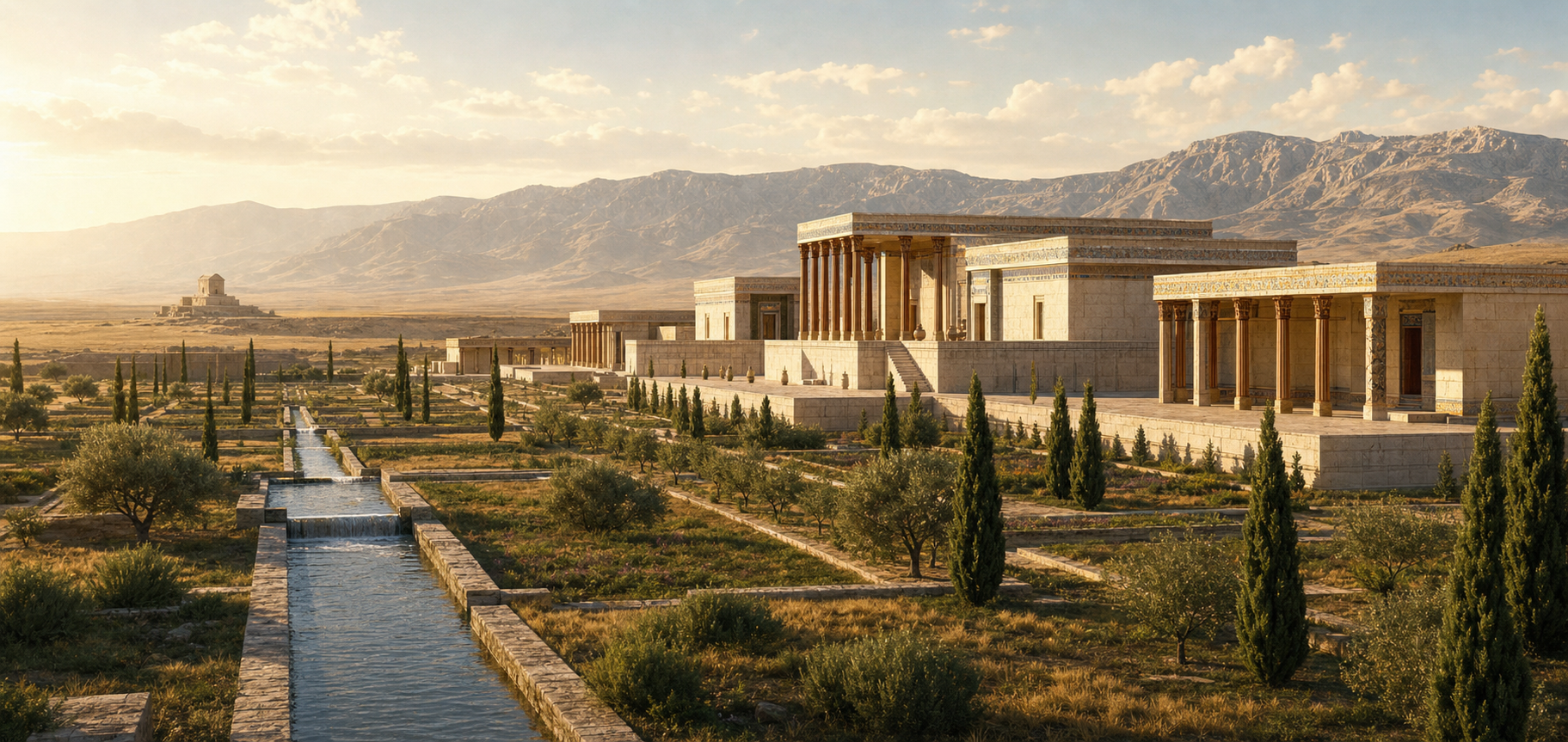
The pursuit of Darius III was one of the final and decisive phases of Alexander the Great’s conquest of the Persian Empire. Following the Macedonian victory at the Battle of Gaugamela in 331 BCE, King Darius III fled eastwards in an attempt to gather new forces and preserve his authority. Alexander, determined to end Persian resistance and claim the full mantle of imperial rule, launched a relentless pursuit across the vast territories of the Achaemenid Empire. The chase would carry Macedonian forces deep into the eastern provinces and culminate in the dramatic death of the Persian king.
The Situation After Gaugamela
The Battle of Gaugamela was the decisive confrontation between Alexander and Darius III. Despite commanding a large and diverse army, Darius was unable to withstand the coordinated attack of the Macedonian forces. When the Persian lines collapsed, Darius fled the battlefield, abandoning his army and leaving the core territories of the empire exposed.
Alexander’s victory opened the road to the great cities of Mesopotamia and Persia. Babylon, Susa, and Persepolis soon fell under Macedonian control, bringing enormous wealth and political legitimacy to Alexander. Yet the Persian king was still alive, and as long as he remained free, resistance could potentially continue.
Alexander therefore resolved to pursue Darius relentlessly, seeking both to eliminate the last symbol of Persian sovereignty and to secure recognition as the rightful ruler of the empire.
Darius’ Flight Eastwards
After escaping from Gaugamela, Darius retreated eastwards through the Persian heartlands. His aim was to reach the eastern satrapies, particularly Bactria and Sogdiana, where loyal governors and fresh troops might allow him to rebuild an army.
The Persian Empire had always possessed great geographic depth, stretching from the Mediterranean to Central Asia. Darius hoped that distance and difficult terrain might slow Alexander’s advance and provide time to reorganise resistance.
However, the collapse of central authority after Gaugamela weakened Darius’ position. Many satraps began to doubt his ability to recover power, and loyalty within the Persian elite grew uncertain.
Alexander’s Determination
Alexander pursued Darius with extraordinary determination. Rather than resting after the capture of the major cities, he pressed onward through the Iranian plateau. His forces crossed long distances under difficult conditions, demonstrating both discipline and endurance.
The pursuit was not simply a matter of speed. Alexander also sought to present himself as the legitimate successor to Persian kingship. By capturing Darius, he could claim authority not merely through conquest but through the elimination of the previous ruler.
This political dimension made the pursuit of Darius one of the most significant episodes of the entire campaign.
The Role of the Persian Satraps
As Alexander advanced, the loyalty of Persian officials became increasingly uncertain. Some local governors submitted to Macedonian authority, recognising that resistance was unlikely to succeed. Others attempted to maintain independence or sought to preserve their own power.
Among the most significant figures was Bessus, the satrap of Bactria. Bessus commanded a large contingent of eastern troops and held considerable influence among the Persian nobility. As the situation deteriorated, he and several other commanders began to lose confidence in Darius’ leadership.
The shifting loyalties of these officials would ultimately determine the fate of the Persian king.
The Betrayal of Darius
During the continued retreat into eastern territories, Bessus and his allies decided to depose Darius. They believed that removing the king might allow them to negotiate with Alexander or reorganise resistance under new leadership.
Darius was seized by his own commanders and taken prisoner. The conspirators proclaimed Bessus as the new king under the name Artaxerxes, attempting to continue resistance in the eastern provinces.
However, Alexander’s forces were advancing rapidly, and the conspirators soon realised that they might not escape capture.
The Death of Darius III
As Alexander drew closer, Bessus and his followers abandoned their captive king. According to ancient accounts, Darius was mortally wounded during the flight and left behind in a wagon along the roadside.
When Alexander’s troops arrived, they found the dying Persian king. The Macedonian king is said to have shown respect for his fallen rival, covering the body with his cloak and ensuring that it was treated with honour.
Darius’ death marked the end of the Achaemenid dynasty, which had ruled the Persian Empire for more than two centuries.
Alexander’s Response
Alexander used the death of Darius as both a political and symbolic opportunity. He presented himself as the avenger of the Persian king, condemning the treachery of Bessus and those who had betrayed their sovereign.
By portraying himself as the rightful successor and protector of Persian royal authority, Alexander sought to win the loyalty of Persian elites and legitimise his rule across the empire.
The pursuit of Bessus and other conspirators would become one of the central objectives of his subsequent campaigns in Central Asia.
Consequences for the Persian Empire
The death of Darius III effectively ended organised resistance under the traditional Persian monarchy. Without a legitimate king, the administrative and political structure of the empire fragmented.
Alexander assumed the titles and responsibilities of the Persian Great King, integrating Persian officials into his administration and adopting certain elements of Persian court ceremony.
This transition marked the transformation of Alexander from a conqueror of Persia into the ruler of a vast multinational empire.
Historical Significance
The pursuit of Darius III represents one of the most dramatic episodes of Alexander’s career. It illustrates both the collapse of a great empire and the emergence of a new political order under Macedonian leadership.
The event also highlights the complex relationships between conqueror and conquered. Alexander’s treatment of Darius’ body and his condemnation of the betrayal reflected a deliberate effort to align himself with Persian traditions of kingship.
Through these actions, he sought to unite the diverse peoples of the empire under a single authority.
Conclusion
The pursuit of Darius III was a decisive moment in the conquest of the Persian Empire. Following the defeat at Gaugamela, Alexander’s relentless advance forced the Persian king into flight and ultimately led to his downfall.
The death of Darius ended the centuries-old Achaemenid dynasty and allowed Alexander to claim the throne of Asia. This event marked the transition from conquest to imperial rule and laid the foundation for the vast Hellenistic world that would emerge in the aftermath of Alexander’s campaigns.