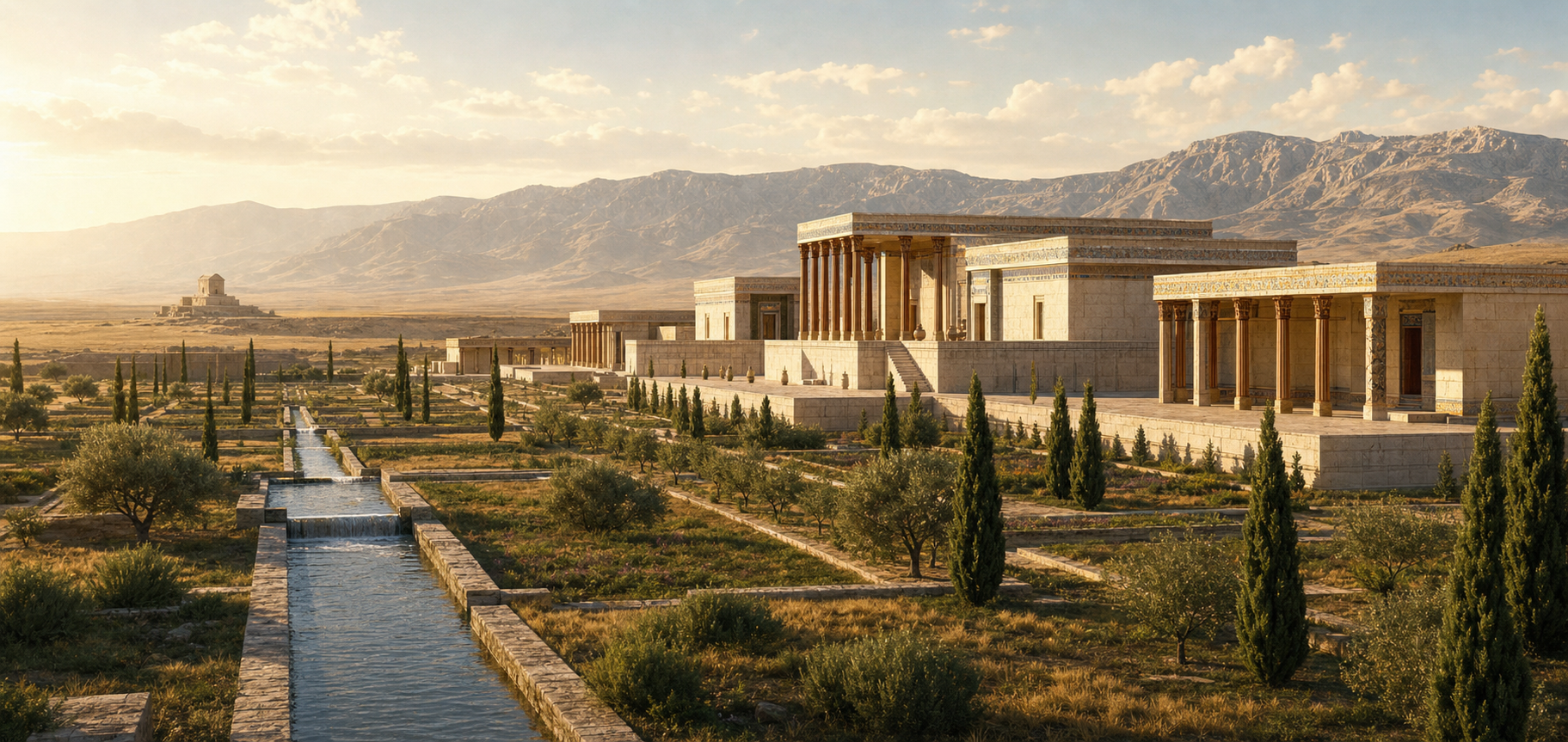
Thebes was one of the most important and influential city-states of ancient Greece. Located in Boeotia in central Greece, Thebes played a decisive role in Greek politics, warfare, and myth from the Bronze Age through the Classical and Hellenistic periods. Although often overshadowed in popular memory by Athens and Sparta, Thebes repeatedly emerged as a major power, at times shaping the fate of the entire Greek world. It was also a city of deep mythic resonance, associated with stories of Cadmus, Oedipus, Dionysus, and Heracles.
Thebes’ historical significance rests upon its strategic position, its control of the fertile Boeotian plain, and its capacity to mobilise regional alliances. Its most dramatic moment came in the fourth century BCE, when Thebes defeated Sparta and briefly became the leading power in Greece. Yet Thebes’ story is not one of simple rise and fall. It is instead a long history of regional competition, shifting alliances, internal political struggle, and repeated reinvention in response to changing conditions.
Geographic Setting and Strategic Importance
Thebes lay inland in Boeotia, a region characterised by rich agricultural land and a network of routes linking northern and southern Greece. The city’s location offered both opportunity and vulnerability. The fertile plains supported population and military manpower, while proximity to key routes made Thebes a natural centre of regional influence. At the same time, the openness of the landscape meant that Thebes often faced pressure from neighbouring powers seeking to dominate central Greece.
Thebes also sat within a wider Boeotian landscape of smaller communities. Thebes’ influence therefore depended not only on its own strength but on its ability to organise and control alliances across the region. This relationship with surrounding towns would become central to Theban politics, especially through the later development of the Boeotian League.
Origins and Early History
Thebes had deep roots in the Bronze Age and appears in early Greek tradition as an ancient and prestigious city. Archaeological evidence indicates long-term settlement in the area, and mythic narratives portray Thebes as a city founded by Cadmus, a figure associated with the introduction of writing and civilisation. Whether these legends preserve historical memory or serve mainly as symbolic stories of origin, they reflect Thebes’ self-image as an ancient, foundational centre of Greek culture.
In early historical periods, Thebes developed as a powerful Boeotian polis. Like other Greek city-states, it underwent changes in political structure over time, moving through phases of aristocratic dominance and later broader participation. The details of these early constitutional shifts are less fully documented than those of Athens, but Thebes clearly possessed the institutional capacity to organise armies, negotiate alliances, and compete at a high level with other major Greek powers.
Thebes in Myth and Cultural Memory
Thebes occupies a central place in Greek myth. The city was associated with Cadmus and the story of the dragon’s teeth, from which armed warriors sprang, symbolising the city’s martial character and the theme of conflict embedded in its origins. Thebes is also the setting for the tragic cycle of Oedipus and his descendants, including Antigone, a body of stories that explored fate, authority, and moral responsibility. These myths were not merely entertainment; they formed part of the cultural language through which Greeks debated power and justice.
Thebes was also linked with Dionysus, whose cult and mythology were closely tied to the region. In addition, Thebes was strongly associated with Heracles, who was often portrayed as a Theban hero. This mythic inheritance reinforced Thebes’ cultural prominence and ensured its enduring presence in Greek literature and drama.
Thebes and Boeotian Regional Power
Unlike maritime powers such as Athens, Thebes’ strength was grounded in land resources and regional organisation. Thebes sought influence over other Boeotian communities, sometimes through cooperation and sometimes through coercion. This tension shaped much of its political history. Control of Boeotia offered agricultural wealth and manpower, but it also required constant negotiation with local identities and rival interests.
Theban leadership in Boeotia eventually took institutional form through the Boeotian League, a federation that coordinated military and political action across the region. While the league’s structure evolved over time, it provided Thebes with a mechanism to project power beyond its city walls and to compete with larger powers on something closer to equal terms.
The Persian Wars and Theban Reputation
During the Persian invasions of Greece in the early fifth century BCE, Greek city-states faced intense pressure to choose between resistance and accommodation. Theban actions during this period contributed to a complicated reputation in later Greek memory. While many Greek states emphasised heroic resistance narratives, Thebes was often portrayed by rivals as insufficiently committed to the collective Greek cause. Whether such portrayals were fully fair or shaped by later political hostility, they affected Thebes’ standing in the ideological conflicts of the Classical period.
The aftermath of the Persian Wars created new power dynamics, especially as Athens built an empire through the Delian League and Sparta asserted leadership through its alliances. Thebes, positioned in central Greece, was drawn into these rivalries, sometimes aligning with Sparta against Athenian influence and at other times resisting Spartan interference.
Thebes in the Classical Period
Throughout the fifth century BCE, Thebes was a major regional actor, frequently competing with Athens for influence in central Greece. Boeotia’s proximity to Attica made Theban-Athenian relations especially tense. In war, Boeotian forces could threaten Athenian land routes and agricultural security, while Athenian power could challenge Theban dominance in the region.
Theban political life also contained internal divisions. As with many Greek poleis, factions could form around differing foreign policy preferences and social interests. These internal struggles were not separate from international politics; they shaped alliances and decisions in ways that could strengthen or weaken Thebes at critical moments.
The Boeotian League and Federal Organisation
The Boeotian League became one of the most significant examples of federal organisation in ancient Greece. While Athens relied on naval empire and Sparta relied on alliance leadership backed by military prestige, Thebes increasingly relied on a regional federation. This offered advantages in manpower and coordination, allowing Thebes to mobilise resources more effectively than a single polis could manage alone.
Federal organisation also required political innovation. The league needed mechanisms for decision-making, contribution, and representation across multiple communities. This structure helped Thebes translate regional strength into strategic power, particularly in the fourth century BCE when it challenged Sparta’s dominance directly.
Theban Ascendancy and the Defeat of Sparta
Thebes reached the height of its power in the fourth century BCE. This ascendancy is closely associated with Theban leaders and commanders who reformed strategy and exploited Spartan weaknesses. The decisive turning point came at the Battle of Leuctra in 371 BCE, where Theban forces defeated the Spartan army and shattered the long-standing myth of Spartan invincibility.
The victory at Leuctra had consequences far beyond Boeotia. It undermined Spartan control in Greece, reshaped alliances, and altered the balance of power. Thebes briefly became the leading Greek power, projecting influence into the Peloponnese and supporting the liberation of populations previously controlled by Sparta, including the restoration of Messenian independence. These actions weakened Sparta structurally, depriving it of labour and resources and accelerating its decline.
Theban military success also demonstrated tactical innovation. The use of concentrated force and refined deployment showed that Spartan dominance was not inevitable and that disciplined strategic planning could overcome even the most feared hoplite tradition. Theban ascendancy was therefore not only a political event but also a transformation in Greek military thinking.
The Sacred Band and Theban Military Culture
Among the most famous elements of Theban military history was the Sacred Band, an elite unit celebrated for discipline and cohesion. Ancient sources associated its strength with intense bonds of loyalty and mutual commitment, creating a force that could be relied upon in critical engagements. Whether understood primarily as an institutional innovation, a cultural symbol, or both, the Sacred Band became a defining feature of Theban military identity.
The Sacred Band’s reputation contributed to Thebes’ broader image as a city capable of producing exceptional soldiers and commanders. It also illustrates how Greek city-states could innovate organisational structures in response to strategic need, particularly during periods of intense inter-polis competition.
The Limits of Theban Power
Despite its dramatic victory over Sparta, Thebes faced significant limits. Sustaining hegemony required resources, diplomatic reach, and long-term administrative capacity. Thebes’ power was deeply tied to Boeotian federation and land-based logistics, and its ability to project sustained influence across the entire Greek world was constrained compared with Athens’ maritime empire or Macedon’s later territorial state.
Thebes also faced continued rivalry and resistance. Other Greek states were unwilling to accept permanent Theban dominance, and shifting alliances could isolate Thebes. Internal pressures within the federation also persisted, as regional communities did not always share identical interests.
Thebes and the Rise of Macedon
The rise of Macedon in the mid-fourth century BCE transformed Greek politics. Macedonian kings developed military and political strategies that exceeded the scale and coordination of traditional polis power. Thebes confronted this new reality, sometimes resisting and sometimes adapting, but the Macedonian challenge ultimately proved decisive.
Thebes’ relationship with Macedon culminated in catastrophic conflict in the late fourth century BCE. The destruction of Thebes by Alexander the Great stands as one of the most dramatic episodes in Greek history, illustrating the end of the classical polis system’s ability to resist emerging imperial structures. Although Thebes was later rebuilt, the event marked a turning point after which no Greek city-state could realistically dominate Greece independently of Macedonian power.
Religion, Sanctuaries, and Civic Identity
Religion played a central role in Theban civic identity. Cult practices associated with Dionysus were particularly important, reinforcing Thebes’ mythic role as a city deeply connected to the god’s narratives. Festivals, ritual practice, and sacred spaces helped bind the community together and provided public occasions for expressing collective values.
Religion also intersected with politics. Like other Greek city-states, Thebes understood divine favour as relevant to military success and civic prosperity. Religious institutions could therefore support legitimacy and shape public life in ways that were both personal and political.
Economy, Society, and Daily Life
Thebes’ economy was supported by Boeotia’s agricultural wealth. Grain, livestock, and regional produce provided food supply and supported military mobilisation. Compared with Athens’ commerce-driven economy, Thebes was more strongly rooted in land resources and regional exchange.
The social structure of Thebes included elites who held political influence and a broader citizen body involved in agriculture and local economic activity. As with other Greek poleis, status, wealth, and family networks shaped opportunities within civic life. Yet Thebes’ federal role also created distinctive forms of identity, combining city loyalty with broader Boeotian affiliation.
Legacy
Thebes’ legacy is complex. In myth, it became a setting for some of Greece’s greatest tragic narratives, shaping later literature and moral reflection. In history, it demonstrated that Sparta could be defeated and that power in Greece was not permanently fixed. Thebes also offered a significant model of federal organisation, showing how regional cooperation could generate strength comparable to that of larger states.
Although Thebes’ period of hegemony was brief, its influence upon Greek politics was profound. It reshaped alliances, weakened Spartan dominance, and contributed to the political conditions into which Macedon expanded. Thebes therefore stands as a crucial link in the chain of Greek history, bridging the classical rivalry of city-states and the emergence of wider territorial powers.
Conclusion
Thebes was more than a rival of Athens or Sparta; it was a major centre of power, myth, and innovation in its own right. Its strategic location in Boeotia, its capacity to organise regional federation, and its remarkable military successes placed it at the centre of Greek affairs at key historical moments. From the legends of Oedipus and Dionysus to the battlefield victory at Leuctra and the later confrontation with Macedon, Thebes shaped the Greek world in ways that remain essential to understanding ancient Greece as a whole.