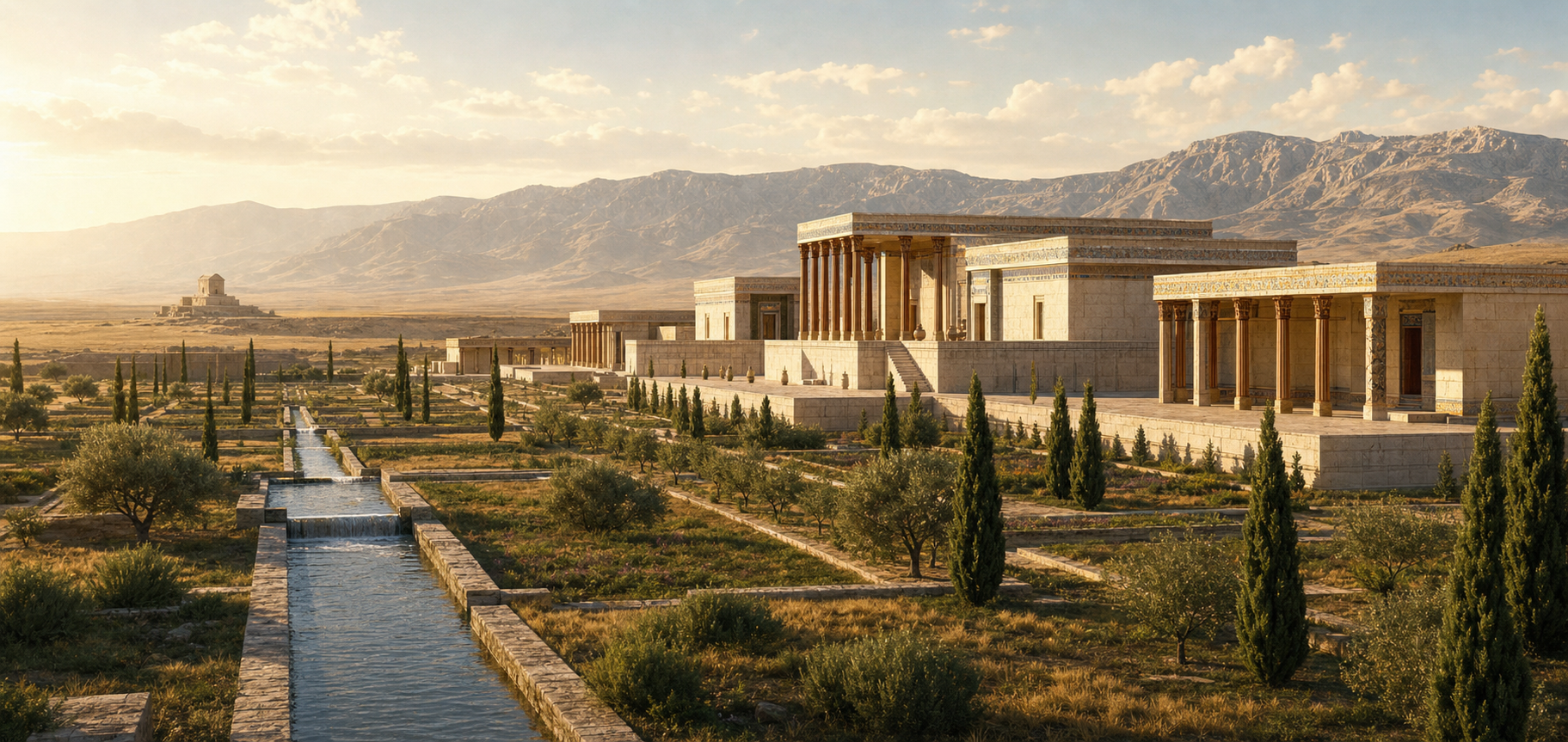
Chalcis was one of the most important cities of ancient Greece, situated on the island of Euboea at the narrow strait known as the Euripus. This strait, which separates Euboea from mainland Greece, is at its narrowest point at Chalcis, making the city strategically vital for both land and sea traffic. Throughout antiquity, Chalcis was recognised for its maritime enterprise, early colonisation, military strength, and participation in the political struggles of the Greek world.
Although frequently overshadowed by larger powers such as Athens and Sparta, Chalcis played a crucial role in shaping early Greek expansion across the Mediterranean. Its influence during the Archaic period, in particular, extended far beyond the confines of Euboea.
Geographic Setting and Strategic Importance
Chalcis occupied a commanding position along the Euripus Strait, where the waters are known for their unusually strong and rapidly changing currents. This location enabled the city to control passage between the Aegean Sea and mainland Greece. A bridge later connected Euboea to the mainland at this narrow crossing, further emphasising Chalcis’ strategic value.
The surrounding territory was fertile and well suited to agriculture, supporting grain cultivation, vineyards, and olive groves. Access to maritime routes allowed Chalcis to engage in extensive trade with other Greek communities and regions beyond.
Early History and the Lelantine War
Chalcis emerged as a prominent polis during the early Archaic period. Its early wealth and power brought it into rivalry with neighbouring Eretria, another major Euboean city. The conflict between these two cities, traditionally known as the Lelantine War, was among the earliest recorded wars in Greek history.
The Lelantine War centred on control of the fertile Lelantine Plain. Though the precise details remain uncertain, the conflict involved alliances with other Greek states and demonstrated the importance of agricultural land and regional influence in early Greek politics.
This rivalry contributed to the development of Chalcis as a militarily capable and assertive polis.
Colonisation and Overseas Expansion
Chalcis was one of the leading participants in the Greek colonising movement of the eighth and seventh centuries BCE. Euboean settlers, including those from Chalcis, established colonies across the Aegean and western Mediterranean.
Among the most notable foundations was Cumae in southern Italy, one of the earliest Greek settlements in the region. Chalcidian influence extended into Sicily as well, with colonies such as Naxos and Leontini tracing connections to Euboean settlers.
Through colonisation, Chalcis expanded its economic reach and contributed to the spread of Greek culture, language, and political institutions across the Mediterranean world.
Political Development
Like many Greek city-states, Chalcis experienced shifts in political structure over time. Early aristocratic governance gave way to broader participation among citizens. Political power, however, often remained influenced by elite families and landowners.
During the Classical period, Chalcis’ proximity to Athens shaped its political trajectory. At times, it came under Athenian influence, particularly during the expansion of the Athenian maritime empire. Revolts against Athenian control reflected tensions between local autonomy and imperial oversight.
The city’s political life was therefore closely tied to the wider balance of power in central Greece.
Chalcis in the Persian and Peloponnesian Wars
During the Persian Wars, Euboea became a theatre of conflict. Although larger battles occurred elsewhere, the island’s strategic importance meant that its cities, including Chalcis, were drawn into the broader struggle between Persia and the Greek states.
In the Peloponnesian War between Athens and Sparta, Chalcis’ alignment shifted according to the evolving political landscape. Its geographic proximity to Athens made it difficult to remain independent of Athenian influence, yet local resistance demonstrated the desire to maintain autonomy.
These conflicts illustrate how mid-sized poleis such as Chalcis navigated the ambitions of greater powers.
Economy and Trade
Chalcis’ economy rested upon agriculture, trade, and craftsmanship. The fertile plains of Euboea provided food supplies, while maritime connections facilitated commerce throughout the Aegean.
Metal resources in Euboea, including copper, contributed to the city’s economic strength in earlier periods. Trade networks established during the colonising era continued to support economic vitality in subsequent centuries.
The city’s harbour activity reinforced its role as a commercial intermediary between mainland Greece and the wider Mediterranean.
Hellenistic and Roman Periods
During the Hellenistic period, Chalcis experienced the influence of Macedonian power following the conquests of Philip II and Alexander the Great. Control of Euboea was strategically important for domination of central Greece, and Chalcis frequently found itself under external supervision.
Under Roman rule, Chalcis became part of the Roman provincial system. Though no longer politically independent, it retained regional importance due to its location at the Euripus Strait.
The city continued to function as an urban centre into later antiquity, reflecting the enduring relevance of its geographic position.
Culture and Society
Chalcis shared in the broader cultural life of the Greek world. Religious practices, public festivals, and civic institutions structured daily life. Sanctuaries dedicated to major Greek deities reinforced communal identity and connection to wider Hellenic traditions.
The city’s participation in colonisation also fostered cultural exchange. Contact with western Mediterranean communities influenced trade, art, and social development.
Legacy
Chalcis’ historical importance lies primarily in its early colonising activity and its strategic position at the Euripus Strait. Through its settlements in Italy and Sicily, it played a foundational role in the spread of Greek civilisation westwards.
Although later overshadowed by larger states, Chalcis remained significant in regional politics and maritime commerce. Its influence during the Archaic period in particular secured its place in Greek history.
Conclusion
Chalcis stands as an example of a dynamic and outward-looking Greek polis. From its rivalry with Eretria and participation in early warfare to its pioneering role in Mediterranean colonisation, the city demonstrated adaptability and ambition.
Its strategic location, economic enterprise, and cultural contributions ensured that Chalcis was more than a provincial centre. It was a key participant in the expansion and development of the ancient Greek world, and its legacy endures in the history of early Mediterranean civilisation.