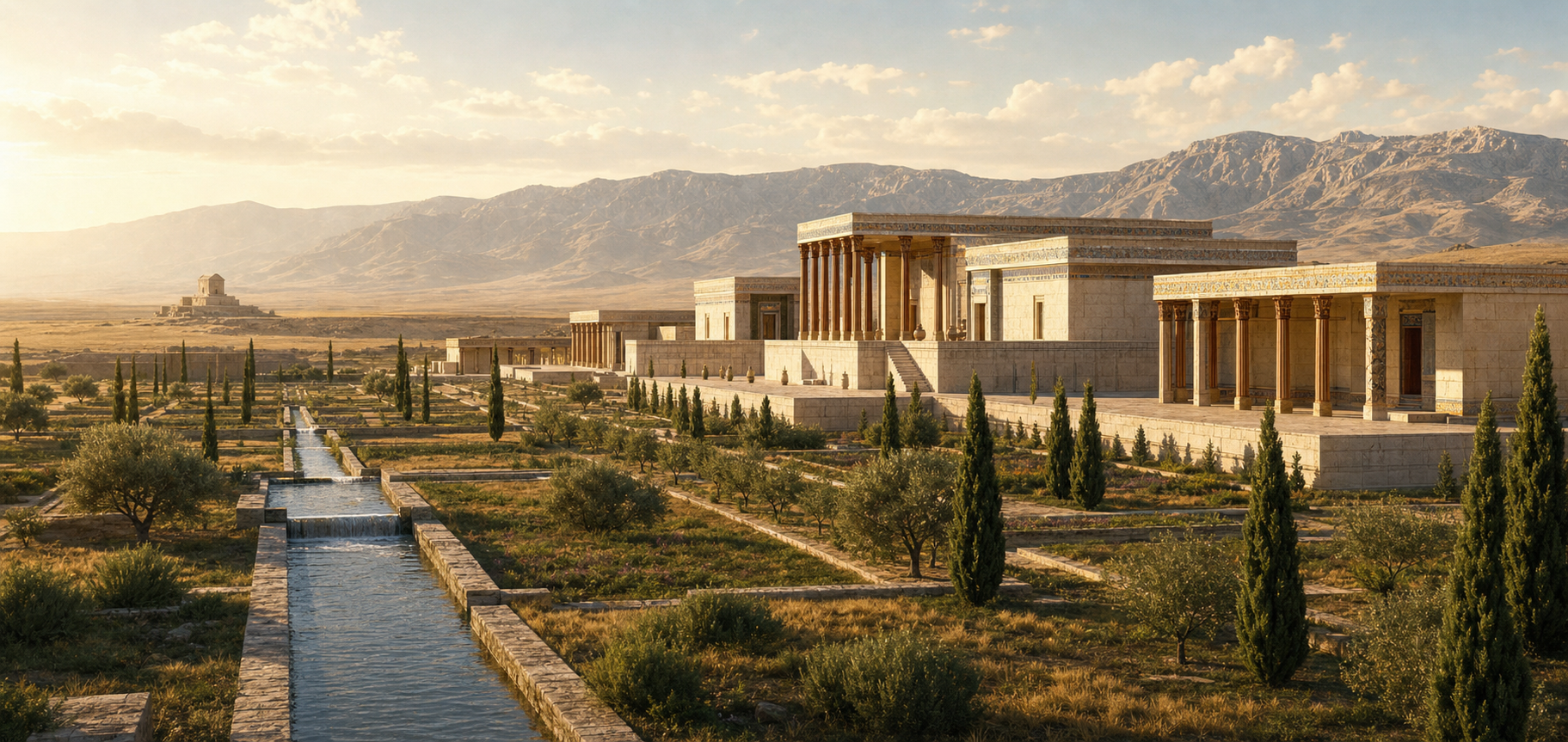
Miletus was one of the most influential and prosperous cities of the ancient Greek world. Situated on the western coast of Asia Minor, near the mouth of the Maeander River, Miletus occupied a strategic position that allowed it to become a centre of maritime trade, colonisation, philosophy, and scientific inquiry. During the Archaic period in particular, Miletus emerged as a leading Ionian city whose economic vitality and intellectual achievements left a lasting imprint on Greek civilisation.
Although later overshadowed by larger powers and eventually incorporated into foreign empires, Miletus’ contributions to commerce, urban planning, and early philosophy secured its place among the most important poleis of antiquity.
Geographic Setting and Strategic Position
Miletus lay along the coast of Ionia in Asia Minor, close to fertile plains and near important sea routes connecting the Aegean with the eastern Mediterranean and the Black Sea. In antiquity, the city possessed several natural harbours, which facilitated extensive maritime trade and naval activity.
The surrounding land supported agriculture, while access to inland trade routes connected Miletus to Anatolian communities. Its coastal position enabled it to serve as a bridge between Greek and eastern cultures, fostering exchange and innovation.
Early History and Ionian Identity
Miletus was inhabited from prehistoric times and became a major Ionian settlement during the early first millennium BCE. As one of the principal members of the Ionian League, it shared religious and cultural traditions with neighbouring cities such as Ephesus and Samos.
By the eighth and seventh centuries BCE, Miletus had become one of the wealthiest cities in the Aegean. Its maritime strength and commercial networks enabled it to establish numerous colonies, particularly around the Black Sea. These colonies extended Milesian influence across a vast geographic area and secured access to valuable resources, including grain and raw materials.
Colonisation and Commercial Expansion
Miletus was among the most active colonising cities of the Greek world. It founded settlements along the shores of the Black Sea, in the Hellespont, and in other strategic locations. These colonies strengthened trade routes and allowed Miletus to dominate commercial exchanges in the region.
The city’s merchants engaged in trade with both Greek and non-Greek communities. Through this commercial activity, Miletus accumulated wealth and established itself as a maritime power.
Its economic prosperity supported urban development, artistic patronage, and intellectual life.
Philosophy and the Milesian School
Miletus is especially renowned as the birthplace of early Greek philosophy. In the sixth century BCE, thinkers such as Thales, Anaximander, and Anaximenes sought rational explanations for natural phenomena. These philosophers, collectively known as the Milesian School, attempted to understand the universe through observation and reasoning rather than myth alone.
Thales is often regarded as one of the first philosophers in Western history. He proposed that water was the fundamental principle underlying all things. Anaximander introduced more abstract concepts, suggesting that the origin of the universe lay in an indefinite substance. Anaximenes argued that air was the primary element.
The intellectual achievements of these thinkers marked a turning point in Greek thought, laying foundations for later scientific and philosophical inquiry. Miletus thus became associated with the emergence of rational investigation and natural philosophy.
Miletus and the Persian Empire
In the late sixth century BCE, the Ionian cities, including Miletus, fell under Persian rule. Although the Persians allowed a degree of local autonomy, resentment grew among the Ionian Greeks.
Miletus played a leading role in the Ionian Revolt against Persian authority in the early fifth century BCE. The revolt initially gained support but was eventually crushed. The Persian destruction of Miletus was severe and marked a tragic moment in the city’s history.
The fall of Miletus had profound psychological impact across the Greek world and contributed to the escalation of tensions that led to the wider Persian Wars.
Recovery and Later Development
After the Persian Wars, Miletus was rebuilt and re-established as a significant urban centre. During the Classical period, it joined the Delian League under Athenian leadership. Although it did not regain its former dominance, the city continued to participate in Aegean trade and cultural life.
In the fourth century BCE, Miletus experienced further urban planning developments, reflecting advances in architectural design. The city’s layout came to embody principles associated with grid planning and rational organisation, which influenced later urban design.
Under Hellenistic and Roman rule, Miletus remained inhabited and retained regional importance. Its theatres, temples, and public buildings reflected continued civic vitality.
Religion and Civic Identity
Religion played a central role in Milesian life. Sanctuaries dedicated to Apollo, Artemis, and other Olympian deities structured civic observance. The nearby sanctuary of Apollo at Didyma became one of the most important oracular sites in the Greek world, further enhancing Milesian prestige.
Religious festivals and rituals reinforced communal identity and connected the city to broader Ionian traditions.
Economy and Society
The economy of Miletus was based on maritime trade, colonisation, agriculture, and craftsmanship. The city’s merchants travelled widely, while agricultural production in surrounding lands supported local needs.
Milesian society included merchants, sailors, artisans, farmers, and intellectuals. The presence of diverse occupations reflected the city’s economic complexity and cosmopolitan character.
As in other Greek cities, slavery formed part of the economic structure, contributing to labour in agriculture and domestic service.
Legacy
Miletus’ legacy rests upon two principal foundations: its commercial and colonial achievements, and its pioneering role in philosophy. The colonies it founded extended Greek influence across the Black Sea and beyond. The thinkers it produced laid the groundwork for Western scientific and philosophical traditions.
The city also contributed to urban planning and architectural development, influencing later Hellenistic and Roman design.
Conclusion
Miletus was a dynamic and innovative city whose influence extended far beyond its immediate territory. From its maritime expansion and economic prosperity to its intellectual breakthroughs in philosophy, the city shaped the course of Greek civilisation.
Though it endured conquest and decline, Miletus remains one of the most important centres of early Greek thought and commerce. Its achievements in trade, colonisation, and rational inquiry continue to mark it as a cornerstone of the ancient Greek world.