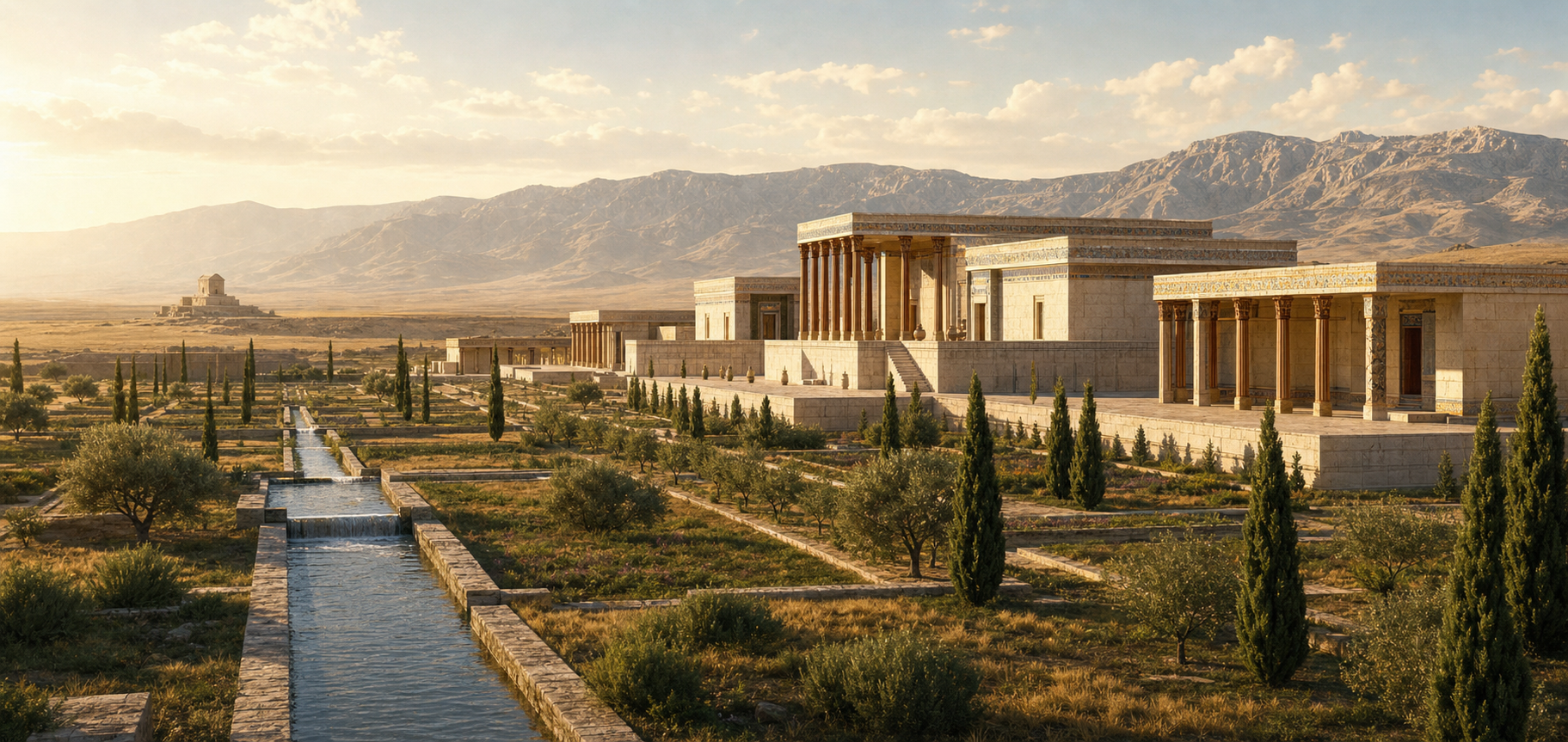
Macedon was an ancient kingdom located in the northern part of the Greek world, occupying a region between the Balkans and the Aegean Sea. Although initially regarded by some southern Greek city-states as peripheral or less refined, Macedon rose to extraordinary prominence during the fourth century BCE under the leadership of Philip II and his son Alexander the Great. Through military reform, political skill, and ambitious expansion, Macedon transformed from a regional kingdom into the dominant power of the Greek world and the foundation of one of the largest empires in antiquity.
The history of Macedon reflects a combination of indigenous traditions and Hellenic influence. Its monarchy, aristocratic structure, and military culture distinguished it from the polis-based political systems of southern Greece. Yet its rulers actively embraced Greek language, religion, and cultural forms, positioning Macedon as both part of and distinct within the broader Greek civilisation.
Geographic Setting and Natural Resources
Macedon was situated north of Thessaly and west of Thrace, encompassing fertile plains, forested highlands, and access to the northern Aegean coastline. The region’s geography played a decisive role in shaping its development. The plains of Lower Macedon supported agriculture, particularly grain cultivation, while the mountainous regions provided timber and mineral resources.
The abundance of timber was especially important, as it allowed Macedon to build fleets and supply materials for construction. The presence of precious metals, including gold and silver from mines in the region, strengthened royal finances and supported military expansion.
Early History and the Argead Dynasty
The ruling house of Macedon, known as the Argead dynasty, claimed descent from the Greek hero Heracles. This assertion reinforced the kingdom’s connection to the wider Greek world. Early Macedonian kings consolidated control over local tribes and extended their authority across neighbouring territories.
In its early centuries, Macedon was often overshadowed by more powerful Greek city-states such as Athens, Sparta, and Thebes. However, the kingdom steadily expanded its territory and developed stronger political cohesion under successive rulers.
Philip II and Military Reform
The true transformation of Macedon occurred during the reign of Philip II in the mid-fourth century BCE. Philip reorganised the Macedonian army, introducing the phalanx equipped with the long sarissa spear. This innovation increased the effectiveness and discipline of infantry formations.
Philip also strengthened the cavalry, particularly the Companion Cavalry, which became a decisive force on the battlefield. Through a combination of military victories and diplomatic manoeuvres, he subdued rival Greek states and secured Macedonian dominance.
The decisive victory at the Battle of Chaeronea established Macedon as the leading power in Greece. Philip subsequently formed the League of Corinth, uniting Greek states under Macedonian leadership in preparation for a campaign against Persia.
Alexander the Great and Imperial Expansion
Following Philip’s assassination, his son Alexander III, known as Alexander the Great, ascended the throne. Within a remarkably short period, Alexander launched a campaign against the Persian Empire, achieving a series of victories that reshaped the ancient world.
Alexander conquered Asia Minor, Egypt, Mesopotamia, and extended his empire as far as India. His campaigns spread Greek culture, language, and political ideas across vast territories. Cities founded during this period became centres of Hellenistic civilisation.
Although Alexander’s empire fragmented after his death, Macedon remained at the heart of the new Hellenistic kingdoms that emerged.
Political Structure and Kingship
Macedon differed from the democratic or oligarchic systems of the southern Greek poleis. It was a hereditary monarchy in which the king exercised significant authority, particularly in military and foreign affairs. However, the king relied on the support of the nobility and the army.
Assemblies of soldiers and aristocrats played roles in legitimising royal succession and approving major decisions. This blend of royal authority and aristocratic participation defined Macedonian governance.
Culture and Hellenisation
Despite early perceptions of Macedon as culturally distinct, its rulers actively promoted Greek culture. The Macedonian court patronised philosophers, artists, and scholars. Aristotle, one of the most influential Greek philosophers, served as tutor to Alexander.
Greek became the language of administration and culture throughout Alexander’s empire. The spread of Hellenistic civilisation combined Greek traditions with local customs across the eastern Mediterranean and Near East.
Macedon under Roman Rule
In the second century BCE, Macedon came into conflict with the expanding Roman Republic. After a series of Macedonian Wars, Rome defeated the kingdom and eventually organised the region as a Roman province.
Under Roman administration, Macedon retained some regional importance but no longer exercised independent political power. Its cities continued to function as centres of commerce and culture within the Roman world.
Economy and Society
The economy of Macedon was based on agriculture, pastoralism, mining, and trade. The fertile plains supported grain production, while livestock farming was common in mountainous areas.
Society included free citizens, nobles, farmers, artisans, and slaves. Military service was central to Macedonian identity, and loyalty to the king formed a core aspect of civic life.
Legacy
The legacy of Macedon is inseparable from the achievements of Philip II and Alexander the Great. The kingdom’s military innovations reshaped warfare, while Alexander’s conquests initiated the Hellenistic age.
The cultural diffusion that followed created a shared Greek-inspired civilisation stretching from the Mediterranean to Central Asia. This fusion of cultures influenced art, philosophy, science, and governance for centuries.
Conclusion
Macedon evolved from a peripheral northern kingdom into the dominant power of the Greek world. Through strategic reform and visionary leadership, it overcame regional divisions and established a far-reaching empire.
Though ultimately absorbed into the Roman state, Macedon’s influence endured through the Hellenistic civilisation it helped to create. Its history illustrates the transformative potential of political unity, military innovation, and cultural ambition in the ancient Mediterranean world.