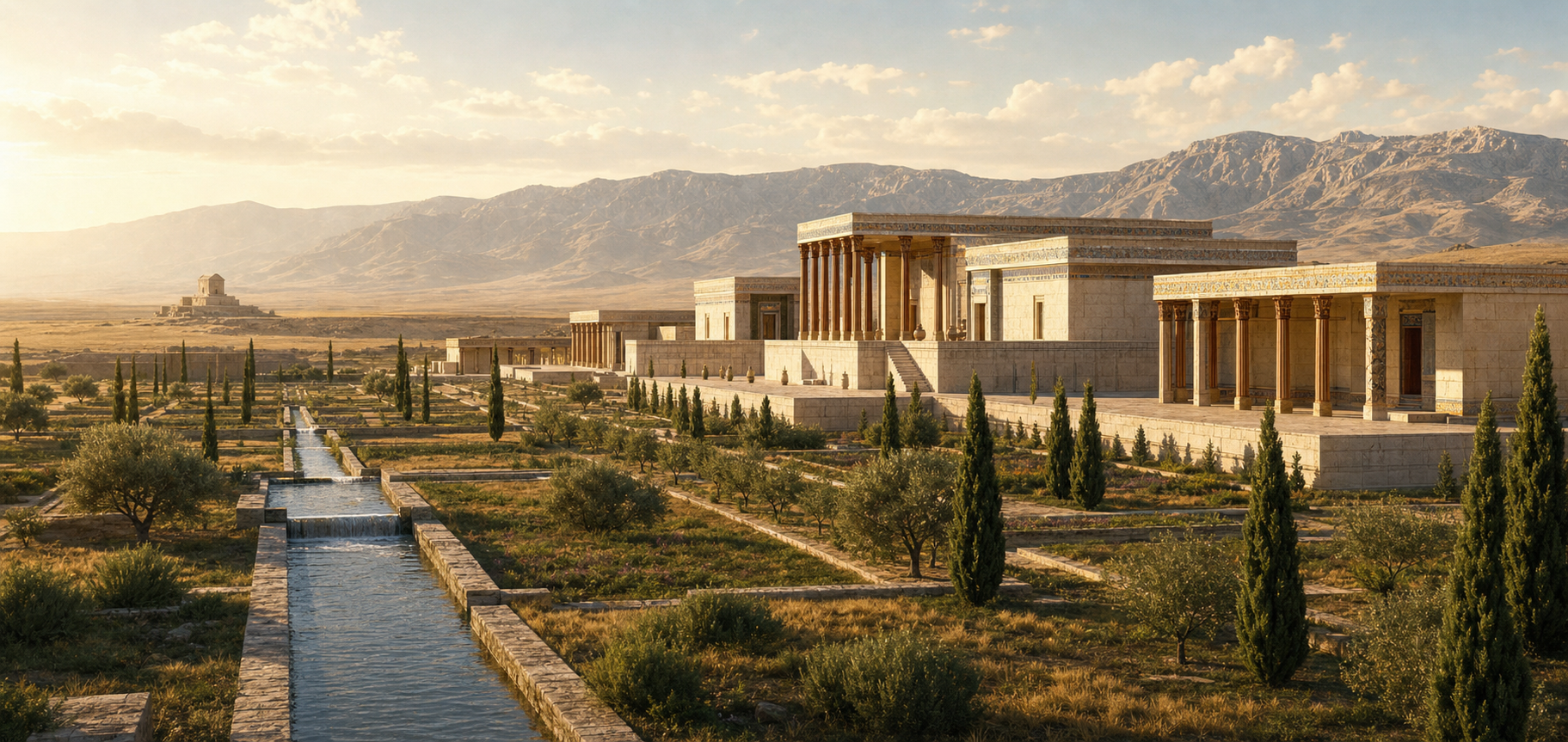
Around 900 BCE, the kingdom of Assyria was beginning one of the most dramatic periods of expansion in ancient history. From its homeland in northern Mesopotamia, Assyrian kings launched repeated military campaigns, strengthened their armies, reorganised conquered territories and created an increasingly powerful state. Over the following centuries, this expansion would produce the Neo-Assyrian Empire, the largest empire the Near East had yet seen.
Assyria was not a new civilisation in 900 BCE. The city of Assur had already existed for many centuries, and Assyrian merchants and rulers had played important roles in Mesopotamian history since the Bronze Age. What changed during the early first millennium BCE was the scale and intensity of Assyrian expansion.
After a period of weakness and territorial loss, Assyrian rulers began restoring control over lands that had previously belonged to the kingdom. Their successors pushed farther into Syria, Anatolia, the Levant and eventually Egypt. Warfare became closely connected with royal ideology, while an increasingly sophisticated administrative system allowed Assyria to govern conquered peoples across enormous distances.
The Assyrian Homeland
The traditional heartland of Assyria lay in northern Mesopotamia, primarily along the upper Tigris River in what is now northern Iraq.
The region contained fertile agricultural land but depended more heavily upon seasonal rainfall than southern Mesopotamia.
Important Assyrian cities included Assur, Nineveh, Arbela and later Kalhu, which is known today as Nimrud.
These cities were connected with agricultural villages, trade routes and river transport.
The geography of northern Mesopotamia placed Assyria between several major regions, including Anatolia, Iran, Syria and Babylonia.
The City of Assur
Assur was the ancient religious and political centre of the Assyrian state.
The city stood on the western bank of the Tigris River.
It had been important since at least the early second millennium BCE, when Assyrian merchants established extensive trading networks in Anatolia.
The city shared its name with the national god Ashur, who became closely associated with Assyrian kingship and imperial expansion.
Although later kings created new capitals, Assur remained a sacred centre throughout Assyrian history.
The God Ashur
Ashur was the principal god of Assyria.
As the kingdom expanded, Assyrian rulers increasingly portrayed warfare as an expression of Ashur's divine will.
The king acted as the god's earthly representative and was expected to extend order over rebellious and foreign lands.
Military campaigns could therefore be presented as religious duties as well as political operations.
Victories demonstrated that Ashur favoured the king, while rebellion against Assyria could be described as resistance against the divine order itself.
Assyria Before 900 BCE
Assyria had already experienced periods of substantial power before the ninth century BCE.
During the Middle Assyrian Period, rulers such as Ashur-uballit I and Tukulti-Ninurta I expanded Assyrian influence across northern Mesopotamia.
Assyria competed with the Hittites, Babylonians, Mitanni and other Bronze Age powers.
However, the disruptions surrounding the end of the Bronze Age weakened Assyrian control over some territories.
During the following centuries, Aramean communities and other regional powers occupied lands that Assyria had once dominated.
The Bronze Age Collapse
Around 1200 BCE, many political systems across the eastern Mediterranean and Near East experienced severe disruption.
The Hittite Empire collapsed, Mycenaean palace civilisation disappeared and several major cities were destroyed.
Assyria survived these upheavals but became more restricted geographically.
Trade routes changed, political authority fragmented and new communities emerged around Assyria's frontiers.
The kingdom's later expansion was therefore partly an attempt to recover territories and routes lost during this period.
The Arameans
Aramean groups became increasingly important in Syria and northern Mesopotamia during the early Iron Age.
They established numerous kingdoms and communities in territories formerly influenced by larger Bronze Age states.
Some Aramean settlements appeared near Assyria's western frontier.
This expansion brought them into repeated conflict with Assyrian kings seeking to restore control over old territories.
Ironically, although Assyria eventually conquered many Aramean states, the Aramaic language later became extremely widespread throughout the Assyrian Empire.
The Recovery Begins
Assyrian revival began before 900 BCE under rulers who gradually restored military strength.
Kings campaigned against neighbouring communities and re-established control over important agricultural regions.
Fortresses were rebuilt and tribute was imposed on defeated rulers.
Each successful campaign increased the resources available for future expansion.
By the beginning of the ninth century BCE, Assyria had regained much of the strength necessary for sustained imperial warfare.
Ashur-dan II
Ashur-dan II ruled Assyria during the late tenth and early ninth centuries BCE.
His reign helped begin the major Assyrian recovery.
He conducted military campaigns against neighbouring peoples and attempted to restore agricultural territories that had been lost.
Royal records emphasise his efforts to resettle abandoned regions and strengthen food production.
This combination of military reconquest and economic restoration helped prepare Assyria for later expansion.
Adad-nirari II
Adad-nirari II became king around the beginning of the ninth century BCE and continued the work of restoring Assyrian power.
He launched repeated campaigns against Aramean groups and other neighbouring states.
His armies also fought Babylonia to the south.
Through warfare and diplomatic agreements, Adad-nirari expanded Assyrian territory and strengthened the kingdom's frontiers.
His reign is often regarded as one of the important beginnings of the Neo-Assyrian imperial expansion.
The Neo-Assyrian Empire
The term Neo-Assyrian Empire is used by modern historians for the period in which Assyria became the dominant imperial power of the ancient Near East.
Its rise developed gradually from the late tenth and ninth centuries BCE.
Early rulers concentrated on restoring lands previously controlled by Assyria.
Later kings moved beyond reconquest and created an empire incorporating territories that had never been part of the traditional Assyrian homeland.
By the seventh century BCE, Assyrian kings ruled an enormous territory extending from Iran to Egypt.
Tukulti-Ninurta II
Tukulti-Ninurta II succeeded Adad-nirari II and continued military campaigns around Assyria's borders.
He strengthened control over regions to the north and west.
Royal campaigns collected tribute, secured trade routes and demonstrated Assyrian military power.
These early ninth-century rulers established the foundations inherited by one of the most aggressive kings in Assyrian history, Ashurnasirpal II.
Ashurnasirpal II
Ashurnasirpal II became king in the early ninth century BCE.
His reign marked a dramatic intensification of Assyrian expansion.
He launched military campaigns almost every year and pushed Assyrian armies into northern Mesopotamia, Anatolia and Syria.
Many local rulers were forced to pay tribute.
Those who resisted could face severe punishment, destruction of their cities or deportation.
The Purpose of Assyrian Campaigns
Assyrian wars had several objectives.
Kings sought territory, agricultural land, trade routes and strategic fortresses.
Campaigns also produced tribute, including metals, livestock, horses, timber and luxury goods.
Military victories discouraged neighbouring rulers from rebellion.
Each successful campaign strengthened royal prestige and reinforced the claim that Ashur supported the king.
Annual Campaigning
Military campaigning became a regular part of Assyrian kingship.
Armies often marched during seasons when weather and agricultural conditions made movement easier.
Royal inscriptions record campaign after campaign against different territories.
Repeated warfare allowed Assyria to maintain pressure on neighbouring states and react quickly to rebellion.
It also ensured that the army remained experienced and organised.
The Assyrian King as Warrior
Assyrian kings presented themselves as powerful warriors chosen by the gods.
Royal inscriptions celebrated their courage, military victories and punishment of enemies.
Palace reliefs later showed kings riding in chariots, hunting lions and commanding armies.
Military strength became one of the central foundations of royal legitimacy.
A king who defeated foreign enemies was portrayed as protecting Assyria from chaos.
Royal Inscriptions
Assyrian kings recorded their achievements in long inscriptions carved on stone monuments, palace walls and clay objects.
These texts describe campaigns, conquered cities and tribute.
They also record temple restoration and palace construction.
The inscriptions are extremely valuable historical sources, but they were also propaganda.
Assyrian rulers exaggerated their successes and rarely described military failures in detail.
Fear as a Weapon
Assyrian royal inscriptions became famous for describing severe punishments inflicted upon rebellious enemies.
Captured rulers could be executed, cities destroyed and populations deported.
These descriptions were deliberately publicised.
They warned other rulers about the consequences of resisting Assyrian authority.
Fear therefore became an important part of Assyrian imperial strategy.
Psychological Warfare
The reputation of the Assyrian army could sometimes achieve political objectives before a battle began.
A smaller kingdom facing Assyria might choose to pay tribute rather than risk destruction.
Royal monuments displayed the fate of defeated enemies.
Messengers and diplomats carried news of Assyrian victories across the Near East.
By cultivating an image of overwhelming power, Assyrian kings attempted to make resistance appear hopeless.
Tribute
Not every conquered or threatened kingdom was immediately incorporated into Assyria.
Some rulers were allowed to remain in power if they accepted Assyrian supremacy.
They were expected to provide regular tribute.
Tribute could include silver, gold, horses, cattle, timber, textiles and luxury goods.
This system allowed Assyria to gain resources without directly administering every territory.
Vassal Kings
Local kings who submitted to Assyria effectively became vassals.
They retained limited internal authority but were expected to remain loyal.
They might provide soldiers and resources to the Assyrian king.
If they rebelled, Assyria could invade, remove the ruler and replace the kingdom with a directly governed province.
This combination of indirect and direct rule allowed the empire to expand gradually.
Treaties and Oaths
Assyrian rulers used treaties to bind subordinate kings to the empire.
Vassals swore solemn oaths before the gods.
Breaking the agreement was therefore presented as both political treason and religious wrongdoing.
Treaties could specify military obligations, tribute and loyalty to the Assyrian ruler.
Direct Provincial Rule
As Assyrian imperial administration developed, conquered kingdoms were increasingly transformed into provinces.
Governors appointed by the Assyrian king administered these territories.
They collected taxation, supervised military forces and communicated with the royal court.
Provincial administration gave the king greater control than relying entirely on local rulers.
Governors
Assyrian governors represented royal authority in distant regions.
They were responsible for maintaining order and collecting resources.
Governors also organised military forces within their provinces.
The king attempted to prevent any governor from becoming too independent by maintaining systems of communication and supervision.
The Assyrian Army
The Assyrian army became one of the most sophisticated military forces of the ancient world.
It contained infantry, archers, chariot crews and eventually large cavalry forces.
Engineers specialised in overcoming fortifications and crossing rivers.
Different regions of the empire supplied soldiers with specialised skills.
Constant warfare gradually transformed the military into an increasingly professional organisation.
Infantry
Infantry formed the largest part of most Assyrian armies.
Soldiers carried combinations of spears, swords, shields and bows.
Some wore helmets and body armour.
Assyrian reliefs depict infantry operating in carefully organised formations.
Different units supported one another during both open battles and sieges.
Spearmen
Spearmen were important in close combat.
A long spear allowed soldiers to attack enemies while maintaining some distance.
Large shields provided protection against arrows and other weapons.
Spearmen could fight in organised groups alongside archers.
Archers
Archers were among the most important Assyrian soldiers.
They could attack enemy formations from a distance and provide covering fire during sieges.
Assyrian art frequently shows archers standing behind heavily protected shield bearers.
This teamwork allowed them to approach defended positions more safely.
Shield Bearers
Large shields protected troops from enemy arrows and missiles.
Some Assyrian representations show a shield bearer standing beside an archer.
The shield protected both soldiers while the archer concentrated on firing.
This combination became especially useful during attacks on fortified positions.
Chariots
Chariots remained prestigious components of Assyrian armies during the early Neo-Assyrian period.
They had played a central role in Bronze Age warfare and continued to be used by kings and elite warriors.
Assyrian chariots became increasingly heavy and could carry several crew members.
They were effective on suitable open terrain but less flexible than cavalry.
The Rise of Cavalry
Mounted cavalry became increasingly important during the Iron Age.
Early Assyrian cavalry sometimes operated in pairs, with one rider controlling horses while another used a bow.
Over time, riders developed greater skill and could fight independently.
Cavalry was more flexible than chariots and could operate across difficult terrain.
It would become one of the most important elements of later Assyrian armies.
Horses
Horses were valuable military resources.
Assyrian kings demanded horses as tribute from regions famous for breeding them.
Maintaining large numbers of cavalry and chariot horses required specialist knowledge and substantial supplies of food.
Control of horse-producing territories therefore possessed strategic importance.
Iron Weapons
The growing use of iron was one feature of Iron Age warfare.
Assyrian soldiers used both iron and bronze equipment.
Iron ore was widely available compared with the tin required for bronze production.
Improved ironworking eventually allowed weapons and tools to be manufactured on a large scale.
However, Assyrian success cannot be explained simply by possession of iron weapons, since neighbouring peoples also used iron.
Military Organisation
Assyria's greatest military advantage lay in organisation rather than a single weapon.
The state could recruit soldiers, gather supplies and coordinate different troop types.
Royal roads and messengers improved communication.
Specialist engineers assisted armies during campaigns.
This combination of logistics, training and administration made Assyrian armies exceptionally effective.
Military Logistics
Large armies required enormous quantities of food, water and equipment.
Soldiers needed grain and other supplies during long campaigns.
Horses required fodder.
Weapons and armour needed repair.
Assyrian administrators organised these resources and arranged supply routes across conquered territories.
Crossing Rivers
Mesopotamia and Syria contained numerous rivers that could slow armies.
Assyrian soldiers developed techniques for crossing waterways.
Reliefs show troops using inflated animal skins as flotation devices.
Boats, temporary bridges and rafts could also transport soldiers and equipment.
Engineering skills allowed the army to continue campaigns across challenging landscapes.
Siege Warfare
Many cities encountered by Assyrian armies were protected by walls.
Capturing such settlements required specialist siege techniques.
The Assyrians became masters of siege warfare.
They used battering rams, ladders, tunnelling and direct assaults against defensive walls.
Archers supported the attackers while engineers attempted to create breaches.
Battering Rams
Battering rams were among the most important Assyrian siege weapons.
A heavy beam could be repeatedly driven against a wall or gate.
The crew operated beneath a protective structure designed to reduce the danger from defenders.
Some rams were mounted on wheels so that they could be moved into position.
Siege Towers
Siege towers and elevated structures helped attackers approach the level of defensive walls.
Archers could fire from protected positions while soldiers attempted to breach fortifications.
Complex siege equipment required skilled carpenters and engineers.
The ability to transport or construct such machinery during campaigns demonstrated Assyria's organisational strength.
Tunnelling
Attackers could also attempt to undermine city walls.
Soldiers dug beneath fortifications and weakened their foundations.
Removing supporting material could cause sections of wall to collapse.
Defenders sometimes dug counter-tunnels or attempted to attack the engineers.
Scaling the Walls
Assyrian soldiers used ladders during direct assaults.
These attacks were extremely dangerous because defenders could fire arrows or throw objects from above.
Archers and shield bearers therefore attempted to suppress defenders while assault troops climbed.
Successful attacks required careful coordination.
Starving a City
Not every siege depended upon direct assault.
An army could surround a city and prevent food from entering.
If defenders exhausted their supplies, they might eventually surrender.
Long sieges required the attacking army to maintain its own supply lines for months or even years.
Fortified Cities
The growth of Assyrian power encouraged neighbouring kingdoms to strengthen their defences.
Walls, towers and fortified gates became essential features of important cities.
Some settlements were positioned on elevated terrain to make attack more difficult.
The competition between stronger fortifications and improved siege technology became one of the defining features of Iron Age warfare.
Deportation
One of the most significant Assyrian imperial policies was the organised movement of conquered populations.
People from rebellious or strategically important regions could be deported and resettled elsewhere.
The policy became especially extensive under later Neo-Assyrian rulers.
Deportation weakened local resistance while providing workers and specialised craftspeople for other parts of the empire.
Why Assyria Moved Populations
Deportation served several political purposes.
Removing influential families could make rebellion more difficult.
Resettled agricultural workers could restore abandoned farmland.
Craftspeople could contribute specialised skills to Assyrian cities.
Moving populations also created communities dependent upon the imperial government for their new lands and security.
Deportees Were Not Always Slaves
People deported by Assyria were not necessarily enslaved.
Many were resettled as farmers, craftspeople or members of new communities.
They remained under imperial authority and had been moved against their will, but their legal and economic status varied.
The policy was designed primarily to reorganise populations for imperial purposes.
A Multiethnic Empire
As Assyria expanded, its population became increasingly diverse.
Arameans, Babylonians, Syrians, Anatolians and many other peoples lived within imperial territory.
Different languages and religious traditions existed side by side.
Population movement increased this cultural diversity.
The Assyrian Empire therefore became far more than an enlarged version of its original homeland.
Aramaic Spreads
One consequence of Assyrian expansion was the widespread use of Aramaic.
Large numbers of Aramaic-speaking people lived within the empire.
The language used a relatively simple alphabetic writing system and became increasingly useful for administration and commerce.
Eventually Aramaic functioned alongside Akkadian as one of the major languages of the imperial world.
Akkadian
Akkadian remained the traditional language of Assyrian royal administration and scholarship.
It was written using cuneiform script on clay tablets and stone inscriptions.
Assyrian was a dialect of Akkadian closely related to Babylonian.
Thousands of surviving tablets preserve letters, reports, contracts and administrative documents.
Scribes
Scribes were essential to the expansion of Assyria.
They recorded tribute, military supplies and taxation.
Royal letters transmitted orders to governors and generals.
Scribes also copied religious and scholarly texts.
A large empire depended as much upon writing and administration as upon soldiers.
Royal Messengers
Communication was essential for governing distant territories.
Royal messengers carried information between the king and provincial officials.
Important routes contained stations where messengers could obtain fresh animals and supplies.
These systems later developed into highly efficient imperial communication networks.
Roads
Assyrian armies and officials depended upon reliable routes.
Roads connected major cities and provincial centres.
Bridges, river crossings and staging points helped movement across the empire.
Improved transportation allowed the king to respond more rapidly to rebellions and threats.
Intelligence
Assyrian kings received reports about events throughout the empire and beyond its borders.
Officials reported military movements, political rumours and potential rebellions.
Information allowed the royal court to make decisions before threats became unmanageable.
Intelligence gathering therefore became an important part of imperial security.
The Royal Court
Assyrian kings governed with the assistance of a large royal court.
Officials supervised taxation, military affairs, temples and palace estates.
Powerful nobles could command armies or govern provinces.
The king attempted to balance these elites so that none became strong enough to challenge royal authority.
The Palace
Royal palaces were centres of government as well as residences.
Officials met there, foreign ambassadors brought tribute and scribes maintained records.
Storerooms contained valuable goods collected from across the kingdom.
Later Neo-Assyrian palaces became enormous architectural statements of imperial power.
Kalhu
Ashurnasirpal II transformed the city of Kalhu, modern Nimrud, into a magnificent royal capital.
The city stood strategically near the Tigris and important routes connecting different regions.
A huge palace complex was constructed along with temples and fortifications.
Thousands of people were moved into the city to support the new administrative centre.
The Northwest Palace
Ashurnasirpal II's Northwest Palace at Kalhu became one of the great monuments of Assyrian architecture.
Its walls were decorated with carved stone reliefs.
These images showed supernatural beings, royal ceremonies, warfare and hunting.
Visitors entering the palace were surrounded by visual messages emphasising the king's power and divine protection.
Palace Reliefs
Assyrian reliefs became one of the most important artistic traditions of the Iron Age.
Large stone panels lined palace walls.
Scenes depicted military campaigns, foreign tribute and royal activities.
Artists represented clothing, weapons, cities and landscapes with remarkable detail.
The reliefs served both decorative and political purposes.
Art as Propaganda
Assyrian art presented a carefully controlled image of imperial power.
The king was shown victorious and calm.
Enemies were defeated, captured or forced to submit.
Foreign peoples brought tribute from distant regions.
These images communicated the message that Assyrian dominance was inevitable and divinely supported.
The Sacred Tree
Some Assyrian palace reliefs depict supernatural figures standing around a stylised tree.
The precise meaning of this imagery remains debated.
It may have represented fertility, divine order or the relationship between kingship and the gods.
The repeated appearance of the motif demonstrates the importance of religious symbolism within royal art.
Winged Protective Figures
Assyrian art included numerous supernatural protective beings.
Some had human bodies with wings, while others combined human and animal characteristics.
These figures guarded important palace spaces and symbolised divine protection.
Later Assyrian gateways became famous for enormous guardian figures known as lamassu.
Lamassu
Lamassu combined the body of a bull or lion, the wings of a bird and a human head.
They were placed at important entrances to Assyrian palaces.
Their enormous size was intended to impress and intimidate visitors.
They represented strength, intelligence and supernatural protection.
The Royal Banquet
Ashurnasirpal II celebrated the completion of his new capital with an enormous banquet described in a royal inscription.
The text claims that tens of thousands of guests attended.
Food and drink were supplied in extraordinary quantities.
Whether every number should be interpreted literally, the inscription clearly emphasises the wealth and organisational power of the king.
Imperial Wealth
Expansion brought increasing quantities of resources into Assyria.
Foreign kings paid tribute in precious metals and luxury goods.
Conquered territories supplied livestock, timber and agricultural products.
Skilled workers were moved to royal cities.
This wealth supported further military campaigns and monumental construction.
Timber
Large timber was relatively scarce in much of Mesopotamia.
Assyrian expansion toward Syria and the Mediterranean provided access to valuable forests.
Cedar and other timber could be used for palace roofs, doors, furniture and ships.
Controlling timber-producing regions therefore had both economic and symbolic importance.
Metals
Assyria required large quantities of metal for weapons, tools and luxury objects.
Trade and tribute brought copper, iron, silver and gold into the kingdom.
Military expansion helped secure routes leading toward metal-producing regions in Anatolia and Iran.
Horses as Tribute
Mountain regions to the north and east of Assyria became important sources of horses.
Royal inscriptions frequently list horses among valuable tribute.
As cavalry became more important, reliable access to horses became essential.
Military expansion and horse acquisition therefore reinforced one another.
Ivory
Carved ivory was highly prized at the Assyrian court.
Ivory panels decorated furniture and luxury objects.
Many surviving examples reflect Phoenician, Syrian and Egyptian artistic influences.
They demonstrate the cultural diversity of goods flowing into Assyrian capitals.
Trade and Conquest
Assyria did not rely solely upon plunder.
Commercial trade continued throughout the expanding empire.
Political control could make routes safer for merchants while allowing the state to tax movement and exchange.
Military conquest and economic integration therefore developed together.
The Euphrates
The Euphrates River formed an important route between Mesopotamia and Syria.
Crossing the river became a symbolic milestone in Assyrian western campaigns.
Kings who reached the Mediterranean often celebrated the achievement in their inscriptions.
Control of Euphrates crossings was strategically important for armies and trade.
The Mediterranean
Assyrian rulers increasingly pushed toward the Mediterranean coast.
Reaching the sea demonstrated that the king's authority extended far beyond the traditional Assyrian homeland.
Phoenician coastal cities offered access to maritime trade and valuable luxury goods.
Some Assyrian kings symbolically washed their weapons in the Mediterranean to commemorate their campaigns.
Phoenician Cities
Phoenician cities such as Tyre and Sidon were wealthy commercial centres.
They possessed skilled sailors and extensive trading networks.
Assyria often preferred to demand tribute from these cities rather than destroy their commercial systems.
As long as Phoenician rulers remained loyal and paid required resources, their maritime expertise could benefit the empire.
The Levant
The Levant contained numerous small kingdoms during the ninth century BCE.
Israel, Judah, Aram-Damascus, Hamath and Phoenician cities all competed for influence.
Assyrian expansion gradually brought these states into contact with a much larger military power.
Some attempted resistance, while others paid tribute.
Aram-Damascus
Aram-Damascus became one of the strongest kingdoms in Syria.
Its capital controlled important trade routes.
The kingdom frequently fought Israel and other neighbouring states.
As Assyria expanded westward, Damascus became a major centre of resistance.
Coalitions Against Assyria
Smaller kingdoms sometimes formed alliances to resist Assyrian expansion.
Individual states rarely possessed enough military power to defeat Assyria alone.
Coalitions could combine infantry, cavalry and chariot forces from several kingdoms.
The most famous example during the ninth century BCE was the coalition that confronted Shalmaneser III at Qarqar.
Shalmaneser III
Shalmaneser III succeeded Ashurnasirpal II and continued aggressive western expansion.
He ruled for more than three decades and conducted numerous military campaigns.
His armies repeatedly entered Syria and the Levant.
Several local kingdoms attempted to stop further Assyrian advance.
The Battle of Qarqar
In 853 BCE, Assyrian forces fought a coalition of western rulers near Qarqar in Syria.
The alliance included the king of Damascus, the ruler of Hamath and Ahab of Israel, along with other participants.
Shalmaneser's inscriptions claim an Assyrian victory.
However, Assyria did not immediately conquer the coalition's principal kingdoms.
The battle therefore appears to have slowed Assyrian expansion without permanently stopping it.
Ahab of Israel
Ahab was king of the northern kingdom of Israel during the ninth century BCE.
Assyrian records identify him as one of the rulers contributing forces at Qarqar.
The record credits his kingdom with a substantial military contingent, including chariots.
This demonstrates that Israel had become a significant regional state.
Damascus Resists
Damascus remained one of Assyria's strongest western opponents for decades.
Its rulers organised resistance and participated in regional coalitions.
Repeated Assyrian campaigns gradually weakened Syrian resistance.
In later centuries, Damascus itself would be conquered and incorporated directly into the Assyrian Empire.
Hamath
Hamath was another important Syrian kingdom.
Its position along major routes gave it strategic importance.
Hamath participated in coalitions against Assyria.
Like other regional kingdoms, it eventually struggled to preserve independence against repeated imperial campaigns.
The Black Obelisk
One of the most famous monuments from Shalmaneser III's reign is the Black Obelisk.
The monument contains carved scenes showing foreign rulers presenting tribute.
Each group carries valuable goods before the Assyrian king.
The imagery demonstrates how tribute became a central symbol of imperial domination.
Jehu of Israel
One scene on the Black Obelisk identifies Jehu, or an ambassador representing him, submitting to Shalmaneser III.
The figure bows before the Assyrian king while tribute is presented.
The image is one of the earliest surviving representations connected with a ruler of ancient Israel.
It demonstrates the growing influence of Assyria over Levantine politics.
Babylonia
Relations between Assyria and Babylonia were complicated.
The two regions shared linguistic, religious and cultural traditions but were politically separate.
Assyrian rulers sometimes fought Babylonian kings and at other times formed alliances with them.
Babylon possessed enormous religious prestige that made direct control politically sensitive.
Babylon
Babylon was one of the most famous cities in Mesopotamia.
Its patron god Marduk held enormous religious importance.
Assyrian kings often presented themselves as protectors of Babylonian temples even while intervening in Babylonian politics.
Control of Babylonia would remain one of the greatest challenges facing later Assyrian rulers.
The Northern Mountains
Assyria also campaigned into mountainous territories to the north and northeast.
These regions contained valuable metals, timber and horses.
The difficult terrain made military operations challenging.
Local rulers could use mountains and fortified settlements to resist imperial armies.
Urartu
During the ninth century BCE, the kingdom of Urartu emerged around Lake Van.
Urartu became one of Assyria's greatest northern rivals.
Its kings constructed powerful fortresses and developed extensive irrigation systems.
Both states competed for control of territories and resources in eastern Anatolia.
Mountain Fortresses
Urartian and other mountain kingdoms used elevated fortresses to control strategic routes.
Assyrian armies sometimes faced difficult sieges in rugged terrain.
Campaigning in mountainous regions required different tactics from warfare on Mesopotamian plains.
The ability to operate effectively in diverse environments became another strength of Assyrian armies.
Zagros Mountains
To the east of Assyria lay the Zagros Mountains.
The region contained numerous independent communities and small kingdoms.
Assyrian rulers campaigned there to obtain horses, livestock, metals and tribute.
These territories also formed routes toward the Iranian plateau.
The Medes
Iranian-speaking Median groups became increasingly important east of Assyria during the first millennium BCE.
Early Assyrian records describe various Median communities rather than a single unified empire.
Assyrian campaigns into the region collected horses and tribute.
Centuries later, the Medes would play a major role in the destruction of Assyria itself.
Expansion Creates Frontiers
Every Assyrian conquest created a new frontier farther from the homeland.
Newly conquered territory had to be defended.
Local rebellions required military responses.
Imperial expansion therefore produced both additional wealth and additional responsibilities.
The empire needed increasingly sophisticated administration to survive.
The Cycle of Rebellion
Some subordinate rulers rebelled when they believed Assyria was weak or distracted.
A new Assyrian king might therefore need to reconquer territories that had previously submitted.
Campaign records repeatedly describe kings restoring obedience to rebellious regions.
This cycle of conquest, rebellion and reconquest became characteristic of Assyrian imperial history.
Why Kingdoms Rebelled
Assyrian tribute could be expensive.
Local rulers wanted greater independence.
Foreign powers sometimes encouraged rebellion.
Succession crises within Assyria could create opportunities for resistance.
Kingdoms therefore constantly evaluated whether submission or rebellion offered the better chance of survival.
Hostages
Imperial powers sometimes required hostages from subordinate royal families.
Keeping relatives of local rulers at the Assyrian court helped encourage loyalty.
Young princes could also become familiar with Assyrian culture and political expectations.
If they later returned home as rulers, Assyria hoped they would remain dependable allies.
Royal Education
The Assyrian court was an important centre of elite culture.
Princes learned military, religious and administrative responsibilities.
Scribes and scholars served the royal household.
The education of future kings was essential because the empire depended heavily upon strong central leadership.
Religion and Conquest
Assyria generally did not require conquered populations to abandon their traditional gods.
Local temples often continued functioning.
However, Assyrian kings expected political loyalty to imperial authority and recognised Ashur as the divine source of their own power.
Rebellion could result in temple treasures being seized or divine statues being removed.
Divine Statues
Ancient Mesopotamians believed that cult statues provided a physical presence for their gods within temples.
Removing a city's divine statue therefore carried enormous religious significance.
Assyrian kings could seize such statues as symbols of victory.
Later returning a statue could be presented as an act of royal generosity and reconciliation.
Temples
Assyrian kings constructed and restored temples throughout their homeland.
Religious building demonstrated devotion to the gods.
Temples also controlled land and resources and played important economic roles.
Successful warfare supplied wealth that could finance major religious construction projects.
Royal Building
Assyrian kings wanted their achievements to survive beyond their lifetimes.
They constructed palaces, temples, city walls and canals.
Foundation inscriptions identified the ruler responsible for a building.
Later kings sometimes restored older monuments while preserving the names of respected predecessors.
Canals
Water management remained essential to Assyrian agriculture.
Kings constructed canals to increase cultivated land and supply growing cities.
Improved irrigation could support larger populations and armies.
Later rulers would undertake enormous engineering projects to bring water to capitals such as Nineveh.
Agriculture
Agriculture remained the economic foundation of Assyrian power.
Farmers cultivated barley, wheat and other crops.
Orchards produced fruit, while livestock supplied meat, wool and transport.
Imperial conquest expanded the amount of agricultural land available to the state.
Taxation
Provincial territories were expected to provide resources to the government.
Taxes could be collected in grain, livestock, labour or valuable materials.
The imperial administration recorded these obligations carefully.
Taxation supported the army, royal court and construction programmes.
Labour
Major Assyrian projects required large labour forces.
Workers constructed palaces, walls, canals and roads.
Some labour came from local populations, while deported communities also contributed workers.
Imperial organisation allowed the king to mobilise people on a scale unavailable to smaller kingdoms.
Craftspeople
Skilled craftspeople were highly valuable to Assyrian rulers.
Metalworkers produced weapons and luxury objects.
Stone carvers decorated royal palaces.
Carpenters worked with imported timber.
Ivory carvers and textile workers created objects demonstrating imperial wealth.
Some skilled workers were deliberately relocated from conquered regions to Assyrian cities.
Trade Routes
Assyrian expansion increasingly placed major trade routes under one political authority.
Roads connected Mesopotamia with Anatolia, Syria, Iran and the Mediterranean.
Merchants transported metals, timber, textiles and luxury goods.
The government could benefit from taxes and tribute associated with this commerce.
Caravans
Overland trade relied upon pack animals such as donkeys.
Caravans travelled between towns and stopping points carrying valuable goods.
Political stability made such journeys safer.
Imperial control therefore had the potential to encourage commerce even though conquest itself could be destructive.
Assyrian Merchants
Assyrian commercial traditions were extremely old.
During the early second millennium BCE, merchants from Assur had established trading colonies in Anatolia.
Although the political circumstances of the Neo-Assyrian period were different, long-distance commerce remained important.
Assyria's rise therefore built upon centuries of experience connecting northern Mesopotamia with surrounding regions.
Urban Growth
Imperial expansion encouraged the growth of major Assyrian cities.
Royal capitals attracted officials, soldiers, craftspeople and merchants.
Food and raw materials flowed into urban centres from surrounding provinces.
The concentration of wealth allowed kings to construct increasingly spectacular monuments.
Nineveh
Nineveh was already an ancient and important Assyrian city during the early Neo-Assyrian period.
It later became the imperial capital under Sennacherib.
The city's temples, palaces and fortifications would eventually make it one of the greatest cities of the ancient world.
Its later importance grew from the imperial expansion that began centuries earlier.
Arbela
Arbela was another important Assyrian city.
It was particularly associated with the goddess Ishtar.
The city remained an important religious and administrative centre throughout Assyrian history.
Its location connected the Assyrian heartland with routes leading eastward.
Ishtar
Ishtar was one of the most important goddesses of Mesopotamia.
She was associated with love, sexuality and warfare.
Different cities maintained important forms of her cult.
Assyrian kings sought divine guidance from Ishtar and other gods before military campaigns.
Divination
Assyrian rulers believed that the gods communicated their intentions through signs.
Specialists interpreted celestial events, unusual births, dreams and the organs of sacrificed animals.
Major political and military decisions could be influenced by divination.
Religious specialists therefore played important roles within the royal court.
Omens
Mesopotamian scholars collected enormous lists of omens.
A particular event might be interpreted as predicting victory, rebellion, famine or the death of a king.
Scribes preserved these interpretations across generations.
This tradition combined religion with systematic observation.
Eclipses
Celestial events could create serious political concern.
An eclipse might be interpreted as a dangerous omen for the king.
Later Assyrian rulers sometimes performed special rituals designed to protect the monarch from predicted danger.
The heavens were therefore closely connected with politics and kingship.
The King's Responsibility
An Assyrian king was expected to do more than win wars.
He had to maintain temples, administer justice and protect agricultural prosperity.
He also needed to preserve the favour of the gods.
Successful kingship combined military, religious and administrative responsibilities.
Justice
Mesopotamian traditions regarded justice as an important responsibility of rulers.
Royal officials heard disputes and enforced laws.
Contracts recorded economic transactions.
Judges and scribes helped maintain order within growing cities and provinces.
Law
Assyria possessed legal traditions with deep roots in Mesopotamian history.
The Middle Assyrian Laws survive from centuries before the great Neo-Assyrian expansion.
They address property, family relationships and social behaviour.
Later imperial government continued relying on written agreements, contracts and administrative orders.
Social Hierarchy
Assyrian society was strongly hierarchical.
The king stood at the top, followed by members of the royal family and powerful officials.
Priests, military officers, merchants and landowners occupied influential positions.
Most people were farmers, labourers and craftspeople.
Enslaved people and dependent workers also formed part of the economy.
Women
Women participated in households, agriculture, textile production and economic activity.
Elite women could control estates and substantial wealth.
Queens possessed particularly important roles within the royal household.
The society nevertheless remained strongly patriarchal, and legal rights differed according to class and gender.
Assyrian Queens
Royal women could exercise substantial influence.
Queens managed estates and maintained their own households.
Later discoveries of royal tombs at Nimrud revealed extraordinary collections of gold jewellery and luxury objects belonging to Assyrian queens.
These finds demonstrate the wealth of the imperial court.
Children
Children grew up within households shaped by occupation and social status.
Farmers' children learned agricultural tasks.
Craft families passed specialised skills between generations.
Elite boys might receive training for scribal, administrative or military careers.
Food
The Assyrian diet included grain, vegetables, fruit and animal products.
Barley and wheat were important staples.
Beer was widely consumed.
Dates, grapes and other fruits were cultivated in suitable regions.
Elite banquets could include large quantities of meat and luxury foods.
Royal Banquets
Banquets demonstrated the wealth and generosity of the king.
Foreign ambassadors and local elites could be invited to elaborate feasts.
Food, drink and entertainment reinforced political relationships.
Royal inscriptions used descriptions of enormous banquets to advertise prosperity and abundance.
Hunting
Hunting was an important royal activity.
Kings hunted lions and other dangerous animals.
These hunts demonstrated courage and physical strength.
They also carried symbolic meaning because the king was shown defeating dangerous forces that threatened order.
Lion Hunting
Later Assyrian palace reliefs show royal lion hunts in extraordinary detail.
Lions were released into controlled areas where the king attacked them with bows and spears.
The scenes were not merely records of sport.
They presented the king as a protector capable of overcoming chaos.
The Environment
Assyria's heartland contained a mixture of river valleys, agricultural plains and nearby hills.
Its location supported both farming and military movement.
However, expanding armies had to operate in very different environments, including mountains, deserts and Mediterranean coastal regions.
Assyrian military flexibility became crucial to imperial success.
Seasonal Campaigns
Weather influenced when armies could move.
Winter snow made mountain routes difficult.
Summer heat created problems in dry regions.
Agricultural seasons also affected the availability of soldiers and supplies.
Campaign planning therefore required careful knowledge of geography and climate.
Campaign Records
Assyrian scribes recorded campaigns according to royal regnal years.
These records help historians reconstruct the sequence of imperial expansion.
Some texts list places conquered one after another.
Others provide detailed narratives of battles and sieges.
Because the records were created for royal glorification, they must be compared with archaeology and foreign sources.
Monoliths and Stelae
Assyrian kings erected stone monuments in conquered territories.
These monuments contained royal images and inscriptions.
They marked the presence of Assyrian power far from the homeland.
A stele could serve as both a territorial statement and a warning to neighbouring rulers.
Assyrian Images Abroad
Royal images placed in distant landscapes symbolically extended the king's authority.
Some inscriptions record rulers carving their likeness beside those of earlier kings.
Such actions linked current rulers with famous predecessors and demonstrated that Assyria had returned to territories reached in earlier generations.
Competition Between Kings
Assyrian rulers were deeply conscious of their predecessors.
A new king wanted to match or exceed earlier military achievements.
Royal inscriptions frequently compared campaigns and construction projects with those of previous rulers.
This competition encouraged continued expansion.
Expansion as Royal Duty
Because Assyrian ideology connected kingship with conquest, a ruler who stopped campaigning risked appearing weak.
Expansion therefore became embedded within the political system.
Military success produced resources and prestige that supported the monarchy.
Those resources then made further campaigns possible.
The Cost of Expansion
Expansion also had enormous costs.
Armies required food and equipment.
New territories needed garrisons and administrators.
Rebellions demanded repeated military intervention.
An empire that continually expanded had to devote enormous resources to maintaining its gains.
Garrisons
Assyrian soldiers could be stationed in strategic cities and fortresses.
Garrisons protected roads and discouraged rebellion.
They also allowed the empire to respond rapidly to local threats.
Maintaining permanent troops far from the homeland increased the logistical demands of imperial rule.
Fortresses
Fortified settlements protected Assyrian frontiers and important routes.
Some were newly built, while others were captured from local rulers.
Fortresses stored supplies and housed soldiers.
They became important tools for converting temporary military conquest into lasting political control.
Provincial Capitals
Important conquered cities could become administrative centres for surrounding territories.
Officials collected taxes and organised local labour from these centres.
Roads connected provincial capitals with Assyria's royal cities.
This network gradually transformed conquered lands into an integrated empire.
The Imperial Centre
Resources from the provinces flowed toward the Assyrian heartland.
Royal capitals displayed wealth obtained from across the empire.
Palaces were decorated with imported materials and constructed by workers from many regions.
The imperial centre therefore became a visible representation of Assyria's territorial reach.
Population of the Capitals
Assyrian kings deliberately increased the populations of new capitals.
People were moved from different regions to support administration, agriculture and craft production.
The resulting cities contained diverse communities speaking different languages.
Imperial expansion therefore transformed Assyria internally as well as externally.
Cultural Exchange
Conquest brought Assyria into contact with numerous artistic and religious traditions.
Phoenician ivory carving influenced luxury objects.
Babylonian scholarship influenced Assyrian scribes.
Syrian and Anatolian styles appeared in palace decoration.
Assyrian culture absorbed and reorganised ideas from throughout the empire.
Babylonian Cultural Influence
Assyrians respected the ancient scholarly traditions of Babylonia.
Babylonian literature, religious texts and astronomical knowledge were copied by Assyrian scribes.
Even when the two kingdoms were political enemies, they shared much of the same Mesopotamian cultural heritage.
Mesopotamian Literature
Assyrian scribes preserved ancient literary traditions.
Stories about Gilgamesh, creation and the gods continued to be copied.
Later Assyrian royal libraries would preserve many works originally composed centuries earlier.
Without these copies, important parts of Mesopotamian literature might have disappeared.
Learning and Scholarship
Royal courts employed scholars skilled in writing, religion, medicine and divination.
Knowledge was considered valuable to the security of the kingdom.
Astrologers advised kings about celestial omens.
Physicians treated members of the royal household.
Scribes maintained archives essential to administration.
Medicine
Assyrian medicine combined practical observation with religious beliefs.
Healers used plant-based remedies and other treatments.
Illness could also be understood as having supernatural causes.
Incantations and rituals therefore existed alongside physical medical treatments.
Mathematics
Assyrian scribes inherited mathematical traditions developed throughout Mesopotamian history.
Mathematics supported surveying, construction and economic administration.
Officials needed accurate measurements for land, taxation and building projects.
Astronomy
Observation of the night sky became increasingly sophisticated within Mesopotamian scholarship.
Stars and planets were studied partly because celestial events were believed to reveal divine messages.
Long-term records eventually contributed to major advances in Babylonian astronomy.
A New Kind of Empire
Assyria's expansion represented a major development in ancient imperial government.
Earlier rulers such as Sargon of Akkad had created large territorial states.
The Neo-Assyrian kings, however, developed systems capable of administering much larger territories over long periods.
Provincial government, deportation, roads and communication networks became essential tools of empire.
Not Just Military Conquest
Assyria could not have survived through military violence alone.
Armies could capture a city, but administrators had to collect taxes afterward.
Roads had to remain open.
Farmers had to produce food.
Governors had to maintain order.
Imperial success therefore depended on administration supporting military power.
Diplomacy
Assyria also used diplomacy extensively.
Foreign kings could negotiate, send gifts and request alliances.
Marriage relationships sometimes connected royal houses.
Diplomacy allowed Assyria to achieve political goals without constant warfare.
Submission Without Battle
Some rulers voluntarily submitted when Assyrian armies approached.
They presented tribute and acknowledged the Assyrian king's superiority.
This could preserve their cities and dynasties.
For Assyria, submission without fighting saved military resources.
Resistance
Other rulers chose to resist.
They fortified cities, formed alliances or sought help from rival powers.
Successful resistance could preserve independence temporarily.
Failure could lead to destruction, deportation and direct incorporation into the empire.
The Mediterranean Kingdoms
Assyria's western expansion gradually connected Mesopotamian politics with the Mediterranean world.
Phoenician cities, Israelite kingdoms and Syrian states became increasingly involved in Assyrian imperial affairs.
This transformed regional politics throughout the Levant.
Israel and Judah
The kingdoms of Israel and Judah developed during the early Iron Age.
Initially their politics were dominated by conflicts with neighbouring states such as the Philistines and Aram-Damascus.
Assyrian expansion introduced a far more powerful external force into the region.
Over time, both kingdoms would face difficult choices between tribute, alliance and rebellion.
Assyria's Long Expansion
The expansion beginning around 900 BCE did not immediately create the enormous empire known from the seventh century BCE.
It unfolded over generations.
Some rulers expanded rapidly while periods of internal weakness slowed imperial growth.
Territories were lost and reconquered.
The final empire was therefore the product of centuries of continuous military and administrative development.
A Period of Weakness
After the powerful ninth-century kings, Assyria experienced periods when royal authority weakened.
Powerful governors gained influence, and external enemies challenged Assyrian frontiers.
Urartu became particularly dangerous in the north.
These difficulties demonstrated that imperial expansion was not irreversible.
Tiglath-Pileser III
During the eighth century BCE, Tiglath-Pileser III restored and dramatically expanded Assyrian power.
He reorganised the military and provincial administration.
More conquered kingdoms were converted directly into Assyrian provinces.
His reforms created the political machinery that supported the empire's greatest expansion.
A More Permanent Army
Earlier Assyrian armies depended substantially upon seasonal military service.
Later reforms increased the importance of permanent professional forces.
Soldiers from conquered regions could be incorporated into imperial units.
The army therefore became more diverse and capable of campaigning for longer periods.
Expansion Into the Levant
Tiglath-Pileser III conquered large areas of Syria and the Levant.
Damascus was eventually defeated.
Israel lost territory and became increasingly dependent upon Assyria.
Phoenician cities paid tribute.
The western territories became much more directly integrated into the empire.
The Fall of Damascus
Aram-Damascus had resisted Assyria for generations.
During the eighth century BCE, Assyrian forces finally captured the city.
The kingdom lost its independence and became part of the imperial system.
One of Assyria's greatest western rivals had been eliminated.
The Fall of Israel
Assyrian pressure eventually destroyed the northern kingdom of Israel.
Following rebellion against imperial authority, Samaria was besieged and captured around 722 BCE.
Israel ceased to exist as an independent kingdom.
Sections of the population were deported and other communities were resettled in the region.
Samaria
Samaria had served as the capital of Israel since the ninth century BCE.
Its hilltop position provided substantial defensive advantages.
The city's capture demonstrated the effectiveness of Assyrian siege warfare.
After conquest, the territory was incorporated into the empire.
Sargon II
Sargon II became king shortly after the fall of Samaria.
He continued campaigns across the empire's frontiers.
Sargon fought in Anatolia, the Levant and Babylonia.
He also constructed a new royal capital known as Dur-Sharrukin.
Dur-Sharrukin
Dur-Sharrukin was constructed as a planned imperial capital.
Massive walls surrounded palaces, temples and administrative buildings.
Colossal lamassu guarded important entrances.
The city demonstrated the ability of the Assyrian monarchy to mobilise enormous resources.
After Sargon's death, however, the royal court moved to Nineveh.
Sennacherib
Sennacherib succeeded Sargon II and made Nineveh his capital.
He conducted major campaigns against rebellious kingdoms and transformed Nineveh through enormous building projects.
His reign demonstrates the mature form of the imperial system that had begun expanding centuries earlier.
The Invasion of Judah
In 701 BCE, Sennacherib invaded Judah after King Hezekiah participated in rebellion against Assyrian authority.
Assyrian armies captured numerous fortified towns.
The campaign is described in Assyrian inscriptions, biblical texts and archaeological evidence.
Lachish
Lachish was one of Judah's most important fortified cities.
Assyrian forces captured it after a major siege.
Reliefs from Sennacherib's palace depict the attack in remarkable detail.
They show archers, siege ramps, battering rams and prisoners.
The Lachish Reliefs
The Lachish reliefs are among the most important visual records of ancient warfare.
They show Assyrian troops attacking city walls and deporting inhabitants.
The king is depicted receiving the submission of defeated people.
Archaeological excavations at Lachish have discovered evidence connected with the siege.
Jerusalem
Sennacherib's army also threatened Jerusalem.
Assyrian inscriptions claim that Hezekiah was trapped inside the city and later paid substantial tribute.
Biblical traditions describe the failure of the Assyrians to capture Jerusalem as a divine deliverance.
The city survived, but Judah remained within the Assyrian sphere of power.
Nineveh as Imperial Capital
Sennacherib transformed Nineveh into one of the ancient world's greatest cities.
Massive walls surrounded the city.
Palaces contained extensive reliefs.
Canals and aqueducts supplied water from distant sources.
The scale of the city reflected resources gathered from across the empire.
The Palace Without Rival
Sennacherib called his great royal residence a Palace Without Rival.
The building contained enormous courtyards and reception halls.
Walls were decorated with narrative reliefs celebrating campaigns and royal achievements.
Foreign ambassadors entering the palace encountered a carefully designed display of imperial power.
Water for Nineveh
Supplying a huge capital required major engineering works.
Sennacherib constructed canals to bring water from distant regions.
Aqueducts carried channels across difficult terrain.
The water supported agriculture, gardens and the growing urban population.
Esarhaddon
Esarhaddon succeeded Sennacherib and continued imperial expansion.
One of his greatest achievements was the invasion of Egypt.
Assyrian armies crossed the Sinai and entered the Nile Delta.
In 671 BCE, they captured Memphis and forced the Kushite pharaoh Taharqa to retreat.
Assyria Reaches Egypt
The conquest of parts of Egypt represented the greatest geographical extent of Assyrian power.
For a time, an empire originating in northern Mesopotamia exercised influence from Iran to the Nile.
Maintaining control of Egypt proved extremely difficult because of the distance from the Assyrian homeland.
Local resistance continued.
Ashurbanipal
Ashurbanipal became one of the final great kings of Assyria.
He conducted campaigns against Egypt, Elam and rebellious regions.
His reign represented both the height of Assyrian cultural achievement and the beginning of serious internal pressures.
Egypt Campaigns
Ashurbanipal continued operations in Egypt after renewed resistance.
Assyrian forces advanced deep into the Nile Valley.
Thebes was attacked and plundered in the seventh century BCE.
Nevertheless, Assyria eventually withdrew from direct control of Egypt.
Elam
Elam in southwestern Iran was a longstanding rival of Mesopotamian states.
Ashurbanipal conducted destructive campaigns against the Elamite kingdom.
The Assyrians captured and devastated important Elamite centres including Susa.
Royal reliefs celebrated these victories.
The Library of Ashurbanipal
Ashurbanipal created a major collection of cuneiform texts at Nineveh.
The library contained literature, medicine, religion, astronomy and scholarly works.
Among its texts were important versions of the Epic of Gilgamesh.
The library preserved knowledge reaching back thousands of years into Mesopotamian history.
A Scholar King
Ashurbanipal presented himself as unusually literate for a king.
Royal inscriptions claim that he could read complex scholarly texts.
He ordered scribes to collect and copy tablets from Babylonia and elsewhere.
His scholarly interests created one of the ancient world's most important surviving archives.
The Empire at Its Height
By the seventh century BCE, Assyria controlled or influenced an enormous area.
Its territory included Mesopotamia, Syria, the Levant and parts of Anatolia and Iran.
For a time, its armies reached into Egypt.
No previous Near Eastern empire had maintained political authority across such extensive territories.
The Cost of Greatness
The empire's enormous size created increasing challenges.
Distant provinces required military protection.
Local rebellions remained frequent.
The royal family experienced succession disputes.
Continuous warfare consumed resources and manpower.
The systems that enabled expansion also created vulnerabilities.
Babylonian Rebellions
Babylonia remained particularly difficult to control.
The region possessed strong political traditions and deep religious prestige.
Babylonian rulers and elites repeatedly rebelled against Assyrian dominance.
Assyrian kings alternated between harsh military punishment and attempts at reconciliation.
Sennacherib Destroys Babylon
After repeated rebellions, Sennacherib destroyed much of Babylon in 689 BCE.
The city's temples and buildings suffered extensive damage.
The action was controversial because Babylon was sacred to many Mesopotamians.
Sennacherib's successor Esarhaddon later reversed the policy and rebuilt the city.
Civil War
Internal conflicts within the Assyrian royal family could threaten imperial stability.
When rival princes competed for the throne, armies and provinces could become divided.
Succession disputes weakened central authority and created opportunities for foreign enemies.
After Ashurbanipal
Following Ashurbanipal's reign, Assyria entered a period of severe political instability.
Several rulers competed for power.
Babylonia successfully rebelled under Nabopolassar.
The Medes expanded from the east.
The empire that had seemed overwhelmingly powerful began to collapse rapidly.
Nabopolassar
Nabopolassar became king of Babylon in 626 BCE.
He established independence from Assyria and gradually gained control of Babylonia.
Babylonian armies then moved northward against the Assyrian heartland.
An alliance with the Medes proved decisive.
The Medes Attack
The Medes had grown powerful on the Iranian plateau.
They attacked Assyrian territories from the east.
Babylonian and Median forces increasingly coordinated their campaigns.
Assyria now faced powerful enemies while suffering internal political weakness.
The Fall of Assur
The sacred city of Assur was captured during the final wars against the empire.
The loss of Assyria's ancient religious centre was a devastating blow.
Yet the government continued resistance from other cities.
The Fall of Nineveh
In 612 BCE, Babylonian and Median armies attacked Nineveh.
The great imperial capital was captured and devastated.
The destruction of Nineveh became one of the decisive events marking the end of the Neo-Assyrian Empire.
The Final Resistance
Assyrian forces continued resistance after Nineveh fell.
Surviving troops regrouped around Harran in northern Mesopotamia.
Babylonian and Median armies eventually captured the remaining centres of Assyrian power.
By the end of the seventh century BCE, the empire had ceased to exist.
Why Assyria Fell
There was probably no single cause of Assyria's collapse.
Internal political struggles weakened the monarchy.
Continuous warfare had created numerous enemies.
Babylonian rebellion removed important southern territories.
The Medes attacked from the east.
Once several crises occurred simultaneously, the enormous imperial system proved difficult to defend.
An Empire Built on Expansion
Assyria's political system depended heavily upon continued military strength.
Victory produced tribute and resources.
Defeat encouraged rebellion.
When the army could no longer dominate every frontier, local resistance spread rapidly.
The empire's strength and its vulnerability were therefore closely connected.
The Assyrian Legacy
Although the empire disappeared, Assyrian innovations influenced later states.
Provincial administration, road networks and organised communication systems demonstrated how enormous territories could be governed.
Babylonian and later Persian rulers inherited a Near East transformed by centuries of Assyrian imperial organisation.
Assyria and Persia
The Achaemenid Persian Empire that emerged during the sixth century BCE would govern even larger territories.
Persian rulers developed their own imperial system, but they operated in regions where Assyria had already established traditions of provincial government and long-distance communication.
The history of Assyria therefore formed part of the political background to Persian imperial rule.
The Legacy of Assyrian Roads
Imperial roads allowed officials, armies and messages to travel across great distances.
The Persians later became famous for their Royal Road and courier systems.
Assyria had already demonstrated the importance of organised transportation for imperial administration.
The Legacy of Deportation
Assyrian population transfers permanently changed the ethnic and linguistic landscape of the Near East.
Aramaic-speaking communities were moved throughout the empire.
This helped Aramaic become one of the region's dominant languages.
Later Babylonian and Persian governments inherited this increasingly Aramaic-speaking world.
The Legacy of Aramaic
Aramaic eventually became one of the principal languages of communication across western Asia.
The Persian Empire later used Imperial Aramaic extensively for administration.
The spread of the language was therefore one of the lasting cultural consequences of the Assyrian imperial system.
The Legacy of Assyrian Art
Assyrian palace art created some of the most extraordinary visual records from the ancient world.
Reliefs preserve detailed representations of cities, soldiers, animals and foreign peoples.
They also influenced later artistic traditions in neighbouring regions.
Modern historians rely heavily upon these images when reconstructing Iron Age warfare and kingship.
The Legacy of Assyrian Scholarship
The preservation of cuneiform literature at Nineveh was one of Assyria's greatest cultural achievements.
Texts from Ashurbanipal's library allowed modern scholars to rediscover Mesopotamian myths and literature.
Without these archives, knowledge of works such as the Epic of Gilgamesh would be far more limited.
The Memory of Assyria
Assyria left a powerful reputation among neighbouring peoples.
Biblical texts remember Assyrian invasions and the destruction of the northern kingdom of Israel.
Babylonian traditions remembered centuries of political rivalry.
Later Greek writers encountered stories about the enormous cities and kings of Mesopotamia.
The empire's military reputation survived long after its political destruction.
Assyria in Biblical History
Assyria plays a major role in several biblical books.
Its kings appear as conquerors threatening Israel and Judah.
The fall of Samaria and Sennacherib's campaign against Jerusalem became major historical memories.
These traditions preserve the perspective of peoples living under Assyrian pressure.
Assyria in Babylonian Memory
For Babylonians, Assyria could be both culturally familiar and politically oppressive.
The two peoples shared Mesopotamian religious and literary traditions.
Yet Assyrian attempts to control Babylon repeatedly produced conflict.
The eventual Babylonian role in Assyria's destruction therefore carried enormous political significance.
Archaeological Rediscovery
For centuries, the great Assyrian capitals lay buried beneath enormous mounds.
During the nineteenth century, archaeological excavations at sites such as Nimrud and Nineveh uncovered palaces, reliefs and cuneiform tablets.
These discoveries transformed knowledge of ancient Mesopotamia.
The Rediscovery of Nineveh
Excavations revealed the remains of monumental palaces and thousands of inscriptions.
The discovery of Ashurbanipal's library was particularly important.
Scholars gradually deciphered cuneiform and began reading Assyrian royal records.
For the first time in thousands of years, the kings of Assyria could describe their own campaigns in their own words.
Nimrud's Treasures
Excavations at Nimrud revealed monumental architecture and remarkable works of art.
Royal tombs discovered beneath palace rooms contained spectacular gold jewellery.
Ivory carvings demonstrated connections with artistic traditions from across the Near East.
These discoveries reveal that Assyria was not only a military power but also a centre of extraordinary craftsmanship.
A Complex Empire
Modern understanding of Assyria has moved beyond the image of a society devoted only to warfare.
Military expansion was undeniably central to the empire.
However, Assyria also possessed sophisticated administration, agriculture, engineering, scholarship and art.
Its armies operated within a much larger system involving officials, scribes, merchants and workers.
The Violence of Empire
Assyrian conquest could be extraordinarily destructive.
Rebellious cities were sometimes burned.
Populations were forcibly moved.
Defeated rulers could face brutal punishment.
These acts should not be minimised, even though royal inscriptions may have exaggerated some details for propaganda purposes.
Violence as Political Communication
Descriptions of brutality were intended to send messages beyond the immediate battlefield.
A ruler hearing about the punishment of another city might submit without resistance.
Assyria therefore transformed violence into a form of imperial communication.
The same monuments celebrating brutality also displayed tribute from rulers who had chosen peaceful submission.
Cooperation Within the Empire
Not every relationship with Assyria involved constant violence.
Many local elites cooperated with imperial government.
Merchants benefited from extensive commercial networks.
Officials from conquered peoples could serve the empire.
The imperial system depended upon collaboration as well as coercion.
Local Traditions
Conquered communities usually continued speaking their own languages and worshipping local gods.
Assyria generally demanded political loyalty rather than total cultural uniformity.
This flexibility made it possible to govern diverse populations.
Local customs therefore survived within the broader imperial structure.
The Assyrian Achievement
The growth of Assyria from a regional kingdom into a vast empire was one of the greatest political transformations of the Iron Age.
It required generations of military expansion.
It also required administrative innovations capable of transforming temporary victories into lasting political control.
Without governors, roads, taxation systems and written communication, conquest alone could not have created an empire.
Why c. 900 BCE Matters
Around 900 BCE, the process that would eventually create the greatest empire of the early Iron Age was accelerating.
Assyrian kings were restoring old territories, defeating neighbouring rulers and extending their influence beyond the Tigris heartland.
The military, administrative and ideological systems associated with later Assyrian greatness were taking recognisable form.
From Kingdom to Empire
The transformation was gradual.
Early kings such as Ashur-dan II and Adad-nirari II concentrated largely on recovering lost territories.
Ashurnasirpal II pushed Assyria far deeper into Syria and Anatolia.
Shalmaneser III continued western campaigns and confronted coalitions of regional kingdoms.
Later rulers transformed conquered territories into provinces and created increasingly permanent imperial administration.
The Foundations of Expansion
Assyrian expansion rested on several interconnected foundations.
A productive agricultural homeland supported population and armies.
Military organisation allowed repeated campaigns.
Siege technology overcame fortified cities.
Roads and messengers maintained communication.
Governors and scribes converted conquest into administration.
A Military Revolution
The Assyrians did not invent every weapon they used.
Their greatest achievement was combining different technologies and troop types within one organised military system.
Archers, spearmen, cavalry, chariots and engineers worked together.
Logistical administration allowed the army to operate far from the homeland.
This integration made Assyria more dangerous than many smaller opponents.
An Administrative Revolution
The empire also represented an administrative revolution.
Territories hundreds of kilometres apart were linked to a central monarchy.
Governors reported to the king.
Taxes and tribute were recorded.
Messages moved through organised communication routes.
The government increasingly possessed the ability to intervene directly in distant provinces.
An Imperial Ideology
Assyrian rulers developed a powerful ideology explaining why expansion was legitimate.
The king had been selected by the gods.
Ashur expected him to defeat rebellious and hostile lands.
Victory represented the extension of divine order.
Royal inscriptions and palace art repeated this message throughout the empire.
The Price Paid by Conquered Peoples
For many communities, Assyrian expansion meant heavy tribute and the loss of political independence.
Resistance could bring siege, destruction and forced relocation.
Local kings had to decide whether rebellion was worth the risk.
The rise of Assyria therefore transformed the political choices available to every kingdom in its path.
The Benefits of Imperial Stability
Imperial rule could also create periods of stability across large territories.
Roads and trade routes could be protected.
Merchants operated across regions governed by the same political system.
Goods and ideas moved between distant peoples.
The same empire that expanded through violence could therefore create economic and cultural integration afterward.
A World Transformed
Before Assyria's great expansion, the Near East contained numerous independent Iron Age kingdoms.
By the seventh century BCE, many had disappeared into a single imperial system.
Aram-Damascus had fallen.
Israel had been destroyed.
Phoenician cities paid tribute.
Babylon repeatedly struggled under Assyrian domination.
Even Egypt experienced Assyrian invasion.
The First Great Iron Age Empire
Assyria became the defining imperial power of the Iron Age Near East.
Its armies demonstrated the effectiveness of organised infantry, cavalry and siege engineering.
Its administration demonstrated how a state could govern enormous multicultural territories.
Its monuments created a visual language of empire copied and remembered long afterward.
Assyria's Paradox
The empire achieved extraordinary strength through conquest, yet conquest also created many of its problems.
Every new province created another territory to defend.
Every defeated kingdom could become a future rebellion.
Every military campaign created enemies alongside wealth.
The system could survive while royal authority remained strong, but widespread crisis eventually exposed its weaknesses.
The Beginning of an Imperial Age
The expansion occurring around 900 BCE therefore represented much more than a series of border wars.
It marked the beginning of a new imperial age in the ancient Near East.
Assyria would progressively absorb independent kingdoms and place larger populations under centralised government.
This model of territorial empire would influence the Babylonians and Persians who followed.
The Legacy of c. 900 BCE
Around 900 BCE, Assyria was emerging from centuries of political uncertainty with renewed strength.
Its kings recovered territory, restored agriculture and rebuilt the military power of the state.
The campaigns of the early Neo-Assyrian rulers created momentum that would continue for generations.
Each conquest provided resources for the next, while administrative reforms made it possible to hold increasingly distant lands.
Assyria Changes the Near East
The expansion of Assyria permanently changed the political map of the ancient Near East.
Small kingdoms that had developed after the Bronze Age Collapse increasingly found themselves confronted by a power possessing far greater military and administrative resources.
Some became tributaries. Others were transformed into provinces. Several disappeared completely.
At the same time, Assyrian rule connected distant peoples, spread languages and moved populations across enormous distances.
A Turning Point in Iron Age History
The renewed expansion of Assyria around 900 BCE was therefore one of the defining turning points of the Iron Age.
What began as the restoration of a northern Mesopotamian kingdom developed into a programme of imperial conquest lasting centuries.
Assyrian soldiers crossed mountains and rivers, engineers broke through city walls and royal messengers carried orders between distant provinces.
Behind them came governors, scribes, merchants and workers who transformed conquered territories into parts of an imperial system.
From Assur to Empire
The small heartland around Assur ultimately became the centre of an empire stretching across much of the ancient Near East.
The transformation required extraordinary military organisation, but it also required roads, taxation, diplomacy, population management and written administration.
By bringing these elements together, the Assyrians created one of history's first truly vast and highly organised territorial empires.
The expansion beginning around 900 BCE laid the foundations for the age of Ashurnasirpal II, Shalmaneser III, Tiglath-Pileser III, Sargon II, Sennacherib and Ashurbanipal. Their victories would make Assyria feared throughout the ancient world, while their palaces, reliefs, archives and administrative innovations would ensure that the empire's influence endured long after its fall.