Religion · Ancient Greece
Apollo
Apollo stands as one of the most complex and influential deities in the Greek pantheon, embodying the highest ideals of classical civilisation through his dominion over light, music, poetry, prophecy, healing, and rational thought…
Apollo stands as one of the most complex and influential deities in the Greek pantheon, embodying the highest ideals of classical civilisation through his dominion over light, music, poetry, prophecy, healing, and rational thought. As both the god who brought divine illumination to humanity and the patron of artistic achievement, Apollo represented the harmonious balance between intellectual pursuit and aesthetic creation that characterised the pinnacle of Greek cultural aspiration.
Introduction
His worship spread throughout the ancient Mediterranean world, establishing some of antiquity's most important religious centres including the Oracle at Delphi, which served as the spiritual heart of Greek civilisation for over a millennium. Apollo's influence extended far beyond religious practice to encompass philosophy, medicine, literature, and the arts, making him perhaps the most culturally significant deity in the Greek pantheon.
Apollo's mythology reveals a god of remarkable complexity and apparent contradictions: he was simultaneously the bringer of plague and disease and the god of healing, the rational deity of order and the patron of ecstatic prophecy, the youthful god of beauty and the stern enforcer of divine justice. These paradoxes reflect ancient understanding of divine nature's complexity whilst demonstrating how a single deity could encompass multiple aspects of human experience and natural phenomena.
This comprehensive examination explores Apollo's origins, mythology, worship, cultural significance, and enduring influence on Western civilisation, demonstrating how ancient Greek understanding of divine enlightenment, artistic inspiration, and rational knowledge continues to shape contemporary culture and intellectual development.
Apollo's Primary Divine Domains
- Light and Sun: Solar deity bringing illumination and enlightenment
- Music and Poetry: Patron of artistic creation and aesthetic excellence
- Prophecy and Oracles: Divine communication and future knowledge
- Healing and Medicine: Therapeutic arts and disease prevention
- Reason and Order: Rational thought and cosmic harmony
- Youth and Beauty: Eternal youthfulness and physical perfection
Origins and Early Development
Indo-European and Pre-Greek Foundations
Apollo's origins likely derive from Indo-European traditions of sky and light deities, with possible connections to Anatolian and northern European solar gods who governed illumination, healing, and divine communication. Archaeological evidence suggests that Apollo-like deities were worshipped in various forms throughout the eastern Mediterranean during the Bronze Age, indicating complex religious development preceding classical Greek civilisation.
The synthesis of these diverse religious traditions created the multifaceted deity known to classical antiquity, demonstrating how Greek religion could integrate various cultural influences whilst creating distinctively Greek theological concepts that served the spiritual and cultural needs of developing Greek civilisation.
Minoan and Mycenaean Influences
Evidence from Minoan and Mycenaean cultures suggests early worship of light and healing deities that may have contributed to Apollo's development. Linear B tablets from Pylos mention Apollo by name, confirming his worship during the Mycenaean period whilst suggesting continuity between Bronze Age religious practices and later classical Greek traditions.
This archaeological evidence demonstrates religious continuity whilst revealing how early Greek religion preserved ancient traditions through cultural transmission that maintained essential characteristics whilst adapting to changing social and political circumstances throughout Greek historical development.
The Dorian Apollo Tradition
The Dorian invasion and migration brought distinctive Apollo traditions that emphasised his role as patron of male beauty, athletic achievement, and martial excellence. This Dorian influence shaped classical Apollo worship through emphasis on gymnasium culture, athletic competition, and the idealization of masculine beauty that became central to Greek cultural identity.
The integration of Dorian Apollo traditions with existing religious practices created the comprehensive deity known to classical antiquity whilst demonstrating how religious development could reflect broader cultural and demographic changes in ancient Greek society and cultural formation.
Birth Myths and Divine Genealogy
The Birth on Delos
Apollo's most famous birth narrative describes how Leto, pursued by jealous Hera, could find no place willing to allow her to give birth until she reached the floating island of Delos. There, after nine days of labour, she delivered first Artemis, who then helped with Apollo's birth, establishing their lifelong connection as twin deities with complementary functions and shared loyalty.
The Delos birth story emphasises Apollo's connection to light and illumination whilst explaining Delos's sacred status as his primary birthplace and one of the most important religious centres in the Greek world. The myth also establishes Apollo's divine genealogy as son of Zeus, confirming his position among the twelve Olympian deities.
Early Manifestations of Divine Power
Immediately after his birth, Apollo demonstrated divine power by speaking and demanding his lyre and bow, the instruments that would become his primary attributes throughout classical tradition. This precocious display of divine authority established his nature as a god of both artistic creation and martial prowess whilst foreshadowing his later roles in human affairs.
The young Apollo's journey to Delphi to establish his oracle further demonstrated divine determination and power whilst explaining the origins of one of antiquity's most important religious institutions. His victory over the Python, the serpent that guarded Delphi, symbolised the triumph of Olympian order over older chthonic powers.
Relationship with Zeus and Olympian Hierarchy
As Zeus's son, Apollo occupied a position of special privilege within the Olympian pantheon whilst serving specific functions that complemented rather than competed with his father's supreme authority. This relationship enabled Apollo to serve as divine messenger and enforcer of Zeus's will whilst maintaining independent authority within his specific domains.
Apollo's filial relationship with Zeus provided theological frameworks for understanding divine hierarchy whilst demonstrating how different deities could maintain distinct identities and functions within unified religious systems that preserved both individual characteristics and collective divine authority.
Apollo as God of Light and the Sun
Solar Attributes and Cosmic Functions
Although originally distinct from Helios, the personified sun god, Apollo gradually absorbed solar characteristics during the classical period, eventually becoming closely identified with the sun itself. This theological development reflected evolving religious understanding whilst providing unified frameworks for understanding light's physical and metaphorical significance in human experience.
Apollo's solar aspects encompassed both literal illumination and metaphorical enlightenment, connecting physical light with intellectual clarity, moral insight, and spiritual wisdom. This symbolism established lasting associations between light and knowledge that influenced subsequent philosophical and religious development throughout Western culture.
The Chariot of the Sun
Later mythological traditions described Apollo driving the sun's chariot across the sky each day, providing poetic explanations for natural phenomena whilst creating powerful imagery that influenced artistic representation and literary expression. This solar chariot became one of Apollo's most recognisable attributes in classical art and literature.
The chariot imagery enabled artists and poets to represent abstract concepts about divine power and cosmic order through concrete visual symbols that made complex theological ideas accessible whilst providing frameworks for artistic creativity and religious education.
Light as Symbol of Truth and Knowledge
Apollo's association with light extended beyond physical illumination to encompass intellectual and moral enlightenment, establishing fundamental connections between light and truth that became central to Western philosophical and religious thought. This symbolism influenced everything from Platonic philosophy to Christian theology through conceptual frameworks derived from Apollo worship.
The identification of light with divine knowledge and moral clarity provided lasting metaphorical frameworks that enabled complex philosophical and theological discourse whilst creating shared cultural vocabularies that facilitated intellectual communication and cultural transmission across diverse historical periods and cultural contexts.
Apollo's Solar Attributes
- Physical Light: Illumination and solar energy
- Intellectual Clarity: Rational thought and understanding
- Moral Enlightenment: Ethical insight and wisdom
- Artistic Inspiration: Creative illumination and aesthetic vision
- Divine Truth: Revelation and prophetic knowledge
- Cosmic Order: Harmony and natural law
The Oracle at Delphi
Establishment of the Sacred Site
Apollo's establishment of the Oracle at Delphi after defeating the Python transformed an ancient chthonic shrine into the most important prophetic centre in the Greek world. This mythological narrative reflects historical processes whereby Olympian religion incorporated older religious sites whilst transforming their functions to serve new cultural and spiritual needs.
The Oracle's location at the centre of the earth (omphalos) emphasised its cosmic significance whilst providing geographical focus for Panhellenic religious activities that transcended local political divisions and created shared Greek cultural identity through common religious experiences and oracular consultation.
The Pythia and Prophetic Practices
The Pythia, Apollo's priestess at Delphi, delivered oracles whilst in states of divine inspiration that contemporary scholars interpret through various models including natural gas emissions, psychological techniques, or purely religious enthusiasm. Regardless of specific mechanisms, the Oracle provided authoritative divine guidance that influenced major political and personal decisions throughout the ancient world.
The oracular process involved complex rituals, preliminary sacrifices, and careful interpretation of the Pythia's utterances by trained priests who translated divine inspiration into comprehensible advice whilst maintaining religious authority and cultural influence that extended throughout the Mediterranean world.
Political and Cultural Influence
The Delphic Oracle wielded enormous influence over Greek political development through oracular pronouncements that legitimised colonial foundations, military campaigns, and political changes whilst providing religious sanction for major decisions that shaped Greek historical development and cultural expansion throughout the Mediterranean basin.
The Oracle's political influence demonstrated how religious institutions could serve broader cultural functions whilst maintaining spiritual authority through careful balance of divine revelation with practical wisdom that addressed contemporary needs whilst preserving religious authenticity and cultural legitimacy.
International Recognition and Consultation
Foreign rulers and peoples throughout the ancient world consulted the Delphic Oracle, demonstrating Apollo's international influence whilst establishing Delphi as a centre for diplomatic communication and cultural exchange that transcended ethnic and political boundaries through shared recognition of divine authority and prophetic wisdom.
This international recognition validated Greek religious authority whilst creating opportunities for cultural influence and diplomatic communication that extended Greek cultural impact far beyond immediate political control through religious prestige and oracular reputation.
The Delphic Oracle System
- The Pythia: Apollo's priestess delivering divine prophecies
- Sacred Rituals: Purification ceremonies and preparatory sacrifices
- Oracular Responses: Divine guidance on political and personal matters
- Priestly Interpretation: Translation of divine inspiration into practical advice
- International Consultation: Clients from throughout the Mediterranean world
- Political Influence: Religious sanction for major decisions and policies
Apollo as God of Music and Poetry
The Divine Musician and the Nine Muses
Apollo's role as leader of the nine Muses established his authority over all forms of artistic creation whilst providing divine patronage for human cultural achievement through poetic composition, musical performance, and intellectual pursuit. This relationship between Apollo and the Muses created comprehensive frameworks for understanding artistic inspiration and cultural development.
The Muses' specialisation in different arts whilst serving under Apollo's leadership demonstrated how divine inspiration could encompass diverse creative activities whilst maintaining unified artistic vision that connected individual creativity with broader cultural purposes and educational goals that served both personal expression and social development.
The Sacred Lyre and Musical Innovation
Apollo's lyre, crafted by Hermes and given in compensation for stolen cattle, became the instrument most closely associated with civilised music and poetic composition. The lyre's harmonious sounds contrasted with the wild music of Pan's pipes or Dionysus's drums, establishing Apollo as patron of refined artistic expression and cultural sophistication.
The development of musical theory and harmonic principles under Apollo's patronage influenced Greek educational systems whilst establishing connections between mathematical relationships and aesthetic beauty that became central to classical artistic theory and educational practice throughout antiquity and subsequent Western cultural development.
Poetry, Epic, and Literary Achievement
Apollo inspired epic poets, lyric composers, and dramatic writers whilst establishing aesthetic standards that emphasised formal excellence, moral instruction, and cultural preservation through artistic achievement that served both entertainment and educational purposes within Greek society and cultural transmission across generations.
The god's influence on literary development extended from Homeric epic through classical tragedy and beyond, providing divine sanction for poetic achievement whilst establishing cultural frameworks that valued artistic excellence as essential component of civilised society and cultural development.
Competitive Festivals and Artistic Excellence
Apollo's festivals featured musical and poetic competitions that encouraged artistic excellence whilst providing public venues for cultural education and aesthetic appreciation. These competitive contexts fostered innovation whilst maintaining traditional standards that preserved cultural heritage through artistic performance and creative achievement.
The integration of competition with artistic creation reflected broader Greek cultural values whilst demonstrating how divine patronage could inspire human excellence through systematic encouragement of creative achievement that served both individual artistic development and collective cultural advancement.
Apollo's Musical and Poetic Domain
- Divine Lyre: Symbol of harmonious music and cultural refinement
- Leadership of Muses: Authority over all artistic inspiration
- Epic Poetry: Inspiration for heroic narratives and cultural memory
- Lyric Composition: Personal expression and emotional content
- Musical Theory: Mathematical principles of harmonic beauty
- Artistic Competitions: Festivals celebrating creative excellence
Apollo as Healer and God of Medicine
Divine Physician and Medical Arts
Apollo's role as divine healer encompassed both prevention and cure of disease whilst establishing medical practice as sacred activity that required both technical knowledge and divine blessing. This theological framework elevated medical practitioners whilst ensuring that healing arts maintained religious dimensions that connected physical treatment with spiritual wellness and divine favour.
The god's medical functions included teaching healing arts to humans, particularly his son Asclepius, who became the primary deity of medicine. This father-son relationship provided mythological frameworks for understanding medical education and professional development whilst maintaining divine sanction for therapeutic practices.
Plague-Bringer and Disease Prevention
Apollo's dual nature as both bringer and healer of disease reflected ancient understanding of divine power's complexity whilst providing religious frameworks for comprehending natural disasters and public health crises. The god's silver bow could shoot arrows of plague whilst his knowledge could prevent and cure the same diseases.
This paradoxical aspect of Apollo's nature demonstrated how ancient Greeks understood natural forces as morally neutral whilst requiring proper religious relationship and ethical behaviour to ensure beneficial rather than harmful divine intervention in human affairs and natural phenomena.
Sacred Healing Centres and Medical Education
Sanctuaries dedicated to Apollo throughout the Greek world served as medical centres where patients sought divine healing whilst physicians received training in therapeutic arts. These religious-medical institutions combined practical medical knowledge with spiritual healing practices that addressed both physical and psychological dimensions of illness and wellness.
The integration of religious and medical practices in Apollo's sanctuaries established lasting models for holistic healthcare whilst demonstrating how ancient medicine recognised connections between spiritual, emotional, and physical aspects of health that required comprehensive approaches to therapeutic treatment and wellness maintenance.
Purification and Ritual Cleansing
Apollo's purification functions extended beyond physical healing to encompass moral and spiritual cleansing that addressed pollution and corruption affecting both individuals and communities. These purification rituals provided religious mechanisms for restoring proper relationships between humans and gods whilst maintaining social and cosmic order.
The emphasis on purification reflected ancient understanding of disease and misfortune as potentially connected to moral and spiritual conditions whilst providing practical frameworks for addressing public health concerns through religious observances that promoted both individual wellness and community hygiene.
Apollo's Medical Functions
- Divine Physician: Source of healing knowledge and therapeutic power
- Disease Prevention: Protection from plague and epidemic illness
- Medical Education: Teaching healing arts through divine inspiration
- Sacred Hospitals: Temple-based healing centres and medical training
- Purification Rituals: Cleansing ceremonies for health and spiritual wellness
- Asclepius Tradition: Divine lineage of medical knowledge and practice
Major Myths and Legendary Stories
Apollo and Daphne: Love and Transformation
The story of Apollo's pursuit of the nymph Daphne, who escaped his advances by transforming into a laurel tree, represents one of mythology's most poignant tales of unrequited love whilst establishing the laurel as Apollo's sacred plant and symbol of poetic achievement. This myth explores themes of desire, rejection, and transformation whilst providing aetiological explanation for natural phenomena and religious symbols.
The Daphne myth influenced artistic and literary traditions throughout Western culture whilst demonstrating how mythological narratives could address complex emotional experiences and social relationships through symbolic representation that preserved cultural wisdom whilst providing frameworks for understanding human psychology and natural relationships.
The Contest with Marsyas: Art and Hubris
Apollo's musical contest with the satyr Marsyas, who dared challenge the god's supremacy with his flute-playing, resulted in Marsyas's defeat and subsequent flaying as punishment for his presumption. This brutal myth explores themes of artistic competition, divine authority, and the consequences of challenging divine supremacy through human pride and ambition.
The Marsyas story served as cautionary tale about appropriate relationships between humans and gods whilst establishing frameworks for understanding artistic excellence and divine inspiration that required humility and proper recognition of divine authority in creative achievement and cultural development.
Niobe's Children: Divine Justice and Maternal Pride
Apollo and Artemis's destruction of Niobe's children in revenge for her boast that she had more children than their mother Leto demonstrates divine enforcement of proper respect and humility whilst exploring themes of maternal pride, divine justice, and the consequences of hybris (excessive pride) that challenged divine authority and social order.
The Niobe myth provided moral instruction about appropriate behaviour toward gods whilst demonstrating how divine justice operated to maintain cosmic order and social stability through punishment of those who violated proper religious and social boundaries that governed human-divine relationships.
Cassandra and the Curse of Prophecy
Apollo's gift of prophecy to Cassandra, followed by his curse that no one would believe her predictions after she rejected his advances, created one of mythology's most tragic figures whilst exploring themes of divine power, sexual coercion, and the burden of unheeded knowledge that could not prevent disasters it foresaw.
The Cassandra story influenced literary traditions whilst providing frameworks for understanding the complex relationships between divine gifts and human autonomy that raised questions about consent, divine authority, and the responsibility that accompanied prophetic knowledge and supernatural abilities.
Major Apollo Myths and Their Themes
- Daphne: Unrequited love and transformation
- Marsyas: Artistic competition and divine authority
- Niobe: Maternal pride and divine justice
- Cassandra: Prophecy, consent, and unheeded truth
- Hyacinthus: Divine love and accidental death
- Coronis: Betrayal, jealousy, and medical knowledge
Apollo's Sacred Animals and Symbols
The Sacred Animals
Apollo's association with specific animals including dolphins, swans, wolves, and ravens reflected various aspects of his divine nature whilst providing symbolic frameworks for understanding his different functions and characteristics. Dolphins represented his connection to Delphi and prophetic wisdom, whilst swans symbolised musical beauty and poetic inspiration.
The wolf's connection to Apollo reflected his role as protector of flocks and agricultural fertility whilst also representing his dangerous aspects as bringer of disease and divine punishment. These animal associations provided rich symbolic vocabularies for artistic representation and religious understanding of divine nature and influence.
Sacred Plants and Natural Symbols
The laurel tree, transformed Daphne, became Apollo's most important plant symbol whilst providing materials for victory crowns and prophetic rituals. The hyacinth flower, associated with his beloved Hyacinthus, represented beauty's transience whilst demonstrating connections between divine love and natural cycles of growth and decay.
These botanical associations connected Apollo's worship with seasonal festivals and agricultural cycles whilst providing natural symbols that could represent abstract theological concepts through concrete imagery that enhanced religious ritual and artistic representation.
Musical and Artistic Attributes
Apollo's lyre became his most recognisable attribute, representing harmonious music and cultural refinement, whilst his silver bow symbolised both his solar functions and his role as divine archer who could bring either healing or destruction depending on circumstances and human behaviour toward divine authority.
The combination of musical and martial attributes reflected Apollo's complex nature whilst providing artistic frameworks for representing different aspects of divine power through visual symbols that could convey theological concepts and mythological narratives in religious and artistic contexts.
Apollo's Sacred Symbols
- Animals: Dolphins, swans, wolves, ravens, mice
- Plants: Laurel, hyacinth, palm tree, cypress
- Objects: Lyre, silver bow, tripod, omphalos stone
- Natural Elements: Sun, light, springs, mountains
- Gemstones: Sapphire, topaz, amber
- Colours: Gold, white, bright yellow
Cult Sites and Religious Centres
Delphi: The Supreme Sanctuary
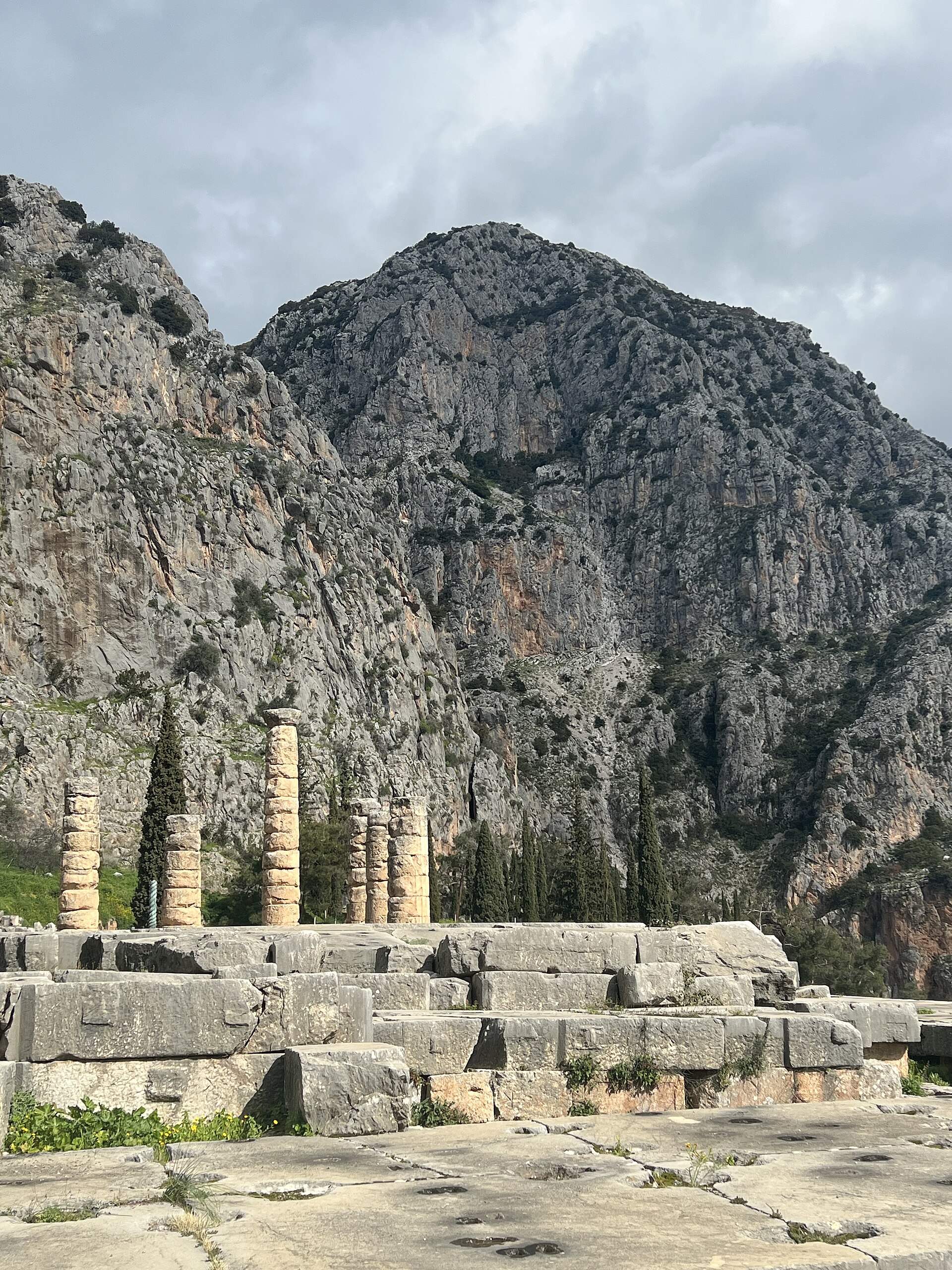
Delphi served as Apollo's most important sanctuary and the religious centre of the Greek world through its famous Oracle, international games, and treasure houses built by various Greek cities to honour the god whilst displaying their wealth and piety. The site's dramatic mountain setting enhanced its sacred atmosphere whilst providing appropriate grandeur for international religious activities.
The Delphic sanctuary complex included the Temple of Apollo, the theatre where musical competitions occurred, the stadium for athletic contests, and numerous monuments and dedications that created comprehensive religious environment serving both local worship and international pilgrimage that strengthened Greek cultural unity whilst promoting Apollo's influence.
Delos: The Sacred Birthplace
The island of Delos maintained significance as Apollo's birthplace whilst serving as centre for the Delian League and international festivals that celebrated the god through musical competitions, religious ceremonies, and diplomatic activities that combined worship with political cooperation among Greek cities and allied states.
Delos's sacred status provided neutral ground for international religious activities whilst demonstrating how religious centres could serve diplomatic functions through shared worship that transcended political divisions whilst promoting cultural cooperation and peaceful interaction among diverse Greek communities.
Regional Sanctuaries and Local Traditions
Apollo sanctuaries throughout the Greek world, including important sites at Didyma, Claros, and Aegina, developed distinctive local traditions whilst maintaining connections with broader Apollo worship through shared mythological frameworks and religious practices that preserved both local identity and cultural unity within Greek religious tradition.
These regional variations demonstrated religious flexibility whilst showing how universal deities could serve particular community needs through local adaptations that addressed specific cultural concerns whilst maintaining authentic religious connections with broader Greek spiritual traditions and theological understanding.
Major Apollo Sanctuaries
- Delphi: Supreme oracle and Panhellenic sanctuary
- Delos: Sacred birthplace and festival centre
- Didyma: Important Ionian oracle site
- Claros: Oracle centre in Asia Minor
- Aegina: Island sanctuary with healing functions
- Bassae: Mountain temple with architectural significance
Festivals and Religious Celebrations
The Pythian Games at Delphi
The Pythian Games, held every four years at Delphi, combined athletic competition with musical contests that honoured Apollo whilst providing Panhellenic festivals that promoted Greek cultural unity through shared religious celebration and competitive achievement. These games rivalled the Olympic Games in prestige whilst emphasising artistic alongside athletic excellence.
The integration of musical and athletic competition reflected Apollo's comprehensive influence whilst demonstrating how religious festivals could serve both spiritual and cultural functions through celebrations that promoted excellence whilst strengthening community bonds and cultural identity across the Greek world.
Musical Competitions and Artistic Excellence
The Pythian musical contests featured competitions in lyre-playing, singing, and poetic composition that attracted artists from throughout the Greek world whilst establishing standards for artistic excellence and cultural achievement. These competitions influenced Greek education whilst promoting artistic innovation within traditional frameworks that preserved cultural heritage.
The emphasis on artistic competition demonstrated Apollo's role in promoting cultural development whilst showing how religious festivals could serve educational purposes through public performances that displayed artistic achievement whilst inspiring continued creative excellence and cultural advancement.
The Delia and Delian Festivals
The festivals held on Delos celebrated Apollo's birth whilst providing occasions for international Greek cooperation through religious observance that transcended political divisions. These celebrations featured processions, sacrifices, musical performances, and athletic competitions that strengthened cultural bonds whilst promoting peaceful interaction among Greek communities.
The Delian festivals demonstrated how religious celebrations could serve diplomatic functions whilst maintaining spiritual authenticity through worship that addressed both religious needs and political objectives that required cultural cooperation and mutual understanding among diverse Greek cities and allied states.
Local Festivals and Seasonal Celebrations
Apollo festivals throughout the Greek world adapted universal themes to local circumstances whilst maintaining connections with broader religious traditions through shared mythological content and ritual practices that preserved cultural unity whilst accommodating regional preferences and community needs.
These local adaptations demonstrated religious flexibility whilst showing how universal deities could serve particular community functions through festivals that addressed specific local concerns whilst maintaining authentic religious connections with broader Greek cultural traditions and spiritual understanding.
Apollo in Greek Art and Literature
Classical Sculpture and Artistic Representation
Apollo became one of the most frequently represented deities in Greek art through sculptures that established ideals of masculine beauty, divine perfection, and youthful grace. The Archaic kouros statues and classical masterpieces like the Apollo Belvedere created lasting models for representing divine beauty whilst demonstrating Greek artistic achievement and cultural values.
The evolution of Apollo's artistic representation from archaic to classical styles reflects changing artistic techniques whilst showing how religious art could serve both devotional and aesthetic purposes through representations that inspired worship whilst establishing cultural standards for beauty and artistic excellence.
Literary Traditions and Poetic Influence
Apollo appeared frequently in Greek literature from Homer's epics through classical tragedy and Hellenistic poetry whilst inspiring literary achievement through divine patronage that connected artistic creation with religious devotion. The Homeric Hymn to Apollo represents one of the finest examples of religious poetry whilst demonstrating literary techniques and cultural values.
The literary development of Apollo's character influenced subsequent European literature whilst establishing frameworks for representing divine inspiration, artistic creation, and the relationship between human achievement and divine guidance that remained influential throughout Western cultural development and artistic tradition.
Pottery Painting and Decorative Arts
Apollo's mythological adventures provided popular subjects for Greek pottery painters whilst enabling artistic innovation and narrative representation that combined religious content with aesthetic pleasure and cultural education through visual storytelling that preserved mythological knowledge whilst demonstrating artistic skill and cultural sophistication.
The popularity of Apollo imagery in decorative arts demonstrated his cultural significance whilst showing how religious themes could enhance everyday objects through artistic decoration that brought divine presence into domestic and social contexts through beautiful and meaningful imagery that connected daily life with spiritual significance.
Apollo in Greek Art
- Archaic Kouroi: Early idealized male statues
- Classical Sculpture: Perfect proportions and divine beauty
- Apollo Belvedere: Roman copy of Greek masterpiece
- Pottery Painting: Mythological scenes and religious narratives
- Temple Decoration: Architectural sculpture and relief work
- Coin Images: Divine representation in monetary art
Philosophical Interpretations and Theological Development
Platonic Philosophy and Divine Reason
Plato's philosophical treatment of Apollo emphasised the god's connection to rational thought, divine order, and intellectual enlightenment whilst developing theoretical frameworks that connected religious concepts with philosophical inquiry. The Delphic maxims "Know thyself" and "Nothing in excess" became central to Greek philosophical tradition through Apollonian influence.
The Platonic interpretation of Apollo as patron of rational inquiry influenced subsequent philosophical development whilst demonstrating how religious concepts could inspire systematic thinking about knowledge, reality, and human nature that addressed both spiritual and intellectual concerns through integrated approaches to understanding existence and meaning.
Stoic Interpretations and Cosmic Order
Stoic philosophers developed interpretations of Apollo that emphasized his role in maintaining cosmic order and rational governance whilst providing philosophical frameworks for understanding divine providence and natural law that governed both physical universe and human moral development through systematic philosophical investigation.
The Stoic emphasis on Apollo's rational aspects influenced Roman imperial ideology whilst demonstrating how Greek religious concepts could serve political purposes through philosophical interpretation that connected divine authority with governmental legitimacy and social order that served both spiritual and practical political functions.
Allegorical Traditions and Symbolic Interpretation
Later ancient and medieval interpreters developed allegorical readings of Apollo myths that found philosophical and moral lessons whilst demonstrating how mythological narratives could serve educational purposes through symbolic interpretation that preserved cultural heritage whilst adapting ancient wisdom to contemporary intellectual and spiritual needs.
These allegorical traditions influenced subsequent European intellectual development whilst establishing interpretive methods that enabled continued engagement with classical culture through intellectual frameworks that preserved cultural continuity whilst allowing for religious and philosophical innovation and adaptation.
Roman Apollo and Cultural Transmission
Roman Adoption and Adaptation
The Romans adopted Apollo directly from Greek religion without significant name change whilst adapting his worship to serve Roman cultural and political needs through emphasis on his roles as patron of poetry, prophecy, and imperial authority that connected divine favour with Roman political success and cultural achievement.
Roman Apollo worship demonstrated cultural continuity whilst showing how religious concepts could transcend ethnic boundaries through adaptation that preserved essential characteristics whilst serving new political and cultural functions that addressed specifically Roman needs and aspirations within broader Mediterranean cultural development.
Imperial Patronage and Political Symbolism
Roman emperors, particularly Augustus, promoted Apollo worship as imperial religion whilst using the god's imagery to support political authority through divine patronage claims and cultural symbolism that connected imperial power with divine favour and artistic achievement that served both religious and political purposes.
The political use of Apollo imagery demonstrated how religious concepts could serve governmental purposes whilst showing how ancient deities could adapt to new political circumstances through cultural interpretation that maintained religious meaning whilst serving contemporary political needs and imperial ideology.
Literary and Artistic Influence
Roman poets including Virgil, Ovid, and Horace developed Greek Apollo traditions whilst creating new literary works that influenced subsequent European culture through preservation and innovation that maintained classical heritage whilst adapting ancient themes to Roman cultural preferences and artistic techniques that served both cultural and political purposes.
This cultural transmission established lasting influences on Western literature and art whilst demonstrating how classical culture could serve both preservational and innovative purposes through creative adaptation that maintained cultural continuity whilst enabling artistic development and cultural evolution that addressed contemporary needs whilst preserving ancient wisdom.
Medieval and Renaissance Legacy
Christian Reinterpretation and Allegorical Reading
Medieval Christian scholars developed complex allegorical interpretations of Apollo that found moral and spiritual lessons whilst preserving classical cultural heritage through intellectual frameworks that enabled continued study of pagan literature within Christian cultural contexts that required careful theological justification and moral interpretation that maintained both scholarly rigor and religious orthodoxy.
These allegorical traditions enabled preservation of classical culture whilst demonstrating how ancient wisdom could serve Christian purposes through interpretive methods that maintained cultural heritage whilst adapting classical content to contemporary religious and moral frameworks that preserved both intellectual richness and spiritual authenticity within medieval cultural synthesis.
Renaissance Revival and Humanist Culture
Renaissance artists, writers, and scholars rediscovered classical Apollo traditions whilst creating new works that celebrated reason, beauty, and artistic achievement through classical imagery adapted to contemporary cultural concerns and artistic techniques that combined ancient wisdom with modern innovation and cultural development that served both aesthetic and intellectual purposes.
The Renaissance revival established lasting influences on European culture whilst demonstrating how classical heritage could inspire contemporary creativity through cultural synthesis that preserved ancient wisdom whilst enabling artistic innovation and cultural development that served both aesthetic and educational purposes within humanist cultural frameworks.
Continuing Artistic and Literary Inspiration
Artists and writers from the Renaissance through contemporary times have found inspiration in Apollo imagery whilst developing new artistic vocabularies and cultural expressions that demonstrate the continuing relevance of ancient symbols and stories for addressing universal themes about knowledge, beauty, and artistic achievement that transcend specific historical periods and cultural circumstances.
This continuing artistic influence validates the universality of Apollo's themes whilst showing how ancient cultural heritage can inspire contemporary creativity through timeless concepts that remain relevant for exploring fundamental aspects of human experience and cultural development across diverse historical and cultural contexts.
Modern Interpretations and Contemporary Relevance
Psychological and Anthropological Analysis
Modern scholars interpret Apollo through psychological and anthropological frameworks that explore how ancient religious concepts addressed universal human needs whilst providing cultural mechanisms for understanding and developing intellectual capabilities, artistic talents, and social relationships that remain relevant for contemporary psychological and cultural analysis and development.
These scholarly approaches demonstrate how ancient wisdom can inform modern understanding whilst showing how religious concepts can serve both spiritual and practical purposes through cultural frameworks that address fundamental aspects of human experience and social organisation that transcend specific historical circumstances whilst providing guidance for contemporary challenges and opportunities.
Scientific and Medical Perspectives
Contemporary medical and scientific communities continue to honour Apollo through symbols and terminology that reflect his ancient role as patron of healing whilst recognising how ancient medical traditions contributed to modern healthcare development through empirical observation and systematic treatment approaches that combined practical knowledge with holistic understanding of health and wellness.
The continuing medical relevance of Apollonian symbolism demonstrates how ancient wisdom can inform contemporary practice whilst showing how historical medical traditions can contribute to modern healthcare development through principles that remain valid for understanding disease, health, and therapeutic relationships between practitioners and patients.
Contemporary Spiritual and Neo-Pagan Movements
Modern spiritual practitioners have revived interest in Apollo worship whilst developing contemporary religious practices that adapt ancient traditions to modern spiritual needs and cultural contexts through creative synthesis that maintains authentic connection with classical heritage whilst addressing contemporary spiritual and cultural concerns that require adapted religious frameworks and practices.
These contemporary movements demonstrate continuing appeal of ancient spiritual wisdom whilst showing how classical religious concepts can serve modern spiritual needs through cultural adaptation that preserves essential characteristics whilst enabling contemporary relevance and practical application that addresses current spiritual and cultural challenges and opportunities.
"Know thyself" - The famous Delphic maxim associated with Apollo's temple, representing the god's emphasis on self-knowledge and rational understanding
Conclusion
Apollo stands as perhaps the most culturally influential deity in the Greek pantheon, embodying the highest aspirations of classical civilisation through his dominion over light, reason, artistic achievement, and divine knowledge. His comprehensive influence on religion, philosophy, art, and culture established lasting foundations for Western intellectual and spiritual development that continue to shape contemporary understanding of knowledge, beauty, and human excellence.
The complexity and apparent contradictions within Apollo's divine nature reflect ancient understanding of reality's multifaceted character whilst demonstrating how religious concepts could address diverse aspects of human experience through theological frameworks that encompassed both rational thought and inspired creativity, individual achievement and social responsibility, divine authority and human autonomy.
Apollo's role as patron of the Delphic Oracle established one of antiquity's most important religious institutions whilst demonstrating how divine guidance could serve both spiritual and practical purposes through oracular wisdom that influenced political decisions, personal choices, and cultural development throughout the ancient Mediterranean world and beyond.
The artistic and literary traditions associated with Apollo created lasting influences on Western culture whilst establishing aesthetic standards and creative frameworks that connected individual artistic achievement with divine inspiration and cultural service. These traditions continue to provide models for understanding the relationship between creativity and spiritual insight that remain relevant for contemporary artistic and cultural development.
Perhaps most importantly, Apollo's emphasis on rational inquiry, self-knowledge, and intellectual excellence established educational and philosophical principles that became central to Western intellectual tradition whilst demonstrating how religious concepts could serve educational purposes through integration of spiritual wisdom with systematic investigation of natural and human phenomena.
The enduring influence of Apollo throughout subsequent Western culture, from Roman imperial religion through medieval allegory to Renaissance humanism and contemporary spiritual movements, validates the universality of his ancient insights whilst showing how classical religious heritage can continue to serve contemporary needs through creative adaptation and thoughtful interpretation.
In our contemporary world, where questions about knowledge, truth, artistic value, and spiritual meaning continue to challenge individuals and societies, Apollo's ancient wisdom provides valuable perspectives on the integration of rational inquiry with aesthetic appreciation, individual excellence with social responsibility, and human achievement with divine guidance that remain relevant for addressing current cultural and spiritual challenges.
The legacy of Apollo reminds us that the pursuit of knowledge, beauty, and excellence requires both intellectual rigor and spiritual openness whilst demanding careful balance between confidence and humility, individual achievement and collective responsibility, that enables genuine human flourishing and cultural development within frameworks that honour both human potential and divine mystery that continues to inspire wonder, creativity, and wisdom across diverse cultural and historical circumstances.