Origins
The precise origins of the Olympic Games are uncertain, but tradition dates their formal beginning to the eighth century BCE. According to Greek myth, the Games were…
Heracles · Pelops · OlympiaRead this section →Olympia · Honour · Excellence
Every four years, athletes and spectators gathered at Olympia to honour Zeus through ritual, rivalry and extraordinary physical achievement.
More than sport
The Olympic Games were the most famous and prestigious athletic festival of the ancient Greek world. Held in honour of Zeus at Olympia in the western Peloponnese, the Games brought together competitors and spectators from across Greece and beyond. For centuries, they symbolised not only physical excellence but also religious devotion, civic pride,…
The Olympic Games were first and foremost a religious festival. They were held at the sanctuary of Zeus, where a massive temple and a celebrated statue of the god stood as focal points of worship. Athletes and spectators participated in sacrifices and rituals to honour Zeus and seek his favour.
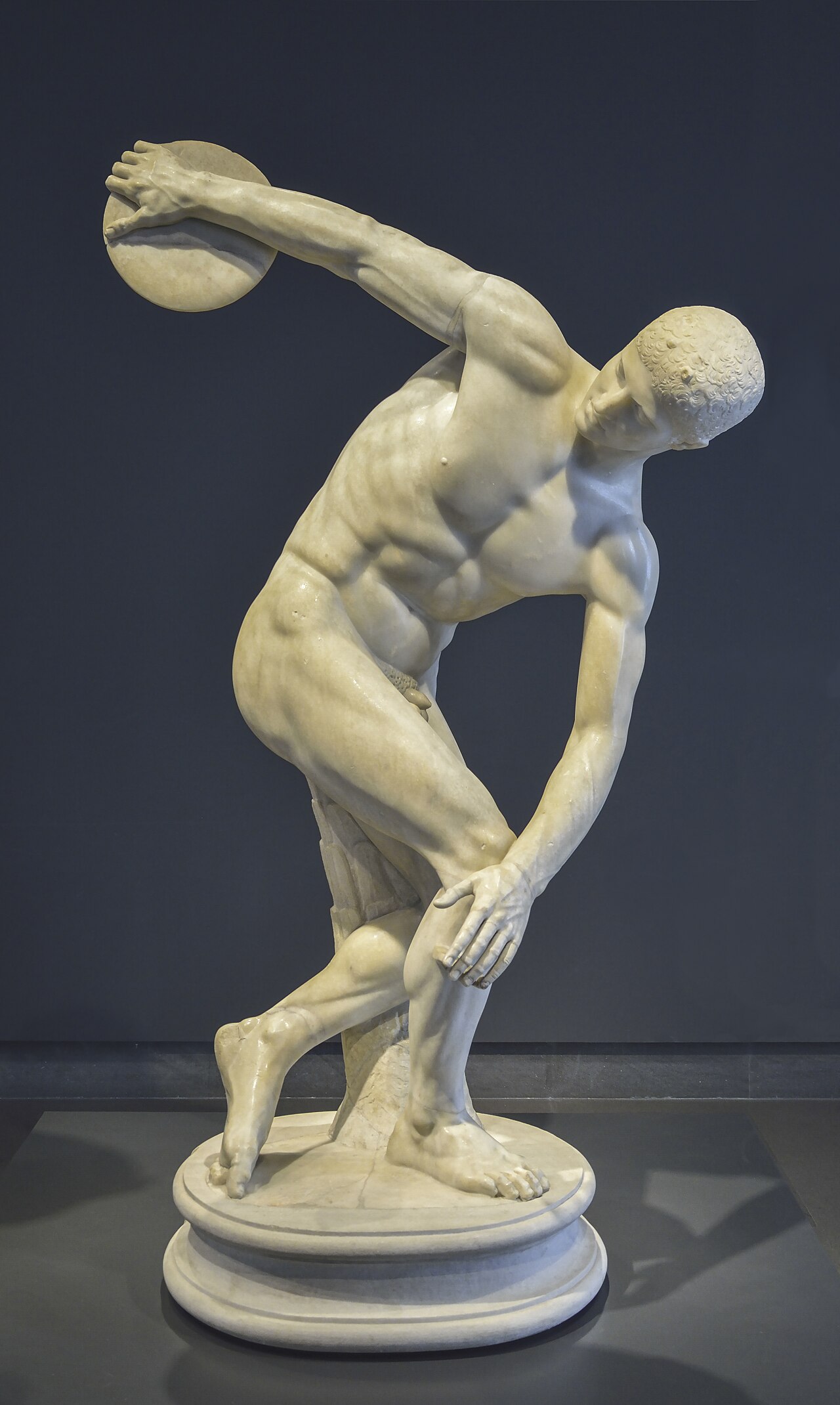
The athlete
The earliest recorded Olympic event was a single foot race known as the stadion. Over time, additional events were introduced, including longer races, wrestling, boxing, the pentathlon, chariot racing, and the pankration, a demanding combat sport.
The Olympic tradition
The precise origins of the Olympic Games are uncertain, but tradition dates their formal beginning to the eighth century BCE. According to Greek myth, the Games were…
Heracles · Pelops · OlympiaRead this section →The Olympic Games were first and foremost a religious festival. They were held at the sanctuary of Zeus, where a massive temple and a celebrated statue of the god st…
Zeus · Olympiad · TruceRead this section →The earliest recorded Olympic event was a single foot race known as the stadion. Over time, additional events were introduced, including longer races, wrestling, box…
Racing · Pentathlon · CombatRead this section →Participation in the ancient Olympic Games was limited to free Greek males. Women were not permitted to compete, and married women were generally excluded from atten…
Athletes · City-states · HeraiaRead this section →A sacred gathering
The precise programme changed over time, but sport was always interwoven with worship, civic display and communal memory.
Arrival and oath
Athletes, trainers and judges processed into the sanctuary, registered and swore to compete honourably.
Youth and horses
Boys’ events and races in the hippodrome announced that physical excellence had many forms.
The sacred centre
A great public sacrifice and shared feast placed religious obligation at the heart of the festival.
The stadium
Footraces, combat sports and the pentathlon brought the most intense athletic competition.
Honour and memory
Winners received olive wreaths before celebrations carried their fame back to their home cities.
Ekecheiria
The Olympic Games were first and foremost a religious festival. They were held at the sanctuary of Zeus, where a massive temple and a celebrated statue of the god stood as focal points of worship. Athletes and spectators participated in sacrifices and rituals to honour Zeus and seek his favour.
Although the Games were religious in origin, they also carried political significance. City-states displayed their strength and prestige through athletic success. Victories were celebrated with statues, poetry, and public honours.
Fame and exclusion
The ancient Games celebrated a demanding ideal, but access to that ideal was tightly bounded by gender, legal status, resources and tradition.
Participation in the ancient Olympic Games was limited to free Greek males. Women were not permitted to compete, and married women were generally excluded from attending the Games. However, women did have their own festival, the Heraia…
Although the Games were religious in origin, they also carried political significance. City-states displayed their strength and prestige through athletic success. Victories were celebrated with statues, poetry, and public honours.
The legacy of the ancient Olympic Games endured long after their abolition. The ideals of athletic excellence, fair competition, and international participation inspired the modern revival of the Games in the nineteenth century.
The prize
Not gold, but a wreath—and a name remembered.Victory at Olympia outlived the race
Continue the journey