History · Ancient Greece
Ancient Assos
Assos was an ancient Greek city located in the Troad region of north-western Asia Minor, on the coast of the Aegean Sea. Perched dramatically upon a volcanic hill overlooking the Gulf of Adramyttium, Assos combined strategic stren…
Assos was an ancient Greek city located in the Troad region of north-western Asia Minor, on the coast of the Aegean Sea. Perched dramatically upon a volcanic hill overlooking the Gulf of Adramyttium, Assos combined strategic strength, maritime access, and intellectual prestige. Although never a dominant imperial power, the city achieved lasting importance through its fortifications, its role in regional politics, and its association with philosophical activity in the Classical period.
Introduction
The history of Assos reflects the broader patterns of the Greek world in Asia Minor: colonisation, Persian rule, shifting alliances during the Classical era, incorporation into Hellenistic kingdoms, and eventual integration into the Roman Empire. Its elevated acropolis, crowned by a temple dedicated to Athena, remains one of the most striking archaeological sites in the eastern Aegean.
Geographic Setting and Strategic Position
Assos occupied a commanding location on a steep hill rising above the surrounding plain and coastline. This position provided natural defensive advantages, with sheer slopes protecting much of the settlement. From its acropolis, inhabitants could observe maritime traffic across the Aegean and monitor movement inland toward the Troad and the interior of Anatolia.
The city’s harbour connected it to wider trade networks across the Aegean Sea. Assos lay near important routes linking the Greek cities of Asia Minor with the Hellespont and the Black Sea beyond. Its geography therefore combined military security with commercial opportunity.
Foundation and Early Development
Assos was founded as a Greek colony during the Archaic period, traditionally associated with settlers from Lesbos. The Aeolian Greeks who colonised parts of north-western Asia Minor established communities along the coast, and Assos became one of the significant centres within this network.
In the sixth century BCE, the region fell under the control of the Persian Empire. Like many Ionian and Aeolian cities, Assos retained local administration while acknowledging Persian authority. The city’s strategic value ensured that it remained a site of interest within the imperial framework.
Political History in the Classical Period
During the Classical period, Assos experienced shifting political circumstances shaped by the rivalry between Persia and the Greek city-states. Following the Persian Wars, many cities in Asia Minor joined the Athenian-led Delian League, seeking protection and autonomy from Persian control.
Assos was at times influenced by Athenian power, though its position in the northern Aegean meant that it also navigated complex local dynamics. Control of the Troad region was frequently contested, particularly during the later stages of the Peloponnesian War and in the conflicts that followed.
In the fourth century BCE, Assos came under the rule of a local dynast, Hermias of Atarneus. Hermias established himself as a regional ruler and maintained relations with leading Greek intellectuals. His rule brought the city into a period of relative stability and cultural significance.
Association with Aristotle and Philosophy
One of the most notable aspects of Assos’ history is its connection with the philosopher Aristotle. After leaving the Academy in Athens, Aristotle spent time in Assos during the mid-fourth century BCE. Under the patronage of Hermias, Aristotle and his associates conducted philosophical and scientific study.
This period marked an important stage in Aristotle’s intellectual development. Assos thus became part of the early history of one of the most influential thinkers in Western philosophy. The city’s association with philosophical inquiry enhanced its cultural prestige.
The presence of philosophical activity in Assos reflects the broader pattern of intellectual exchange in the Greek world, where ideas travelled alongside merchants, soldiers, and diplomats.
Hellenistic Period and Urban Development
Following the conquests of Alexander the Great, Assos became part of the Hellenistic world shaped by his successors. Control of Asia Minor shifted between rival kingdoms, including the Seleucids and later the Attalids of Pergamon.
During this period, Assos experienced urban development and fortification. The city walls, built of massive stone blocks, are among the best preserved in the region. These fortifications underscore the continuing importance of defence in a landscape marked by political uncertainty.
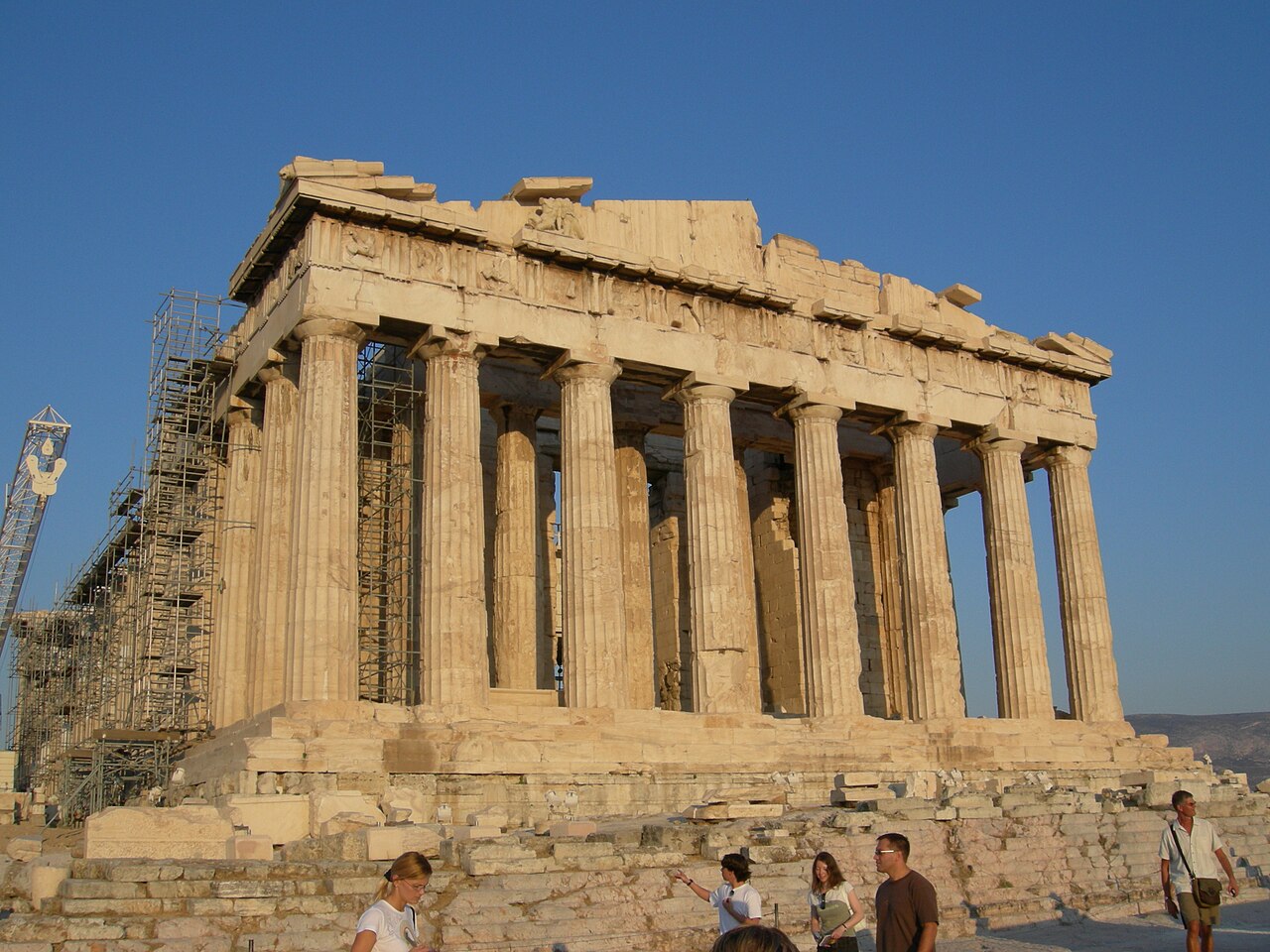
The Temple of Athena, situated atop the acropolis, dates from the Archaic period but remained a focal point of civic and religious life. Its Doric architecture, adapted to local conditions, demonstrates both continuity and regional variation in Greek building traditions.
Economy and Trade
Assos’ economy relied upon agriculture, maritime trade, and stone resources. The surrounding countryside supported cultivation, while the harbour facilitated exchange with other Aegean cities.
The region was also known for its stone, which was used in construction and exported to neighbouring areas. Maritime trade connected Assos to broader economic networks, ensuring its participation in the flow of goods across the eastern Mediterranean.
Though not a commercial giant like Corinth or Miletus, Assos maintained steady economic relevance due to its location and resources.
Roman Period and Later History
With the expansion of Roman authority into Asia Minor, Assos became part of the Roman provincial system. Under Roman rule, the city retained local institutions but no longer functioned as an independent political actor.
The Roman period brought stability and integration into imperial trade routes. Assos continued to be inhabited, and its harbour remained active. Over time, however, larger urban centres overshadowed it, and its prominence gradually declined.
In later antiquity, the city remained occupied, reflecting the enduring viability of its geographic position.
Religion and Civic Identity
The Temple of Athena dominated the skyline of Assos and symbolised civic identity. As in other Greek cities, religion was deeply intertwined with political and social life. Festivals, sacrifices, and rituals reinforced communal bonds and affirmed the city’s relationship with the divine.
The elevated temple, visible from sea and land, projected both spiritual and political authority. It served as a reminder of the city’s autonomy and its connection to the wider Greek religious tradition.
Legacy
Assos is remembered for its dramatic setting, impressive fortifications, and intellectual associations. Its link to Aristotle places it within the broader history of philosophy, while its architectural remains provide insight into regional variations of Greek urban design.
Although it never dominated the Greek world, Assos illustrates the diversity of the polis system. It was a fortified coastal city balancing trade, defence, and cultural engagement within a shifting political landscape.
Conclusion
Assos stands as a testament to the adaptability of Greek city-states in Asia Minor. Founded by colonists, shaped by Persian and Hellenistic rule, and later incorporated into the Roman Empire, the city navigated centuries of change whilst preserving a distinct civic identity.
Its commanding acropolis, crowned by the Temple of Athena, continues to symbolise its historical role as a place where strategy, commerce, and intellectual life converged. Through its architecture and its association with philosophy, Assos remains an important chapter in the history of the ancient Greek world.