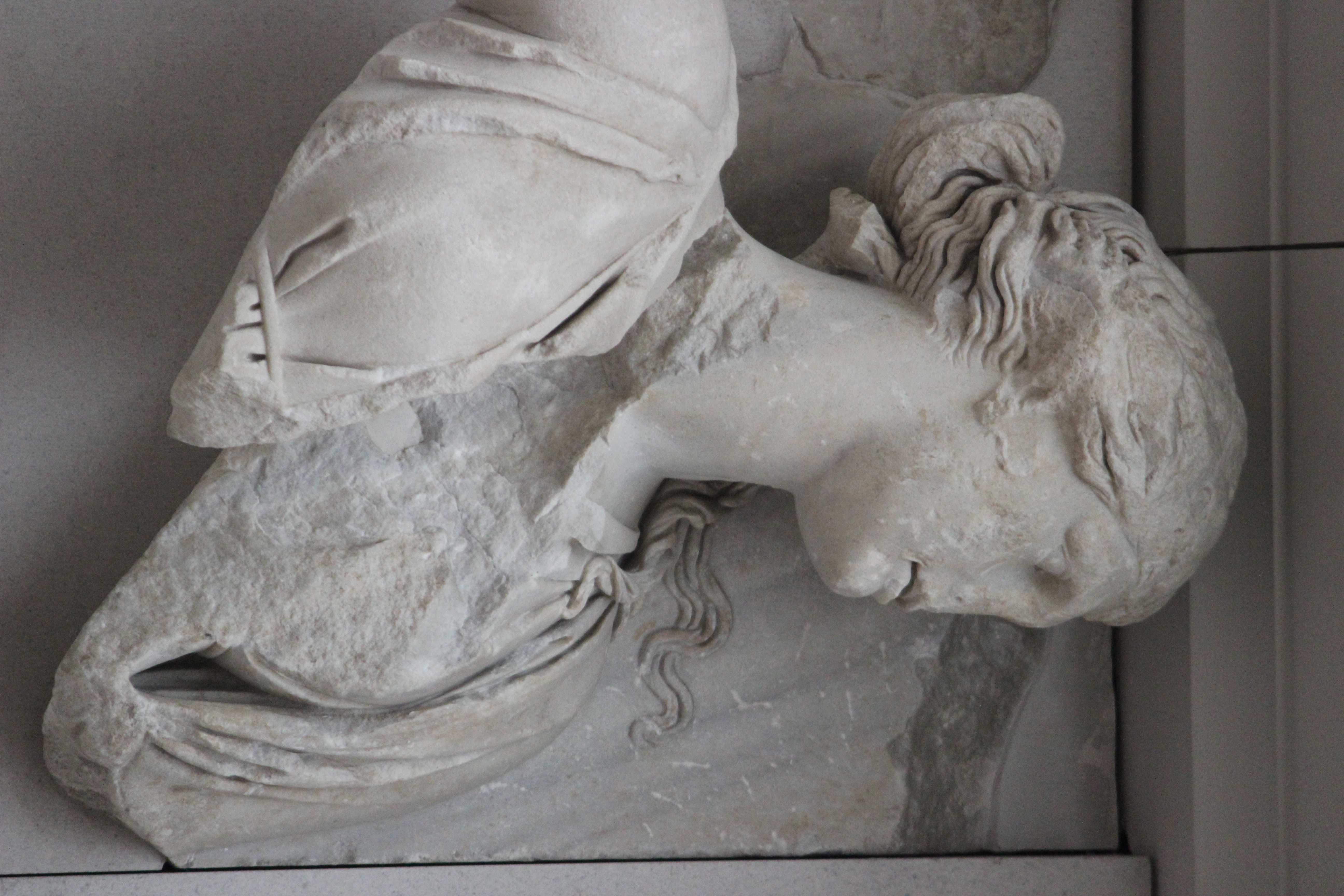
Theia – The Titan Goddess of Light and Heavenly Brilliance
Theia was one of the ancient Titan goddesses of Greek mythology, associated with divine light, heavenly brilliance, sight, and the radiant splendour of the celestial bodies. As the mother of Helios, the Sun; Selene, the Moon; and Eos, the Dawn, she occupied an important position in the mythological understanding of the heavens. Through her children, Theia represented the luminous forces that illuminated the world, governed the passage of day and night, and brought beauty and order to the skies.
Belonging to the first generation of Titans, Theia was among the primordial divine beings who existed before the Olympian gods established their supremacy. Although she did not feature prominently in the dramatic conflicts and adventures of Greek mythology, her importance lay in her connection to light and the celestial powers that shaped the natural world.
Theia was sometimes known by the alternative name Euryphaessa, meaning "Wide-Shining" or "Far-Shining", a title that emphasised her radiant nature. Her mythology reflects the ancient Greek fascination with the relationship between divine power, heavenly illumination, and the ability to perceive the world through sight.
The Origins of Theia
According to the ancient Greek poet Hesiod, Theia was one of the twelve original Titans, the children of Gaia, the primordial goddess of the Earth, and Uranus, the personification of the Sky. These powerful beings formed an early generation of Greek deities and represented fundamental aspects of the cosmos.
Theia's brothers included Oceanus, Coeus, Crius, Hyperion, Iapetus, and Cronus. Her sisters were Tethys, Rhea, Themis, Mnemosyne, and Phoebe. Together, the Titans belonged to the divine generation that preceded the Olympian gods and played a central role in the mythological origins of the universe.
Theia's parentage connected her directly to the two great primordial powers of Earth and Sky. This relationship reflected her association with the heavens and the radiant light that descended upon the world.
Unlike some of her siblings, whose myths involved rebellion, imprisonment, or the struggle for divine supremacy, Theia was primarily remembered through her divine lineage and her association with the celestial bodies.
Theia and Hyperion
Theia became the consort of her brother Hyperion, a Titan whose name is commonly interpreted as "He Who Goes Above" or "He Who Watches from Above". Hyperion was closely associated with the heavenly realm and became the father of three of the most important celestial deities in Greek mythology.
The union of Theia and Hyperion produced Helios, Selene, and Eos. These three divine children personified the Sun, the Moon, and the Dawn, forming a powerful family whose activities explained the daily cycles of the heavens.
In Hesiod's Theogony, Theia is identified as the mother of these radiant deities, establishing her importance within the genealogy of the Greek gods. The relationship between Theia and Hyperion symbolically united heavenly height with divine brilliance, producing the celestial powers that illuminated the world.
Although Greek mythology preserves relatively few stories about their relationship, the importance of their children ensured that Theia and Hyperion remained significant figures in the ancient Greek understanding of the cosmos.
Theia – Goddess of Light and Radiance
Theia is commonly described as a Titan goddess of light, brilliance, and shining splendour. Her identity is closely connected with the radiant qualities of the Sun, Moon, and Dawn, which were personified by her children.
In Greek mythology, light possessed profound symbolic importance. It made the world visible, revealed the beauty of nature, and distinguished the ordered heavens from darkness. Theia's association with brilliance therefore placed her within a broader divine framework in which illumination represented beauty, perception, and celestial power.
Her alternative name Euryphaessa strengthened this connection. The name evokes the idea of widespread radiance, suggesting a goddess whose brilliance extended across the heavens.
However, surviving ancient sources provide little evidence of a separate mythology in which Theia personally controlled sunlight or governed the movement of celestial bodies. Those functions were primarily associated with her children. Her character as a goddess of heavenly light is largely understood through her name, her divine family, and later interpretations of her significance.
Theia and the Gift of Sight
One of the most interesting aspects of Theia's divine identity is her association with sight and visual perception. In ancient Greek thought, vision was closely connected with light, since objects could only be seen when illuminated.
The Greek poet Pindar provides an important reference to Theia in his Fifth Isthmian Ode, invoking her in connection with the brilliance and value of gold. In this poetic context, Theia is linked to the splendour that makes precious things shine and appear beautiful.
This association contributed to later interpretations of Theia as a goddess connected with the shining qualities of objects and the power of vision. Her relationship with sight was therefore understood as an extension of her association with radiance and illumination.
Nevertheless, Theia was not the only Greek deity connected with light or perception, and the surviving literary evidence does not establish a detailed independent cult devoted to her as the universal giver of sight.
Her symbolic importance lies in the relationship between light and the visible world, an idea that occupied an important place in ancient Greek philosophy, poetry, and religious imagination.
Helios – The Radiant Sun God
Helios was the son of Theia and Hyperion and the divine personification of the Sun. He was one of the most prominent celestial deities in Greek mythology, responsible for bringing daylight to the world through his daily journey across the heavens.
Ancient Greek poets described Helios travelling across the sky in a magnificent chariot drawn by fiery horses. Each morning, he rose in the east and journeyed towards the west, illuminating the Earth with his radiant brilliance.
At the end of the day, Helios descended beyond the western horizon. Some ancient traditions described his return to the east during the night in a golden vessel, allowing him to begin his journey again at dawn.
Helios was also regarded as an all-seeing deity because his position in the heavens allowed him to witness events occurring across the world. In the Homeric Hymn to Demeter, Helios possesses knowledge of Persephone's abduction and reveals important information about her disappearance.
Through Helios, Theia's association with heavenly light was expressed in its most powerful and visible form. The Sun brought warmth, daylight, and the conditions necessary for life, making her son one of the most significant figures in the Greek celestial order.
Selene – The Goddess of the Moon
Selene, the daughter of Theia and Hyperion, personified the Moon. She represented the gentle illumination of the night sky and was closely associated with the changing lunar cycle.
In Greek poetry, Selene was often imagined as a beautiful goddess travelling across the heavens in a chariot drawn by horses. Her pale radiance illuminated the darkness, contrasting with the intense brilliance of her brother Helios.
Selene was particularly famous for her love of Endymion, a beautiful mortal youth who, according to several traditions, remained in an extraordinary state of sleep or ageless repose. Their story became one of the most romantic myths associated with the Moon.
The changing appearance of the Moon was important to the ancient Greeks because lunar cycles influenced calendars, religious festivals, and the measurement of time.
As the mother of Selene, Theia was connected with the celestial light that continued to shine after sunset. Her daughter represented the quieter and more mysterious aspect of heavenly illumination.
Eos – The Goddess of the Dawn
Eos was the third child of Theia and Hyperion. She personified the Dawn, appearing each morning to announce the arrival of daylight and the coming journey of Helios across the sky.
Greek poets frequently described Eos using the celebrated epithet "rosy-fingered", an image suggesting the pink and golden colours that spread across the horizon before sunrise.
Eos was imagined as a beautiful winged goddess who emerged from the eastern reaches of the world and opened the gates of heaven for the Sun. Her arrival marked the transition from darkness to daylight.
Among the best-known myths involving Eos was her love for Tithonus, a mortal prince of Troy. According to the story, Eos asked Zeus to grant Tithonus immortality but neglected to request eternal youth. As a result, Tithonus continued to age despite being unable to die.
The myth became a powerful reflection on the relationship between mortality, ageing, and the limitations of divine gifts.
Through Eos, Theia's heavenly lineage was associated with renewal, new beginnings, and the daily return of light to the world.
Theia and the Cosmic Order
Theia's three children formed a celestial family whose activities symbolised the recurring patterns of the natural world. Eos announced the coming day, Helios illuminated the heavens, and Selene brought light to the night.
These divine figures helped the ancient Greeks explain the changing appearance of the sky and the passage of time. Their regular movements represented continuity, renewal, and the ordered rhythm of the cosmos.
Theia's position as their mother gave her an important place within this mythological structure. Although she was not generally portrayed as directing their journeys, her divine lineage connected her with the fundamental cycles of day, night, and dawn.
Greek mythology frequently expressed natural processes through relationships between generations of gods. Theia illustrates this pattern particularly clearly, since her children personified different forms of heavenly illumination.
Her role also demonstrates how the early Titan generation remained important even after the Olympian gods became dominant figures in Greek religion.
Theia and the Titan Generation
The Titans were among the earliest divine rulers and powers in Greek mythology. Their history was shaped by the conflict between successive generations of gods, beginning with the struggle between Uranus and his children.
According to Hesiod, Uranus concealed or confined his offspring within Gaia, causing her great suffering. Gaia eventually encouraged her children to resist their father, and Cronus emerged as the Titan willing to overthrow him.
After Cronus seized power, he became the leading figure among the Titans. His reign eventually ended when Zeus and the younger Olympian gods challenged his authority.
This great conflict became known as the Titanomachy, the war between the Titans and the Olympians. It lasted ten years in Hesiod's account and ended with the victory of Zeus and his allies.
Many Titans who opposed Zeus were defeated and imprisoned in Tartarus, the deep region beneath the world. However, Greek mythology does not state that every Titan fought against the Olympians or suffered the same punishment.
Theia's personal involvement in the Titanomachy is not described in the principal surviving accounts. There is no clear ancient narrative showing her taking part in the fighting or being imprisoned in Tartarus.
Her absence from the conflict narratives suggests that her mythological identity was focused more strongly on divine ancestry and celestial radiance than on political struggles among the gods.
Theia and the Olympian Gods
Although Theia belonged to the older Titan generation, her divine children continued to occupy important positions in the mythological universe after Zeus established his supremacy.
Helios remained the personification of the Sun in many Greek traditions, while Selene and Eos continued to represent the Moon and Dawn. Their existence demonstrates that the transition from Titan to Olympian rule did not involve the complete disappearance of the older divine powers.
The Greek religious world was complex, and divine functions frequently overlapped. Over time, Apollo became increasingly associated with solar light, while Artemis developed strong connections with the Moon. Nevertheless, Helios and Selene retained their distinct identities in ancient literature, religion, and art.
Theia herself was not counted among the twelve Olympians and did not possess a prominent role in the surviving stories of Zeus, Hera, Athena, or the other major Olympian deities.
Instead, she remained a figure of the older cosmic order, remembered primarily as an ancestral goddess whose children illuminated the heavens.
Theia and the Brilliance of Gold
An unusual and distinctive aspect of Theia's mythology is her literary connection with gold and its shining appearance.
In Pindar's Fifth Isthmian Ode, Theia is invoked in a passage celebrating the brilliance and exceptional value of gold. The poet associates her with the splendour through which gold becomes especially beautiful and desirable.
This connection reflects the importance of brightness and visual beauty in ancient Greek descriptions of precious materials. Gold was admired not only for its rarity and value but also for its radiant colour and ability to reflect light.
Later interpretations expanded this poetic association, sometimes describing Theia as a deity who gave gold, silver, and precious stones their brilliance.
Such descriptions should be understood as interpretations of her association with splendour rather than as evidence of a detailed ancient myth in which she physically created or illuminated every precious substance.
Nevertheless, the relationship between Theia and shining gold offers an insight into how the Greeks connected divine power with beauty, wealth, and the visual qualities of the natural world.
Theia and Ancient Greek Religion
Despite her important divine ancestry, Theia was not among the most widely worshipped figures of ancient Greek religion. The surviving evidence for temples, festivals, or organised religious ceremonies specifically dedicated to her is extremely limited.
This distinguishes her from major goddesses such as Athena, Hera, Demeter, and Artemis, who possessed established cult centres and played prominent roles in public religious life.
Theia's significance was primarily preserved through mythological genealogies and poetic references. Hesiod's Theogony provides the principal account of her family, while Pindar offers an important example of her association with brilliance.
Her children, particularly Helios, possessed more recognisable religious identities. Helios was especially important on the island of Rhodes, where he became a principal patron deity and received substantial religious honours.
Although this does not establish a separate cult of Theia, it illustrates the wider religious significance of the celestial family to which she belonged.
Theia in Ancient Greek Literature
Theia appears in relatively few surviving ancient Greek literary works, but those references establish her place within the divine genealogy of the Titans.
Her most important appearance occurs in Hesiod's Theogony, composed around the late eighth or early seventh century BC. Hesiod names Theia among the children of Gaia and Uranus and identifies her as the consort of Hyperion and mother of Helios, Selene, and Eos.
The Homeric Hymn to Helios also preserves a tradition concerning the divine ancestry of the Sun. In this hymn, the mother of Helios is called Euryphaessa, a name commonly identified with Theia.
Pindar's Fifth Isthmian Ode provides another important literary reference, associating Theia with the brilliance and splendour of gold.
These sources reveal that Theia was understood through several related ideas: Titan ancestry, celestial motherhood, divine radiance, and the shining qualities of valuable objects.
Unlike Athena, Aphrodite, or Demeter, however, Theia did not become the central character of an extensive surviving mythological narrative. Her importance emerges through the wider cosmic relationships described by ancient poets.
Theia in Ancient Greek Art
Theia is less frequently represented in surviving ancient Greek art than many other goddesses. There is no widely established set of visual attributes that allows her to be identified as confidently as Athena with her helmet or Artemis with her bow.
Ancient artists devoted much greater attention to her children, particularly Helios and Selene. Helios was commonly represented as a radiant male deity driving a chariot, while Selene appeared as a female figure associated with the Moon and the night sky.
Eos was often depicted as a winged goddess, sometimes shown carrying or pursuing figures connected with her mythology.
Modern artistic representations of Theia frequently portray her as a luminous celestial goddess wearing golden robes, surrounded by sunlight, or crowned with radiant beams. Such images reflect contemporary interpretations of her divine character rather than a securely established ancient iconographic tradition.
Her limited artistic presence does not diminish her mythological importance but demonstrates the difference between divine figures celebrated through dramatic stories and those preserved mainly through genealogy and symbolism.
Theia and the Meaning of Her Name
The name Theia is written in ancient Greek as Θεία, often transliterated as Theia or Thea. It is related to the Greek language of divinity, although its precise interpretation as a proper divine name should be distinguished from broader words meaning "divine" or "goddess".
Her alternative name Euryphaessa is more explicitly connected with brightness. It is usually interpreted as "Wide-Shining", "Far-Shining", or "She Who Shines Widely".
This title is particularly appropriate for the mother of the Sun, Moon, and Dawn, whose light appears across the heavens and illuminates the visible world.
The use of multiple names for divine figures was common in Greek mythology. Different poets and regional traditions could preserve alternative names, descriptions, and genealogical details for the same deity.
In Theia's case, the name Euryphaessa provides an especially strong connection between her identity and the radiant celestial family described in ancient poetry.
Theia and the Symbolism of Heavenly Light
In the broader context of Greek mythology, Theia can be understood as a symbol of heavenly radiance and the continuity of light across the natural world.
Her three children represented the principal forms of illumination visible in the sky: the golden brilliance of the Sun, the silver light of the Moon, and the delicate colours of the Dawn.
These phenomena were essential features of everyday life in the ancient Mediterranean. The rising and setting of the Sun influenced agricultural work, travel, navigation, and daily routines. The Moon helped determine the passage of months, while the Dawn announced the beginning of each new day.
Greek poets often described the heavens through images of beauty, movement, and divine power. Theia's association with radiance connected her to this poetic understanding of the universe.
Her symbolism may also be interpreted in relation to knowledge and perception, since light allows human beings to distinguish forms, recognise their surroundings, and observe the natural world.
These wider meanings are interpretative rather than descriptions of specific actions attributed to Theia in surviving myths, but they help explain why her divine identity remains compelling.
Theia and the Difference Between Titans and Olympians
Theia's mythology illustrates an important feature of ancient Greek religion: the distinction between Titans and Olympians was not simply a division between evil and good deities.
The Titans belonged to an older divine generation, many of whose members represented fundamental cosmic powers or ancestral relationships. The Olympians formed the younger generation associated with the rule of Zeus.
Although the Titanomachy described a violent struggle for supremacy, some Titans and their descendants continued to occupy important places within the cosmos after Zeus became king of the gods.
Theia belonged to this enduring older generation. Her children continued to perform their celestial roles, and their light remained essential to the mythological structure of the world.
Her story therefore represents continuity between successive generations of divine beings rather than a complete replacement of one religious order by another.
Theia in Modern Astronomy
The name Theia has acquired a second meaning in modern scientific discussions of the formation of the Moon.
In planetary science, Theia is the name commonly given to a hypothetical ancient protoplanet that may have collided with the early Earth approximately 4.5 billion years ago.
According to the giant-impact hypothesis, material released by a major collision accumulated around Earth and eventually contributed to the formation of the Moon.
The hypothetical impactor was named Theia because the mythological goddess was the mother of Selene, the Greek personification of the Moon.
The connection provides an example of how ancient mythology continues to influence modern scientific terminology.
Although the giant-impact hypothesis is a leading explanation for the Moon's formation, scientists continue to investigate the exact circumstances of the event, including the impactor's size, composition, and the processes that produced the Moon.
The astronomical use of Theia's name is a modern convention and should not be confused with an ancient Greek belief that the goddess physically created the Moon through a collision with Earth.
The Legacy of Theia
Theia occupies a distinctive place among the divine figures of ancient Greek mythology. She was not celebrated primarily as a warrior, ruler, or participant in dramatic adventures, but as a Titan goddess connected with the brilliance of the heavens.
Her greatest mythological importance comes from her children. Through Helios, Selene, and Eos, she became the divine ancestor of the Sun, Moon, and Dawn, three celestial powers that influenced the daily rhythms of the ancient world.
Her association with light also gave her a symbolic connection with beauty, sight, and the shining qualities of precious materials. Ancient literary references, particularly those preserved by Hesiod and Pindar, provide the foundation for these interpretations.
Although Theia never achieved the widespread cultic prominence of the major Olympian goddesses, her presence within the Titan genealogy reveals how the Greeks imagined the origins of the visible universe.
Her name continues to appear in modern astronomy, literature, mythology, and artistic representations, demonstrating the enduring influence of ancient Greek ideas about the heavens.
Conclusion – The Mother of Celestial Light
Theia was one of the original Titan goddesses, born to Gaia and Uranus and united with Hyperion as the mother of Helios, Selene, and Eos. Through this divine family, she was associated with the brilliant light of the Sun, the gentle radiance of the Moon, and the beautiful colours of the Dawn.
Although relatively few ancient myths describe her individual actions, Theia held an important position within Greek cosmology. Her divine ancestry connected the primordial generation of Titans with the celestial powers that continued to illuminate the world under the rule of Zeus.
Her association with radiance, visual splendour, and the shining qualities of gold gave her a distinctive identity among the ancient deities. She represented an aspect of the Greek mythological imagination in which light was inseparable from beauty, perception, and the ordered movement of the heavens.
Today, Theia remains a fascinating figure whose legacy extends from the poetry of ancient Greece to scientific theories about the origins of the Moon. As the mother of the Sun, Moon, and Dawn, she continues to symbolise the heavenly brilliance that has inspired human curiosity since antiquity.