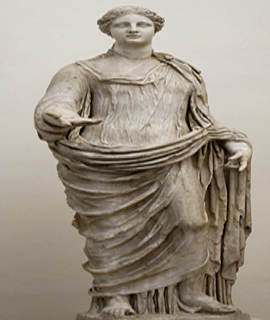
Demeter (Δημήτηρ, Dēmḗtēr)
The Great Mother Goddess of Agriculture, Harvest, and the Sacred Earth
Demeter stands as one of the most fundamental and beloved deities of the ancient Greek pantheon, embodying humanity's essential relationship with the earth, agricultural abundance, and the cyclical patterns of growth and renewal that sustained all life in the ancient world. As the goddess of grain, harvest, and fertile soil, Demeter represented far more than simple agricultural productivity—she encompassed the divine principles that governed natural cycles, seasonal change, and the profound spiritual connections between human communities and the living earth that nourished them.
Her significance extended beyond mere farming concerns to encompass broader themes of motherhood, loss, renewal, and the enduring bonds that connected families and communities across generations through shared dependence on agricultural abundance and seasonal rhythms that determined survival and prosperity in ancient societies where crop failure meant famine and death for entire populations.
The complexity of Demeter's character reflects ancient understanding of nature's dual aspects: the generous abundance that provided life-sustaining nourishment and the dangerous unpredictability of drought, flood, and crop failure that could bring destruction and starvation. This duality made her simultaneously the most nurturing and potentially dangerous of the Olympian deities, capable of blessing communities with unprecedented prosperity or condemning them to barren desolation through withdrawal of her life-giving powers.
Her worship evolved from prehistoric Earth Mother traditions through the classical period, adapting to urbanisation and social change whilst maintaining essential agricultural and spiritual functions that served both rural farming communities and urban populations dependent on agricultural surplus for survival and prosperity in increasingly complex civilisations.
Demeter's Primary Divine Domains
- Agriculture: Grain crops, farming, and agricultural abundance
- Harvest: Seasonal gathering and food preservation
- Fertility: Earth's productive capacity and natural fecundity
- Motherhood: Maternal love, protection, and nurturing care
- Seasonal Cycles: Natural rhythms and temporal patterns
- Sacred Law: Divine justice and natural order
Origins and Ancient Earth Mother Traditions
Prehistoric Agricultural Goddess Heritage
Demeter's origins reach deep into prehistoric agricultural traditions when human communities first developed systematic farming and grain cultivation that required divine blessing and protection for successful harvests. Archaeological evidence suggests that goddess figures associated with fertility and agricultural abundance were worshipped throughout the Mediterranean region long before classical Greek civilisation, indicating complex religious development that preceded historical documentation.
The transition from hunter-gatherer societies to agricultural communities required new spiritual frameworks that addressed the mysteries of seed germination, plant growth, and seasonal cycles that governed food production through human cooperation with natural forces that determined survival and prosperity for emerging agricultural civilisations throughout the ancient world.
These early agricultural goddesses embodied both the life-giving earth and the knowledge required for successful farming whilst providing spiritual guidance for communities learning to work with natural cycles and seasonal patterns that required careful observation and systematic planning for successful crop production and food security within settled agricultural communities.
The synthesis of these diverse agricultural traditions created the complex goddess known to classical antiquity whilst demonstrating how religious development could integrate various cultural influences through systematic adaptation that served contemporary spiritual needs whilst preserving ancient wisdom about human relationships with natural environment and agricultural sustainability.
Minoan and Mycenaean Influences
Archaeological evidence from Minoan and Mycenaean civilisations reveals sophisticated goddess worship that included agricultural rituals, fertility ceremonies, and seasonal celebrations that influenced later Greek religious development through cultural transmission and religious synthesis that preserved essential spiritual functions whilst adapting to changing social and political circumstances throughout Bronze Age development.
Linear B tablets mention goddesses associated with agricultural abundance whilst providing evidence for systematic religious organisation that supported palace economies dependent on agricultural surplus and systematic food distribution that required divine blessing and community cooperation for successful implementation within complex Bronze Age political and economic systems.
The collapse of Bronze Age palace civilisations led to religious adaptation whilst preserving essential agricultural goddess functions through local community worship that maintained spiritual traditions during periods of political instability and social transformation that required flexibility and cultural resilience for successful preservation of essential religious knowledge and spiritual practice.
This Bronze Age heritage influenced classical Greek religion whilst demonstrating how ancient wisdom could survive political upheaval through community preservation of essential spiritual traditions that served practical needs whilst maintaining connection to divine authority and cosmic order that transcended immediate political circumstances and social changes.
Indo-European Agricultural Traditions
Demeter's characteristics also reflect Indo-European traditions of sky and earth deities whose marriage produced agricultural abundance through seasonal cycles that connected celestial movements with terrestrial fertility patterns requiring divine intervention and human cooperation for successful agricultural production within natural and cosmic rhythms that determined prosperity and survival.
The integration of Indo-European and Mediterranean goddess traditions created complex theological synthesis whilst preserving essential functions that served diverse populations through religious frameworks that accommodated various cultural backgrounds whilst maintaining unity of purpose in agricultural blessing and seasonal celebration that enhanced community solidarity and spiritual understanding.
These cultural integrations influenced Greek religious development whilst demonstrating how successful civilisations could adapt diverse spiritual traditions through systematic theological development that served contemporary needs whilst preserving ancient wisdom about human relationships with natural environment and divine authority that transcended specific cultural contexts and historical circumstances.
The resulting religious synthesis provided comprehensive spiritual frameworks whilst addressing both practical agricultural needs and deeper spiritual questions about human purpose and divine relationship that enhanced both individual understanding and community solidarity through shared religious experience and cultural identity formation within developing Greek civilisation.
Divine Genealogy and Olympian Position
Daughter of Cronus and Rhea
As daughter of the Titan rulers Cronus and Rhea, Demeter possessed ancient divine authority that preceded Zeus's Olympian order whilst maintaining essential cosmic functions that connected the new divine generation with primordial powers governing natural cycles and fundamental life processes that sustained all existence through eternal patterns and spiritual principles.
Her survival of Cronus's attempt to devour his children established her as one of the founding Olympian deities whilst demonstrating divine resilience and the enduring power of natural forces that could not be destroyed by political violence or cosmic upheaval but continued operating according to eternal laws and spiritual principles that transcended immediate circumstances.
The rescue by Zeus and participation in the Titanomachy demonstrated loyalty to cosmic order whilst establishing her position within the new divine hierarchy through recognition of her essential functions and ancient authority that required accommodation rather than replacement within evolving theological and political arrangements that balanced tradition with innovation.
This ancient heritage provided theological authority whilst ensuring that agricultural and seasonal functions remained protected within the new cosmic order through divine recognition of their fundamental importance for universal welfare and continued existence that required divine blessing and spiritual guidance for successful implementation and community prosperity.
Sister and Consort Relationships
Demeter's complex relationships with her divine siblings, particularly Zeus, reflected both family solidarity and tensions surrounding authority and autonomy within the Olympian hierarchy that balanced individual divine prerogatives with collective responsibility for cosmic order and universal welfare through cooperative relationships and systematic division of divine responsibilities and territorial control.
Her romantic relationship with Zeus produced Persephone whilst creating family bonds that would later become central to her mythology and religious significance through maternal love that transcended divine status and cosmic authority to demonstrate universal aspects of parental devotion and protective care that resonated with human experience and emotional understanding.
The agricultural goddess's independence within family relationships demonstrated divine autonomy whilst showing how essential functions required recognition and respect from other deities through acknowledgment of specialized expertise and irreplaceable contribution to cosmic welfare that enhanced rather than threatened overall divine authority and cosmic stability through cooperative integration.
These family dynamics influenced religious understanding whilst providing frameworks for comprehending divine relationships and cosmic organisation through anthropomorphic narratives that addressed complex theological questions about divine authority, individual autonomy, and cooperative responsibility within hierarchical systems that balanced order with flexibility.
Divine Authority Over Natural Cycles
Demeter's unique position within the Olympian pantheon stemmed from her absolute authority over agricultural abundance and seasonal change that made her indispensable to both divine and mortal welfare whilst demonstrating how specialized divine functions could provide security and influence within competitive cosmic and political environments through irreplaceable expertise and essential services.
Unlike other Olympian deities whose powers might overlap or compete, Demeter's agricultural domain remained uniquely hers whilst providing foundation for all other activities that required food security and seasonal stability for successful implementation and community development through reliable natural cycles and productive agricultural abundance that supported civilisation and culture.
This exclusive authority created divine independence whilst ensuring that her wishes and concerns received serious attention from other deities who recognised their own dependence on agricultural abundance and seasonal regularity for the continuation of cosmic order and universal prosperity that required her active cooperation and divine blessing for successful implementation.
The agricultural goddess's essential role influenced divine politics whilst demonstrating how fundamental services could provide security and autonomy within competitive environments through recognition that certain functions remained irreplaceable and required accommodation rather than domination or replacement through alternative approaches or technological substitution that might threaten essential natural processes.
The Persephone Myth and Seasonal Cycles
The Rape of Persephone
The abduction of Persephone by Hades represents one of mythology's most profound explorations of maternal love, loss, and the fierce determination of mothers to protect their children whilst examining themes of violation, grief, and the terrible choices faced by families torn apart by violence and circumstances beyond their control that tested divine and human resilience.
Demeter's desperate search for her missing daughter demonstrated maternal devotion that transcended divine status whilst showing how parental love could motivate extraordinary effort and sacrifice that overcame seemingly impossible obstacles through determination and unwillingness to accept loss without exhaustive investigation and persistent effort that honoured family bonds and parental responsibility.
The goddess's withdrawal of agricultural blessing during her grief created worldwide famine whilst demonstrating how personal tragedy could have universal consequences when individuals with essential responsibilities became incapacitated by loss and emotional devastation that prevented normal functioning and community service through psychological trauma and spiritual crisis.
This mythological crisis required divine intervention whilst showing how family disruption could threaten cosmic order and universal welfare through interconnected relationships that linked individual wellbeing with community prosperity and cosmic stability that required resolution through systematic negotiation and careful attention to competing interests and legitimate concerns.
The Negotiated Resolution
Zeus's eventual intervention and the negotiated settlement that allowed Persephone to spend part of each year with her mother represented divine diplomacy whilst demonstrating how seemingly impossible conflicts could be resolved through creative compromise that acknowledged competing legitimate interests whilst finding solutions that served universal welfare rather than individual preference or absolute victory.
The arrangement that divided Persephone's time between the underworld and the upper world created mythological explanation for seasonal change whilst providing theological framework for understanding natural cycles as expressions of divine relationship and cosmic harmony that balanced competing forces through systematic accommodation and creative adaptation rather than permanent domination or defeat.
Persephone's transformation from innocent maiden to queen of the underworld reflected psychological development whilst demonstrating how traumatic experience could lead to growth and new understanding that enhanced rather than diminished individual capability and social contribution through integration of difficult experience and expanded perspective that served both personal development and community welfare.
The resolution satisfied maternal needs whilst ensuring continued cosmic function through compromise that preserved essential relationships whilst enabling necessary adaptations that served broader community interests and universal welfare through flexible arrangements that balanced individual desires with collective requirements for stability and prosperity.
Agricultural and Spiritual Symbolism
The Persephone myth provided ancient explanations for agricultural cycles whilst offering spiritual frameworks for understanding death, renewal, and the eternal patterns that governed both natural phenomena and human experience through symbolic narratives that connected immediate observation with deeper theological understanding and cosmic significance that enhanced both practical knowledge and spiritual wisdom.
The annual departure and return of Persephone corresponded to seed burial and plant emergence whilst demonstrating how apparent death could lead to renewed life through natural processes that required faith and patience during periods of darkness and dormancy that preceded spring renewal and agricultural abundance through cyclical patterns that governed both natural and spiritual development.
The goddess's dual nature as both Persephone and Kore (maiden) reflected seasonal transformation whilst providing theological frameworks for understanding how individuals could embody different aspects according to circumstances and temporal context whilst maintaining essential identity and spiritual continuity through changing roles and social positions that required adaptation and flexibility.
These symbolic interpretations influenced religious understanding whilst providing educational content about natural cycles and spiritual development that enhanced both practical knowledge and theological insight through integrated approaches that connected observable phenomena with divine authority and cosmic meaning that served both immediate utility and long-term spiritual development.
The Persephone Myth and Its Meanings
- Maternal Love: Demeter's desperate search and protective devotion
- Seasonal Cycles: Agricultural explanation for winter and spring
- Death and Renewal: Spiritual symbolism of eternal life patterns
- Divine Negotiation: Compromise and diplomatic resolution
- Psychological Development: Maiden to queen transformation
- Cosmic Balance: Integration of underworld and upper world
Goddess of Agriculture and the Harvest
Grain Crops and Cereal Cultivation
Demeter's primary association with grain crops, particularly wheat and barley, reflected the fundamental importance of cereal agriculture in ancient Mediterranean civilisation whilst demonstrating divine concern for basic human nutrition and food security that required systematic cultivation and careful attention to natural cycles and agricultural techniques for successful implementation and community prosperity.
The goddess's blessing ensured abundant harvests whilst providing spiritual frameworks for understanding agricultural success as divine gift rather than mere human achievement through recognition that farming required cooperation with natural forces and cosmic rhythms that transcended individual control whilst responding to appropriate reverence and careful stewardship that honoured divine authority and natural law.
Agricultural rituals dedicated to Demeter included first-fruit offerings whilst demonstrating community recognition of divine blessing through systematic acknowledgment of supernatural assistance and grateful appreciation that enhanced both spiritual relationship and practical agricultural knowledge through religious practices that combined devotion with education and cultural transmission of essential farming wisdom.
The goddess's agricultural domain influenced farming practices whilst providing religious authority for agricultural innovation and technical development that enhanced productivity whilst maintaining respect for natural cycles and environmental sustainability that served both immediate needs and long-term agricultural viability through balanced approaches that integrated human skill with divine blessing.
Sacred Agriculture and Ritual Farming
Religious agricultural practices under Demeter's guidance included sacred plowing ceremonies whilst establishing spiritual frameworks for farming activities that connected practical work with divine service through systematic integration of religious observance with agricultural labour that enhanced both productivity and spiritual meaning whilst maintaining community solidarity through shared religious experience and common purpose.
Temple lands dedicated to Demeter demonstrated religious agricultural management whilst providing models for sustainable farming practices that balanced productivity with environmental preservation through careful stewardship and systematic attention to soil health and natural cycles that ensured long-term agricultural viability whilst serving immediate community needs and religious obligations.
Seasonal festivals coordinated with agricultural activities provided community coordination whilst ensuring that farming tasks received appropriate divine blessing through systematic religious observance that enhanced both practical effectiveness and spiritual significance whilst strengthening community bonds through shared celebration and cooperative labour that served both individual and collective welfare.
These sacred agricultural traditions influenced farming culture whilst demonstrating how religious observance could enhance practical effectiveness through spiritual motivation and community cooperation that improved both agricultural productivity and social cohesion whilst maintaining respect for natural cycles and environmental sustainability that served long-term community welfare.
Economic and Social Significance
Agricultural abundance under Demeter's blessing provided economic foundation whilst enabling urban development and cultural achievement that required food surplus and reliable agricultural production for successful implementation within increasingly complex civilisations that depended on systematic food distribution and economic specialisation for continued prosperity and cultural advancement.
The goddess's agricultural domain influenced trade relationships whilst establishing religious frameworks for international commerce that required divine blessing and appropriate conduct for successful implementation through recognition that economic prosperity depended on spiritual as well as practical factors that enhanced trust and cooperation whilst ensuring fair dealing and mutual benefit.
Food security provided social stability whilst demonstrating how agricultural abundance could support political development and cultural innovation through reliable nutrition and economic foundation that enabled investment in education, arts, and civic institutions that enhanced community life whilst maintaining essential agricultural productivity through systematic attention and divine blessing.
These economic applications influenced political development whilst providing frameworks for understanding how agricultural prosperity could enhance social welfare and cultural achievement through systematic investment in infrastructure and education that served both immediate needs and long-term community development whilst maintaining respect for agricultural foundation and divine blessing that ensured continued prosperity.
Demeter's Agricultural Domains
- Grain Crops: Wheat, barley, and cereal cultivation
- Harvest Seasons: Timing and agricultural festivals
- Soil Fertility: Earth's productive capacity and renewal
- Farming Techniques: Plowing, sowing, and reaping practices
- Food Security: Community nutrition and famine prevention
- Agricultural Innovation: Improved techniques and crop varieties
The Eleusinian Mysteries and Sacred Initiation
Origins and Development of the Mystery Cult
The Eleusinian Mysteries represented ancient Greece's most important mystery religion whilst providing spiritual frameworks for understanding death, afterlife, and eternal renewal that transcended immediate material concerns through initiatory experiences that revealed divine secrets and cosmic truths that enhanced both individual spiritual development and community spiritual solidarity through shared religious experience.
The cult's development at Eleusis reflected local agricultural traditions whilst expanding to serve international audiences through sophisticated religious organisation that combined ancient wisdom with contemporary spiritual needs whilst maintaining secrecy and exclusive access that enhanced both religious authority and personal transformation through systematic initiation and spiritual education.
Archaeological evidence reveals elaborate temple complexes whilst demonstrating the substantial community investment in mystery religion that provided both spiritual services and economic benefits through religious tourism and pilgrimage activities that enhanced local prosperity whilst maintaining authentic spiritual traditions and effective religious practices that served diverse populations.
The mysteries' lasting influence throughout antiquity demonstrated religious effectiveness whilst showing how successful spiritual traditions could adapt to changing circumstances whilst maintaining essential functions and authentic spiritual content that served both individual development and community welfare through systematic religious practice and careful preservation of sacred knowledge.
Initiation Rituals and Spiritual Transformation
The Eleusinian initiation process involved elaborate preparation whilst creating transformative spiritual experiences that revealed divine mysteries and cosmic truths through systematic progression from preliminary instruction to advanced spiritual revelation that enhanced both individual understanding and community spiritual solidarity through shared religious experience and common spiritual achievement.
Sacred dramas reenacting the Persephone myth provided educational content whilst creating emotional and spiritual impact that enhanced religious understanding through dramatic representation that combined entertainment with spiritual instruction whilst strengthening community bonds through shared cultural experience and religious participation that served both individual and collective spiritual development.
The requirement for secrecy enhanced spiritual significance whilst demonstrating respect for sacred knowledge that required appropriate preparation and spiritual development for effective reception and integration into personal spiritual practice that served both individual growth and community welfare through careful preservation and transmission of authentic religious wisdom.
Initiates reported profound spiritual transformation whilst describing experiences that enhanced life meaning and reduced fear of death through direct spiritual encounter that provided personal validation of divine reality and cosmic purpose that transcended immediate circumstances whilst serving long-term spiritual development and community spiritual leadership through enhanced understanding and commitment.
Social and Political Significance
The Eleusinian Mysteries attracted participants from throughout the Mediterranean whilst demonstrating religious authority and cultural influence that enhanced Athenian prestige and international relationships through spiritual leadership and religious innovation that served both spiritual needs and political purposes whilst maintaining authentic religious content and effective spiritual practices.
Political leaders and intellectuals sought initiation whilst recognising the spiritual and social benefits of mystery religion that provided both personal spiritual development and enhanced social standing through association with prestigious religious traditions that combined ancient wisdom with contemporary relevance whilst serving both individual ambition and community welfare.
The mysteries' egalitarian character welcomed diverse participants whilst demonstrating religious inclusivity that transcended social and economic barriers through spiritual qualification and religious commitment that provided alternative frameworks for social recognition and personal achievement that served both individual development and community spiritual solidarity through shared religious experience.
International participation enhanced diplomatic relationships whilst providing cultural exchange and mutual understanding that reduced conflict and enhanced cooperation through shared spiritual experience and common religious commitment that transcended political boundaries whilst maintaining local identity and authentic spiritual traditions that served both international peace and community prosperity.
The Eleusinian Mysteries
- Sacred Drama: Reenactment of Persephone myth and seasonal renewal
- Spiritual Initiation: Progressive revelation and personal transformation
- Death and Rebirth: Mysteries of afterlife and eternal continuation
- International Appeal: Participants from throughout ancient world
- Social Equality: Spiritual qualification transcending social status
- Sacred Secrecy: Protected knowledge and initiatory exclusivity
Sacred Animals and Divine Symbols
The Pig and Agricultural Fertility
Pigs held special significance as Demeter's sacred animals whilst representing agricultural abundance and fertility through their rapid reproduction and efficient conversion of agricultural surplus into protein that enhanced community nutrition whilst demonstrating natural productivity and divine blessing that connected animal husbandry with agricultural success and community prosperity through integrated farming systems.
The sacrifice of pigs in Demeter's honour provided appropriate offerings whilst demonstrating community appreciation for agricultural blessing through valuable gifts that acknowledged divine generosity whilst supporting religious institutions and community spiritual activities through systematic contribution and grateful recognition of supernatural assistance and divine favour.
Pig symbolism influenced agricultural practices whilst providing frameworks for understanding livestock management as component of integrated farming systems that enhanced productivity whilst maintaining environmental sustainability through natural cycles and systematic resource use that served both immediate needs and long-term agricultural viability through careful stewardship and divine blessing.
The association between pigs and earth-based fertility reflected ancient understanding whilst demonstrating how animal husbandry could enhance agricultural productivity through natural fertilisation and systematic waste management that improved soil quality whilst providing valuable protein and other animal products that enhanced community nutrition and economic prosperity through diversified agricultural production.
Sheaves of Grain and Harvest Symbolism
Sheaves of wheat and barley represented Demeter's primary gifts whilst providing visual symbols of agricultural abundance and divine blessing that immediately identified the goddess whilst demonstrating community prosperity and successful harvests through tangible evidence of agricultural productivity and divine favour that enhanced both religious devotion and practical appreciation for farming success.
Grain symbolism influenced artistic representation whilst providing decorative motifs for temples, pottery, and religious objects that enhanced aesthetic beauty whilst maintaining spiritual significance through systematic incorporation of agricultural themes that connected artistic expression with religious devotion and community identity formation through shared cultural symbols and meanings.
The binding of grain sheaves represented human cooperation whilst demonstrating how individual efforts could combine to create collective achievement through systematic organisation and community labour that enhanced productivity whilst strengthening social bonds through shared work and common purpose that served both practical efficiency and social solidarity.
Harvest imagery provided seasonal frameworks whilst establishing calendrical systems that coordinated community activities according to agricultural cycles and religious observance through systematic integration of practical necessity with spiritual significance that enhanced both agricultural effectiveness and religious devotion whilst maintaining community cohesion through shared temporal rhythms and common celebration.
The Cornucopia and Divine Abundance
The horn of plenty, or cornucopia, symbolised Demeter's generous provision whilst representing unlimited abundance and divine blessing that transcended mere agricultural production to encompass all forms of prosperity and wellbeing that enhanced community life through supernatural generosity and cosmic favour that supported both material success and spiritual development.
Cornucopia imagery influenced Roman culture whilst demonstrating how Greek religious symbols could adapt to serve different political and social contexts through symbolic representation that maintained spiritual significance whilst serving contemporary needs and cultural preferences that enhanced both artistic expression and religious devotion within imperial frameworks and administrative systems.
The abundance symbolism reflected theological concepts whilst providing frameworks for understanding divine generosity and cosmic provision that ensured universal welfare through supernatural care and systematic blessing that transcended individual merit or achievement to demonstrate divine love and cosmic benevolence that served both justice and mercy through balanced divine response.
These symbols influenced later cultural development whilst providing lasting imagery for abundance and prosperity that enhanced both religious art and secular decoration through beautiful representation of divine blessing and natural productivity that served both aesthetic pleasure and spiritual inspiration whilst maintaining connection to ancient wisdom and traditional religious understanding.
Demeter's Sacred Symbols
- Animals: Pigs, snakes, doves, cranes
- Plants: Wheat, barley, poppies, mint
- Objects: Sheaves of grain, cornucopia, torch
- Natural Elements: Fertile soil, flowing springs
- Seasonal: Harvest tools, agricultural implements
- Colours: Golden yellow, earth brown, green
Motherhood and Maternal Devotion
The Archetypal Mother Goddess
Demeter's maternal aspect represented universal motherhood whilst embodying protective love and nurturing care that transcended individual relationships to encompass all forms of maternal devotion and family protection that enhanced both human understanding and divine representation through comprehensive exploration of parental love and family responsibility that resonated with universal human experience.
Her relationship with Persephone provided mythological frameworks whilst demonstrating how maternal love could motivate extraordinary effort and sacrifice that overcame seemingly impossible obstacles through determination and unwillingness to accept loss whilst showing how family bonds could transcend death and separation through persistent devotion and spiritual connection that maintained relationship despite physical circumstances.
The goddess's protective instincts influenced family relationships whilst providing divine authority for parental rights and family integrity that enhanced both individual family welfare and community social stability through recognition of family bonds and parental responsibility that required social support and legal protection for successful implementation and community welfare.
Maternal symbolism affected women's spiritual development whilst providing divine models for motherhood that enhanced both individual capability and cultural understanding through religious frameworks that honoured maternal sacrifice and family devotion whilst recognising the challenges and rewards of parental responsibility within community contexts that required both individual commitment and social support.
Protection of Children and Family Welfare
Demeter's fierce protection of children extended beyond her own daughter whilst demonstrating divine concern for all young people who required supernatural blessing and community protection for successful development and social integration that served both individual welfare and community prosperity through systematic attention to family needs and childhood development that enhanced both present welfare and future social stability.
Religious practices invoking Demeter's maternal protection provided spiritual frameworks whilst offering comfort and guidance to families facing challenges and difficulties that required divine assistance and community support for successful resolution through recognition that family welfare served broader social purposes whilst requiring both individual effort and supernatural blessing for optimal outcomes.
The goddess's maternal authority influenced legal development whilst providing divine sanction for family law and children's rights that enhanced both legal protection and social recognition of family integrity and parental responsibility that required community enforcement and cultural support for effective implementation within complex social and political systems that balanced individual rights with collective welfare.
These protective functions influenced social development whilst demonstrating how divine maternal care could enhance human family relationships through spiritual blessing and religious guidance that strengthened family bonds whilst maintaining community solidarity through shared recognition of family importance and divine concern for family welfare that served both individual happiness and social stability.
Grief and Loss in Maternal Experience
Demeter's grief over Persephone's abduction provided mythological frameworks whilst exploring universal themes of maternal loss and the devastating impact of family separation that tested emotional resilience and spiritual faith through challenging circumstances that required both personal strength and community support for successful navigation and eventual healing that restored family bonds and personal wellbeing.
The goddess's withdrawal during her search demonstrated how personal tragedy could affect broader community welfare whilst showing how individual emotional crisis could have widespread consequences when community members with essential responsibilities became incapacitated by grief and loss that prevented normal functioning and social contribution through psychological trauma and spiritual devastation.
The mythological resolution provided hope whilst demonstrating how even the most devastating losses could lead to renewal and restored relationship through persistence and faith that maintained commitment to family bonds despite apparent impossibility whilst creating opportunities for growth and enhanced understanding that enriched both individual development and family relationships through shared challenge and mutual support.
These grief narratives influenced cultural understanding whilst providing frameworks for comprehending loss and healing that enhanced both individual coping capability and community support systems through recognition that grief required both personal processing and social assistance whilst maintaining hope for renewal and restoration that served both immediate comfort and long-term healing and family reconstruction.
Demeter as Mother Goddess
- Maternal Love: Protective devotion and nurturing care
- Family Protection: Divine defence of children and family integrity
- Grief and Loss: Maternal mourning and emotional processing
- Reunion and Joy: Family restoration and renewed happiness
- Intergenerational Bonds: Connections across family generations
- Community Support: Social recognition of family importance
Festivals and Religious Celebrations
The Thesmophoria and Women's Religious Authority
The Thesmophoria represented ancient Greece's most important women-only festival whilst demonstrating female religious authority and the essential role of women in agricultural and fertility rituals that ensured community prosperity through systematic religious observance and spiritual practice that combined practical agricultural knowledge with divine blessing and community solidarity amongst women who shared responsibility for family and community welfare.
This three-day festival included elaborate rituals whilst providing opportunities for women to exercise religious leadership and demonstrate community importance through organised spiritual activities that enhanced both individual spiritual development and collective social recognition of women's essential contribution to community welfare and religious life through systematic participation and cultural leadership.
The festival's agricultural focus connected women's biological fertility with agricultural abundance whilst demonstrating how natural cycles and feminine wisdom could enhance community prosperity through spiritual understanding and practical knowledge that combined religious observance with technical expertise and cultural transmission that served both immediate needs and long-term community development.
Religious secrecy and gender exclusivity enhanced women's spiritual authority whilst providing autonomous spaces for feminine religious expression and leadership development that transcended normal social limitations through divine sanction and religious necessity that recognised women's essential spiritual functions and community contributions that required appropriate recognition and social respect.
Harvest Festivals and Community Celebration
Seasonal harvest celebrations honoured Demeter's generosity whilst providing community frameworks for celebrating agricultural success and divine blessing through systematic religious observance that combined spiritual gratitude with social solidarity whilst strengthening community bonds through shared celebration and recognition of collective achievement that served both religious devotion and social cohesion.
First-fruit ceremonies demonstrated community appreciation whilst establishing religious obligation to acknowledge divine blessing through appropriate offerings and grateful recognition that enhanced both spiritual relationship and practical agricultural understanding through systematic integration of religious practice with farming activities that served both devotional and educational purposes.
Competitive elements in harvest festivals encouraged agricultural excellence whilst providing opportunities for recognising individual achievement within community contexts that balanced personal accomplishment with collective welfare through systematic acknowledgment of skill and effort that enhanced both individual motivation and social solidarity through shared celebration and mutual recognition.
These celebrations influenced agricultural development whilst providing social frameworks for sharing knowledge and coordinating community activities according to seasonal cycles and religious observance that enhanced both practical effectiveness and spiritual significance whilst maintaining community identity and cultural continuity through traditional practices and shared religious experience.
Urban Adaptations and Religious Innovation
As Greek society became increasingly urbanised, Demeter worship adapted to serve city populations whilst maintaining essential agricultural functions through modified religious practices that addressed urban spiritual needs whilst preserving connection to rural traditions and agricultural foundation that remained essential for urban prosperity and survival through continued food production and distribution.
Urban temples provided religious centres whilst creating opportunities for city dwellers to maintain connection with agricultural cycles and seasonal rhythms that remained relevant for spiritual development and community organisation despite reduced direct involvement in farming activities through systematic religious observance and cultural education that preserved essential wisdom and spiritual understanding.
Festival adaptations served urban contexts whilst maintaining authentic religious content through creative modification that addressed contemporary circumstances whilst preserving essential spiritual functions and cultural significance that enhanced both individual religious experience and community spiritual solidarity through adapted but genuine religious practice and celebration.
These urban developments influenced religious evolution whilst demonstrating how ancient spiritual traditions could adapt to changing social circumstances whilst maintaining authenticity and effectiveness through systematic modification that served contemporary needs whilst preserving essential wisdom and spiritual authority that transcended specific cultural contexts and historical circumstances.
Sacred Laws and Divine Justice
Thesmoi and Divine Legislation
Demeter's role as lawgiver connected agricultural abundance with social order whilst demonstrating how divine authority could establish legal principles and social norms that enhanced community welfare through systematic governance and appropriate conduct that served both individual development and collective prosperity whilst maintaining cosmic order and universal justice through divine sanction and spiritual authority.
The thesmoi, or sacred laws attributed to Demeter, addressed agricultural practices whilst extending to broader social regulation that recognised the connection between natural order and human organisation through comprehensive legal frameworks that integrated practical necessity with spiritual principle whilst maintaining both individual rights and community welfare through balanced governance and divine guidance.
These divine laws influenced human legal development whilst providing religious authority for civil legislation and social norms that enhanced both legal legitimacy and popular acceptance through recognition that human law required divine sanction and spiritual foundation for effective implementation and community acceptance that transcended mere political authority or social convention.
The connection between agricultural law and social justice demonstrated integrated thinking whilst showing how environmental stewardship and community welfare required coordinated attention to both natural cycles and human relationships through systematic governance that served both immediate needs and long-term sustainability whilst maintaining divine authority and spiritual significance.
Hospitality Laws and Sacred Protection
Demeter's protection of hospitality laws reflected agricultural communities' dependence on mutual assistance whilst demonstrating divine concern for travellers and strangers who required community protection and appropriate reception that enhanced both individual safety and social stability through systematic obligation and cultural norm that recognised universal human dignity and divine concern for welfare.
Sacred hospitality connected agricultural abundance with social responsibility whilst showing how divine blessing required appropriate sharing and community generosity that enhanced both spiritual development and social solidarity through recognition that prosperity carried obligation to assist others whilst maintaining both personal welfare and community harmony through balanced generosity and prudent resource management.
The violation of hospitality laws attracted divine punishment whilst demonstrating how social misconduct could result in agricultural disaster and community suffering through cosmic justice that connected individual behaviour with collective consequences whilst showing how divine authority operated through natural systems and social relationships that required appropriate conduct for continued blessing.
These protective laws influenced international relationships whilst providing frameworks for diplomatic conduct and cultural exchange that enhanced both political stability and economic prosperity through systematic recognition of mutual obligation and appropriate conduct that served both immediate interests and long-term peace whilst maintaining divine sanction and spiritual authority.
Environmental Protection and Sacred Stewardship
Demeter's laws protected agricultural land whilst establishing divine authority for environmental conservation and sustainable resource use that enhanced both immediate productivity and long-term viability through systematic stewardship and careful attention to natural cycles and ecological balance that served both human needs and divine will through responsible conduct and appropriate reverence.
Sacred groves and protected agricultural areas demonstrated religious environmental protection whilst providing models for conservation policy that balanced human needs with natural preservation through divine sanction and community obligation that enhanced both spiritual significance and practical sustainability whilst maintaining both productivity and environmental health through systematic attention and careful management.
The goddess's punishment of environmental violations connected ecological destruction with social catastrophe whilst demonstrating how environmental abuse could result in agricultural failure and community suffering through natural consequences and divine justice that required appropriate environmental conduct for continued prosperity and community welfare through systematic stewardship and respectful resource use.
These environmental laws influenced later conservation thought whilst providing religious authority for environmental protection and sustainable development that enhanced both legal legitimacy and popular support through recognition that environmental stewardship served both spiritual obligation and practical necessity whilst maintaining both divine favour and natural productivity through appropriate conduct and systematic conservation.
Roman Ceres and Imperial Agriculture
Roman Religious Adaptation and Political Integration
The Romans identified Demeter with their goddess Ceres whilst adapting Greek agricultural traditions to Roman political needs and imperial administration through systematic religious policy that enhanced both spiritual authenticity and political effectiveness whilst maintaining essential agricultural functions and community religious life within expanding territorial and administrative frameworks that required flexibility and cultural integration.
Roman Ceres developed stronger political associations whilst maintaining agricultural functions through integration with Roman law and imperial administration that enhanced both religious authority and governmental effectiveness through systematic connection of spiritual blessing with political legitimacy whilst serving both individual spiritual needs and state administrative requirements through organised religious institutions and official recognition.
The adaptation process demonstrated cultural synthesis whilst showing how ancient religious traditions could serve contemporary political and social needs through creative reinterpretation that preserved essential spiritual functions whilst addressing practical requirements for religious unity and administrative effectiveness within diverse imperial populations that required both local accommodation and imperial coordination.
Imperial patronage enhanced Ceres worship whilst providing state support for agricultural development and food security that served both religious devotion and practical governance through systematic investment in agricultural infrastructure and religious institutions that enhanced both spiritual life and economic prosperity whilst maintaining both divine blessing and political stability.
Plebeian Religion and Social Justice
Ceres became particularly associated with plebeian interests whilst providing divine authority for social justice and political reform that enhanced both popular support and religious legitimacy through recognition that agricultural abundance required social equity and appropriate distribution that served both divine will and community welfare through systematic attention to social justice and economic fairness.
The Aventine temple served plebeian religious needs whilst providing institutional framework for popular political organisation and social advocacy that enhanced both religious expression and political effectiveness through systematic coordination of spiritual devotion with social action that served both individual development and collective political advancement through organised religious and political activity.
Ceres' association with grain distribution connected religious authority with practical social welfare whilst demonstrating how divine blessing could enhance governmental policy and administrative effectiveness through spiritual sanction and popular support that enhanced both policy legitimacy and community acceptance whilst maintaining both religious authenticity and political effectiveness.
These social applications influenced Roman political development whilst providing frameworks for popular participation and social advocacy that enhanced both democratic process and social justice through systematic recognition of popular needs and divine concern for community welfare that served both immediate political needs and long-term social stability through balanced governance and religious support.
Agricultural Policy and Imperial Economy
Roman imperial agricultural policy invoked Ceres' blessing whilst providing religious authority for systematic agricultural development and food security that enhanced both economic prosperity and political stability through comprehensive approaches that integrated spiritual blessing with practical administration whilst serving both imperial needs and provincial welfare through coordinated policy and religious support.
The annona system for grain distribution connected divine providence with imperial administration whilst demonstrating how religious concepts could enhance governmental effectiveness through spiritual legitimacy and popular acceptance that transcended mere political authority through recognition of divine concern for universal welfare and appropriate governmental responsibility for community welfare.
Provincial agricultural development under Ceres' patronage enhanced imperial prosperity whilst providing frameworks for colonial administration and economic integration that served both imperial interests and provincial development through systematic investment and cultural accommodation that enhanced both economic productivity and political stability whilst maintaining religious authenticity and spiritual significance.
These economic applications influenced later European development whilst providing models for agricultural policy and rural administration that enhanced both economic prosperity and social stability through systematic attention to agricultural foundation and rural welfare that served both immediate needs and long-term cultural development through comprehensive policy and administrative excellence.
Medieval Christian Transformation
Mary as Earth Mother and Agricultural Patron
Early Christian communities adapted Demeter traditions whilst developing Marian devotion that preserved agricultural blessing and maternal protection through theological frameworks that maintained essential spiritual functions whilst ensuring doctrinal orthodoxy and religious authenticity within Christian theological systems that required both continuity with traditional wisdom and innovation for contemporary spiritual needs.
Agricultural communities continued seeking divine blessing whilst transferring devotion from Demeter to Mary through systematic religious adaptation that preserved practical spiritual functions whilst maintaining Christian doctrine and ecclesiastical authority through careful theological interpretation and pastoral accommodation that served both spiritual needs and religious orthodoxy.
Harvest festivals adapted to Christian calendar whilst maintaining essential agricultural celebration through modified religious practices that preserved community solidarity and seasonal recognition whilst ensuring Christian content and doctrinal appropriateness through systematic adaptation and ecclesiastical supervision that served both spiritual authenticity and practical pastoral needs.
These Christian adaptations influenced medieval religious development whilst demonstrating how ancient spiritual traditions could be transformed to serve new theological frameworks through systematic reinterpretation that preserved valuable wisdom whilst ensuring religious orthodoxy and spiritual authenticity within established Christian institutional and doctrinal requirements.
Monastic Agriculture and Sacred Stewardship
Medieval monasteries developed agricultural traditions whilst incorporating spiritual principles derived from ancient earth goddess worship through systematic integration of practical farming with religious devotion that enhanced both agricultural productivity and spiritual development through disciplined labour and systematic stewardship that served both community welfare and individual spiritual formation.
Monastic agricultural innovation combined ancient wisdom with Christian spirituality whilst developing improved farming techniques and environmental stewardship that enhanced both productivity and sustainability through systematic investigation and practical application that served both immediate needs and long-term agricultural viability through disciplined attention and spiritual motivation.
The Benedictine emphasis on manual labour connected agricultural work with spiritual development whilst demonstrating how practical activity could enhance religious formation through systematic integration of physical labour with spiritual discipline that served both individual development and community welfare through balanced attention to both spiritual and material needs.
These monastic developments influenced European agricultural advancement whilst providing models for sustainable farming and environmental stewardship that enhanced both economic prosperity and spiritual development through systematic integration of practical knowledge with religious commitment that served both immediate utility and long-term cultural development through disciplined excellence and spiritual dedication.
Folk Religion and Popular Devotion
Popular religious practices preserved ancient agricultural traditions whilst adapting them to Christian contexts through folk religion that maintained essential spiritual functions whilst ensuring basic Christian content and social acceptability through cultural accommodation and pastoral flexibility that served both spiritual needs and religious orthodoxy within local community contexts.
Agricultural rituals continued under Christian auspices whilst maintaining connection to seasonal cycles and natural rhythms through modified practices that preserved practical knowledge and community solidarity whilst ensuring doctrinal appropriateness and ecclesiastical approval through systematic adaptation and pastoral supervision that balanced tradition with innovation.
Local saints assumed agricultural patronage whilst providing Christian frameworks for ancient spiritual functions through hagiographical traditions that preserved practical knowledge and community religious life whilst maintaining Christian orthodoxy and institutional authority through systematic integration of local tradition with universal Christian doctrine and spiritual practice.
These folk traditions influenced European cultural development whilst demonstrating how ancient wisdom could survive religious transformation through popular adaptation and cultural resilience that preserved essential knowledge whilst enabling religious and cultural evolution that served both continuity and development within changing historical and social circumstances.
Renaissance and Enlightenment Legacy
Humanistic Revival and Classical Learning
Renaissance scholars rediscovered classical Demeter traditions whilst developing new interest in ancient agricultural wisdom and natural philosophy that enhanced both scholarly understanding and practical knowledge through systematic investigation of classical texts and agricultural techniques that combined historical learning with contemporary innovation whilst maintaining respect for ancient wisdom and cultural achievement.
Humanistic education incorporated classical agricultural knowledge whilst providing comprehensive understanding of ancient civilisation that enhanced both intellectual development and practical capability through systematic study of classical literature and scientific investigation that served both scholarly advancement and practical application whilst maintaining respect for classical wisdom and cultural heritage.
Artistic revival celebrated classical themes whilst creating new cultural expressions that combined ancient wisdom with contemporary creativity through artistic innovation that preserved classical beauty whilst enabling cultural development and artistic advancement that served both aesthetic pleasure and intellectual instruction whilst maintaining connection to ancient wisdom and cultural tradition.
These Renaissance developments influenced European intellectual culture whilst providing frameworks for systematic learning and cultural advancement that enhanced both individual capability and social development through comprehensive education and systematic investigation that served both intellectual growth and practical advancement whilst preserving classical wisdom and cultural heritage.
Agricultural Revolution and Scientific Development
Enlightenment agricultural development reflected ancient principles whilst applying systematic scientific investigation to farming techniques and environmental management that enhanced both productivity and sustainability through rational analysis and methodical experimentation that served both immediate needs and long-term agricultural advancement whilst maintaining respect for natural cycles and environmental balance.
Scientific agriculture incorporated traditional knowledge whilst developing improved techniques through systematic investigation and rational analysis that enhanced both theoretical understanding and practical application whilst maintaining respect for environmental sustainability and natural processes that served both productivity and ecological health through balanced approaches and systematic stewardship.
The agricultural revolution demonstrated practical application whilst showing how systematic investigation could enhance traditional knowledge through scientific method and technological innovation that improved both efficiency and sustainability whilst maintaining respect for natural systems and environmental health through intelligent development and careful stewardship.
These scientific developments influenced modern agriculture whilst providing frameworks for systematic improvement and technological development that enhanced both productivity and environmental stewardship through rational investigation and practical innovation that served both immediate needs and long-term sustainability whilst maintaining respect for natural systems and ecological balance.
Romantic Nature Philosophy and Environmental Awareness
Romantic movement thinkers found inspiration in ancient earth goddess traditions whilst developing philosophical frameworks for understanding human relationship with nature that enhanced both intellectual understanding and spiritual appreciation through systematic investigation of natural systems and aesthetic appreciation that served both philosophical development and cultural advancement whilst maintaining respect for natural beauty and environmental integrity.
Literary romanticism celebrated natural themes whilst creating cultural expressions that combined aesthetic beauty with philosophical insight through artistic innovation that preserved natural wisdom whilst enabling cultural development and spiritual expression that served both artistic achievement and intellectual advancement whilst maintaining connection to natural systems and environmental understanding.
These romantic developments influenced environmental philosophy whilst providing frameworks for understanding human responsibility for natural stewardship and environmental protection that enhanced both intellectual understanding and practical application through systematic investigation and cultural expression that served both philosophical development and environmental advocacy whilst maintaining respect for natural systems and ecological balance.
Environmental awareness reflected ancient wisdom whilst demonstrating how classical understanding could inform modern environmental thought through recognition of ecological principles and environmental stewardship that enhanced both practical conservation and spiritual appreciation whilst maintaining respect for natural systems and sustainable development that served both immediate needs and long-term environmental health.
Modern Agricultural Science and Environmental Movement
Sustainable Agriculture and Ecological Farming
Contemporary sustainable agriculture reflects ancient Demeter principles whilst applying modern scientific knowledge to farming practices that enhance both productivity and environmental health through systematic integration of traditional wisdom with technological innovation that serves both immediate agricultural needs and long-term environmental sustainability through balanced approaches that honour both productivity and ecological balance.
Organic farming movements invoke goddess traditions whilst developing farming systems that eliminate chemical dependency through natural methods and ecological understanding that enhance both soil health and crop productivity whilst maintaining environmental sustainability through systematic stewardship and careful attention to natural cycles and biological systems that serve both agricultural success and environmental protection.
Permaculture design principles reflect ancient earth wisdom whilst creating agricultural systems that work with natural processes and ecological patterns to enhance both productivity and environmental health through systematic integration of human needs with natural systems that serve both practical utility and environmental sustainability through intelligent design and careful stewardship.
These agricultural developments demonstrate continuing relevance whilst showing how ancient wisdom can inform modern farming practices through recognition of ecological principles and environmental stewardship that enhance both agricultural success and environmental health whilst maintaining respect for natural systems and sustainable development that serves both immediate needs and long-term prosperity.
Environmental Protection and Earth Goddess Spirituality
Environmental movements find inspiration in Demeter traditions whilst developing spiritual frameworks for environmental protection and ecological activism that enhance both practical conservation and spiritual motivation through recognition of sacred earth and divine presence in natural systems that require human protection and respectful stewardship through systematic environmental advocacy and spiritual practice.
Eco-feminist theology connects goddess traditions with environmental activism whilst developing religious frameworks that address environmental crisis through spiritual understanding and practical action that serves both environmental protection and spiritual development through systematic integration of religious practice with environmental advocacy that enhances both individual spiritual growth and collective environmental protection.
Earth-based spirituality invokes ancient wisdom whilst creating contemporary religious practices that address environmental challenges through spiritual understanding and practical action that serves both individual spiritual development and environmental protection through systematic integration of spiritual practice with environmental stewardship that enhances both personal growth and ecological health.
These spiritual movements demonstrate practical relevance whilst showing how ancient religious wisdom can inform contemporary environmental action through recognition of sacred earth and divine presence in natural systems that require human protection and spiritual reverence through systematic environmental advocacy and religious practice that serves both spiritual development and environmental health.
Global Food Security and Agricultural Justice
Contemporary concerns about global food security reflect ancient Demeter themes whilst addressing modern challenges through international cooperation and agricultural development that enhances both food production and social justice through systematic attention to both agricultural technology and equitable distribution that serves both productivity and social welfare through comprehensive approaches that address both technical and social dimensions.
Agricultural development programs invoke goddess principles whilst providing technical assistance and social support that enhances both agricultural productivity and community development through systematic integration of technical innovation with social justice that serves both agricultural advancement and community empowerment through comprehensive development and cultural respect that addresses both immediate needs and long-term sustainability.
Food justice movements connect ancient concerns with contemporary activism whilst addressing inequality and access issues through systematic advocacy and practical programmes that enhance both food security and social justice through recognition that agricultural abundance requires appropriate distribution and social equity that serves both practical utility and moral obligation through comprehensive approaches and sustained commitment.
These contemporary applications validate ancient insights whilst demonstrating how classical wisdom can inform modern social action through recognition of fundamental principles about agricultural blessing and social responsibility that enhance both practical effectiveness and moral authority whilst maintaining respect for both agricultural foundation and social justice that serves both immediate needs and long-term prosperity.
Contemporary Demeter Legacy
- Sustainable Agriculture: Organic farming and ecological stewardship
- Environmental Protection: Earth goddess spirituality and activism
- Food Security: Global agricultural development and social justice
- Mother Earth Movement: Sacred earth and environmental reverence
- Agricultural Science: Crop research and farming innovation
- Rural Development: Community agriculture and local food systems
"Demeter of the beautiful hair, giver of good gifts, she who nurtures the young grain shoots." - Homeric Hymn to Demeter
Conclusion
Demeter remains one of antiquity's most essential and beloved deities, embodying fundamental principles about human relationship with the earth, agricultural sustainability, and the sacred bonds that connect communities across generations through shared dependence on natural abundance and divine blessing that transcends individual circumstance whilst serving universal needs for nourishment, security, and spiritual meaning.
Her enduring significance reflects humanity's continuing dependence on agricultural abundance whilst demonstrating how ancient wisdom can inform contemporary challenges through recognition of ecological principles and environmental stewardship that enhance both practical sustainability and spiritual understanding whilst maintaining respect for natural systems and divine authority that serves both immediate needs and long-term prosperity.
The evolution of Demeter worship from prehistoric earth goddess traditions through classical antiquity to contemporary environmental movements demonstrates remarkable adaptability whilst maintaining essential functions that serve diverse cultural contexts through flexible religious frameworks that preserve ancient wisdom whilst enabling creative adaptation to changing circumstances and spiritual requirements that transcend specific historical limitations.
Her influence on agricultural development and environmental consciousness provides crucial insights whilst addressing contemporary challenges through spiritual frameworks that complement scientific understanding with moral authority and cultural meaning that enhances both practical effectiveness and spiritual significance whilst maintaining respect for natural systems and ecological balance that serves both immediate utility and long-term sustainability.
The maternal aspects of Demeter worship offer valuable perspective whilst demonstrating how family bonds and community solidarity can provide strength and resilience during challenging circumstances whilst maintaining hope for renewal and restoration that serves both individual healing and social reconstruction through persistent devotion and mutual support that honours both personal dignity and family integrity.
Perhaps most importantly, Demeter demonstrates how ancient religious wisdom can inform contemporary life whilst providing spiritual resources for addressing modern challenges through timeless principles about environmental stewardship, community solidarity, and the sacred relationships that connect human welfare with natural abundance whilst requiring both practical wisdom and spiritual reverence for successful implementation.
The continuing relevance of Demeter's agricultural and environmental concerns validates her representation of fundamental human needs for sustainable abundance and ecological balance that require both technological innovation and spiritual understanding whilst maintaining respect for natural cycles and environmental health that serves both immediate prosperity and long-term survival.
In our contemporary world, where climate change and environmental degradation threaten global food security and ecological stability, Demeter provides both inspiration and practical guidance through classical precedent that demonstrates how environmental stewardship and agricultural sustainability can address complex challenges whilst maintaining both spiritual authenticity and practical effectiveness through comprehensive approaches that honour both ancient wisdom and contemporary innovation.
The legacy of Demeter ultimately teaches us that human flourishing requires respectful relationship with the natural world through sustainable practices that honour both present needs and future generations whilst maintaining spiritual reverence for the sacred earth that provides life-sustaining abundance through divine blessing and human cooperation that serves both practical utility and spiritual significance through balanced approaches that integrate ancient wisdom with contemporary knowledge and technology.
Go Back...