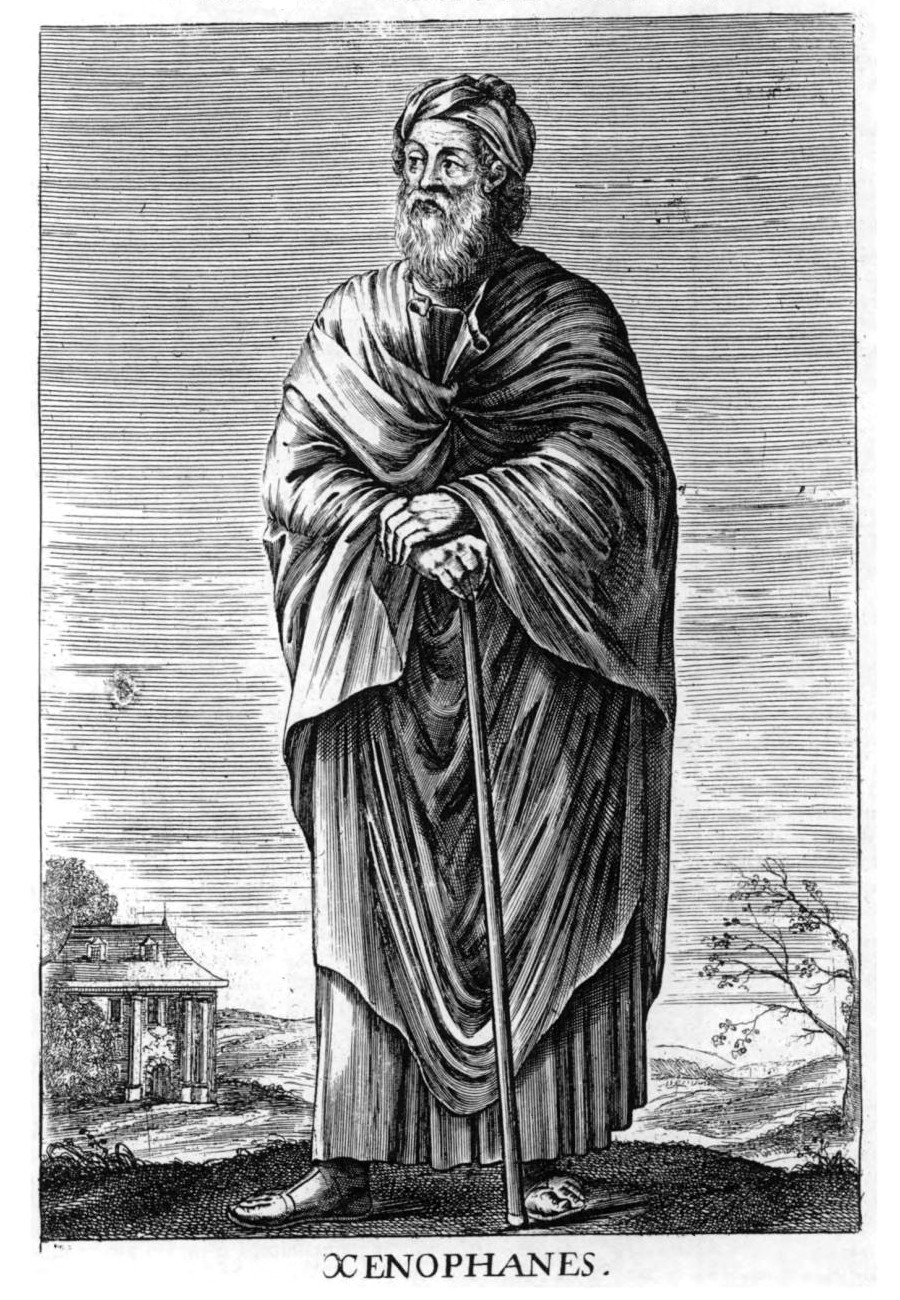
Revolutionary Critic of Traditional Religion and Pioneer of Rational Theology (c. 570 – c. 475 BCE)
Introduction
Xenophanes of Colophon emerges as one of the most revolutionary and intellectually courageous figures of the ancient world, whose devastating critique of traditional religious beliefs and innovative theological insights fundamentally challenged conventional understanding of divinity whilst establishing essential foundations for rational theology, philosophical epistemology, and natural philosophy that profoundly influenced subsequent intellectual development through systematic application of reason to fundamental questions about knowledge, reality, and divine nature that transcended cultural limitations and religious orthodoxy through fearless intellectual investigation.
His most significant contribution to philosophical development was the systematic criticism of anthropomorphic religion and the revolutionary proposal of a single, unchanging, and rational divinity that operated through intellectual rather than physical means whilst challenging fundamental assumptions about divine nature, human knowledge, and religious truth through sophisticated philosophical analysis and empirical observation that revealed contradictions and inadequacies in traditional religious belief whilst establishing alternative frameworks for understanding divine reality through rational investigation and systematic philosophical inquiry.
As a wandering poet-philosopher who experienced the political upheavals and cultural transformations of sixth-century Greece through extensive travel and intellectual engagement with diverse communities, Xenophanes developed comprehensive perspectives on human knowledge, cultural relativism, and religious diversity that informed his revolutionary critique of traditional beliefs whilst providing innovative insights into the nature of truth, certainty, and philosophical investigation that established essential precedents for epistemological inquiry and methodological skepticism through disciplined intellectual analysis.
The breadth and depth of Xenophanean achievement encompass groundbreaking contributions to natural philosophy, geological investigation, epistemological analysis, and literary innovation that demonstrated remarkable integration of empirical observation with rational analysis whilst establishing methodological approaches and theoretical frameworks that influenced all subsequent philosophical development through systematic investigation of fundamental questions about knowledge, reality, and divine nature that addressed both immediate intellectual challenges and ultimate questions about human understanding and cosmic organisation.
Living during the remarkable period of Greek intellectual awakening when traditional cultural frameworks were being challenged and transformed through rational inquiry and systematic investigation, Xenophanes exemplified the courage and intellectual integrity required for genuine philosophical revolution whilst demonstrating how systematic criticism and alternative theoretical frameworks could advance human understanding and cultural development through disciplined philosophical investigation and innovative conceptual analysis that transcended conventional limitations whilst maintaining empirical grounding and practical relevance.
Xenophanes's Life and Intellectual Journey
- c. 570 BCE: Born in Colophon, Ionia, during the Persian expansion
- c. 545 BCE: Fled Colophon following Persian conquest, beginning extensive travels
- c. 535 BCE: Established residence in Elea, southern Italy, amongst Greek colonists
- c. 525 BCE: Developed systematic critique of traditional religious beliefs
- c. 515 BCE: Formulated innovative theological and natural philosophical theories
- c. 505 BCE: Advanced epistemological investigation and methodological analysis
- c. 495 BCE: Influenced development of Eleatic philosophical tradition
- c. 485 BCE: Continued philosophical investigation and poetic composition
- c. 475 BCE: Died in Elea, leaving revolutionary intellectual legacy
Revolutionary Critique of Traditional Religion
Anthropomorphic Religion and Cultural Criticism
Xenophanes launched a devastating critique of anthropomorphic religion whilst exposing the cultural relativity and logical contradictions inherent in traditional religious beliefs through systematic analysis of how different peoples create gods in their own image, famously observing that "if horses and oxen and lions had hands and could paint with their hands and produce works of art, horses would paint horse-like gods and oxen ox-like gods." This revolutionary insight demonstrated sophisticated understanding of cultural conditioning and religious projection whilst establishing essential frameworks for comparative religious analysis and cultural criticism.
His systematic investigation of religious diversity revealed how different cultures attribute their own characteristics, values, and physical features to their deities whilst demonstrating that religious beliefs reflect human cultural limitations rather than divine revelation or objective truth through empirical observation of religious variation and rational analysis of theological contradictions that exposed fundamental problems with conventional religious understanding through comparative investigation and critical philosophical analysis that challenged established religious orthodoxy.
The philosophical sophistication of Xenophanes's religious criticism extended beyond mere cultural observation to encompass fundamental epistemological questions about how humans acquire knowledge of divine reality whilst demonstrating how cultural conditioning and psychological projection influence religious belief through systematic analysis of the mechanisms underlying religious formation and cultural transmission that revealed underlying patterns of human religious behaviour through rational investigation and comparative cultural analysis.
His critique of anthropomorphic religion established essential precedents for religious criticism and cultural analysis whilst providing frameworks for understanding how human limitations and cultural contexts shape religious belief and theological understanding through systematic investigation that revealed connections between religious diversity and cultural variation whilst demonstrating how rational analysis could illuminate fundamental questions about religious truth and divine reality through philosophical investigation and comparative cultural study.
Moral Criticism of Divine Behaviour
Xenophanes advanced systematic moral criticism of traditional religious narratives whilst challenging the attribution of immoral behaviour to divine beings through rational analysis of religious texts and mythological accounts that revealed profound contradictions between claimed divine perfection and described divine behaviour in traditional religious stories. His famous criticism that "Homer and Hesiod have attributed to the gods all sorts of things that are matters of reproach and censure among men: theft, adultery, and mutual deception" demonstrated sophisticated moral reasoning and ethical sensitivity that challenged conventional religious authority.
His moral critique revealed fundamental inconsistencies between religious claims about divine perfection and religious narratives describing divine behaviour whilst demonstrating how traditional religious stories actually undermine rather than support authentic religious understanding through systematic analysis of moral contradictions and ethical problems inherent in conventional religious accounts that exposed underlying tensions between religious authority and rational moral analysis through philosophical investigation and ethical reasoning.
The systematic nature of Xenophanes's moral criticism established essential foundations for ethical theology whilst providing frameworks for understanding how moral reasoning can illuminate religious truth and divine nature through rational investigation that addresses fundamental questions about divine perfection, moral consistency, and religious authority through systematic philosophical analysis and ethical reflection that enhanced both individual moral understanding and collective ethical development through disciplined moral reasoning and systematic ethical investigation.
These contributions to moral criticism of religion established precedents for ethical evaluation of religious beliefs whilst demonstrating how systematic moral analysis could reveal fundamental problems with traditional religious understanding through rational investigation and ethical reasoning that enhanced both individual moral development and collective ethical advancement through philosophical investigation and systematic moral analysis that addressed both immediate ethical concerns and ultimate questions about divine nature and religious truth through disciplined ethical inquiry.
Epistemological Challenges to Religious Knowledge
Xenophanes developed sophisticated epistemological critiques of religious knowledge whilst questioning fundamental assumptions about human ability to acquire certain knowledge of divine reality through systematic analysis of the limitations and uncertainties inherent in human cognitive capacity and observational capability that revealed profound problems with claims to religious certainty and theological knowledge through rational investigation of epistemological foundations and methodological analysis of knowledge acquisition processes that challenged conventional religious epistemology.
His epistemological investigation revealed fundamental limitations in human capacity for acquiring certain knowledge about divine reality whilst demonstrating how cognitive limitations, cultural conditioning, and observational constraints affect religious understanding through systematic analysis of knowledge acquisition processes and methodological reflection on the conditions required for reliable knowledge that exposed inherent problems with claims to religious certainty and theological authority through rational epistemological investigation and systematic methodological analysis.
The philosophical sophistication of Xenophanean epistemology established essential frameworks for understanding the relationship between human knowledge and divine reality whilst providing systematic approaches to evaluating religious claims and theological assertions through rational analysis of epistemological foundations and methodological investigation of knowledge acquisition that enhanced both individual intellectual capability and collective philosophical advancement through disciplined epistemological inquiry and systematic methodological analysis that addressed fundamental questions about certainty and truth.
These contributions to epistemological analysis established precedents for philosophical investigation of religious knowledge whilst providing frameworks for systematic evaluation of theological claims and religious assertions through rational analysis and methodological investigation that enhanced both individual philosophical understanding and collective intellectual advancement through disciplined epistemological inquiry and systematic analysis of knowledge acquisition processes that addressed both immediate philosophical concerns and ultimate questions about truth and certainty through philosophical investigation.
Revolutionary Religious Criticism
- Anthropomorphic Critique: Systematic analysis of cultural projection in religious belief
- Cultural Relativism: Recognition of religious diversity and cultural conditioning
- Moral Criticism: Ethical evaluation of divine behaviour in traditional narratives
- Epistemological Challenge: Questioning human capacity for religious knowledge
- Logical Analysis: Rational investigation of religious contradictions
- Comparative Method: Cross-cultural analysis of religious diversity
Innovative Theology and Divine Nature
The One God Theory
Xenophanes proposed revolutionary theological innovations whilst developing systematic understanding of divine nature through his famous doctrine of the "One God" that transcended traditional polytheistic frameworks and anthropomorphic limitations through rational analysis of divine perfection and logical investigation of theological coherence that established essential foundations for monotheistic theology and philosophical understanding of divine unity through systematic theological reflection and innovative conceptual analysis that addressed fundamental questions about divine nature and cosmic organisation through disciplined theological investigation.
His systematic theological analysis proposed that authentic divinity must be characterised by perfection, unity, and transcendence of human limitations whilst demonstrating how rational analysis could reveal essential features of divine reality through logical investigation of divine attributes and systematic theological reasoning that transcended cultural conditioning and religious orthodoxy through innovative conceptual frameworks and comprehensive theological analysis that enhanced both individual theological understanding and collective religious development through disciplined theological inquiry.
The theological sophistication of Xenophanean divine theory included recognition that authentic divinity operates through intellectual rather than physical means whilst proposing that divine knowledge and power transcend human limitations and anthropomorphic characteristics through systematic analysis of divine attributes and logical investigation of theological coherence that revealed fundamental principles governing divine nature and cosmic organisation through rational theological investigation and innovative conceptual analysis that established precedents for philosophical theology.
These contributions to theological understanding established essential foundations for monotheistic religious thought whilst providing frameworks for rational investigation of divine nature and theological coherence that influenced all subsequent theological development through emphasis on logical consistency, systematic analysis, and rational investigation of divine attributes that enhanced both individual theological understanding and collective religious advancement through disciplined theological inquiry and systematic theological investigation that addressed fundamental questions about divine reality and cosmic organisation.
Divine Attributes and Perfect Being
Xenophanes developed systematic understanding of divine attributes whilst proposing that authentic divinity must be characterised by immutability, omnipresence, and perfect knowledge that transcends temporal change and spatial limitation through rational analysis of divine perfection and logical investigation of theological consistency that revealed essential features of divine nature whilst establishing innovative frameworks for understanding divine attributes through systematic theological analysis and rational investigation of perfect being that enhanced theological sophistication and philosophical understanding of divine reality.
His systematic investigation of divine perfection included recognition that authentic divinity transcends physical form and spatial limitation whilst operating through pure intellect and perfect knowledge that encompasses all reality without temporal change or developmental process through logical analysis of divine attributes and systematic theological reasoning that demonstrated how rational investigation could reveal essential features of divine nature through innovative conceptual frameworks and comprehensive theological analysis that established precedents for philosophical theology and systematic divine speculation.
The integration of logical analysis with theological speculation created comprehensive approaches to understanding divine nature whilst providing frameworks for systematic investigation of divine attributes and theological coherence that enhanced both theoretical understanding and spiritual insight through disciplined theological inquiry and rational analysis of perfect being that addressed both immediate theological concerns and ultimate questions about divine reality and cosmic organisation through systematic theological investigation and innovative conceptual analysis that characterised Xenophanean theological methodology.
These contributions to understanding divine attributes established essential foundations for philosophical theology whilst providing systematic approaches to investigating divine nature and theological coherence that influenced subsequent theological development through emphasis on rational consistency, logical analysis, and systematic investigation of divine perfection that enhanced both individual theological understanding and collective religious advancement through disciplined theological inquiry and comprehensive theological analysis that addressed fundamental questions about divine reality and perfect being.
Divine Activity and Cosmic Governance
Xenophanes proposed innovative understanding of divine activity whilst suggesting that authentic divinity governs the cosmos through intellectual rather than physical means, declaring that the divine "remains in the same place without moving, nor is it fitting for him to travel to different places at different times, but without toil he shakes all things by the thought of his mind." This revolutionary insight established essential frameworks for understanding divine transcendence whilst maintaining divine immanence and cosmic governance through intellectual causation rather than anthropomorphic intervention.
His systematic investigation of divine activity revealed how authentic divinity operates through perfect knowledge and intellectual power that transcends physical limitation whilst maintaining comprehensive governance of cosmic organisation and natural phenomena through rational causation and systematic order that demonstrates divine perfection whilst avoiding anthropomorphic characteristics and temporal change through innovative theological analysis and systematic understanding of divine attributes that enhanced both theological sophistication and philosophical understanding of cosmic organisation.
The integration of divine transcendence with cosmic governance created comprehensive theological frameworks whilst providing innovative understanding of how divine perfection relates to natural phenomena and cosmic organisation through intellectual causation and systematic order that maintains divine unity whilst explaining natural diversity and cosmic complexity through rational theological analysis and systematic investigation of divine activity that addressed both theological coherence and empirical observation through disciplined theological inquiry and innovative conceptual analysis.
These contributions to understanding divine activity established essential foundations for systematic theology whilst providing frameworks for investigating the relationship between divine transcendence and cosmic governance that influenced subsequent theological development through emphasis on intellectual causation, systematic order, and rational consistency that enhanced both theoretical understanding and practical insight through disciplined theological inquiry and comprehensive theological analysis that addressed fundamental questions about divine activity and cosmic organisation through systematic theological investigation.
Innovative Theological Contributions
- One God Doctrine: Systematic monotheistic theology transcending polytheistic frameworks
- Divine Perfection: Immutable, omnipresent, and perfectly knowledgeable divinity
- Intellectual Causation: Divine governance through thought rather than physical action
- Transcendent Unity: Divine simplicity and freedom from anthropomorphic limitation
- Cosmic Governance: Systematic order through intellectual divine activity
- Rational Theology: Logical investigation of divine attributes and nature
Natural Philosophy and Scientific Investigation
Geological Discoveries and Earth Sciences
Xenophanes conducted pioneering geological investigations whilst making remarkable empirical discoveries about Earth's history and natural processes through systematic observation of fossils, sedimentary formations, and geological phenomena that revealed evidence for environmental change and temporal development in Earth's surface features through careful empirical investigation and rational analysis that established essential foundations for geological science whilst demonstrating how systematic observation could reveal natural processes and historical development through disciplined scientific inquiry and innovative analytical approaches.
His systematic investigation of marine fossils found in mountainous regions provided compelling evidence for environmental change and geological transformation whilst demonstrating sophisticated empirical reasoning and scientific methodology that revealed connections between present observations and past environmental conditions through rational analysis of geological evidence and systematic investigation of natural phenomena that enhanced both theoretical understanding and practical knowledge of geological processes through innovative scientific methodology and comprehensive empirical investigation.
The integration of empirical observation with rational analysis created comprehensive approaches to geological investigation whilst providing frameworks for understanding Earth's temporal development and environmental transformation through systematic scientific methodology and innovative analytical approaches that enhanced both theoretical knowledge and practical understanding of geological phenomena through disciplined scientific inquiry and collaborative investigation that addressed both immediate scientific questions and long-term theoretical advancement through systematic geological methodology and empirical investigation.
These contributions to geological science established essential foundations for systematic Earth science investigation whilst providing methodological approaches and theoretical frameworks that influenced subsequent geological development through emphasis on empirical observation, rational analysis, and systematic investigation that enhanced both individual scientific understanding and collective geological advancement through disciplined scientific inquiry and innovative geological methodology that demonstrated connections between empirical evidence and theoretical understanding through systematic scientific investigation.
Cosmological Theories and Astronomical Investigation
Xenophanes developed innovative cosmological theories whilst proposing alternative explanations for celestial phenomena and cosmic organisation through systematic investigation of astronomical observation and rational analysis of natural processes that challenged conventional mythological accounts whilst providing naturalistic frameworks for understanding celestial behaviour and cosmic structure through empirical investigation and theoretical analysis that established essential precedents for scientific cosmology and astronomical investigation through disciplined scientific inquiry and innovative analytical approaches.
His cosmological investigations included systematic study of solar, lunar, and stellar phenomena whilst providing naturalistic explanations for celestial behaviour through rational analysis of natural processes and empirical observation of astronomical relationships that revealed underlying patterns and systematic organisation in celestial phenomena through scientific methodology and innovative theoretical frameworks that enhanced both theoretical understanding and practical capability for astronomical prediction and cosmological comprehension through disciplined scientific investigation.
The systematic nature of Xenophanean cosmological investigation included recognition of natural causation in celestial phenomena whilst providing frameworks for understanding cosmic organisation through rational analysis and empirical observation that transcended mythological interpretation through scientific methodology and innovative analytical approaches that enhanced both individual scientific understanding and collective astronomical advancement through collaborative investigation and systematic scientific methodology that addressed both immediate astronomical concerns and long-term cosmological understanding.
These contributions to cosmological science established essential foundations for systematic astronomical investigation whilst providing theoretical frameworks and methodological approaches that influenced subsequent cosmological development through emphasis on natural causation, empirical observation, and rational analysis that enhanced both theoretical knowledge and practical capability through disciplined scientific inquiry and innovative cosmological methodology that demonstrated connections between empirical evidence and theoretical understanding through systematic scientific investigation.
Meteorological Phenomena and Atmospheric Science
Xenophanes investigated meteorological phenomena whilst developing naturalistic explanations for atmospheric processes and weather systems through systematic observation of climatic patterns and rational analysis of atmospheric behaviour that provided alternative frameworks to mythological interpretation whilst establishing essential foundations for meteorological science through empirical investigation and theoretical analysis that enhanced both understanding and predictive capability through disciplined scientific inquiry and innovative analytical approaches that addressed both immediate practical concerns and long-term scientific advancement.
His meteorological investigations included systematic study of rainfall patterns, cloud formation, and atmospheric circulation whilst providing rational explanations for weather phenomena through empirical observation and theoretical analysis that revealed underlying principles governing atmospheric processes through scientific methodology and innovative analytical frameworks that enhanced both theoretical understanding and practical capability for weather prediction and atmospheric comprehension through disciplined scientific investigation and systematic meteorological methodology.
The integration of empirical observation with rational analysis created comprehensive approaches to meteorological investigation whilst providing frameworks for understanding atmospheric processes and climatic patterns through systematic scientific methodology and innovative analytical approaches that enhanced both theoretical knowledge and practical understanding of meteorological phenomena through disciplined scientific inquiry and collaborative investigation that addressed both immediate meteorological concerns and long-term atmospheric understanding through systematic scientific methodology.
These contributions to meteorological science established essential foundations for systematic atmospheric investigation whilst providing methodological approaches and theoretical frameworks that influenced subsequent meteorological development through emphasis on empirical observation, rational analysis, and natural causation that enhanced both individual scientific understanding and collective meteorological advancement through disciplined scientific inquiry and innovative meteorological methodology that demonstrated connections between empirical evidence and theoretical understanding through systematic scientific investigation.
Natural Philosophy and Scientific Contributions
- Geological Investigation: Systematic study of fossils and Earth's temporal development
- Cosmological Theory: Naturalistic explanations for celestial phenomena
- Meteorological Study: Rational investigation of atmospheric processes
- Empirical Methodology: Systematic observation and evidence-based reasoning
- Natural Causation: Scientific explanation transcending mythological interpretation
- Environmental Analysis: Recognition of temporal change in natural systems
Epistemological Philosophy and Theory of Knowledge
Skepticism and the Limits of Knowledge
Xenophanes developed sophisticated epistemological analysis whilst establishing fundamental insights about the limitations and uncertainties inherent in human knowledge acquisition through systematic investigation of cognitive limitations and methodological constraints that revealed profound problems with claims to certain knowledge and absolute truth whilst providing frameworks for understanding how uncertainty and probability characterise authentic intellectual inquiry through rational analysis of epistemological foundations and systematic investigation of knowledge acquisition processes that enhanced both philosophical sophistication and practical wisdom.
His famous epistemological insight that "no man has seen nor will anyone know the truth about the gods and about all the things I speak of; for even if he should chance to say what is completely true, yet he himself does not know it; but opinion is woven over all things" established essential foundations for epistemological skepticism whilst providing frameworks for understanding the relationship between truth and human knowledge through systematic analysis of cognitive limitations and methodological constraints that revealed fundamental problems with epistemic certainty.
The systematic nature of Xenophanean epistemological analysis included recognition that human knowledge operates through opinion and probability rather than absolute certainty whilst demonstrating how intellectual humility and methodological caution enhance rather than diminish authentic intellectual inquiry through rational investigation of epistemological foundations and systematic analysis of knowledge acquisition processes that provided frameworks for understanding both the possibilities and limitations of human cognitive capability through disciplined epistemological inquiry.
These contributions to epistemological philosophy established essential foundations for systematic investigation of knowledge and truth whilst providing frameworks for understanding cognitive limitations and methodological constraints that influenced all subsequent epistemological development through emphasis on intellectual humility, methodological caution, and systematic analysis of knowledge acquisition that enhanced both individual philosophical understanding and collective intellectual advancement through disciplined epistemological inquiry and systematic philosophical investigation.
Opinion, Probability, and Degrees of Certainty
Xenophanes pioneered sophisticated understanding of probabilistic reasoning whilst developing frameworks for evaluating different degrees of certainty and reliability in human knowledge through systematic analysis of epistemic gradations and methodological approaches that revealed how authentic intellectual inquiry requires recognition of uncertainty and probability rather than claims to absolute certainty through rational investigation of knowledge acquisition processes and systematic analysis of cognitive limitations that enhanced both philosophical sophistication and practical intellectual capability.
His systematic investigation of opinion and probability revealed how authentic knowledge requires careful evaluation of evidence and systematic consideration of alternative possibilities whilst demonstrating how intellectual humility and methodological caution enhance reliability and accuracy in knowledge acquisition through rational analysis of epistemological foundations and systematic investigation of methodological constraints that provided frameworks for understanding both the possibilities and limitations of human cognitive capability through disciplined intellectual inquiry.
The integration of probabilistic reasoning with epistemological analysis created comprehensive approaches to knowledge evaluation whilst providing frameworks for understanding how different types of evidence and analytical approaches yield different degrees of certainty and reliability through systematic investigation of knowledge acquisition processes and rational analysis of epistemological foundations that enhanced both theoretical understanding and practical intellectual capability through disciplined epistemological inquiry and systematic methodological analysis.
These contributions to probabilistic epistemology established essential foundations for systematic evaluation of knowledge claims whilst providing frameworks for understanding degrees of certainty and methodological reliability that influenced subsequent epistemological development through emphasis on evidence evaluation, systematic analysis, and intellectual humility that enhanced both individual philosophical understanding and collective intellectual advancement through disciplined epistemological inquiry and systematic investigation of knowledge acquisition processes and methodological constraints.
Methodology and Intellectual Inquiry
Xenophanes developed innovative methodological approaches to intellectual inquiry whilst establishing systematic frameworks for rational investigation and evidence evaluation that enhanced both individual intellectual capability and collective knowledge advancement through disciplined analytical approaches and comprehensive methodological standards that addressed both immediate intellectual challenges and long-term philosophical development through systematic investigation of reasoning processes and analytical methodology that revealed essential principles governing authentic intellectual inquiry through rational analysis and empirical investigation.
His methodological innovations included systematic approaches to evidence evaluation, logical analysis, and rational criticism whilst providing frameworks for understanding how disciplined intellectual inquiry can enhance reliability and accuracy in knowledge acquisition through systematic investigation of reasoning processes and analytical methodology that demonstrated how methodological sophistication could serve both immediate intellectual objectives and long-term philosophical advancement through collaborative investigation and systematic analytical approaches that enhanced both theoretical understanding and practical intellectual capability.
The integration of methodological analysis with philosophical investigation created comprehensive approaches to intellectual inquiry whilst providing frameworks for systematic evaluation of reasoning processes and analytical approaches that enhanced both individual philosophical understanding and collective intellectual advancement through disciplined methodological investigation and systematic analysis of intellectual standards and analytical criteria that addressed both immediate philosophical concerns and long-term methodological development through innovative analytical approaches and systematic methodological investigation.
These contributions to methodological philosophy established essential foundations for systematic intellectual inquiry whilst providing frameworks for understanding reasoning processes and analytical methodology that influenced all subsequent philosophical development through emphasis on logical rigor, systematic analysis, and methodological sophistication that enhanced both individual intellectual capability and collective philosophical advancement through disciplined intellectual inquiry and systematic methodological investigation that addressed fundamental questions about reasoning and knowledge acquisition.
Epistemological Philosophy and Theory of Knowledge
- Epistemic Skepticism: Recognition of fundamental limitations in human knowledge
- Probabilistic Reasoning: Understanding knowledge through degrees of certainty
- Opinion vs. Truth: Systematic analysis of knowledge and belief relationships
- Methodological Analysis: Frameworks for systematic intellectual inquiry
- Intellectual Humility: Recognition of cognitive limitations and uncertainty
- Evidence Evaluation: Systematic approaches to knowledge assessment
Literary Innovation and Poetic Philosophy
Philosophical Poetry and Literary Form
Xenophanes pioneered innovative approaches to philosophical expression whilst developing systematic integration of poetic form with philosophical content through creative literary methodology that enhanced both aesthetic achievement and intellectual communication whilst demonstrating how artistic expression could serve philosophical investigation and conceptual analysis through disciplined literary craft and systematic artistic methodology that addressed both immediate aesthetic objectives and long-term philosophical development through innovative literary approaches and comprehensive artistic investigation that established precedents for philosophical literature.
His philosophical poetry combined rigorous intellectual analysis with aesthetic beauty whilst providing frameworks for understanding how artistic form could enhance philosophical communication and conceptual clarification through systematic literary methodology and innovative artistic approaches that demonstrated connections between aesthetic experience and intellectual understanding through disciplined literary craft and comprehensive artistic investigation that enhanced both individual aesthetic appreciation and collective philosophical advancement through creative literary methodology and systematic artistic investigation.
The integration of philosophical content with poetic form created comprehensive approaches to intellectual communication whilst providing innovative frameworks for understanding how aesthetic expression could serve both artistic achievement and philosophical investigation through systematic literary methodology and creative artistic approaches that enhanced both theoretical understanding and practical communication capability through disciplined literary craft and collaborative artistic investigation that addressed both immediate aesthetic concerns and long-term philosophical development through innovative literary methodology.
These contributions to philosophical literature established essential foundations for systematic integration of artistic and intellectual achievement whilst providing frameworks for understanding how creative expression could enhance both aesthetic appreciation and philosophical understanding through disciplined literary investigation and systematic artistic methodology that influenced subsequent literary and philosophical development through emphasis on creative expression, systematic analysis, and comprehensive artistic investigation that enhanced both individual literary capability and collective cultural advancement.
Critical Satire and Cultural Commentary
Xenophanes developed sophisticated approaches to satirical criticism whilst using poetic forms for systematic cultural analysis and intellectual critique that challenged conventional beliefs and social practices through creative literary methodology and innovative artistic approaches that enhanced both aesthetic achievement and intellectual communication whilst demonstrating how artistic expression could serve critical analysis and social commentary through disciplined literary craft and systematic satirical methodology that addressed both immediate cultural concerns and long-term social development.
His satirical poetry combined intellectual rigor with aesthetic sophistication whilst providing frameworks for cultural criticism and social analysis that revealed underlying problems and contradictions in conventional beliefs and practices through systematic literary methodology and innovative artistic approaches that demonstrated how creative expression could enhance both aesthetic appreciation and critical understanding through disciplined literary craft and comprehensive cultural investigation that enhanced both individual aesthetic capability and collective cultural advancement.
The integration of satirical criticism with philosophical analysis created comprehensive approaches to cultural commentary whilst providing innovative frameworks for understanding how artistic expression could serve both aesthetic objectives and intellectual critique through systematic literary methodology and creative artistic approaches that enhanced both theoretical understanding and practical critical capability through disciplined literary craft and collaborative cultural investigation that addressed both immediate cultural concerns and long-term social development through innovative satirical methodology.
These contributions to satirical literature established essential foundations for systematic integration of artistic expression with critical analysis whilst providing frameworks for understanding how creative methodology could enhance both aesthetic achievement and intellectual critique through disciplined literary investigation and systematic satirical methodology that influenced subsequent literary and philosophical development through emphasis on critical analysis, creative expression, and comprehensive cultural investigation that enhanced both individual literary capability and collective critical advancement.
Educational Poetry and Intellectual Transmission
Xenophanes pioneered innovative approaches to educational poetry whilst developing systematic frameworks for intellectual transmission and philosophical communication through creative literary methodology that enhanced both pedagogical effectiveness and aesthetic achievement whilst demonstrating how artistic expression could serve educational objectives and intellectual development through disciplined literary craft and systematic educational methodology that addressed both immediate pedagogical concerns and long-term intellectual development through innovative educational approaches and comprehensive artistic investigation that established precedents for educational literature.
His educational poetry combined philosophical sophistication with pedagogical effectiveness whilst providing frameworks for understanding how artistic form could enhance learning and intellectual development through systematic literary methodology and innovative educational approaches that demonstrated connections between aesthetic experience and intellectual understanding through disciplined literary craft and comprehensive educational investigation that enhanced both individual learning capability and collective educational advancement through creative educational methodology and systematic pedagogical investigation.
The integration of educational content with poetic form created comprehensive approaches to intellectual transmission whilst providing innovative frameworks for understanding how aesthetic expression could serve both artistic achievement and educational objectives through systematic literary methodology and creative pedagogical approaches that enhanced both theoretical understanding and practical educational capability through disciplined literary craft and collaborative educational investigation that addressed both immediate pedagogical concerns and long-term intellectual development through innovative educational methodology.
These contributions to educational literature established essential foundations for systematic integration of artistic expression with pedagogical methodology whilst providing frameworks for understanding how creative approaches could enhance both aesthetic appreciation and intellectual development through disciplined literary investigation and systematic educational methodology that influenced subsequent literary and educational development through emphasis on creative expression, systematic pedagogy, and comprehensive educational investigation that enhanced both individual literary capability and collective educational advancement.
Literary Innovation and Poetic Philosophy
- Philosophical Poetry: Integration of rigorous thought with aesthetic expression
- Satirical Criticism: Creative literary approaches to cultural commentary
- Educational Literature: Artistic methodology for intellectual transmission
- Literary Innovation: Systematic development of philosophical literature
- Aesthetic Analysis: Understanding artistic expression and intellectual communication
- Cultural Critique: Creative approaches to social and religious analysis
Travel, Exile, and Comparative Cultural Analysis
Forced Migration and Intellectual Development
Xenophanes's extensive travels following his exile from Colophon during the Persian conquest provided unique opportunities for comparative cultural investigation whilst establishing comprehensive perspectives on human diversity and cultural variation that informed his revolutionary philosophical insights through direct experience of different societies and intellectual traditions that enhanced both individual intellectual development and theoretical sophistication through systematic comparative analysis and cross-cultural investigation that revealed underlying patterns and variations in human belief systems and cultural practices through empirical observation and rational analysis.
His forced migration throughout the Greek world provided extensive exposure to diverse cultural traditions and intellectual approaches whilst creating opportunities for systematic comparative analysis of religious beliefs, social practices, and philosophical traditions that enhanced both empirical understanding and theoretical sophistication through disciplined cultural investigation and comparative analysis that revealed underlying patterns of cultural variation and human diversity through systematic observation and rational investigation that informed his revolutionary insights about religious diversity and cultural conditioning.
The integration of travel experience with philosophical investigation created comprehensive approaches to cultural analysis whilst providing frameworks for understanding how direct empirical experience could enhance theoretical understanding through systematic comparative methodology and innovative analytical approaches that demonstrated connections between cultural diversity and intellectual development through disciplined cultural investigation and collaborative comparative analysis that enhanced both individual intellectual capability and collective philosophical advancement through empirical cultural investigation.
These experiences of cultural diversity established essential foundations for comparative cultural analysis whilst providing empirical grounding for understanding human variation and cultural conditioning that informed all subsequent philosophical development through emphasis on empirical observation, comparative analysis, and systematic cultural investigation that enhanced both individual intellectual understanding and collective philosophical advancement through disciplined comparative inquiry and systematic cultural analysis that revealed fundamental insights about human nature and cultural development.
Comparative Religious Analysis
Xenophanes's extensive travels enabled systematic comparative investigation of diverse religious traditions whilst providing empirical foundations for understanding religious diversity and cultural variation in theological beliefs that informed his revolutionary critique of anthropomorphic religion through direct observation of how different cultures construct religious narratives and divine concepts that revealed underlying patterns of cultural projection and human psychological tendencies in religious formation through systematic comparative analysis and empirical investigation of religious diversity across different cultural contexts.
His comparative religious investigations revealed systematic patterns of cultural conditioning and religious projection whilst demonstrating how different peoples attribute their own characteristics and values to divine beings through empirical observation of religious diversity and systematic analysis of theological variation that provided concrete evidence for his revolutionary insights about anthropomorphic religion through disciplined comparative methodology and comprehensive religious investigation that enhanced both theoretical understanding and empirical grounding for religious criticism through systematic comparative analysis.
The integration of comparative religious analysis with philosophical criticism created comprehensive approaches to understanding religious phenomena whilst providing frameworks for systematic evaluation of religious claims and theological assertions through empirical investigation and rational analysis that demonstrated connections between cultural diversity and religious variation through disciplined comparative inquiry and systematic religious investigation that enhanced both individual intellectual understanding and collective philosophical advancement through empirical religious analysis and comparative theological investigation.
These contributions to comparative religious analysis established essential foundations for systematic investigation of religious diversity whilst providing empirical frameworks for understanding theological variation and cultural conditioning that influenced all subsequent religious studies through emphasis on comparative methodology, empirical observation, and systematic analysis that enhanced both individual religious understanding and collective theological advancement through disciplined comparative inquiry and systematic religious investigation that revealed fundamental insights about religious formation and cultural conditioning in theological development.
Cultural Relativism and Human Diversity
Xenophanes developed sophisticated understanding of cultural relativism whilst recognising how human diversity and cultural variation influence knowledge acquisition and belief formation through systematic analysis of cultural conditioning and empirical investigation of human diversity that revealed underlying patterns of cultural influence on intellectual development and philosophical understanding through disciplined comparative analysis and comprehensive cultural investigation that enhanced both theoretical sophistication and practical understanding of human variation and cultural conditioning through systematic comparative methodology and innovative analytical approaches.
His systematic investigation of cultural diversity revealed how human beliefs and practices vary according to cultural context whilst demonstrating underlying patterns of cultural influence on intellectual development through empirical observation and comparative analysis that provided frameworks for understanding how cultural conditioning affects knowledge acquisition and belief formation through disciplined cultural investigation and systematic comparative analysis that enhanced both individual intellectual understanding and collective philosophical advancement through empirical cultural analysis and comparative cultural investigation.
The integration of cultural relativism with philosophical analysis created comprehensive approaches to understanding human diversity whilst providing frameworks for systematic investigation of cultural influence on intellectual development through empirical observation and comparative analysis that demonstrated connections between cultural variation and philosophical understanding through disciplined comparative inquiry and systematic cultural investigation that enhanced both theoretical understanding and practical cultural capability through empirical cultural analysis and comparative cultural methodology.
These contributions to understanding cultural relativism established essential foundations for systematic investigation of human diversity whilst providing frameworks for understanding cultural conditioning and its influence on intellectual development that influenced all subsequent anthropological and philosophical investigation through emphasis on comparative methodology, empirical observation, and systematic cultural analysis that enhanced both individual cultural understanding and collective philosophical advancement through disciplined comparative inquiry and systematic cultural investigation that revealed fundamental insights about human nature and cultural development.
Travel, Exile, and Comparative Analysis
- Forced Migration: Intellectual development through cultural displacement and travel
- Comparative Religion: Systematic investigation of diverse theological traditions
- Cultural Diversity: Empirical observation of human variation and social practices
- Relativistic Analysis: Recognition of cultural conditioning in belief formation
- Cross-Cultural Method: Systematic comparative investigation and analysis
- Empirical Grounding: Direct experience informing philosophical insight
Influence on Later Philosophy and Intellectual Development
Eleatic School and Philosophical Tradition
Xenophanes established essential foundations for the Eleatic philosophical tradition whilst providing conceptual frameworks and methodological approaches that profoundly influenced Parmenides, Zeno, and subsequent philosophers through systematic investigation of being, unity, and rational analysis that enhanced both theoretical sophistication and methodological rigor through disciplined philosophical inquiry and innovative analytical approaches that addressed fundamental questions about reality and knowledge through rational investigation and systematic philosophical methodology that established precedents for subsequent metaphysical and epistemological development through comprehensive philosophical analysis.
His systematic approach to theological and metaphysical investigation provided essential foundations for Eleatic emphasis on rational demonstration and logical analysis whilst establishing methodological precedents for systematic philosophical investigation that enhanced both theoretical understanding and practical philosophical capability through disciplined rational inquiry and comprehensive analytical methodology that influenced all subsequent philosophical development through emphasis on logical rigor, systematic analysis, and rational demonstration that characterised Eleatic philosophical methodology and theoretical sophistication.
The integration of theological analysis with epistemological investigation created comprehensive philosophical approaches whilst providing frameworks for systematic investigation of fundamental questions about reality and knowledge that enhanced both individual philosophical understanding and collective philosophical advancement through disciplined philosophical inquiry and collaborative investigation that addressed both immediate philosophical concerns and long-term theoretical development through systematic philosophical methodology and innovative analytical approaches that established precedents for subsequent philosophical tradition.
These contributions to Eleatic philosophy established essential foundations for systematic metaphysical and epistemological investigation whilst providing methodological approaches and theoretical frameworks that influenced all subsequent philosophical development through emphasis on rational demonstration, logical analysis, and systematic investigation that enhanced both individual philosophical understanding and collective philosophical advancement through disciplined philosophical inquiry and systematic philosophical methodology that addressed fundamental questions about being, knowledge, and reality through rational investigation and comprehensive analytical approaches.
Theological Philosophy and Religious Thought
Xenophanes's revolutionary theological innovations profoundly influenced subsequent religious and philosophical development whilst establishing essential foundations for rational theology and systematic investigation of divine nature through logical analysis and systematic theological reasoning that enhanced both theoretical understanding and practical religious insight through disciplined theological inquiry and innovative conceptual analysis that addressed fundamental questions about divine reality and religious truth through rational investigation and systematic theological methodology that established precedents for subsequent theological development.
His systematic approach to theological criticism and innovative understanding of divine nature influenced medieval and modern theological development whilst providing frameworks for rational investigation of religious questions and systematic analysis of theological coherence that enhanced both individual theological understanding and collective religious advancement through disciplined theological inquiry and comprehensive theological methodology that demonstrated connections between rational analysis and religious insight through systematic theological investigation and innovative theological approaches that characterised subsequent theological development.
The integration of theological criticism with constructive theological analysis created comprehensive approaches to religious investigation whilst providing frameworks for systematic evaluation of religious claims and theological assertions through rational analysis and systematic theological methodology that enhanced both theoretical understanding and practical religious capability through disciplined theological inquiry and collaborative religious investigation that addressed both immediate theological concerns and long-term religious development through innovative theological approaches and systematic religious methodology.
These contributions to theological philosophy established essential foundations for systematic religious investigation whilst providing frameworks for understanding divine nature and religious truth that influenced all subsequent theological development through emphasis on rational consistency, logical analysis, and systematic investigation that enhanced both individual theological understanding and collective religious advancement through disciplined theological inquiry and systematic theological methodology that addressed fundamental questions about divine reality and religious truth through rational investigation and comprehensive theological analysis.
Scientific Methodology and Natural Philosophy
Xenophanes's pioneering approaches to natural investigation established essential foundations for scientific methodology whilst providing frameworks for systematic empirical investigation and rational analysis that influenced all subsequent scientific development through emphasis on empirical observation, natural causation, and systematic investigation that enhanced both theoretical understanding and practical capability through disciplined scientific inquiry and innovative analytical approaches that addressed both immediate scientific concerns and long-term theoretical advancement through systematic scientific methodology and comprehensive empirical investigation.
His systematic integration of empirical observation with rational analysis established methodological precedents for scientific investigation whilst providing frameworks for understanding natural phenomena through systematic methodology and innovative analytical approaches that demonstrated connections between empirical evidence and theoretical understanding through disciplined scientific inquiry and collaborative investigation that enhanced both individual scientific understanding and collective scientific advancement through empirical investigation and systematic scientific methodology that characterised subsequent scientific development.
The integration of geological investigation with cosmological analysis created comprehensive approaches to natural philosophy whilst providing frameworks for systematic investigation of natural phenomena that enhanced both theoretical knowledge and practical understanding through disciplined scientific inquiry and innovative scientific methodology that addressed both immediate scientific objectives and long-term theoretical advancement through systematic empirical investigation and comprehensive analytical approaches that established precedents for subsequent scientific methodology and natural philosophical investigation.
These contributions to scientific methodology established essential foundations for systematic natural investigation whilst providing frameworks for understanding empirical investigation and rational analysis that influenced all subsequent scientific development through emphasis on systematic observation, natural causation, and empirical methodology that enhanced both individual scientific understanding and collective scientific advancement through disciplined scientific inquiry and systematic scientific methodology that addressed fundamental questions about natural phenomena and scientific investigation through empirical observation and comprehensive analytical approaches.
Philosophical and Intellectual Influence
- Eleatic Tradition: Foundational influence on Parmenides and subsequent metaphysics
- Theological Philosophy: Rational approaches to divine nature and religious investigation
- Scientific Method: Empirical investigation and natural causation frameworks
- Epistemological Analysis: Skeptical methodology and knowledge evaluation approaches
- Cultural Criticism: Comparative analysis and relativistic investigation
- Methodological Innovation: Systematic inquiry and rational demonstration
Modern Relevance and Contemporary Applications
Religious Studies and Comparative Theology
Contemporary religious studies and comparative theology continue to build upon Xenophanean insights whilst demonstrating how his systematic approaches to religious criticism and cultural analysis provide essential frameworks for understanding religious diversity and theological development through comprehensive academic investigation and cross-cultural analysis that enhances both theoretical understanding and practical religious literacy through disciplined religious investigation and innovative analytical approaches that address both immediate academic concerns and long-term religious understanding through systematic religious methodology and comprehensive theological investigation.
Modern approaches to religious studies reflect Xenophanean emphasis on comparative analysis and cultural investigation whilst providing frameworks for understanding religious diversity and theological variation through systematic academic methodology and innovative analytical approaches that demonstrate connections between cultural context and religious formation through disciplined religious investigation and collaborative theological analysis that enhances both individual religious understanding and collective academic advancement through empirical religious analysis and comparative theological methodology that characterises contemporary religious studies.
The integration of cultural analysis with theological investigation continues Xenophanean traditions whilst providing frameworks for systematic investigation of religious phenomena that addresses both theoretical questions and practical religious challenges through comprehensive academic programmes that enhance both theoretical knowledge and practical religious capability through disciplined religious investigation and innovative theological methodology that serves both immediate academic objectives and long-term religious understanding through systematic religious analysis and collaborative theological investigation.
These contemporary applications of religious studies demonstrate the continuing relevance of Xenophanean insights whilst providing frameworks for addressing complex religious questions and theological challenges that require sophisticated understanding of cultural diversity and religious variation through innovative academic methodology and systematic religious investigation that serves both immediate academic needs and long-term religious advancement through disciplined religious inquiry and collaborative theological analysis that enhances both theoretical understanding and practical religious capability.
Epistemological Philosophy and Critical Thinking
Contemporary epistemological philosophy incorporates fundamental Xenophanean insights whilst demonstrating how his systematic approaches to knowledge evaluation and methodological analysis provide essential frameworks for understanding cognitive limitations and intellectual inquiry through comprehensive philosophical investigation and analytical methodology that enhances both theoretical understanding and practical intellectual capability through disciplined epistemological inquiry and innovative analytical approaches that address both immediate philosophical concerns and long-term intellectual development through systematic epistemological methodology and comprehensive philosophical investigation.
Modern approaches to critical thinking reflect Xenophanean emphasis on intellectual humility and methodological caution whilst providing frameworks for systematic evaluation of knowledge claims and evidence assessment through disciplined analytical methodology and innovative epistemological approaches that demonstrate connections between methodological sophistication and intellectual reliability through systematic epistemological investigation and collaborative philosophical analysis that enhances both individual intellectual capability and collective philosophical advancement through empirical epistemological analysis and systematic critical thinking methodology.
The integration of epistemological analysis with practical reasoning continues Xenophanean traditions whilst providing frameworks for systematic investigation of knowledge acquisition and intellectual development that addresses both theoretical questions and practical intellectual challenges through comprehensive educational programmes that enhance both theoretical knowledge and practical intellectual capability through disciplined epistemological investigation and innovative critical thinking methodology that serves both immediate educational objectives and long-term intellectual advancement.
These contemporary applications of epistemological philosophy demonstrate the continuing relevance of Xenophanean insights whilst providing frameworks for addressing complex intellectual questions and methodological challenges that require sophisticated understanding of cognitive limitations and analytical methodology through innovative philosophical approaches and systematic epistemological investigation that serves both immediate philosophical needs and long-term intellectual development through disciplined epistemological inquiry and collaborative philosophical analysis that enhances both theoretical understanding and practical intellectual capability.
Scientific Research and Methodological Innovation
Contemporary scientific research validates fundamental Xenophanean insights about empirical investigation and methodological sophistication whilst demonstrating how his systematic approaches to natural philosophy and evidence evaluation provide essential frameworks for understanding scientific methodology and research design through comprehensive scientific investigation and analytical methodology that enhances both theoretical understanding and practical scientific capability through disciplined scientific inquiry and innovative analytical approaches that address both immediate scientific concerns and long-term theoretical advancement through systematic scientific methodology and comprehensive empirical investigation.
Modern approaches to scientific methodology reflect Xenophanean emphasis on empirical observation and rational analysis whilst providing frameworks for systematic investigation of natural phenomena through disciplined scientific methodology and innovative analytical approaches that demonstrate connections between empirical evidence and theoretical understanding through systematic scientific investigation and collaborative research analysis that enhances both individual scientific capability and collective scientific advancement through empirical scientific analysis and systematic research methodology that characterises contemporary scientific investigation.
The integration of empirical investigation with theoretical analysis continues Xenophanean traditions whilst providing frameworks for systematic scientific research that addresses both fundamental theoretical questions and practical technological challenges through comprehensive research programmes that enhance both theoretical knowledge and practical scientific capability through disciplined scientific investigation and innovative research methodology that serves both immediate scientific objectives and long-term technological advancement through systematic scientific analysis and collaborative research investigation.
These contemporary applications of scientific methodology demonstrate the continuing relevance of Xenophanean insights whilst providing frameworks for addressing complex scientific questions and research challenges that require sophisticated understanding of empirical investigation and analytical methodology through innovative research approaches and systematic scientific investigation that serves both immediate scientific needs and long-term technological development through disciplined scientific inquiry and collaborative research analysis that enhances both theoretical understanding and practical scientific capability through empirical investigation and comprehensive analytical approaches.
Contemporary Relevance and Applications
- Religious Studies: Comparative theology and cultural analysis of religious diversity
- Critical Thinking: Epistemological analysis and methodological evaluation
- Scientific Research: Empirical investigation and evidence-based methodology
- Cultural Analysis: Anthropological investigation and cross-cultural studies
- Academic Methodology: Systematic inquiry and analytical sophistication
- Philosophical Education: Integration of skeptical analysis with intellectual development
"No man has seen nor will anyone know the truth about the gods and about all the things I speak of; for even if he should chance to say what is completely true, yet he himself does not know it; but opinion is woven over all things." - Xenophanes of Colophon
Conclusion
Xenophanes of Colophon emerges as one of history's most revolutionary and intellectually courageous figures whose devastating critique of traditional religious beliefs and innovative philosophical insights fundamentally transformed human understanding of knowledge, reality, and divine nature whilst establishing essential foundations for rational theology, epistemological analysis, and scientific methodology that continue to influence contemporary intellectual and cultural development through timeless insights about the limitations of human knowledge and systematic approaches to intellectual inquiry that transcend particular cultural contexts whilst maintaining universal relevance for human advancement.
His systematic critique of anthropomorphic religion and cultural conditioning revealed fundamental problems with conventional religious understanding whilst demonstrating how comparative cultural analysis could illuminate underlying patterns of human psychological projection and cultural variation in belief formation through disciplined intellectual investigation and innovative analytical approaches that enhanced both individual intellectual capability and collective cultural advancement through systematic criticism and comprehensive cultural analysis that addressed both immediate religious concerns and ultimate questions about divine reality and human knowledge.
The revolutionary theological innovations of Xenophanes, including his doctrine of divine unity and transcendence, established essential foundations for rational theology whilst providing frameworks for understanding divine nature through logical analysis and systematic theological reasoning that enhanced both theoretical understanding and practical religious insight through disciplined theological inquiry and innovative conceptual analysis that demonstrated how rational investigation could illuminate fundamental questions about divine reality whilst maintaining reverence for authentic divine transcendence and perfection.
His pioneering contributions to natural philosophy and scientific methodology established essential precedents for empirical investigation whilst demonstrating how systematic observation and rational analysis could reveal underlying principles governing natural phenomena through disciplined scientific inquiry and innovative analytical approaches that enhanced both theoretical knowledge and practical understanding through comprehensive empirical investigation and systematic scientific methodology that influenced all subsequent scientific development through emphasis on natural causation and evidence-based reasoning.
The sophisticated epistemological analysis developed by Xenophanes, including recognition of cognitive limitations and the probabilistic nature of human knowledge, established essential foundations for philosophical skepticism whilst providing frameworks for understanding the relationship between truth and human knowledge through systematic analysis of epistemological foundations and methodological constraints that enhanced both intellectual humility and analytical sophistication through disciplined epistemological inquiry and innovative methodological approaches that addressed fundamental questions about certainty and intellectual reliability.
His literary innovations, including philosophical poetry and satirical criticism, demonstrated how artistic expression could enhance philosophical communication whilst providing frameworks for integrating aesthetic achievement with intellectual analysis through creative literary methodology and systematic artistic investigation that enhanced both cultural achievement and philosophical understanding through disciplined literary craft and innovative artistic approaches that addressed both immediate aesthetic objectives and long-term philosophical development through systematic literary methodology.
The extensive travels and comparative cultural analysis undertaken by Xenophanes provided essential empirical grounding for understanding human diversity and cultural conditioning whilst establishing frameworks for systematic comparative investigation that revealed underlying patterns of cultural variation and human psychological tendencies through disciplined cultural analysis and comprehensive comparative methodology that enhanced both individual intellectual understanding and collective cultural advancement through empirical cultural investigation and systematic comparative analysis.
His profound influence on subsequent philosophical development, including the Eleatic tradition and rational theology, established essential foundations for Western intellectual tradition whilst providing methodological approaches and theoretical frameworks that continue to inform contemporary philosophical investigation and religious studies through emphasis on rational demonstration, systematic analysis, and comprehensive intellectual inquiry that enhances both individual philosophical understanding and collective intellectual advancement through disciplined philosophical methodology and collaborative investigation.
Perhaps most importantly, Xenophanes demonstrated how intellectual courage and systematic criticism could advance human understanding whilst maintaining reverence for authentic truth and divine reality through disciplined inquiry and innovative analytical approaches that served both immediate intellectual objectives and ultimate questions about reality and human purpose through comprehensive philosophical investigation and systematic methodological analysis that addressed contemporary intellectual challenges whilst preserving essential insights about truth, knowledge, and divine transcendence.
In our contemporary world facing complex challenges requiring both critical analysis and constructive understanding, Xenophanes provides essential inspiration and methodological guidance through classical precedents that demonstrate how systematic criticism and rational investigation can address difficult problems whilst maintaining commitment to truth and intellectual integrity that serves human flourishing and cultural advancement through disciplined inquiry and innovative problem-solving that addresses contemporary challenges whilst preserving essential wisdom about knowledge, reality, and human limitation.
The legacy of Xenophanes ultimately teaches us that authentic intellectual achievement requires integration of critical analysis with constructive investigation whilst maintaining commitment to both systematic inquiry and intellectual humility that serves individual development and collective advancement through disciplined philosophical investigation and collaborative analysis that addresses both immediate intellectual needs and long-term human development through innovative approaches to knowledge acquisition and cultural understanding that continue to advance both intellectual capability and cultural achievement while preserving essential insights about truth, knowledge, and human purpose in the ongoing quest for understanding and wisdom.