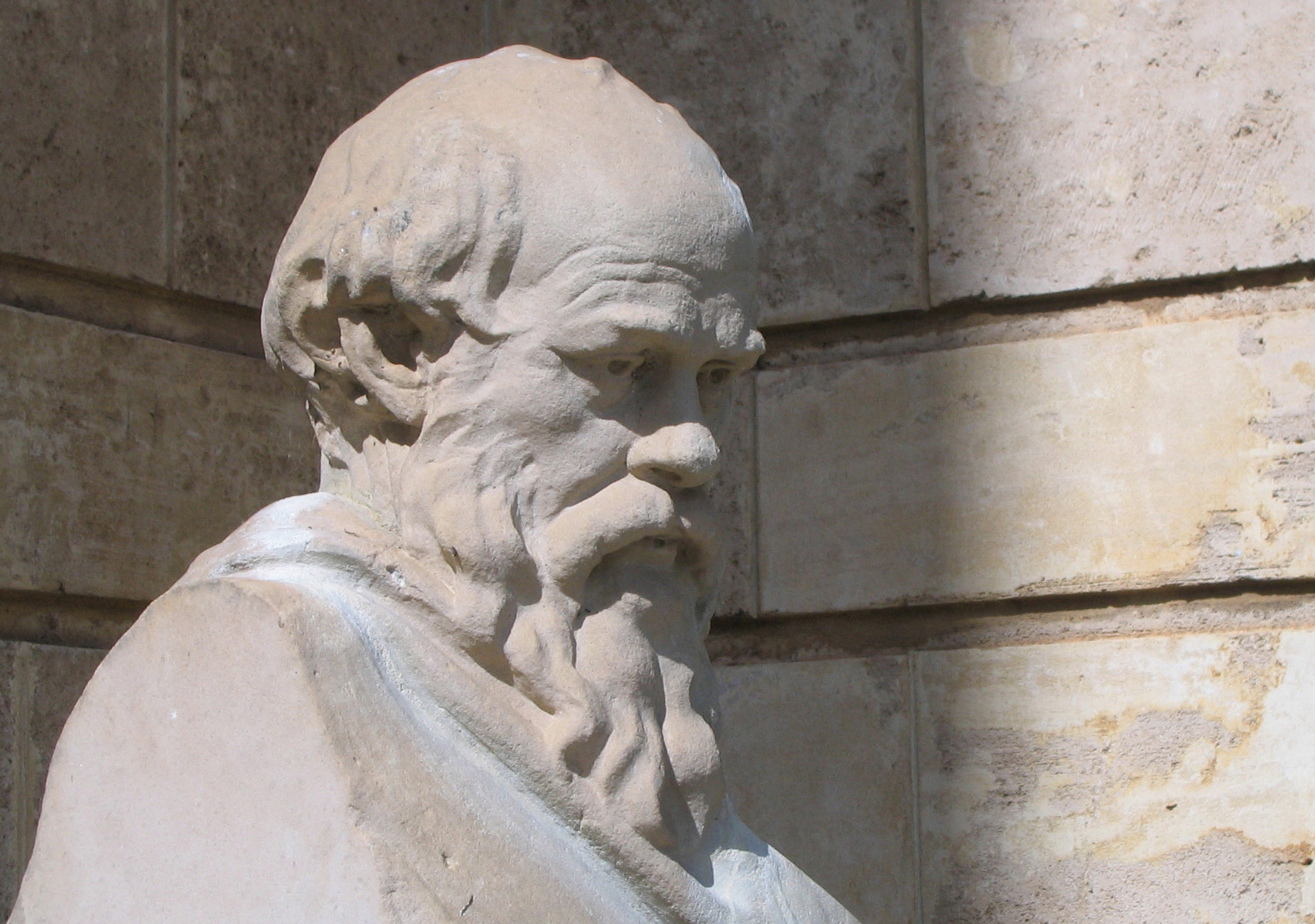
The trial of Socrates in 399 before Christ is one of the most famous legal and philosophical events in ancient history. An elderly Athenian philosopher was accused of rejecting the gods of the city, introducing new divine powers and corrupting the young. After defending himself before a large citizen jury, Socrates was found guilty and sentenced to death.
The Death of a Philosopher and the Crisis of Athenian Democracy
His execution raised questions that have remained important for more than two thousand years. Can a person be punished for challenging accepted beliefs? What duties does a citizen owe to the state? Should truth be determined by popular opinion? Is it better to suffer injustice than to commit it?
Socrates wrote no books of his own. Most knowledge of his trial comes from works written by his followers and contemporaries, especially Plato and Xenophon. The comic playwright Aristophanes also presented a satirical version of Socrates decades before the trial.
These sources do not provide a perfectly neutral record. Plato and Xenophon admired Socrates and wanted to defend his memory, while Aristophanes exaggerated him for comic effect. Nevertheless, together they reveal the political tensions, religious concerns and personal hostility surrounding the case.
The trial was not simply a conflict between one philosopher and an intolerant city. It took place after years of war, political violence and social instability. Athens had recently suffered military defeat, oligarchic revolution and the collapse of its empire.
Socrates was associated with several controversial figures involved in these events. His method of questioning also embarrassed politicians, poets and respected citizens by exposing the limits of their knowledge.
To understand why Athens condemned Socrates, it is necessary to examine his life, his philosophy, the accusations against him and the troubled world in which the trial occurred.
Socrates and Classical Athens
Socrates was born in Athens around 470 or 469 before Christ. His father, Sophroniscus, was traditionally described as a stonemason or sculptor, while his mother, Phaenarete, was said to have worked as a midwife.
Socrates lived during a period of extraordinary change. Athens became a great naval power, developed a direct democracy and produced major achievements in drama, architecture, philosophy, history and art.
The city also created an empire and fought repeated wars. Its political life was energetic but unstable, and influential citizens could quickly rise or fall according to the decisions of the Assembly and courts.
Socrates served as a soldier during the Peloponnesian War. Ancient sources describe him fighting at Potidaea, Delium and Amphipolis.
He developed a reputation for courage and physical endurance. During military campaigns, he was said to tolerate cold, hunger and exhaustion better than many younger men.
Socrates did not belong to the wealthy elite, although he associated with rich and politically ambitious Athenians. He lived simply, often walked barefoot and showed little interest in money or luxury.
He spent much of his time in public places, including the Agora, gymnasiums and workshops. There he approached citizens and questioned them about justice, courage, knowledge, religion and virtue.
The Socratic Method
Socrates did not usually present himself as a teacher delivering a fixed body of knowledge. Instead, he asked questions.
He might begin by asking a person to define courage, justice or piety. When an answer was offered, Socrates tested it with further questions.
The conversation often revealed contradictions. A person who initially appeared confident would discover that the definition failed to explain every example.
This method is now commonly known as Socratic questioning or the Socratic method.
Its purpose was not merely to humiliate people. Socrates believed that recognising ignorance was the beginning of genuine wisdom.
A person who falsely believed that he already understood justice or goodness had little reason to examine his life. A person who accepted the limits of his knowledge could begin searching more honestly.
However, those questioned by Socrates did not always appreciate the experience. Influential citizens could appear foolish before an audience of young men.
Socrates’ conversations therefore created both admiration and resentment.
The Search for Wisdom
One of the most important stories associated with Socrates concerned the Oracle of Apollo at Delphi.
Socrates’ friend Chaerephon reportedly asked the oracle whether anyone was wiser than Socrates. The answer was that no one was wiser.
Socrates found this response puzzling because he did not consider himself wise.
He attempted to understand the oracle by questioning people who possessed reputations for knowledge. He spoke with politicians, poets and craftsmen.
The politicians believed that they understood important matters but often could not explain their ideas clearly.
The poets created impressive works but could not always explain their meaning or the source of their inspiration.
Craftsmen possessed genuine knowledge of their trades, but some assumed that this practical knowledge made them wise about every subject.
Socrates concluded that he was wiser only in a limited sense. Other people believed that they knew what they did not know, while he recognised his own ignorance.
This search helped create the hostility that eventually contributed to his prosecution.
The Examined Life
Socrates believed that human beings should examine how they lived.
Wealth, reputation and power were less important than the condition of the soul.
A person should care above all about becoming just, wise and morally good.
Socrates challenged citizens who devoted themselves to money and political influence while neglecting virtue.
He believed that wrongdoing damaged the person who committed it, even when the wrongdoer gained power or escaped punishment.
For Socrates, moral improvement required continuous questioning.
A life guided only by habit, ambition or public opinion was not fully human because it lacked reflection.
This belief shaped his conduct during the trial. He refused to promise that he would stop philosophising because he considered examination a duty given to him by the god Apollo.
Socrates and the Sophists
Socrates was often associated with a group of travelling teachers known as the Sophists.
The Sophists offered instruction in rhetoric, argument, politics and public speaking. These skills were valuable in the Athenian Assembly and courts.
Many Sophists charged fees and promised to help ambitious young men become more successful.
Socrates shared some features with them. He discussed morality and politics, questioned traditional assumptions and attracted young followers.
However, he rejected the claim that he taught wisdom for money. He insisted that he did not possess knowledge that could simply be sold to students.
His goal was not to train people to win arguments regardless of truth. He wanted to discover whether beliefs were rational and whether lives were just.
Many Athenians may not have recognised this distinction. To them, Socrates looked like another dangerous intellectual who taught young men to question authority.
Aristophanes and the Public Image of Socrates
In 423 before Christ, the comic playwright Aristophanes presented a play called The Clouds.
The play portrayed Socrates as the head of a strange school known as the Thinkery.
Aristophanes’ Socrates studied the heavens, investigated absurd natural questions and taught dishonest forms of argument.
He was shown suspended in a basket, claiming that he needed to rise above the ground to think about the sky.
The play combined Socrates with features associated with natural philosophers and Sophists, even though the historical Socrates differed from both.
The Clouds was a comedy, not a factual biography. Its purpose was to entertain and criticise new intellectual fashions.
However, it may have shaped public attitudes towards Socrates.
At his trial, Socrates referred to old accusations that had followed him for years. These included claims that he investigated things beneath the earth and in the heavens and made weaker arguments appear stronger.
He considered these earlier rumours more dangerous than the formal charges because they had influenced jurors long before he entered the courtroom.
The Peloponnesian War
The political background of the trial was dominated by the Peloponnesian War, fought between Athens and Sparta from 431 to 404 before Christ.
Athens led a naval empire, while Sparta commanded a powerful alliance based mainly upon land forces.
The war brought invasion, plague, political division, military disaster and economic hardship to Athens.
During the early years of the conflict, a devastating epidemic killed a large part of the population, including the statesman Pericles.
Athens later launched the Sicilian Expedition, an ambitious campaign that ended in catastrophic defeat.
In the final years of the war, Sparta developed a navy with financial assistance from Persia and destroyed the main Athenian fleet.
Athens surrendered in 404 before Christ. Its empire collapsed, its walls were partly demolished and its political system was temporarily replaced.
The defeat created bitterness, fear and suspicion within the city.
The Rule of the Thirty
After the Athenian surrender, Sparta supported the establishment of an oligarchic government known as the Thirty.
The Thirty were led by figures including Critias, a former associate of Socrates.
The regime carried out executions, confiscated property and drove many citizens into exile.
Its violence made it deeply hated.
Another former associate of Socrates, Charmides, also participated in the oligarchic government.
Socrates did not support every action of the Thirty. According to Plato, the rulers ordered him and several others to arrest Leon of Salamis so that Leon could be executed.
Socrates refused to obey because he considered the command unjust.
He returned home despite the danger. The fall of the Thirty prevented the regime from punishing him.
Nevertheless, his connection with Critias and Charmides damaged his reputation.
To many Athenians, the philosopher seemed associated with men who had betrayed democracy and participated in political terror.
Alcibiades and Political Scandal
Another controversial figure connected with Socrates was Alcibiades.
Alcibiades was wealthy, talented, ambitious and politically unstable. He played important roles during the Peloponnesian War but repeatedly changed sides.
He supported the Sicilian Expedition before being recalled to Athens to face charges of religious misconduct.
Rather than return for trial, he escaped and advised Sparta against Athens.
He later worked with Persian officials and eventually returned temporarily to Athenian service.
Alcibiades admired Socrates, and Plato portrayed him speaking passionately about the philosopher.
Socrates had attempted to guide him, but he had not prevented Alcibiades from pursuing power and ambition.
Critics could therefore ask what kind of influence Socrates exercised over the young men who followed him.
The actions of Alcibiades and Critias made the charge of corrupting the youth politically explosive.
The Restoration of Democracy
The Thirty were overthrown in 403 before Christ, and democracy was restored in Athens.
The returning democrats attempted to prevent further civil conflict by establishing an amnesty.
Most citizens agreed not to prosecute one another for actions committed during the oligarchic period.
This policy helped Athens recover without immediately descending into cycles of revenge.
However, political memories did not disappear.
Suspicion remained towards individuals associated with oligarchic leaders or anti-democratic ideas.
Socrates had not been a member of the Thirty, but his criticism of political ignorance and his relationships with controversial aristocrats made him vulnerable.
The formal charges against him concerned religion and education rather than direct political crimes.
Yet the recent history of Athens formed an important background to the trial.
The Accusers
Three men brought the formal case against Socrates: Meletus, Anytus and Lycon.
Meletus was a poet and appears to have been the official prosecutor responsible for presenting the indictment.
Anytus was a wealthy and influential democratic politician. He had opposed the Thirty and supported the restoration of democracy.
Lycon was associated with public speaking and may have represented the interests of orators.
Plato’s account suggests that the accusers represented groups offended by Socrates’ questioning: poets, politicians, craftsmen and speakers.
Anytus may have been especially concerned about Socrates’ influence upon young men and his criticism of respected democratic leaders.
The prosecution was therefore supported by personal hostility, religious concern and political suspicion.
The Formal Charges
The indictment accused Socrates of failing to recognise the gods recognised by the city, introducing new divine beings and corrupting the young.
These charges were closely connected.
Religion in Athens was not simply a matter of private belief. Public worship, sacrifices and festivals were essential parts of civic life.
Rejecting the gods of the city could be understood as threatening the community’s relationship with divine powers.
Teaching young citizens to disrespect religion, law or political authority could also be viewed as a danger to the state.
The prosecution did not need to prove that Socrates had established an organised religious movement or directly ordered young men to commit crimes.
It needed to persuade the jury that his influence and teachings damaged the values upon which Athens depended.
Impiety in Ancient Athens
The charge of impiety concerned disrespect towards the gods, sacred rituals or religious laws.
Athenian religion did not require citizens to follow a written creed describing exactly what they believed.
Instead, proper participation in sacrifices, festivals and traditional customs was especially important.
People could tell different stories about the gods or debate religious questions, but public actions that appeared to threaten divine favour could produce prosecution.
Athens had experienced several religious scandals during the Peloponnesian War.
Before the Sicilian Expedition, statues of Hermes were damaged throughout the city. There were also accusations that sacred mysteries had been mocked in private gatherings.
These events created fear that religious wrongdoing might bring disaster upon Athens.
Against this background, Socrates’ unusual language about divine guidance could appear suspicious.
The Divine Sign
Socrates frequently referred to a divine sign or spiritual voice that had guided him since childhood.
This sign did not usually tell him what to do. Instead, it warned him against particular actions.
Socrates treated the sign as evidence of divine concern and guidance.
His accusers may have interpreted it as the introduction of a new spiritual power not recognised by the city.
Socrates responded that anyone who believed in divine signs must also believe in divine beings.
He argued that the charge was contradictory because Meletus appeared to accuse him both of atheism and of introducing new gods.
Socrates did not present himself as an enemy of religion. He claimed that his philosophical activity was a service commanded by Apollo.
The Charge of Corrupting the Young
The accusation that Socrates corrupted the young was broad and emotionally powerful.
Young men often gathered around Socrates and enjoyed watching him question confident public figures.
Some attempted to copy his method and challenge older citizens.
This could make traditional authorities appear foolish and encourage disrespect.
Socrates’ followers included members of wealthy families who had the leisure to spend time in philosophical conversation.
Several later became associated with political controversy, oligarchy or betrayal.
The prosecution could therefore claim that Socratic questioning weakened respect for parents, laws, religion and democratic institutions.
Socrates denied that he deliberately corrupted anyone.
He also argued that if he had harmed the young unintentionally, he should have been corrected privately rather than prosecuted.
The Athenian Legal System
The trial took place before a large jury of male Athenian citizens.
Athenian courts did not use professional judges and lawyers in the modern sense.
Citizens presented their own cases, although speeches could sometimes be written with assistance.
The jurors listened to the prosecution and defence before voting.
There was no extended private discussion among jurors. Each citizen cast his own vote.
The large size of juries was intended to reduce bribery and prevent a small group from controlling the decision.
Speeches were timed using a water clock.
Emotional appeals, character arguments, political history and religious concerns could all influence the verdict.
Plato’s Apology
The most famous account of the trial is Plato’s Apology.
The title does not mean that Socrates apologised or expressed regret.
The Greek word refers to a defence speech.
Plato presents Socrates responding to both the formal indictment and the older rumours surrounding him.
It is uncertain whether the speech records Socrates’ exact words.
Plato may have shaped and reorganised the defence to communicate the philosopher’s character and ideas.
Nevertheless, the work is generally understood as reflecting the central arguments Socrates used.
The speech portrays him as calm, courageous and unwilling to abandon philosophy in order to save his life.
Socrates Addresses the Old Accusations
Socrates begins by distinguishing between his formal accusers and the earlier anonymous critics who had shaped his reputation.
For many years, Athenians had heard that he studied natural mysteries, denied traditional religion and taught clever arguments.
Socrates denies that he possesses expert knowledge of the heavens or the earth.
He also denies teaching students for payment.
He explains that his reputation for wisdom began with the Delphic oracle and his attempt to understand its meaning.
By questioning respected citizens, he discovered that many possessed confidence without knowledge.
These encounters created enemies who preferred to blame Socrates rather than admit their ignorance.
The Cross-Examination of Meletus
In Plato’s account, Socrates questions Meletus directly.
He asks who improves the young if Socrates corrupts them.
Meletus answers that the laws, jurors, councillors and citizens improve them, while Socrates alone corrupts them.
Socrates argues that this is unreasonable.
With horses, only a small number of trained experts improve them, while most people can cause harm through ignorance.
It seems unlikely that every Athenian improves the young while one individual alone corrupts them.
Socrates then asks whether anyone would intentionally make the people around him worse.
A corrupt person might harm those nearby, creating danger for the corrupter himself.
Therefore, if Socrates had harmed the young, he must have done so unintentionally and should have been instructed rather than prosecuted.
The Religious Contradiction
Socrates also questions Meletus about the religious charge.
He asks whether Meletus accuses him of believing in no gods or of introducing different divine beings.
Meletus appears to claim that Socrates is a complete atheist.
Socrates responds that this contradicts the accusation that he believes in spiritual signs or divine agencies.
A person cannot believe in activities associated with divine beings while denying that any divine beings exist.
He compares the contradiction to believing in the activities of horses without believing that horses exist.
The argument allows Socrates to present the indictment as confused and poorly constructed.
However, the jury may have been concerned less with logical consistency than with the wider effect of his teachings and religious language.
Socrates as the Gadfly
Socrates compares himself to a gadfly sent by the gods to awaken a large and slow horse.
The horse represents Athens.
The city is powerful and impressive but can become lazy, proud and unwilling to examine itself.
Socrates claims that his questions irritate citizens because they force them to confront their moral failures.
He urges them to care less about money, reputation and public office and more about wisdom and virtue.
Killing him might end the irritation, but it would also remove a valuable source of moral criticism.
Through this image, Socrates presents philosophy as a public service rather than a private hobby.
Why Socrates Avoided Political Leadership
Socrates explains that his divine sign prevented him from entering ordinary political life.
He believed that a person who consistently opposed injustice would not survive long in public office.
However, he describes occasions when he acted courageously as a citizen.
During the trial of several Athenian generals, Socrates served in a public role and resisted an illegal attempt to judge them collectively.
Later, under the Thirty, he refused the order to arrest Leon of Salamis.
These examples allowed him to argue that he had opposed injustice under both democratic and oligarchic governments.
He had not avoided politics because of cowardice. He believed that philosophical activity allowed him to serve the city more honestly.
Socrates Refuses to Beg
Athenian defendants sometimes brought their wives and children before the jury to inspire sympathy.
They might cry, plead or ask respected friends to speak on their behalf.
Socrates refused to use such methods.
He acknowledged that he had a family but would not present them to manipulate the jurors.
He argued that jurors should decide according to law and justice rather than pity.
This decision demonstrated dignity and consistency.
However, it may also have appeared proud or insulting.
Some jurors may have expected a defendant facing death to show humility and respect for their authority.
Socrates instead behaved as though his philosophical mission placed him above ordinary courtroom strategy.
The Verdict
After hearing the speeches, the jury voted on whether Socrates was guilty.
He was convicted by a relatively narrow majority.
The exact number of votes remains uncertain, although Plato suggests that a change of only a small number would have produced an acquittal.
The closeness of the result shows that Athenian opinion was divided.
Many jurors accepted that Socrates was dangerous or impious, while many others were unconvinced by the prosecution.
The guilty verdict did not automatically determine the punishment.
A second stage of the trial required the prosecution and defendant to propose penalties.
The jury would then choose between them.
The Proposed Punishments
The prosecution proposed death.
Socrates was expected to offer a serious alternative such as exile, imprisonment or a substantial fine.
Instead, he initially suggested that he deserved free meals in the Prytaneum, a public honour normally given to victorious athletes and important citizens.
He argued that athletes made citizens appear happy, while he attempted to make them genuinely good.
The proposal reflected his confidence that his philosophical work benefited Athens.
However, many jurors probably interpreted it as mockery.
Socrates later considered other penalties.
He rejected imprisonment because it would place him under the control of officials.
He rejected exile because other cities would also dislike his questioning.
He could not promise to remain silent because this would require him to disobey the god.
Finally, with support from friends including Plato, he proposed a fine.
The Death Sentence
The jury selected the death penalty.
The majority supporting death appears to have been larger than the majority that had voted for guilt.
This suggests that Socrates’ behaviour during the penalty stage angered some jurors who might otherwise have supported a less severe punishment.
Socrates responded without panic.
He warned those who condemned him that killing critics would not protect them from examination.
Others would continue asking questions, perhaps more aggressively because they were younger.
The proper way to escape criticism was not to silence critics but to improve one’s conduct.
He also addressed the jurors who had voted for acquittal and reflected upon the meaning of death.
Socrates on Death
Socrates argues that death should not automatically be feared.
No living person possesses certain knowledge of what death is.
To fear death as though it were known to be the greatest evil is therefore a form of false wisdom.
Death may be like a dreamless sleep, free from pain and disturbance.
If so, it could be considered peaceful.
Alternatively, death may involve the movement of the soul to another place where the dead continue to exist.
In that case, Socrates would be able to question famous heroes, poets and leaders from the past.
Either possibility seemed better than committing injustice to avoid death.
Socrates therefore maintained that a good person cannot truly be harmed in the most important moral sense.
Why the Execution Was Delayed
Socrates was not executed immediately after the trial.
Each year, Athens sent a sacred ship to the island of Delos in memory of the mythical voyage of Theseus.
During the ship’s absence, the city avoided executions in order to remain ritually pure.
The sacred vessel had already begun its journey when Socrates was convicted.
He therefore remained in prison for several weeks until the ship returned.
During this period, friends visited him and continued discussing philosophy.
Plato’s dialogues Crito and Phaedo describe events and conversations associated with Socrates’ final days.
Crito’s Escape Plan
In Plato’s Crito, Socrates’ wealthy friend Crito visits the prison before dawn.
Crito tells Socrates that arrangements have been made for his escape.
Friends are willing to bribe guards and help him travel to another city.
Crito argues that Socrates should not abandon his children or allow his enemies to succeed.
He also fears that people will believe his friends valued money more than Socrates because they failed to rescue him.
Socrates refuses to decide according to reputation or fear.
He insists that the only important question is whether escape would be just.
The Argument of the Laws
Socrates imagines the laws of Athens speaking to him.
The laws argue that they made his birth, education, marriage and civic life possible.
By choosing to remain in Athens throughout his long life, Socrates accepted its legal system.
He had opportunities to leave if he found the laws unacceptable.
Escaping after a lawful trial would damage the authority of the legal order.
Socrates distinguishes between suffering an unjust decision and responding with injustice.
Even if the jury judged him wrongly, he should not destroy respect for law by secretly escaping.
He concludes that it is better to suffer injustice than to commit it.
This argument has remained controversial because obedience to law can conflict with resistance to unjust government.
Socrates and Civil Obedience
Socrates’ decision to remain in prison does not mean that he believed citizens must obey every command.
He had already refused the illegal order of the Thirty to arrest Leon.
He also declared that he would continue philosophising even if the court ordered him to stop.
His position appears to distinguish between obeying a direct command to commit injustice and accepting the legal consequences of resistance.
Socrates would not perform an unjust action, but he would not escape punishment through another act he considered unjust.
This creates a demanding model of citizenship.
The citizen must obey conscience, challenge wrongdoing and still accept personal responsibility for the consequences.
The Final Day
Plato’s Phaedo presents Socrates’ final day in prison.
His friends gather around him to discuss the soul, philosophy and death.
Socrates appears calm, while many of his companions struggle with grief.
He argues that philosophy prepares a person for death by teaching the soul to value truth and virtue above bodily pleasure.
The dialogue develops complex arguments concerning the immortality of the soul.
Whether these arguments reproduce the exact conversation is uncertain, but they express Plato’s understanding of Socrates’ final attitude.
Socrates does not treat death as a meaningless end.
He approaches it as the final test of his belief that moral integrity matters more than physical survival.
The Hemlock
The official method of execution involved drinking a poisonous substance traditionally identified as hemlock.
When the time came, a prison official prepared the poison and explained what Socrates should do.
Socrates took the cup calmly and drank.
His friends began to cry, but he asked them to remain composed.
He walked until his legs became heavy and then lay down.
The poison gradually produced numbness that moved upward through his body.
When the coldness reached his heart, he died.
Plato describes the execution with restraint, presenting Socrates’ calmness as evidence of philosophical courage.
The Final Words
Socrates’ final words were addressed to Crito.
He reminded his friend that they owed a rooster to Asclepius and asked him to pay the debt.
Asclepius was the god of healing.
The meaning of the statement has been debated for centuries.
Some interpret it as suggesting that death heals the soul from the suffering of bodily life.
Others believe Socrates was simply remembering a genuine religious obligation.
The statement also challenges the accusation that he rejected the gods.
At the moment of death, he remained concerned with fulfilling a sacred duty.
Was Socrates Guilty?
The question of Socrates’ guilt depends upon how the accusations are understood.
He was probably not guilty of atheism in the ordinary sense.
He spoke repeatedly about gods, divine commands and spiritual guidance.
However, his understanding of religion was highly personal and philosophical.
He questioned traditional stories and claimed a special divine mission.
This may have appeared disrespectful or dangerous to some Athenians.
The charge of corrupting the young is even more difficult.
Socrates did encourage young men to question respected authorities.
Some of his associates later became enemies of democracy.
Yet there is no evidence that he instructed them to commit betrayal, tyranny or violence.
His philosophy emphasised virtue, justice and self-control rather than political crime.
Was the Trial Political?
The formal charges did not accuse Socrates of supporting oligarchy or participating in the crimes of the Thirty.
The amnesty established after the restoration of democracy made direct prosecution for many past political actions difficult.
Nevertheless, political memory almost certainly influenced the case.
Socrates’ connections with Critias and Alcibiades made him appear suspicious.
His criticism of popular decision-making and political ignorance could be interpreted as hostility towards democracy.
The trial may therefore have been legally religious but emotionally and politically connected to the recent crisis of Athens.
This does not mean that the accusations were invented solely as a disguise.
Religion, education and politics were closely connected in the ancient city.
To corrupt young citizens or undermine civic worship was inherently political.
Did Athens Betray Its Democratic Ideals?
The execution of Socrates is often presented as a failure of democracy.
A citizen jury condemned a man for questioning accepted beliefs and challenging public figures.
The case demonstrates how democratic majorities can act unjustly, especially when influenced by fear, resentment and political trauma.
However, Athens also allowed Socrates to speak publicly, cross-examine his accuser and criticise the city before hundreds of citizens.
The verdict was divided rather than unanimous.
Socrates had spent decades questioning powerful people without being silenced.
The trial therefore reveals both the openness and the vulnerability of democratic society.
Freedom of speech can exist alongside hostility towards speakers who appear to threaten shared values.
Socrates and Freedom of Speech
Socrates has become a symbol of the struggle for freedom of thought and expression.
He refused to stop asking questions even when silence might have saved his life.
He believed that public examination benefited the city by exposing ignorance and encouraging moral improvement.
However, ancient Athens did not possess a modern legal principle guaranteeing unlimited freedom of speech.
Speech could be judged according to its effects upon religion, morality and civic order.
The trial therefore raises a continuing question.
How much criticism should a society tolerate when citizens believe that criticism threatens the values holding the community together?
Socrates’ answer was that truth and moral examination must not be abandoned merely because they are uncomfortable.
Socrates and Democratic Knowledge
Socrates’ philosophy challenged the assumption that political equality automatically produced political wisdom.
Every male citizen could speak and vote in the Assembly, but not every citizen possessed knowledge of justice, war or good government.
Socrates frequently compared political expertise with specialised crafts.
A person would not select a ship’s captain or doctor by popularity alone.
Why, then, should important political decisions be made without knowledge?
This criticism could appear anti-democratic.
Yet Socrates did not simply support rule by wealthy aristocrats.
He exposed ignorance among elite politicians as readily as among ordinary citizens.
His deeper concern was that authority should be guided by wisdom and virtue rather than status or public approval.
Plato’s Response to the Trial
The death of Socrates deeply influenced Plato.
Plato had belonged to an aristocratic family and witnessed the failures of both democracy and oligarchy.
The Thirty had ruled brutally, but democratic Athens had executed his teacher.
Plato became suspicious of political systems governed by ambition, ignorance and changing public opinion.
In his dialogues, he repeatedly explored justice, knowledge, education and the qualities required for good leadership.
His work The Republic presents a highly critical examination of democracy and imagines government by philosopher-rulers trained to understand the good.
The trial of Socrates therefore helped shape one of the most influential traditions in Western political philosophy.
Xenophon’s Defence of Socrates
Xenophon also wrote works defending Socrates’ character.
His Apology presents Socrates as accepting death because he believed old age would bring physical and mental decline.
Xenophon’s Memorabilia attempts to show that Socrates improved rather than corrupted his companions.
He portrays the philosopher offering practical moral advice about friendship, household management, duty and self-control.
Xenophon’s Socrates is often less abstract than Plato’s and more concerned with everyday conduct.
Both authors agree that Socrates was religious, disciplined and committed to virtue.
Their works helped preserve his reputation after the conviction.
The Socratic Problem
Because Socrates wrote nothing, historians face what is known as the Socratic problem.
It is difficult to separate the historical Socrates from the interpretations of his followers.
Plato used Socrates as the central speaker in many dialogues, but the ideas expressed may increasingly reflect Plato’s own philosophy.
Xenophon presents a somewhat different figure.
Aristophanes offers a comic caricature, while Aristotle discusses Socrates from the perspective of a later generation.
No single source can be accepted without question.
Nevertheless, certain features appear consistently.
Socrates questioned people in public, claimed moral rather than technical wisdom, emphasised virtue and developed a strong group of admirers and enemies.
The Meaning of Socratic Irony
Socrates often claimed ignorance while questioning people who claimed knowledge.
This practice is sometimes described as Socratic irony.
He appeared humble, yet his questions frequently revealed that his conversation partner knew less than expected.
It remains debated whether Socrates’ statements of ignorance were completely sincere or strategically exaggerated.
He did appear to possess strong convictions about justice, virtue and the importance of examination.
However, he denied possessing complete definitions or expert wisdom.
The tension made his conversations both powerful and irritating.
Those questioned could feel that Socrates controlled the discussion while pretending not to know anything.
Why Socrates Made Enemies
Socrates made enemies because his method challenged reputation.
A politician might be admired as wise until Socrates asked him to define justice.
A poet might be celebrated as inspired but unable to explain the meaning of his own work.
A craftsman might possess genuine skill but claim authority over matters beyond his experience.
Young audiences enjoyed watching respected men become confused.
The victims of these examinations could feel publicly humiliated.
Socrates also refused to soften his criticism for the sake of popularity.
He believed that causing discomfort was justified if it encouraged moral improvement.
To his followers, this was courage. To his enemies, it was arrogance.
The Question of Teaching
Socrates denied being a teacher in the professional sense.
He did not charge fees, offer a formal course or claim responsibility for students.
People chose to listen to him and participate in conversations.
This defence created an important difficulty.
If Socrates was not a teacher, could he be blamed for the later actions of those who admired him?
Critics might answer that influence does not require a classroom or payment.
Socrates’ followers copied his questioning style and absorbed his criticism of conventional authority.
Socrates would respond that individuals remained responsible for their own choices.
He could encourage examination but could not control how every listener used it.
The Trial as Tragedy
The trial can be understood as a tragedy because both Socrates and Athens acted according to principles they considered necessary.
Socrates believed that he must continue philosophising and refuse dishonest appeals.
The city believed it had the right to protect religion, education and civic stability.
Neither side was willing to compromise without betraying its own understanding of justice.
Socrates could probably have increased his chances of survival by speaking more cautiously, proposing exile or promising silence.
Athens could have tolerated an elderly critic whose influence would soon end naturally.
Instead, the confrontation produced a death that damaged the city’s reputation and made Socrates immortal as a philosophical symbol.
The Legacy of the Trial
The trial of Socrates became one of the defining stories of Western philosophy.
Socrates came to represent the individual who places conscience and truth above safety.
His death has been compared with later cases involving religious persecution, political dissent and freedom of expression.
Writers, artists and political thinkers have repeatedly returned to the scene of the philosopher before his judges.
Some admire his courage. Others question whether he deliberately provoked the jury or failed in his responsibility to his family.
The trial remains powerful because it does not offer an easy separation between wisdom and foolishness, law and justice, or democracy and oppression.
Socrates as a Martyr for Philosophy
Socrates is sometimes described as a martyr for philosophy.
He died because he would not abandon the search for truth and virtue.
Unlike a religious martyr, he did not demand acceptance of a fixed revelation.
His commitment was to questioning, argument and moral examination.
His execution demonstrated that philosophical inquiry could become dangerous when it challenged political authority and social confidence.
Yet Socrates did not seek destruction of the city.
He believed that his criticism was a form of care for Athens.
The tragedy is that the city interpreted his service as corruption.
Law and Justice
The trial forces a distinction between law and justice.
A legal process can follow established procedures and still produce an unjust result.
Socrates received a public hearing and was judged by citizens according to Athenian law.
Yet many later readers believe the verdict was morally wrong.
Socrates also believed that individuals must respect law while refusing to commit injustice.
His refusal to escape suggests that legal order has value even when particular decisions fail.
The case therefore resists simple conclusions.
It asks how citizens should respond when conscience conflicts with law and when obedience threatens truth.
Knowledge and Humility
One of the central lessons associated with Socrates is the importance of intellectual humility.
Human beings often claim certainty without examining the foundations of their beliefs.
Political power, education, artistic talent or professional skill can create confidence that extends beyond genuine knowledge.
Socrates’ wisdom consisted partly in recognising these limits.
His method required people to define their terms, test their assumptions and admit contradictions.
This process can be uncomfortable, but it remains essential to philosophy, science, law and education.
The trial shows the danger faced by communities that punish questions rather than answer them.
The Duty to Question
Socrates believed that questioning was not merely a personal preference.
It was a duty to the gods, the city and the soul.
He compared himself to a person awakening others from sleep.
A society that never examines its values may become confident but unjust.
Citizens may follow tradition without understanding it or obey leaders without testing their claims.
Socratic questioning does not guarantee correct answers.
Its value lies in exposing weak reasoning and preventing false certainty from becoming unquestioned authority.
This duty to question remains central to the modern idea of critical thinking.
The Cost of Integrity
Socrates’ conduct demonstrates that integrity can carry a serious cost.
He could have flattered the jury, appealed to pity or promised to remain silent.
He refused because these actions would contradict the life he had taught others to examine.
His death gave consistency to his philosophy.
If virtue was more important than survival, he had to demonstrate that belief when survival was genuinely threatened.
However, his choice also affected his wife, children and friends.
This raises another difficult question.
Does personal integrity justify refusing every compromise, even when others will suffer from the decision?
The sources admire Socrates but do not completely remove this tension.
The Responsibility of the Citizen
Socrates’ life presents citizenship as an active moral responsibility.
A good citizen does more than obey laws and attend political meetings.
He must examine whether the city’s actions are just.
Socrates resisted illegal commands under both democracy and oligarchy.
He criticised citizens for caring more about wealth than virtue.
At the same time, he accepted the authority of the legal system and refused to escape punishment.
His model of citizenship combines criticism with loyalty, resistance with responsibility and conscience with respect for civic order.
This balance remains difficult to achieve.
How Athens Remembered Socrates
The immediate reaction of Athens after Socrates’ death is uncertain.
Later traditions claimed that the city regretted the execution and punished his accusers, but these stories may not be historically reliable.
What is clear is that Socrates’ followers preserved his memory.
Plato, Xenophon and other Socratic writers produced dialogues and accounts presenting him as a model of virtue and wisdom.
The schools of later Greek philosophy also treated Socrates as a foundational figure.
Cynics admired his simple lifestyle and rejection of wealth.
Stoics admired his self-control, courage and obedience to reason.
Sceptics found inspiration in his recognition of human ignorance.
The Trial in Modern Thought
The trial of Socrates continues to influence modern discussions of education, democracy and civil liberty.
Teachers use Socratic questioning to encourage students to examine assumptions rather than memorise conclusions.
Lawyers and political thinkers study the case as an example of tension between public order and freedom of expression.
Defenders of democracy use it as a warning that majority rule must be limited by rights, evidence and fair treatment.
Critics of intellectual arrogance use it to ask whether Socrates respected ordinary citizens or treated them with contempt.
The story remains relevant because open societies still struggle with unpopular speech, political mistrust and the boundaries of civic loyalty.
Conclusion
The trial of Socrates was the result of philosophical conflict, personal hostility, religious suspicion and political trauma.
Socrates had spent decades questioning Athenians about justice, virtue and knowledge.
His method attracted young followers but embarrassed respected citizens.
His relationships with controversial figures such as Alcibiades and Critias made him especially vulnerable after the defeat of Athens and the violent rule of the Thirty.
In 399 before Christ, Meletus, Anytus and Lycon accused him of impiety and corrupting the young.
Socrates defended himself by denying that he was an atheist or a professional teacher.
He argued that his philosophical mission had been commanded by the god and that his questioning benefited Athens.
He refused to beg for mercy, abandon philosophy or offer a punishment that implied guilt.
The jury convicted him and selected death.
When his friends arranged an escape, Socrates refused because he believed that answering injustice with injustice would damage his soul and the laws of the city.
He drank the poison calmly and died surrounded by his companions.
Athens succeeded in ending the life of Socrates, but it could not silence his questions.
His death transformed him from a controversial public figure into an enduring symbol of philosophy, conscience and intellectual courage.
The trial continues to challenge every society that values both public order and freedom of thought.
It asks whether citizens are willing to tolerate voices that expose their ignorance, criticise their priorities and demand that they live more justly.
Socrates believed that an unexamined life was not worth living.
His trial demonstrated that the examined life may carry danger, but his legacy suggests that a society without examination faces a greater danger still.