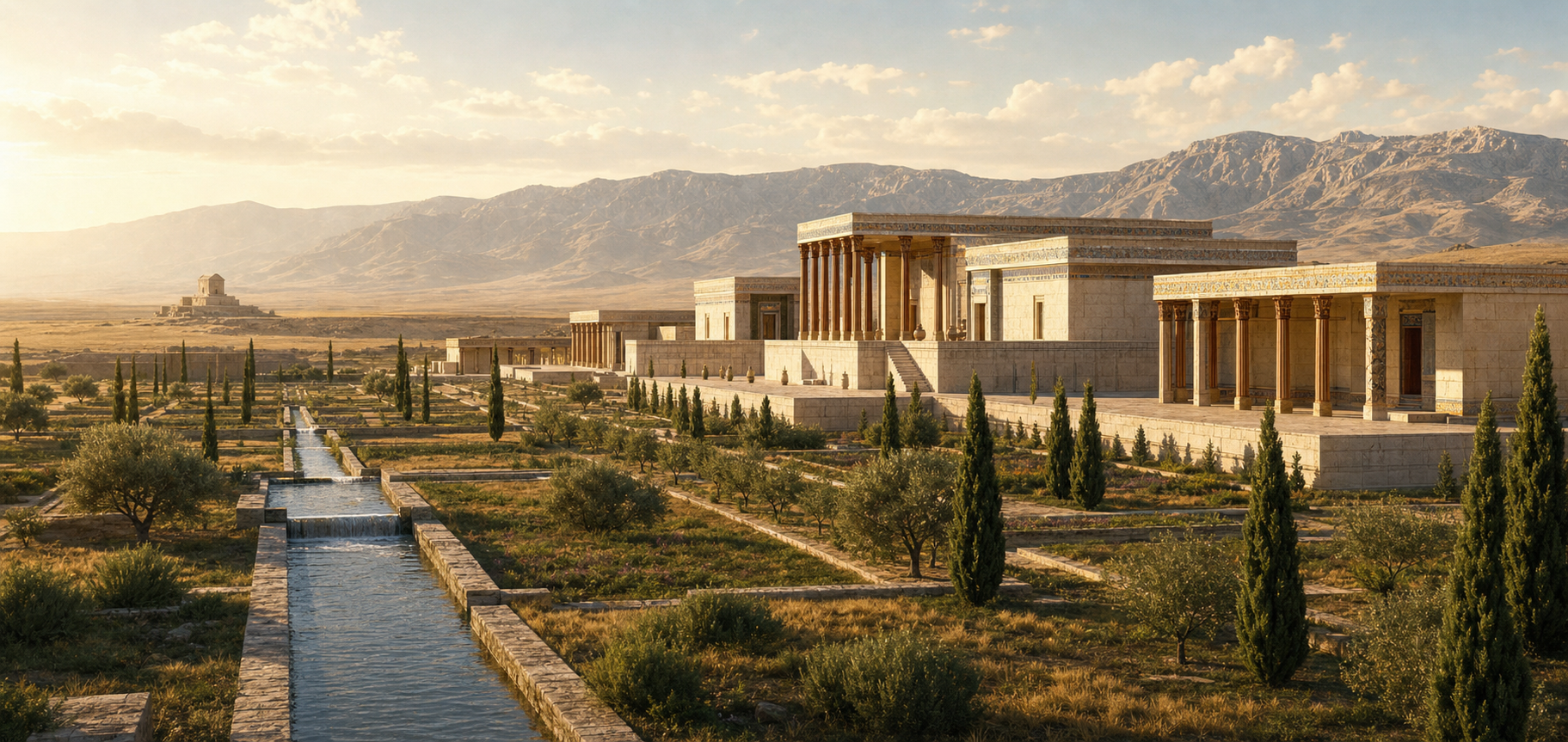
The Hellenistic Age began in 323 BCE with the death of Alexander the Great and ended conventionally in 31 BCE with the Battle of Actium, when Octavian defeated the forces of Mark Antony and Cleopatra VII. During these nearly three centuries, the political world created by Alexander's conquests fragmented into powerful kingdoms ruled by Macedonian dynasties, while Greek language and culture spread across an enormous area stretching from the Mediterranean to Central Asia and the borders of India.
The Hellenistic world was not simply Greek civilisation transplanted into foreign lands. It was a complex age of interaction. Greek and Macedonian settlers lived among Egyptians, Babylonians, Persians, Jews, Phoenicians, Anatolians, Syrians and many other peoples. Local traditions survived, adapted and sometimes blended with Greek institutions and artistic styles. Great cities such as Alexandria, Antioch, Pergamon and Seleucia became centres of commerce, scholarship and royal power.
The period witnessed dramatic advances in mathematics, astronomy, geography, medicine, engineering and philosophy. Scholars including Euclid, Archimedes and Eratosthenes worked within intellectual traditions supported by wealthy kings and expanding libraries. Philosophical schools such as Stoicism and Epicureanism offered new approaches to life in a world where the independent Greek city-state no longer dominated international politics.
The Hellenistic kingdoms were also intensely competitive. The descendants and generals of Alexander fought decades of wars over his empire. The Ptolemies ruled Egypt, the Seleucids controlled much of western Asia, the Antigonids dominated Macedonia, and smaller kingdoms emerged throughout Anatolia and Central Asia. Eventually a new western power, Rome, became increasingly involved in eastern Mediterranean politics. By the first century BCE, most major Hellenistic kingdoms had fallen under Roman control.
The Death of Alexander the Great
Alexander the Great died in Babylon in June 323 BCE at the age of thirty-two.
In barely a decade of campaigning, he had destroyed the Achaemenid Persian Empire, conquered Egypt, captured Babylon, Susa and Persepolis and advanced through Central Asia into the northwestern Indian subcontinent.
His empire extended across thousands of kilometres.
Yet Alexander died without establishing a clear and stable succession.
The political crisis created by his death became the starting point of the Hellenistic Age.
An Empire Without a Successor
Alexander left no adult son capable of taking power immediately.
His half-brother Arrhidaeus, later known as Philip III, had limited ability to rule independently.
Alexander's wife Roxana was pregnant when he died.
Her child, Alexander IV, was born after his father's death.
The existence of two weak royal figures allowed Alexander's powerful generals to compete for real authority.
Philip III Arrhidaeus
Philip III was a son of Philip II of Macedon and therefore Alexander's half-brother.
He was proclaimed king after Alexander's death as part of a political compromise.
However, effective power remained in the hands of senior commanders and royal officials.
Philip became a symbolic focus for competing factions rather than an independent ruler.
Alexander IV
Alexander IV was the posthumous son of Alexander the Great and Roxana.
In theory, he represented the continuation of Alexander's dynasty.
In practice, his youth made him dependent upon regents and military commanders.
He and Roxana eventually became victims of the violent struggles among Alexander's successors.
The Diadochi
Alexander's generals and successors became known as the Diadochi, meaning successors.
They initially claimed to govern portions of the empire on behalf of the royal family.
Over time, however, many began acting as independent rulers.
Their wars gradually destroyed the possibility of restoring Alexander's empire under one monarch.
The Partition of Babylon
Shortly after Alexander's death, his commanders met at Babylon to divide major responsibilities and territories.
Different generals received satrapies or commands throughout the empire.
Ptolemy received Egypt.
Antigonus controlled important territories in Anatolia.
Other commanders received regions stretching from Macedonia to Central Asia.
The arrangement was temporary and soon gave way to conflict.
Perdiccas
Perdiccas became one of the most powerful figures immediately after Alexander's death.
As holder of important royal authority, he attempted to preserve the unity of the empire under the Argead royal family.
Other generals increasingly feared his ambitions.
His attempt to invade Egypt ended disastrously, and he was killed by his own officers in 321 BCE.
Ptolemy
Ptolemy was one of Alexander's senior commanders and became ruler of Egypt after 323 BCE.
He understood the strategic and economic strength of the Nile kingdom.
Rather than attempting immediately to control the entire empire, Ptolemy concentrated on securing a durable regional power base.
His dynasty would rule Egypt for nearly three centuries.
Alexander's Body
The fate of Alexander's body became politically important.
His remains were originally intended for burial within the Macedonian royal tradition, but Ptolemy intercepted the funeral procession.
Alexander's body was eventually taken to Egypt and placed in Alexandria.
Possession of the conqueror's remains strengthened Ptolemy's claim to association with Alexander's legacy.
Antipater
Antipater had served Philip II and Alexander and remained responsible for Macedonia and Greece while Alexander campaigned in Asia.
After Alexander's death, he became one of the most powerful surviving representatives of the older Macedonian political order.
His death in 319 BCE created another succession crisis.
The Lamian War
News of Alexander's death encouraged several Greek cities to challenge Macedonian dominance.
Athens became a leading participant in the uprising known as the Lamian War.
Greek forces initially achieved some success and trapped Antipater at Lamia.
Macedonian reinforcements eventually reversed the situation.
The Defeat of Athens
The anti-Macedonian coalition was defeated in 322 BCE.
Athens was forced to accept political restrictions and a Macedonian garrison.
The defeat demonstrated that Alexander's death had not restored the independence of the major Greek city-states.
Demosthenes
The famous Athenian orator Demosthenes had spent much of his career opposing Macedonian power.
After the failure of the Lamian War, Macedonian authorities pursued him.
He took his own life in 322 BCE rather than surrender.
His death symbolised the end of an earlier era of independent Athenian resistance to Macedon.
The Wars of the Successors
The decades after Alexander's death were dominated by repeated wars among his former generals.
Alliances changed constantly.
Former allies became enemies, and defeated rulers frequently returned to power.
Military control, dynastic marriage and possession of major cities became essential tools of survival.
Antigonus Monophthalmus
Antigonus I Monophthalmus, whose name means the One-Eyed, became one of the most ambitious of Alexander's successors.
He controlled extensive territories in Anatolia and later attempted to restore much of Alexander's empire under his own authority.
His growing power alarmed Ptolemy, Seleucus, Cassander and Lysimachus.
Demetrius Poliorcetes
Antigonus's son Demetrius became one of the most colourful military leaders of the period.
He was called Poliorcetes, meaning Besieger of Cities, because of his reputation for siege warfare.
Demetrius used massive siege engines and naval forces during campaigns across the eastern Mediterranean.
The Siege of Rhodes
One of Demetrius's most famous operations was the siege of Rhodes from 305 to 304 BCE.
The Rhodians resisted despite enormous siege machinery constructed by Demetrius's engineers.
The siege eventually ended without the city's capture.
Rhodes emerged with enhanced prestige.
The Colossus of Rhodes
After resisting Demetrius, the Rhodians constructed an enormous bronze statue of the sun god Helios.
The Colossus of Rhodes became one of the Seven Wonders of the Ancient World.
The statue stood for only several decades before being destroyed by an earthquake.
Its construction reflected the wealth and confidence of Hellenistic Rhodes.
Kingship Returns
Alexander's generals initially avoided openly declaring themselves kings while members of his family remained alive.
By the early third century BCE, this restraint disappeared.
Antigonus and Demetrius adopted royal titles in 306 BCE.
Other major successors soon followed.
The empire had effectively become a collection of competing monarchies.
The End of Alexander's Dynasty
Philip III Arrhidaeus was killed during the succession struggles.
Alexander IV and Roxana were later murdered on the orders of Cassander.
With the death of Alexander's son, there was no longer a legitimate surviving heir capable of reuniting the empire under the original Macedonian dynasty.
Cassander
Cassander, son of Antipater, became ruler of Macedonia after prolonged struggle.
He founded or rebuilt cities and attempted to strengthen his authority in Greece.
His decision to eliminate Alexander IV removed one of the greatest remaining threats to the independence of the successor rulers.
Lysimachus
Lysimachus had served Alexander and received authority in Thrace.
He gradually expanded into Anatolia and Macedonia.
For a time, he controlled a large kingdom spanning both sides of the northern Aegean.
His career demonstrates how rapidly relatively modest satrapies could grow into powerful states.
Seleucus
Seleucus I Nicator emerged as the founder of the Seleucid dynasty.
He initially received Babylon but lost and later recovered the region.
From Mesopotamia, Seleucus expanded across much of the former Persian Empire.
His kingdom eventually became the largest of the major Hellenistic states.
The Battle of Ipsus
In 301 BCE, Antigonus and Demetrius confronted a coalition of rival successors at Ipsus in central Anatolia.
Seleucus, Lysimachus and their allies defeated the Antigonid forces.
Antigonus was killed in battle.
The victory destroyed his attempt to reunify Alexander's empire.
War Elephants at Ipsus
Seleucus possessed a substantial force of war elephants acquired through his eastern political arrangements.
During the Battle of Ipsus, elephants helped prevent Demetrius's cavalry from returning effectively to support the main Antigonid line.
The battle demonstrated the growing importance of elephants in Hellenistic warfare.
The Empire Is Permanently Divided
After Ipsus, no realistic possibility remained that one of Alexander's original generals would restore the entire empire.
Large regional kingdoms increasingly became permanent political structures.
The Hellenistic world would now be defined by competition among these monarchies.
The Battle of Corupedium
The last major confrontation among Alexander's surviving senior commanders occurred at Corupedium in 281 BCE.
Seleucus defeated and killed Lysimachus.
For a brief moment, Seleucus controlled enormous territories and appeared ready to take Macedonia.
He was assassinated soon afterward.
The End of the First Generation
With Seleucus's death, the generation of commanders who had personally served Alexander was passing away.
Their descendants inherited established dynasties rather than fragments of one empire.
The mature Hellenistic political order had emerged.
The Three Great Kingdoms
Three major dynastic powers dominated much of the Hellenistic period.
The Ptolemies ruled Egypt.
The Seleucids ruled territories across much of western Asia.
The Antigonids eventually secured Macedonia.
Each kingdom developed distinctive institutions while sharing elements of Macedonian royal culture.
Ptolemaic Egypt
The Ptolemaic kingdom became one of the richest states of the Hellenistic world.
Its economic strength depended upon the extraordinary agricultural productivity of the Nile Valley.
Alexandria served as the principal royal capital and Mediterranean port.
The dynasty combined Macedonian monarchy with carefully adapted Egyptian royal traditions.
Ptolemy I Soter
Ptolemy I eventually adopted the royal title and became known as Soter, meaning Saviour.
He established the political foundations of Ptolemaic Egypt.
His government relied heavily upon Greek and Macedonian elites while preserving much of the existing Egyptian administrative system.
Alexandria
Alexandria had been founded by Alexander the Great in 331 BCE.
Under the Ptolemies, it grew into one of the largest and most cosmopolitan cities of the ancient Mediterranean.
Its harbours connected Egypt with Greece, the Levant, North Africa and wider Mediterranean trade networks.
The Layout of Alexandria
Ancient Alexandria was planned with broad streets arranged in a regular urban pattern.
Royal palaces, temples, harbour installations and public buildings occupied large sections of the city.
Different communities lived within its neighbourhoods.
Greek, Egyptian and Jewish populations all contributed to its character.
The Mouseion
The Ptolemies sponsored an institution at Alexandria known as the Mouseion.
Its name referred to the Muses, divine patrons of learning and the arts.
Scholars associated with the Mouseion studied literature, mathematics, astronomy, medicine and other fields.
The modern word museum ultimately derives from the same Greek term.
The Library of Alexandria
The Library of Alexandria became the most famous scholarly collection of antiquity.
Ptolemaic rulers attempted to gather large numbers of Greek literary and scholarly texts.
Scholars compared manuscripts, edited major authors and organised knowledge systematically.
The exact size of the library cannot be established confidently, and stories about its destruction are more complicated than a single catastrophic fire.
Collecting Knowledge
Ptolemaic rulers reportedly sought books from throughout the Greek-speaking world.
Manuscripts arriving in Alexandria could be copied by royal scholars.
This programme reflected both genuine interest in learning and the desire to make Alexandria the intellectual centre of the Mediterranean.
Callimachus
Callimachus was a poet and scholar associated with Alexandria.
He produced a vast catalogue of authors and works traditionally known as the Pinakes.
This catalogue represented an extraordinary attempt to organise the library's collections and classify literature.
Zenodotus
Zenodotus became one of the early scholars associated with editing Homeric texts at Alexandria.
Different copies of the Iliad and Odyssey contained textual variations.
Alexandrian scholars attempted to compare manuscripts and establish authoritative versions.
This work helped develop traditions of textual criticism.
Aristarchus of Samothrace
Later Alexandrian scholarship reached a high level under figures such as Aristarchus.
He became famous for careful study of Homer.
His methods influenced later traditions of literary scholarship.
The Septuagint
Alexandria possessed a large Jewish community.
During the Hellenistic period, Jewish scriptures began to be translated into Greek.
The Greek translation became known as the Septuagint.
It became extremely influential among Greek-speaking Jewish and later Christian communities.
A Multilingual City
Although Greek was dominant in royal administration and elite scholarship, Egypt remained linguistically diverse.
Egyptian languages continued to be spoken widely.
Jewish communities used Hebrew and Aramaic alongside Greek.
Alexandria therefore represented the multicultural character of the Hellenistic world.
The Lighthouse of Alexandria
The island of Pharos stood near Alexandria's harbour.
During the Ptolemaic period, an enormous lighthouse was constructed there.
The Lighthouse of Alexandria became one of the Seven Wonders of the Ancient World.
It guided ships toward the harbour and symbolised the city's maritime importance.
The Pharos
The fame of the Alexandrian lighthouse was so great that the name Pharos became a term for lighthouse in several later languages.
The structure survived for many centuries before earthquakes gradually destroyed it.
Ptolemaic Royal Power
The Ptolemies ruled through a highly centralised monarchy.
The royal government controlled taxation, agricultural production and important economic activities.
Greek-speaking officials occupied many senior positions.
Egyptian local institutions nevertheless remained essential to administration.
The Nile Economy
Egypt's agricultural wealth depended upon the annual Nile flood and extensive irrigation.
Grain production supplied both the domestic population and Mediterranean export markets.
Control of this agricultural surplus gave the Ptolemaic kings immense financial resources.
Royal Monopolies
The Ptolemaic state exercised strong control over parts of the economy.
Certain crops, industries and commercial activities were regulated closely.
Detailed papyrus records reveal taxation and economic management on a remarkable scale.
Papyrus
Egypt's dry climate has preserved enormous numbers of papyrus documents from the Hellenistic and Roman periods.
Contracts, tax records, private letters and administrative documents provide detailed information about everyday life.
These records allow historians to reconstruct aspects of society often invisible in monumental inscriptions.
Egyptian Temples
Ptolemaic rulers supported traditional Egyptian temples.
They were depicted on temple walls wearing pharaonic crowns and presenting offerings to Egyptian gods.
This visual language allowed the Macedonian dynasty to present itself within the ancient tradition of Egyptian kingship.
The Ptolemies as Pharaohs
To Greek subjects, the Ptolemies were Hellenistic kings.
Within Egyptian religious contexts, they were represented as pharaohs.
The same monarch could therefore possess multiple forms of political identity depending upon the audience.
Ptolemaic Temple Building
Some of Egypt's best-preserved temples were constructed or greatly expanded under the Ptolemies.
Sites such as Edfu, Dendera and Philae preserve architecture and inscriptions from this period.
These monuments demonstrate the continued vitality of Egyptian religious traditions under Macedonian rule.
The Temple of Horus at Edfu
The great temple at Edfu was begun under Ptolemy III in the third century BCE and completed over generations.
It was dedicated primarily to the god Horus.
Its inscriptions preserve extensive information about Egyptian ritual and mythology.
Philae
The island sanctuary of Philae became an important centre for the worship of Isis.
Ptolemaic and later Roman rulers contributed buildings there.
The sanctuary illustrates the long continuity of Egyptian religion through successive foreign dynasties.
Isis
The Egyptian goddess Isis became increasingly popular far beyond Egypt during the Hellenistic and Roman periods.
Her cult spread throughout Mediterranean cities.
Worshippers associated her with motherhood, protection, healing and salvation.
Her international popularity demonstrates how local gods could acquire much wider identities in the Hellenistic world.
Serapis
The Ptolemaic period also saw the prominence of the god Serapis.
Serapis combined elements that could appeal to both Greek and Egyptian religious traditions.
His cult became strongly associated with Alexandria.
The creation and promotion of such religious forms reflected cultural interaction within the kingdom.
The Serapeum
A major sanctuary dedicated to Serapis stood at Alexandria.
The cult became an important feature of the city's religious landscape.
Serapis later gained worshippers across the Roman world.
Ptolemaic Dynastic Marriage
Members of the Ptolemaic royal family frequently married close relatives, including siblings.
Such marriages had precedents within certain Egyptian royal traditions and also helped keep dynastic authority concentrated within the royal house.
They could, however, contribute to intense succession disputes.
Arsinoe II
Arsinoe II became one of the most influential royal women of the early Ptolemaic dynasty.
She married her brother Ptolemy II Philadelphus and was honoured extensively through royal cult.
Her political and religious status became a model for later Ptolemaic queens.
Royal Women
Women of the Hellenistic dynasties could exercise considerable political influence.
Queens acted as diplomatic partners, regents and sometimes independent rulers.
Dynastic marriages were central to international politics.
The final Ptolemaic ruler, Cleopatra VII, would become the most famous example.
The Seleucid Empire
The Seleucid Empire controlled the largest portion of Alexander's former territories.
At its greatest extent, it stretched from Anatolia and the Levant through Mesopotamia and Iran toward Central Asia.
Its enormous geographical size was both its greatest strength and greatest weakness.
Seleucus I Nicator
Seleucus I founded the dynasty after securing Babylon and expanding east and west.
His title Nicator means Victor.
He established new cities, encouraged Greek and Macedonian settlement and preserved many older administrative traditions inherited from the Persian Empire.
Babylon
Babylon remained an important city during the early Seleucid period.
Its ancient temples and scholarly communities continued functioning.
Cuneiform writing remained in use.
The Seleucid kings therefore governed Mesopotamia through a mixture of Macedonian monarchy and much older Babylonian traditions.
Seleucia on the Tigris
Seleucus founded Seleucia on the Tigris near Babylon.
The city became an important administrative and commercial centre.
Its growth gradually reduced Babylon's political dominance, although Babylon continued to remain culturally significant for generations.
Antioch
Antioch on the Orontes became one of the great capitals of the Seleucid kingdom.
Located in northern Syria, it connected Mediterranean trade with inland routes.
The city later became one of the largest urban centres of the Roman Empire as well.
The Seleucid Tetrapolis
Several important cities in northern Syria formed a network associated with Seleucid royal power.
Antioch, Seleucia Pieria, Laodicea and Apamea became particularly significant.
These urban foundations strengthened royal control and encouraged settlement.
City Foundations
Seleucid rulers founded or renamed numerous cities throughout their territories.
Many carried dynastic names such as Antioch, Seleucia, Apamea or Laodicea.
These cities served as military colonies, administrative centres and centres of Greek civic culture.
Greek Settlers
Greek and Macedonian settlers received land in many parts of the Hellenistic kingdoms.
They formed military communities and urban elites.
Their presence encouraged the spread of Greek language and institutions.
However, settlers remained minorities within many regions dominated by older local populations.
Koine Greek
A common form of Greek known as Koine became widespread throughout the Hellenistic world.
It developed largely from Attic Greek but incorporated broader linguistic features.
Koine became a major language of administration, commerce and literature across the eastern Mediterranean and Near East.
A Shared Language
The spread of Koine allowed people from distant regions to communicate more easily.
Merchants, soldiers, scholars and officials could operate across kingdoms using a common language.
Local languages nevertheless continued to flourish alongside Greek.
Greek and Local Cultures
The Hellenistic world was not culturally uniform.
Greek institutions were strongest in cities and among settlers and elites.
Rural populations frequently retained local languages, customs and religious traditions.
Cultural interaction varied considerably from one region to another.
The Seleucid Royal Court
The Seleucid kings combined Macedonian royal traditions with elements inherited from Achaemenid government.
They travelled across their enormous territories and relied upon provincial officials.
Regional elites remained essential to maintaining authority.
The Achaemenid Inheritance
Alexander had preserved many Persian administrative systems after conquering the Achaemenid Empire.
The Seleucids inherited this pattern.
Satrapies and regional forms of government continued in modified form.
The Hellenistic kingdoms therefore owed much to the imperial structures established before Alexander.
Antiochus I
Antiochus I succeeded Seleucus and faced the challenge of maintaining an enormous multicultural kingdom.
He had already served in eastern territories during his father's reign.
Seleucid kings repeatedly had to balance conflicts in Anatolia, Syria, Mesopotamia and the eastern provinces.
Antiochus III
Antiochus III, later called Antiochus the Great, ruled from 223 to 187 BCE.
He restored Seleucid authority over several regions that had drifted away from central control.
His campaigns extended into Anatolia, Iran and Central Asia.
For a time, Seleucid power appeared revitalised.
The Anabasis of Antiochus III
Antiochus conducted a long eastern campaign attempting to restore royal authority over distant provinces.
He negotiated with regional rulers and demonstrated military power.
The campaign strengthened his reputation and temporarily reasserted Seleucid influence across much of the east.
The Seleucid East
Maintaining control over eastern territories was extraordinarily difficult.
Distance from the Mediterranean heartland limited rapid communication.
Regional governors and local rulers could become increasingly independent.
This contributed to the emergence of new kingdoms.
Bactria
Bactria occupied a wealthy region of Central Asia centred around the upper Oxus region.
Greek and Macedonian settlers had been established there since Alexander's campaigns.
During the third century BCE, the region broke away from Seleucid authority and developed into the Greco-Bactrian Kingdom.
The Greco-Bactrian Kingdom
The Greco-Bactrian rulers created one of the most remarkable states of the Hellenistic world.
Greek-speaking kings governed territories deep within Central Asia.
Their coinage combines exceptionally fine Greek portraiture with evidence for complex cultural interaction.
Ai Khanoum
The archaeological site of Ai Khanoum in modern Afghanistan provides striking evidence for Hellenistic culture in Central Asia.
The city contained Greek-style public architecture, a theatre, gymnasium and administrative buildings.
It also incorporated local building traditions and existed within a wider Central Asian environment.
Greek Philosophy in Central Asia
Greek inscriptions discovered at Ai Khanoum included moral sayings associated with the sanctuary at Delphi.
The evidence demonstrates that aspects of Greek literary and philosophical culture travelled extraordinarily far from the Mediterranean.
The Indo-Greek Kingdoms
Some Greco-Bactrian rulers later expanded across the Hindu Kush into northwestern parts of the Indian subcontinent.
These Indo-Greek kingdoms produced coinage bearing Greek and local scripts.
They became sites of interaction between Greek, Iranian and Indian traditions.
Menander I
Menander I was one of the most famous Indo-Greek kings.
He ruled during the second century BCE.
Buddhist tradition later remembered a king named Milinda, commonly identified with Menander, participating in philosophical discussions about Buddhism.
The tradition illustrates the extraordinary cultural contacts created by the Hellenistic expansion eastward.
Hellenism and Buddhism
Interactions between Greek and Buddhist traditions developed especially in regions of Central and South Asia.
Later Gandharan art incorporated artistic influences that ultimately drew partly upon Greek and Hellenistic conventions.
The chronology and mechanisms of this cultural exchange were complex and extended beyond the conventional end of the Hellenistic period.
The Rise of Parthia
Another major challenge to Seleucid authority emerged in Iran.
The Parthians developed into an increasingly powerful Iranian kingdom during the third and second centuries BCE.
They gradually captured Seleucid territories in the east.
Arsaces
The Parthian dynasty traced its foundation to Arsaces.
Parthian rulers established a durable state that eventually controlled much of Iran and Mesopotamia.
They would later become one of Rome's greatest imperial rivals.
The Decline of Seleucid Territory
The Seleucid Empire gradually lost control over many distant provinces.
Bactria became independent.
Parthia expanded.
Anatolian kingdoms grew stronger.
Repeated dynastic conflicts further weakened central authority.
The Antigonid Kingdom
Macedonia eventually came under the stable control of the Antigonid dynasty.
Antigonus II Gonatas established himself as king during the early third century BCE after decades of instability.
The Antigonids would rule Macedonia until Roman conquest.
Antigonus II Gonatas
Antigonus II faced invasions, Greek resistance and competition from rival Hellenistic kingdoms.
He successfully secured Macedonia and restored a degree of stability.
His kingdom was smaller than the Seleucid and Ptolemaic realms but remained one of the principal powers of the Greek mainland.
Macedonia
Macedonia remained a monarchy based upon powerful landowning elites and a strong military tradition.
The Macedonian phalanx continued to form the core of its armies.
Control over Greek city-states to the south remained an important but difficult political objective.
Greek Cities Under Hellenistic Kings
The rise of monarchies did not eliminate the Greek polis.
Cities continued to possess assemblies, councils, laws and civic identities.
However, their independence was often limited by the power of kings, garrisons and regional leagues.
Athens in the Hellenistic Age
Athens no longer possessed the empire of the fifth century BCE, but it remained culturally prestigious.
The city continued to attract philosophers and students.
Its political independence varied as Macedonian and other powers intervened repeatedly.
Philosophical Athens
The Hellenistic period became one of the great ages of philosophy at Athens.
Plato's Academy and Aristotle's Lyceum continued to influence intellectual life.
New schools including Stoicism and Epicureanism emerged.
Epicurus
Epicurus established a philosophical community in Athens around the beginning of the third century BCE.
His school became known as the Garden.
Epicurean philosophy sought tranquillity through freedom from unnecessary fear and desire.
Epicureanism
Epicureans argued that pleasure was the highest good, but they did not simply advocate constant luxury.
The ideal pleasure involved freedom from pain, anxiety and disturbing desires.
Friendship, modest living and philosophical understanding were central to the Epicurean way of life.
The Gods in Epicurean Thought
Epicurus did not simply deny the existence of gods.
Instead, Epicureans argued that divine beings did not intervene constantly in human affairs.
Fear of divine punishment was therefore unnecessary.
This idea was intended to free individuals from religious anxiety.
Death in Epicurean Thought
Epicurus argued that death should not be feared because sensation ends when life ends.
The philosophy attempted to remove one of humanity's deepest sources of anxiety.
These teachings became influential throughout the Hellenistic and Roman worlds.
Zeno of Citium
Zeno of Citium founded the philosophical tradition known as Stoicism in Athens.
He taught in a painted colonnade known as the Stoa Poikile.
The name Stoicism derives from this location.
Stoicism
Stoics believed that the universe was governed by rational order.
Human beings should live according to reason and virtue.
External wealth, status and even suffering were less important than the moral character of the individual.
Living According to Nature
Stoic philosophy encouraged individuals to understand their place within the rational order of nature.
True freedom came from controlling one's judgments and desires rather than attempting to control every external event.
Cosmopolitanism
Stoicism developed strong ideas about humanity belonging to a wider moral community.
The concept of the cosmopolis imagined all people as participants in a universal order.
This outlook suited a Hellenistic world in which traditional boundaries between individual city-states had become less politically decisive.
Cleanthes
Cleanthes succeeded Zeno as an important leader of the Stoic school.
His surviving Hymn to Zeus expresses the Stoic belief in a rational divine order governing the cosmos.
Chrysippus
Chrysippus became one of the most influential early Stoic philosophers.
He developed Stoic logic, ethics and physical theory in great detail.
Later writers sometimes suggested that without Chrysippus there would have been no enduring Stoic school.
Skepticism
Hellenistic philosophy also produced important skeptical traditions.
Skeptics questioned whether human beings could attain certainty about many philosophical claims.
Suspending judgment could lead to tranquillity by preventing unnecessary dogmatism.
Pyrrho
Pyrrho of Elis became associated with an influential skeptical tradition.
Later Pyrrhonists emphasised the suspension of judgment when evidence could not establish certainty.
The school developed further during later centuries.
Cynicism
Cynic philosophers rejected conventional ideas of wealth, status and luxury.
They argued that virtue and independence required freedom from artificial social desires.
The movement had roots before the Hellenistic Age but remained influential throughout it.
Diogenes
Diogenes of Sinope became the most famous Cynic philosopher.
He was known for deliberately simple living and provocative challenges to social conventions.
Stories about his encounters with Alexander the Great became particularly famous, though many developed within later philosophical tradition.
Philosophy in a Changing World
Hellenistic philosophy often focused more strongly on how individuals could achieve a good and stable life within uncertain political conditions.
The great city-state democracies no longer dominated the wider political world.
Individuals now lived beneath large monarchies and international systems.
Philosophy increasingly addressed personal ethics, tranquillity and universal human identity.
Hellenistic Science
The Hellenistic Age witnessed remarkable achievements in mathematics, astronomy, geography, mechanics and medicine.
Royal patronage and major urban centres allowed scholars to collect information from many traditions.
Greek intellectual methods interacted with knowledge inherited from Egypt, Babylonia and elsewhere.
Euclid
Euclid worked at Alexandria around the beginning of the third century BCE.
His Elements organised mathematical knowledge into a systematic structure based upon definitions, axioms and proofs.
The work became one of the most influential mathematics textbooks ever written.
Euclidean Geometry
Euclid's presentation of geometry demonstrated how complex conclusions could be derived logically from basic assumptions.
His method shaped mathematical education for more than two thousand years.
Archimedes
Archimedes of Syracuse was one of the greatest mathematicians and engineers of antiquity.
He lived during the third century BCE.
His work covered geometry, hydrostatics, mechanics and mathematical approximations.
The Principle of Buoyancy
Archimedes became associated with the principle describing the upward force acting on an object immersed in fluid.
Later tradition tells the famous story of him discovering the principle while bathing and rushing through the streets in excitement.
The story may be legendary, but his genuine work on hydrostatics was highly sophisticated.
Archimedes and the Lever
Archimedes investigated the mathematical principles of levers.
His studies demonstrated how mechanical advantage could allow relatively small forces to move heavy objects.
Ancient traditions celebrated his confidence in mathematical mechanics.
Archimedes and Syracuse
During the Roman siege of Syracuse, Archimedes was credited with designing defensive machines.
Ancient accounts describe artillery and mechanical devices used against Roman ships.
Some later stories became exaggerated, but his reputation as an engineer was genuine.
The Death of Archimedes
Syracuse fell to Roman forces in 212 BCE during the Second Punic War.
Archimedes was killed by a Roman soldier despite traditions that the Roman commander wished him spared.
His death became a famous symbol of scholarship destroyed by warfare.
Aristarchus of Samos
Aristarchus proposed that Earth travelled around the Sun.
This heliocentric idea was extraordinary in antiquity.
It did not become the dominant ancient astronomical model, but it demonstrates the range of theoretical possibilities explored by Hellenistic thinkers.
The Size of the Sun and Moon
Aristarchus also attempted to estimate the relative sizes and distances of the Sun and Moon using geometry.
His measurements were inaccurate because precise observations were difficult, but his method represented a major intellectual achievement.
Eratosthenes
Eratosthenes worked at Alexandria and became one of the most remarkable scholars of the Hellenistic Age.
He contributed to geography, mathematics, astronomy and literary scholarship.
He is especially famous for estimating the circumference of Earth.
Measuring the Earth
Eratosthenes compared the angle of sunlight at two Egyptian locations.
Using geometry and an estimate of the distance between them, he calculated Earth's circumference.
Although uncertainty remains about the exact length of the unit he used, his result was impressively close to the real value.
Geography
Eratosthenes helped develop geography as a systematic field of study.
He attempted to map the inhabited world and organise geographical knowledge mathematically.
The conquests of Alexander had greatly expanded Greek knowledge of distant lands, providing new information for such work.
Hipparchus
Hipparchus became one of the greatest astronomers of antiquity during the second century BCE.
He produced detailed observations of stars and planetary movements.
He also discovered the phenomenon now known as the precession of the equinoxes.
Star Catalogues
Hipparchus created or contributed to systematic cataloguing of stars.
Accurate observations allowed later astronomers to compare changes over time.
His work heavily influenced subsequent Greek astronomy.
Babylonian Astronomy
Greek astronomers benefited from contact with Babylonian astronomical traditions.
Babylonian scholars had recorded celestial observations for centuries and developed mathematical methods for predicting astronomical events.
Hellenistic astronomy increasingly combined Greek geometric models with Mesopotamian observational knowledge.
Knowledge Across Cultures
The scientific achievements of the Hellenistic Age therefore emerged from an interconnected world.
Greek scholars did not develop knowledge in isolation.
Egyptian, Babylonian and other intellectual traditions contributed information and techniques.
Herophilus
Herophilus was an important physician working in Alexandria.
He studied anatomy and distinguished between different bodily structures.
Ancient sources associate him with human dissection, which appears to have been permitted for a limited period in Ptolemaic Alexandria.
Erasistratus
Erasistratus also made significant contributions to anatomy and physiology.
He studied organs, nerves and blood vessels.
Although many ancient physiological theories were incorrect, the systematic study of anatomy represented a major development.
Medicine at Alexandria
Alexandria became a leading medical centre because scholars could study earlier traditions and, unusually, investigate human anatomy directly.
Medical knowledge remained limited by ancient technology, but Hellenistic physicians significantly expanded anatomical understanding.
Engineering
Hellenistic engineers developed increasingly sophisticated machines.
Siege engines, water systems, pumps and mechanical devices became more complex.
Royal warfare encouraged investment in military engineering, while urban growth created demand for practical technology.
Ctesibius
Ctesibius of Alexandria became famous for work involving pneumatics and hydraulic devices.
He experimented with compressed air and water pressure.
Devices associated with his tradition included pumps and water clocks.
Water Clocks
Improved water clocks allowed time to be measured with greater regularity.
Such devices had practical applications in administration and public life.
They also reflected Hellenistic interest in mechanical control and precision.
Philon of Byzantium
Philon wrote about mechanics and military engineering.
His works preserve information about artillery, fortifications and mechanical devices.
Technical writing became increasingly specialised during the Hellenistic period.
Siege Artillery
Hellenistic armies used torsion-powered artillery capable of launching bolts or stones.
Such weapons could defend walls or attack fortified cities.
Engineering became essential to royal warfare.
The Hellenistic Army
The major kingdoms inherited the military system developed by Philip II and Alexander.
The Macedonian phalanx remained a central battlefield formation.
However, armies increasingly included cavalry, elephants, light infantry, mercenaries and specialised troops.
The Sarissa Phalanx
Phalangites carried the sarissa, an extremely long spear wielded with both hands.
When troops maintained formation, several rows of spear points projected toward the enemy.
The formation was extremely powerful from the front but less flexible on broken terrain.
Increasingly Deep Formations
Hellenistic rulers sometimes increased the depth and weight of phalanx formations.
This could create enormous frontal power.
However, larger and heavier phalanxes became increasingly dependent upon supporting troops and favourable terrain.
Companion-Style Cavalry
Heavy cavalry remained an important element of Hellenistic armies.
Successor kings maintained elite mounted forces inspired partly by Alexander's Companion cavalry.
Cavalry could exploit gaps created by infantry and pursue defeated enemies.
War Elephants
Alexander's campaigns introduced Macedonian armies to large-scale use of Indian war elephants.
The successor kingdoms adopted them enthusiastically.
Elephants could frighten horses, disrupt infantry and create psychological shock.
The Limitations of Elephants
War elephants were difficult and expensive to maintain.
If frightened or wounded, they could become dangerous to their own troops.
Experienced opponents learned tactics for avoiding or attacking them.
Seleucid Elephants
The Seleucids had particularly strong access to eastern sources of elephants during parts of their history.
Seleucus received hundreds of elephants through an agreement with Chandragupta Maurya according to ancient traditions.
These animals strengthened Seleucid power during the early successor wars.
Ptolemaic Elephants
Ptolemaic Egypt also used war elephants, acquiring animals from regions south of Egypt and along the Red Sea.
These African elephants were used against Seleucid forces during the Syrian Wars.
Mercenary Armies
The Hellenistic kingdoms relied heavily upon mercenaries.
Greek, Macedonian, Thracian, Galatian, Cretan and other soldiers fought for royal pay.
Military employment became an international profession.
Cretan Archers
Cretan soldiers became particularly famous as archers.
They served in many Hellenistic and later Roman armies.
Their reputation demonstrates the growing specialisation of military units.
Thracian Troops
Thracian warriors also served widely as mercenaries.
They were often valued for light infantry and flexible fighting styles.
The multinational composition of armies reflected the interconnected nature of the Hellenistic Mediterranean.
Galatian Mercenaries
Celtic groups known to Greeks as Galatians entered the Hellenistic world during the third century BCE.
Some settled in central Anatolia.
Galatian warriors became feared enemies and highly valued mercenaries.
The Galatian Invasions
During the early third century BCE, Celtic forces moved through the Balkans and entered Greece.
They threatened Macedonia and advanced toward Delphi.
Other groups crossed into Anatolia and established themselves there.
Galatia
The region of central Anatolia settled by these Celtic-speaking groups became known as Galatia.
Galatian communities retained distinct identities while becoming integrated into Hellenistic political systems.
They frequently served as mercenaries for neighbouring kings.
Pergamon
Pergamon emerged as one of the most important smaller Hellenistic kingdoms in western Anatolia.
The Attalid dynasty built a prosperous state and became major patrons of art and architecture.
The city itself occupied a dramatic fortified hilltop.
The Attalid Dynasty
The rulers of Pergamon initially emerged from the political struggles following Lysimachus's death.
They gradually established independent kingship.
The Attalids cultivated close relationships with Greek cities and eventually with Rome.
Attalus I
Attalus I gained prestige by defeating Galatian forces.
He adopted the title of king and presented himself as a defender of Greek civilisation.
His victories became important subjects of royal artistic propaganda.
The Dying Gaul
Famous sculptures associated with Pergamene victory monuments represented defeated Galatian warriors with remarkable dignity and realism.
The sculpture commonly known as the Dying Gaul is preserved through a later Roman copy.
It reflects the Hellenistic interest in emotional intensity and individual suffering.
Hellenistic Sculpture
Hellenistic art developed beyond the balanced idealism associated with much Classical sculpture.
Artists explored dramatic movement, age, pain, emotion and unusual body types.
Subjects could include rulers, gods, children, elderly people and defeated enemies.
Realism
Hellenistic sculptors frequently represented wrinkles, muscular strain and emotional expression.
Ideal beauty remained important, but artists also explored individuality and imperfection.
This broader range gives Hellenistic art a distinctive emotional force.
Drama in Sculpture
Figures increasingly appear caught in moments of intense action.
Twisting bodies and sweeping garments create movement.
Sculptural compositions were designed to engage viewers from multiple angles.
The Great Altar of Pergamon
Pergamon's monumental altar complex became one of the masterpieces of Hellenistic art.
Its enormous sculpted frieze depicted the battle between gods and Giants.
The figures twist across the surface with extraordinary energy and emotion.
The Gigantomachy
The battle of gods and Giants had long been part of Greek mythology.
At Pergamon, it could also symbolise royal victory over forces presented as chaotic or threatening.
Mythological art therefore served political propaganda.
The Library of Pergamon
Pergamon became an important intellectual centre as well as an artistic one.
Its rulers developed a significant library and patronised scholarship.
Ancient traditions sometimes present Pergamon and Alexandria as rivals in the competition for cultural prestige.
Parchment
Pergamon became strongly associated with parchment, a writing material prepared from animal skin.
The English word parchment is connected ultimately with the city's name.
Animal-skin writing materials existed earlier, so Pergamon did not simply invent them, but the city became famous for their use and production.
The Nike of Samothrace
The Winged Victory of Samothrace is one of the most celebrated surviving works of Hellenistic sculpture.
The goddess Nike stands with wings spread as though landing on the prow of a ship.
The dramatic treatment of wind and fabric creates a powerful sense of motion.
The Laocoon Group
The famous sculpture of Laocoon and his sons struggling with serpents reflects the dramatic qualities associated with Hellenistic art.
The figures show intense physical and emotional suffering.
The precise dating and original context remain debated, but the work belongs to the broader Hellenistic artistic tradition.
The Venus de Milo
The statue commonly known as the Venus de Milo represents Aphrodite and dates to the later Hellenistic period.
It combines Classical ideals of beauty with Hellenistic approaches to movement and composition.
Royal Portraiture
Hellenistic kings used portraits to communicate authority.
Coins carried recognisable royal faces throughout kingdoms.
Rulers could be shown with idealised features, divine attributes or symbols connecting them with Alexander.
Alexander's Image
Alexander's portrait became one of the most influential visual models of the period.
Successor kings repeatedly associated themselves with his appearance and heroic reputation.
His upward-looking gaze and distinctive hairstyle influenced royal portraiture for generations.
Coins
Coinage became one of the most effective forms of royal propaganda.
Millions of coins circulated through markets and military payments.
Royal portraits and divine symbols reminded users of dynastic authority.
Economic Integration
The Hellenistic world contained extensive commercial networks.
Common coinage traditions and widespread use of Greek facilitated trade.
Major ports connected Egypt, the Levant, Anatolia, Greece, the Black Sea and western Mediterranean.
Rhodes
Rhodes became one of the great commercial and naval centres of the Hellenistic Mediterranean.
Its strategic position allowed merchants to operate between the Aegean, Egypt and the eastern Mediterranean.
The island developed a strong naval tradition and sophisticated commercial institutions.
Rhodian Maritime Law
Rhodes acquired a reputation for maritime law and commercial practice.
Later Roman legal traditions referred to Rhodian principles concerning sea trade and shared losses.
The island's commercial importance therefore left a significant legal legacy.
Delos
The sacred island of Delos became a major commercial centre during the later Hellenistic period.
Its harbour attracted merchants from across the Mediterranean.
Romans, Greeks, Syrians, Egyptians and others established communities there.
The Slave Trade
Slavery remained fundamental to Hellenistic economies.
War captives could be sold across international markets.
Ports such as Delos became associated with large-scale slave trading during parts of the period.
Enslaved people worked in households, agriculture, workshops and mines.
Trade With Arabia
Hellenistic kingdoms traded extensively with Arabian communities.
Incense, aromatics and luxury goods travelled through Red Sea and caravan routes.
Ptolemaic rulers developed ports along the Red Sea to strengthen access to southern trade.
The Red Sea
Red Sea routes connected Egypt with Arabia, East Africa and eventually Indian Ocean commerce.
Ptolemaic exploration and port development contributed to expanding maritime connections.
Trade With India
Connections between the Hellenistic world and India intensified after Alexander's campaigns.
Luxury goods, spices and precious materials moved westward through land and sea routes.
Diplomatic exchanges also linked Hellenistic rulers with Indian kingdoms.
The Mauryan Empire
The Mauryan Empire emerged in northern India shortly after Alexander's withdrawal.
Chandragupta Maurya created a powerful kingdom and eventually confronted Seleucus I.
The two rulers reached a settlement rather than continuing prolonged warfare.
Seleucus and Chandragupta
Seleucus surrendered claims to certain eastern territories in exchange for political settlement and war elephants according to ancient accounts.
The agreement established a frontier between the Seleucid and Mauryan spheres.
Diplomatic relations followed.
Megasthenes
The Greek diplomat Megasthenes served at the Mauryan court according to later traditions.
He wrote an account of India known as the Indica.
The original work is lost but survives through quotations in later authors.
It became an important source of Greek knowledge about the Indian subcontinent.
Ashoka
The Mauryan emperor Ashoka ruled during the third century BCE.
His inscriptions refer to Hellenistic kings and demonstrate diplomatic awareness extending across enormous distances.
Some inscriptions were written in Greek in regions influenced by Alexander's conquests.
A Connected Eurasian World
The Hellenistic period therefore helped connect Mediterranean, Iranian, Central Asian and Indian worlds more closely.
These connections did not create a unified global economy, but they significantly increased movement of goods, people and ideas.
The Syrian Wars
Ptolemaic Egypt and the Seleucid Empire fought repeated conflicts known collectively as the Syrian Wars.
The principal area of competition was Coele-Syria and the eastern Mediterranean coastline.
Control of these territories offered strategic routes, ports and agricultural resources.
Coele-Syria
Coele-Syria broadly included territories in the southern Levant whose exact political boundaries varied.
Ptolemies and Seleucids both claimed the region.
Its population experienced repeated changes of imperial rule.
The Battle of Raphia
In 217 BCE, Ptolemy IV defeated Antiochus III at Raphia near Gaza.
The battle involved enormous armies and war elephants.
Ptolemaic forces included large numbers of native Egyptian soldiers trained for phalanx warfare.
Egyptian Soldiers at Raphia
The increasing military role of native Egyptians had significant social and political consequences.
For generations, the Ptolemies had relied heavily on Greek and Macedonian military settlers.
Mobilising Egyptians demonstrated both the scale of the crisis and the changing composition of the kingdom's military.
Egyptian Revolts
Ptolemaic Egypt experienced major native revolts, especially in Upper Egypt.
Some local rulers established temporary independent authority.
These uprisings demonstrate that Ptolemaic control was not universally accepted or equally secure throughout the Nile Valley.
Two Cultures of Government
The Ptolemaic state depended upon cooperation between Greek-speaking officials and deeply rooted Egyptian institutions.
When economic or political pressures became severe, tensions could lead to rebellion.
Antiochus III Conquers Coele-Syria
Antiochus III eventually reversed earlier Seleucid setbacks.
During the early second century BCE, he defeated Ptolemaic forces and secured much of the southern Levant.
This brought Judea under Seleucid control.
Judea in the Hellenistic Age
Judea experienced both Ptolemaic and Seleucid rule during the Hellenistic period.
Jerusalem remained a major religious centre focused upon the Jewish temple.
Greek language and cultural practices became increasingly visible among sections of the population.
Hellenisation in Judea
Some Jewish elites adopted elements of Greek language, education and civic culture.
Others regarded certain forms of Hellenisation as threats to traditional religious identity.
These tensions eventually contributed to major political conflict under the Seleucid king Antiochus IV.
Antiochus IV Epiphanes
Antiochus IV ruled the Seleucid Empire during the second century BCE.
His intervention in Jerusalem and Jewish religious life generated intense resistance.
The precise motivations behind his policies remain debated, but their consequences were profound.
The Maccabean Revolt
In the 160s BCE, Jewish rebels led by the family later known as the Maccabees rose against Seleucid authority.
The revolt combined religious, political and social conflict.
Rebel forces gradually gained control over Jerusalem and surrounding territory.
Judas Maccabeus
Judas Maccabeus became one of the leading military figures of the revolt.
He achieved several victories against Seleucid forces.
The rededication of the Jerusalem Temple became one of the defining events associated with the uprising.
Hanukkah
The Jewish festival of Hanukkah commemorates the rededication of the Jerusalem Temple during the Maccabean period.
The festival reflects a major historical confrontation between Seleucid authority and Jewish religious resistance.
The Hasmonean Kingdom
The descendants of the Maccabean leadership eventually created the Hasmonean state.
As Seleucid power weakened, the Hasmoneans expanded their political independence.
Judea thus became another regional kingdom emerging from the fragmentation of the Hellenistic empires.
Hellenistic Religion
The Hellenistic Age was marked by extensive religious interaction.
Traditional Greek gods continued to be worshipped.
Local religions remained strong throughout Egypt and Asia.
At the same time, divine identities could increasingly be compared, combined or worshipped across cultural boundaries.
Religious Syncretism
Syncretism describes the blending or identification of religious traditions.
Greek gods could be associated with Egyptian, Phoenician or Anatolian deities possessing similar characteristics.
This process varied widely and did not erase local distinctions.
Zeus-Ammon
The Egyptian god Amun became identified with the Greek Zeus in certain contexts.
Alexander himself had visited the oracle of Zeus-Ammon at Siwa.
The combined divine identity remained influential in Hellenistic royal and religious imagery.
Isis Across the Mediterranean
Isis became one of the most internationally successful deities of the Hellenistic period.
Sanctuaries devoted to her appeared throughout the Greek-speaking Mediterranean.
Her worship demonstrates the movement of Egyptian religious traditions beyond the Nile Valley.
Cybele
The Anatolian goddess Cybele also gained worshippers across the Hellenistic world.
Greek communities had known her earlier, but expanding cultural contact helped her cult spread farther.
She later became important within Roman religion as well.
Royal Cult
Hellenistic kings and queens could receive divine honours.
Some cities established cults for living or deceased rulers.
Royal cult linked political loyalty with religious ceremony.
Alexander as Divine Model
Alexander's association with divine ancestry influenced his successors.
Many Hellenistic rulers presented themselves with divine symbols or received divine titles.
This strengthened royal authority within societies where kingship was already closely connected with religion.
Soter
The title Soter means Saviour.
Several Hellenistic rulers received this title after military or political actions interpreted as rescuing communities.
Such titles helped transform royal achievements into religious prestige.
Epiphanes
The title Epiphanes suggested divine manifestation or visible divine presence.
Hellenistic rulers sometimes used such titles to emphasise extraordinary royal status.
The boundary between political and sacred kingship could therefore become increasingly blurred.
Hellenistic Kingship
The king stood at the centre of Hellenistic political life.
His authority depended upon military success, dynastic legitimacy, wealth and the ability to reward followers.
Unlike the Persian Great King, many Hellenistic monarchies emerged directly from the personal armies of Alexander's successors.
The King as Warrior
Hellenistic kings were expected to command armies personally.
Battlefield courage was an important part of royal legitimacy.
A king who repeatedly suffered defeat risked losing support from soldiers and elites.
The King as Benefactor
Rulers also presented themselves as benefactors of cities.
They funded temples, theatres, walls and public festivals.
Cities responded with honorary inscriptions, statues and sometimes divine honours.
Gift Exchange
Royal politics depended heavily upon gifts.
Kings rewarded loyal officials with land, money and titles.
Cities sent embassies requesting tax relief, protection or financial assistance.
The relationship between monarch and subjects was therefore partly personal and reciprocal.
The Hellenistic Court
Royal courts became centres of politics, culture and competition.
Generals, administrators, scholars and relatives competed for access to the king.
Court titles and personal relationships often mattered as much as formal institutions.
Dynastic Politics
Succession remained a constant source of instability.
Brothers, sons and cousins frequently fought over thrones.
Queens and royal mothers could play decisive roles.
Dynastic civil wars repeatedly weakened the major kingdoms.
Royal Marriage
Marriage served diplomatic as well as family purposes.
Dynasties exchanged daughters to create alliances.
However, marriages did not guarantee lasting peace.
Changes in succession could quickly turn relatives into enemies.
The Greek Polis Continues
Despite the rise of monarchy, Greek civic institutions remained vibrant.
Cities maintained assemblies, councils, magistrates and festivals.
Citizens took great pride in local identity.
Hellenistic political life therefore combined powerful monarchies with continued civic traditions.
Civic Benefaction
Wealthy citizens increasingly financed public buildings, festivals and food supplies.
This practice became known broadly through traditions of civic benefaction.
Public generosity brought prestige and political influence.
Inscriptions
Thousands of Hellenistic inscriptions survive from Greek cities.
They record treaties, honours, laws and decrees.
These texts provide detailed evidence for civic politics beneath the larger story of kings and wars.
Federal Leagues
Some Greek states responded to the power of monarchies by forming larger federal organisations.
The Achaean and Aetolian Leagues became particularly important.
These federations allowed smaller communities to cooperate in defence and diplomacy.
The Achaean League
The Achaean League united several communities in the northern Peloponnese and later expanded.
Member cities shared federal political institutions while maintaining local governments.
The league became a significant power during the third and second centuries BCE.
Aratus of Sicyon
Aratus became one of the leading figures of the Achaean League.
He helped expand the federation and opposed Macedonian influence at various times.
His career illustrates the complicated alliances of later Hellenistic Greece.
The Aetolian League
The Aetolian League developed in central Greece.
It became a major military and political federation.
Aetolian forces participated extensively in conflicts involving Macedonia and later Rome.
Federal Government
The leagues demonstrate that Greek political innovation did not end with Classical democracy.
Federal institutions allowed several poleis to share foreign policy and military resources.
These systems influenced later discussions of federated government.
Sparta in the Hellenistic Age
Sparta remained politically important but had declined greatly from its fifth-century power.
The number of full Spartan citizens had fallen substantially.
Land inequality and social tension weakened the traditional system.
Agis IV
King Agis IV attempted reforms during the third century BCE.
He sought debt cancellation and redistribution of land in an effort to restore the citizen body.
Opposition from wealthy interests contributed to his failure and execution.
Cleomenes III
Cleomenes III later introduced more radical reforms.
He attempted to revive Spartan military power and expand influence in the Peloponnese.
For a time, Sparta again became a serious regional force.
The Battle of Sellasia
In 222 BCE, Cleomenes was defeated at Sellasia by forces led by Antigonus III Doson of Macedonia and his allies.
The defeat ended the major Spartan revival.
Rhodes as a Republic
Not every successful Hellenistic state was a monarchy.
Rhodes maintained republican civic institutions while becoming a major naval and commercial power.
Its example demonstrates the political diversity of the age.
Carthage
In the western Mediterranean, Carthage remained a major power for much of the Hellenistic period.
Its political and cultural traditions were Phoenician rather than Greek.
Nevertheless, Carthaginian history increasingly intersected with the expanding power of Rome.
Rome at the Beginning of the Hellenistic Age
When Alexander died in 323 BCE, Rome controlled only part of the Italian peninsula.
It was engaged in conflicts with neighbouring Italic peoples.
Few inhabitants of Alexandria or Babylon would have regarded Rome as the future master of the Mediterranean.
Rome Conquers Italy
During the fourth and early third centuries BCE, Rome defeated Samnites, Etruscans and other Italian rivals.
By the early third century BCE, it dominated most of the Italian peninsula.
This expansion eventually brought Rome into direct contact with the Hellenistic Greek world.
Pyrrhus of Epirus
One of Rome's earliest major encounters with a Hellenistic monarch involved Pyrrhus, king of Epirus.
Greek cities in southern Italy requested his assistance against Roman expansion.
Pyrrhus brought a sophisticated Hellenistic army to Italy in 280 BCE.
War Elephants in Italy
Pyrrhus's army included war elephants, which initially shocked Roman troops unfamiliar with them.
He won several battles but suffered heavy losses that were difficult to replace.
Pyrrhic Victory
The expression Pyrrhic victory derives from traditions surrounding Pyrrhus's costly successes against Rome.
A victory that inflicts losses too severe to sustain may therefore be described as Pyrrhic.
Rome's larger manpower reserves enabled it to recover repeatedly.
The Battle of Beneventum
Pyrrhus eventually failed to break Roman power in Italy.
After fighting near Beneventum in 275 BCE, he returned to Greece.
Rome soon secured dominance over the Greek cities of southern Italy.
Rome Enters the Hellenistic World
The conflict with Pyrrhus demonstrated that Rome could survive against armies using advanced Hellenistic tactics.
During the following century, Roman involvement in the eastern Mediterranean would increase dramatically.
The Punic Wars
Rome first had to defeat Carthage before becoming the dominant Mediterranean state.
The First Punic War began in 264 BCE and centred largely on Sicily.
Rome eventually built powerful fleets and defeated Carthage.
Roman Naval Power
Rome had traditionally been a land power.
The First Punic War forced it to develop large naval forces.
Success at sea allowed Rome to acquire its first overseas provinces.
The Second Punic War
In 218 BCE, Hannibal of Carthage launched one of history's most famous campaigns against Rome.
He crossed the Alps and won major victories in Italy.
For years, Roman survival remained uncertain.
Hannibal
Hannibal Barca became one of the greatest commanders of antiquity.
His victories at Trebia, Lake Trasimene and Cannae inflicted enormous Roman losses.
Yet Rome refused to surrender.
The Battle of Cannae
In 216 BCE, Hannibal destroyed a massive Roman army at Cannae.
The battle became one of the most studied tactical victories in military history.
Despite the disaster, Rome mobilised new armies and continued fighting.
Philip V of Macedon
The Antigonid king Philip V allied with Hannibal after Cannae.
This brought Macedonia into direct conflict with Rome.
Roman involvement in Greek politics now intensified.
The First Macedonian War
Rome fought Macedonia while still engaged against Carthage.
The conflict remained relatively limited because Rome relied extensively upon Greek allies.
No decisive transformation followed immediately, but the war established Rome as an active participant in eastern Mediterranean politics.
Rome Defeats Carthage
The Roman general Scipio eventually invaded North Africa.
Hannibal returned from Italy to defend Carthage.
In 202 BCE, Rome defeated him at the Battle of Zama.
Carthage ceased to be Rome's equal as a Mediterranean great power.
Rome Turns East
After defeating Carthage, Rome possessed the resources and confidence to intervene more decisively in the Hellenistic kingdoms.
Macedonia became the first major target.
The Second Macedonian War
Rome fought Philip V from 200 to 197 BCE.
Several Greek states supported Rome because they feared Macedonian dominance.
The war culminated at Cynoscephalae.
The Battle of Cynoscephalae
In 197 BCE, Roman forces defeated the Macedonian army at Cynoscephalae in Thessaly.
The battle became famous for demonstrating weaknesses of the Macedonian phalanx when fighting on broken terrain.
The more flexible Roman legion was able to exploit disorder within Philip's formation.
Phalanx and Legion
The phalanx was formidable when maintaining a continuous front on favourable ground.
Roman manipular formations were generally more flexible in uneven terrain.
Cynoscephalae became an important example of the changing military balance between Rome and the Hellenistic kingdoms.
The Freedom of the Greeks
After defeating Philip, Rome publicly declared the freedom of Greek communities at the Isthmian Games.
The announcement was enthusiastically received.
However, Roman ideas of freedom increasingly coexisted with growing Roman political influence.
Antiochus III and Rome
The Seleucid king Antiochus III expanded into western Anatolia and became involved in Greek politics.
Rome viewed his growing presence with suspicion.
Conflict eventually became unavoidable.
Hannibal at the Seleucid Court
After leaving Carthage, Hannibal eventually found refuge with Antiochus III.
His presence increased Roman suspicion of the Seleucid king.
The former Carthaginian commander remained a symbol of the greatest threat Rome had faced.
The Roman-Seleucid War
Rome and Antiochus fought from 192 to 188 BCE.
Antiochus attempted to intervene in Greece but was forced back into Asia Minor.
Roman forces then crossed into Anatolia.
The Battle of Magnesia
In 190 BCE, a Roman-led army defeated Antiochus III near Magnesia.
The Seleucid army included phalangites, cavalry, elephants and other specialised troops.
The defeat ended Antiochus's attempt to dominate western Anatolia.
The Treaty of Apamea
The peace settlement of 188 BCE forced the Seleucids to surrender most territories in Anatolia west of the Taurus Mountains.
Rome rewarded allies such as Pergamon and Rhodes with territorial gains.
The treaty transformed the political map of western Anatolia.
Roman Influence Without Direct Annexation
Rome initially preferred to shape eastern Mediterranean politics through alliances and settlements rather than annex every defeated kingdom immediately.
Local monarchies remained in existence, but Roman diplomatic authority increasingly determined their freedom of action.
Perseus of Macedon
Perseus succeeded Philip V as king of Macedonia.
Roman suspicion of Macedonian ambitions eventually produced another war.
This conflict would end Antigonid monarchy.
The Third Macedonian War
The Third Macedonian War began in 171 BCE.
After several years of campaigning, Roman forces under Lucius Aemilius Paullus confronted Perseus at Pydna.
The Battle of Pydna
In 168 BCE, the Macedonian phalanx initially advanced powerfully against Roman forces.
As the battlefield became uneven, gaps opened in the phalanx.
Roman soldiers penetrated these openings and fought at close range.
The Macedonian army collapsed.
The Fall of the Antigonid Dynasty
Perseus was captured.
The Macedonian monarchy was abolished.
Macedonia was initially divided into separate political units before eventually becoming a Roman province.
Rome and the Hellenistic East
The victory at Pydna demonstrated that Rome had become the dominant military power of the Mediterranean.
No major Hellenistic kingdom could ignore Roman decisions afterward.
The Day of Eleusis
In the same year as Pydna, Antiochus IV invaded Ptolemaic Egypt.
A Roman envoy confronted him near Alexandria and demanded withdrawal.
According to ancient tradition, the envoy drew a circle in the ground around the king and demanded an answer before he stepped outside it.
Antiochus withdrew, dramatically demonstrating Rome's new diplomatic power.
The Sack of Corinth
Conflict between Rome and the Achaean League eventually ended catastrophically.
In 146 BCE, Roman forces captured and destroyed Corinth.
The same year, Carthage was destroyed in the west.
Rome had become unquestionably dominant across the Mediterranean.
Greece Under Roman Power
Greek cities continued to possess cultural prestige and local institutions after Roman conquest.
However, their international independence was greatly reduced.
Rome increasingly determined political affairs.
Greek Culture Conquers Rome
Military conquest did not mean cultural rejection.
Roman elites admired Greek literature, philosophy, art and education.
Greek teachers and scholars became influential in Roman society.
Hellenistic culture therefore profoundly shaped the civilisation of its conquerors.
Greek Art in Rome
Roman generals carried enormous quantities of Greek art to Italy after eastern campaigns.
Greek statues decorated temples, houses and public spaces.
Roman artists produced copies and adaptations of famous Greek works.
Greek Education
Wealthy Romans increasingly learned Greek.
Greek literature became central to elite education.
Roman philosophical thought developed largely through engagement with Greek schools.
Stoicism in Rome
Stoicism became especially influential among Roman thinkers.
Its emphasis on virtue, duty and control of emotion appealed to many Roman elites.
The school would later be associated with figures including Seneca, Epictetus and Marcus Aurelius.
Epicureanism in Rome
Epicurean philosophy also gained Roman followers.
The poet Lucretius later presented Epicurean ideas in Latin in his work On the Nature of Things.
Hellenistic philosophy therefore became central to Roman intellectual culture.
Pergamon and Rome
The Attalid kingdom of Pergamon developed particularly close relations with Rome.
Its rulers often supported Roman interests against rival Hellenistic powers.
This relationship eventually produced an unusual transfer of territory.
Attalus III
Attalus III died in 133 BCE.
According to the terms associated with his will, he left his kingdom to Rome.
Rome eventually organised much of the territory as the province of Asia.
The Province of Asia
The acquisition of Pergamene territory gave Rome direct control over one of the wealthiest regions of the eastern Mediterranean.
Taxation and commercial opportunities attracted Roman financiers and officials.
Roman involvement in Anatolia became permanent.
The Seleucid Civil Wars
The Seleucid kingdom increasingly suffered dynastic instability during the second and first centuries BCE.
Rival claimants repeatedly fought for the throne.
Regional powers exploited the weakness.
The once enormous empire gradually contracted toward Syria.
Parthian Expansion
The Parthians captured major eastern Seleucid territories and eventually took Mesopotamia.
By the first century BCE, Parthia had become the dominant Iranian power.
It would replace the Seleucids as Rome's great eastern rival.
Mithridates VI
Mithridates VI of Pontus became one of Rome's most dangerous opponents in the late Hellenistic period.
He ruled a kingdom on the southern Black Sea coast and attempted to exploit widespread resentment of Roman power in Anatolia.
The Kingdom of Pontus
Pontus combined Greek and Anatolian cultural traditions.
Its kings claimed connections with both Persian and Hellenistic royal traditions.
Mithridates built a powerful regional state capable of challenging Rome.
The Mithridatic Wars
Rome fought Mithridates in a series of major wars during the first century BCE.
His forces temporarily drove Roman authority from large areas of Anatolia and Greece.
Roman commanders including Sulla, Lucullus and Pompey eventually defeated him.
The Asian Vespers
During the First Mithridatic War, large numbers of Romans and Italians living in Anatolian cities were killed in coordinated violence associated with Mithridates's uprising.
The episode revealed the depth of resentment created by aspects of Roman economic and political domination.
Sulla in Athens
Athens supported Mithridates during the conflict.
The Roman commander Sulla besieged and captured the city in 86 BCE.
Athens suffered severe damage, although its cultural importance later recovered.
Pompey the Great
Pompey eventually defeated Mithridates and reorganised large parts of the eastern Mediterranean.
He also ended the remaining Seleucid monarchy in Syria.
In 64 BCE, Syria became a Roman province.
The End of the Seleucid Empire
The Seleucid state had once stretched from the Mediterranean deep into Central Asia.
By the first century BCE, territorial losses and civil wars had reduced it dramatically.
Roman annexation finally ended the dynasty's independent rule.
Ptolemaic Egypt Survives
Among the major kingdoms founded after Alexander, Ptolemaic Egypt survived longest.
Its wealth and strategic importance allowed it to remain formally independent even as Roman influence increased.
By the first century BCE, however, the Ptolemies depended heavily upon Roman political support.
Ptolemaic Decline
Dynastic disputes weakened the kingdom.
Rival members of the royal family appealed repeatedly to Rome for assistance.
Roman politicians increasingly treated Egyptian succession as part of their own international power struggles.
Cleopatra VII
Cleopatra VII became queen of Egypt in 51 BCE.
She was a member of the Macedonian Ptolemaic dynasty but ruled a deeply Egyptian kingdom.
Unlike many members of her family, ancient tradition credits her with speaking Egyptian as well as several other languages.
Cleopatra as Pharaoh
Within Egyptian contexts, Cleopatra was represented as pharaoh and participated in traditional religious kingship.
In the Greek-speaking world, she appeared as a Hellenistic queen.
Her political identity therefore reflected the multicultural character of Ptolemaic rule.
Cleopatra and Rome
Cleopatra's reign became inseparable from Roman civil wars.
She first formed an alliance with Julius Caesar.
After Caesar's assassination, she became closely allied with Mark Antony.
Her relationships with Roman leaders were fundamentally political as well as personal.
Julius Caesar in Egypt
Caesar arrived in Egypt during a civil war between Cleopatra and her brother Ptolemy XIII.
He supported Cleopatra's restoration to power.
Fighting broke out in Alexandria.
The Alexandrian War
Caesar became involved in intense urban fighting during the Alexandrian conflict.
Ptolemy XIII eventually died.
Cleopatra retained the throne alongside another younger brother before later ruling with her son.
The Library and Caesar's War
Ancient sources mention fires during Caesar's Alexandrian campaign.
Later tradition sometimes transformed this into the story that Caesar completely destroyed the Library of Alexandria.
The historical reality is more complicated.
Books or storage facilities may have been damaged, but the scholarly institutions of Alexandria continued afterward.
Caesarion
Cleopatra had a son named Ptolemy XV Caesar, commonly called Caesarion.
Cleopatra presented him as the son of Julius Caesar.
Roman political recognition of that claim remained sensitive because Caesar's adopted heir Octavian had his own claim to Caesar's legacy.
The Assassination of Caesar
Julius Caesar was assassinated in Rome in 44 BCE.
His death triggered another round of Roman civil wars.
Cleopatra's political position now depended upon forming relationships with the new Roman power structure.
The Second Triumvirate
Octavian, Mark Antony and Lepidus formed a political alliance known as the Second Triumvirate.
They defeated Caesar's assassins and divided major responsibilities within the Roman world.
Antony became especially influential in the eastern Mediterranean.
Mark Antony
Mark Antony was a senior Roman commander and political ally of Caesar.
After the civil wars following Caesar's death, Antony controlled much of Rome's eastern territories.
His position brought him into close political contact with Cleopatra.
Antony and Cleopatra
Cleopatra and Antony formed both a political partnership and personal relationship.
Egyptian wealth could support Antony's eastern ambitions.
Antony offered Cleopatra protection and opportunities to recover or expand Ptolemaic territories.
The Donations of Alexandria
In 34 BCE, Antony staged a major ceremony in Alexandria distributing titles and territories among Cleopatra and her children.
Octavian used these actions as powerful propaganda in Rome.
He portrayed Antony as abandoning Roman interests in favour of an eastern monarchy.
Octavian
Octavian was Julius Caesar's adopted son and eventual political heir.
He became Antony's principal rival for control of the Roman world.
The struggle between them would bring the Hellenistic Age to its conventional end.
Propaganda Against Cleopatra
Octavian carefully framed the coming conflict as a war against Cleopatra rather than simply another Roman civil war.
Roman propaganda portrayed her as a dangerous foreign queen who had corrupted Antony.
This image strongly influenced later traditions about Cleopatra.
The Historical Cleopatra
Cleopatra was far more than the seductive figure created by later literature and propaganda.
She was an experienced Hellenistic monarch managing taxation, diplomacy, religion and military resources.
She attempted to preserve Egyptian independence within a Mediterranean world increasingly dominated by Rome.
The Road to Actium
Relations between Antony and Octavian deteriorated completely.
Both sides gathered armies and fleets.
The decisive confrontation took place off the western coast of Greece in 31 BCE.
The Battle of Actium
On 2 September 31 BCE, the fleets of Octavian and the combined forces of Antony and Cleopatra fought near Actium.
Octavian's naval forces were commanded principally by Marcus Agrippa.
The battle ended with Antony and Cleopatra escaping with part of their fleet while much of their remaining force surrendered.
Marcus Agrippa
Agrippa was one of Octavian's most capable commanders.
Before Actium, he captured strategic positions and disrupted Antony's supply lines.
His naval experience played a major role in Octavian's victory.
Antony's Fleet
Antony possessed many large warships.
However, disease, supply problems and desertion had weakened his forces before the decisive battle.
Octavian and Agrippa increasingly controlled surrounding maritime routes.
Cleopatra's Squadron
Cleopatra commanded or controlled an Egyptian naval contingent positioned within Antony's fleet.
During the battle, her ships broke through and sailed away.
Antony followed.
The precise prearranged strategy and circumstances remain debated.
Actium as a Strategic Victory
Actium did not immediately destroy every ship or soldier under Antony's command.
Its importance was strategic and political.
After the defeat, much of Antony's support collapsed.
Octavian gained the initiative completely.
Octavian Invades Egypt
In 30 BCE, Octavian advanced into Egypt.
Antony and Cleopatra could no longer assemble enough support to reverse their position.
Alexandria fell to Octavian.
The Death of Mark Antony
Antony took his own life after his military position collapsed.
Ancient writers preserved dramatic accounts of his final moments.
His death ended one of the last major challenges to Octavian's supremacy.
The Death of Cleopatra
Cleopatra also died by suicide in 30 BCE.
Later tradition famously claimed she used the bite of an asp or cobra.
The precise method of death is uncertain.
What is clear is that she chose death rather than living as Octavian's captive.
The Death of Caesarion
Octavian ordered Caesarion killed.
As a supposed biological son of Julius Caesar, Caesarion represented a possible rival claim to Caesar's political legacy.
His death ended the direct Ptolemaic royal line.
Egypt Becomes Roman
Egypt was annexed by Rome after Cleopatra's death.
Its enormous agricultural wealth now came under Roman control.
The Nile Valley became one of the principal grain-producing regions of the Roman Empire.
Why 31 BCE Marks the End
Historians often use the Battle of Actium in 31 BCE as the conventional end of the Hellenistic Age.
Cleopatra's kingdom survived technically until 30 BCE, when Octavian occupied Egypt.
Actium nevertheless decided the political struggle that ended the last major independent successor kingdom.
From Alexander to Cleopatra
The Hellenistic Age therefore stretches symbolically from Alexander the Great to Cleopatra VII.
Alexander's death fragmented an enormous Macedonian empire.
Cleopatra's defeat ended the last powerful dynasty descended from his successors.
Between them lay nearly three centuries of cultural exchange, scientific achievement and dynastic warfare.
The Rise of Rome
Perhaps the greatest political transformation of the Hellenistic Age was the rise of Rome.
In 323 BCE, Rome was still consolidating control over Italy.
By 31 BCE, it dominated almost the entire Mediterranean.
The Hellenistic kingdoms had gradually become provinces, allies or dependants of Roman power.
Rome Did Not Destroy Hellenistic Culture
Roman conquest did not bring Greek culture to an end.
Instead, Roman elites adopted enormous amounts of Hellenistic art, philosophy, education and literature.
Greek remained the dominant cultural language of much of the eastern Mediterranean for centuries.
The Roman East
Former Hellenistic cities such as Alexandria, Antioch, Ephesus and Pergamon flourished under Roman rule.
They remained major centres of trade and learning.
The Roman Empire therefore inherited rather than erased much of the Hellenistic urban world.
The Legacy of Alexandria
Alexandria remained one of the greatest cities of antiquity under Roman rule.
Its scholars continued contributing to mathematics, astronomy and medicine.
Its harbour remained essential to Mediterranean trade.
The Legacy of Antioch
Antioch likewise developed into one of the greatest cities of the Roman East.
Its strategic position and mixed population made it a major centre of administration and commerce.
It would later become extremely important in the history of early Christianity.
The Legacy of Koine Greek
Koine Greek continued to spread after Roman conquest.
It became the language of major works written during the Roman period.
The New Testament of Christianity was composed largely in Koine Greek.
The linguistic transformation of the Hellenistic Age therefore had consequences extending far beyond pagan antiquity.
The Legacy for Christianity
Early Christianity emerged within a world profoundly shaped by Hellenistic culture.
Greek-speaking cities connected the eastern Mediterranean.
Jewish communities existed throughout the diaspora.
Common language and trade routes later helped Christian teachings move between regions.
The Jewish Diaspora
Jewish communities lived throughout many Hellenistic cities.
Alexandria possessed one of the largest.
Greek increasingly became a language used by many Jews outside Judea.
The Septuagint reflected this linguistic environment.
Hellenistic Judaism
Jewish thinkers living within Greek-speaking environments engaged with Hellenistic philosophical and literary traditions while maintaining Jewish religious identity.
This interaction became an important intellectual development.
Philo of Alexandria
Philo lived after the conventional end of the Hellenistic Age, during Roman rule.
However, his attempt to interpret Jewish scripture through Greek philosophical concepts demonstrates the long-term legacy of Hellenistic cultural interaction.
The Legacy of Hellenistic Science
Roman scholars inherited Greek mathematical, geographical and astronomical knowledge.
Euclid remained fundamental to geometry.
Archimedes influenced mechanics.
Alexandrian astronomy continued developing during Roman rule.
Claudius Ptolemy
The astronomer Claudius Ptolemy lived centuries after Alexander during the Roman period.
His work at Alexandria drew upon Hellenistic traditions established by Hipparchus and others.
The scientific legacy of the Hellenistic Age therefore continued long after the kingdoms themselves disappeared.
The Legacy of Philosophy
Stoicism, Epicureanism and Skepticism survived into Roman times.
Roman writers adapted Greek philosophical ideas to new political and social settings.
The schools founded in Hellenistic Athens became central traditions of ancient ethical thought.
The Legacy of Art
Hellenistic sculpture profoundly influenced Roman artists.
Roman patrons collected original Greek works and commissioned copies.
Many famous Hellenistic compositions survive today only because Roman versions preserved them.
Emotional Art
The Hellenistic interest in emotion and dramatic movement influenced later European art repeatedly.
Renaissance and Baroque artists admired works such as the Laocoon.
Ancient artistic experimentation therefore continued shaping visual culture thousands of years later.
The Legacy of Kingship
Hellenistic monarchy created models of royal ceremony, court culture and divine kingship that influenced later rulers.
Roman emperors inherited political environments already accustomed to powerful monarchs receiving extraordinary honours.
The Legacy of Cities
Alexander and his successors founded or expanded hundreds of settlements.
Some disappeared.
Others became major centres lasting for centuries.
Urban networks created during the Hellenistic Age shaped later Roman administration and trade.
The Legacy of Trade
The political connections created after Alexander encouraged long-distance commerce across the eastern Mediterranean and Near East.
Roman conquest later incorporated many of these routes into an even larger political system.
The Legacy of Cultural Exchange
The greatest cultural characteristic of the Hellenistic Age was interaction.
Greek settlers did not simply replace older civilisations.
Egyptian religion spread into Greek cities.
Babylonian astronomy influenced Greek science.
Greek art appeared in Central Asia.
Jewish texts were translated into Greek.
Not a Single Hellenistic Culture
The term Hellenistic can create the impression of one uniform Greek civilisation spreading everywhere.
The reality was much more diverse.
Alexandria differed from Athens.
Seleucid Babylonia differed from Macedonia.
Greco-Bactrian Central Asia differed from Ptolemaic Egypt.
Local Traditions Survive
Egyptians continued worshipping ancient gods and writing hieroglyphic texts.
Babylonian scribes continued cuneiform scholarship.
Judeans maintained Jewish religious institutions.
Iranian traditions continued and later contributed to the rise of Parthia.
Hellenisation therefore operated alongside cultural continuity.
Hellenisation
Hellenisation describes the spread or adoption of Greek language and cultural forms.
It was not a single planned process controlled centrally by kings.
It resulted from migration, education, military settlement, commerce and elite participation in Greek-style civic life.
The Gymnasium
The gymnasium became one of the important institutions of Greek civic culture.
Young men received physical and intellectual training there.
Establishing a gymnasium could signal participation in Hellenic cultural identity.
Greek Education
Education emphasised literature, rhetoric, athletics and familiarity with Homer.
Greek-speaking elites across the Hellenistic world often shared these educational traditions.
This helped create a cultural network extending beyond individual kingdoms.
Homer
The Iliad and Odyssey remained central texts of Greek education.
Scholars at Alexandria devoted enormous effort to editing and interpreting Homer.
Alexander's own legendary admiration for Achilles increased the prestige of Homeric heroic culture among later rulers.
Poetry
Hellenistic poetry often differed from the monumental public poetry of earlier periods.
Writers experimented with learned references, shorter forms and highly polished literary style.
Alexandrian scholarship influenced poetic creativity deeply.
Theocritus
Theocritus became famous for poetry portraying idealised rural scenes and conversations among herders.
His work contributed to the development of pastoral poetry.
Later Roman poets would adapt the genre extensively.
Apollonius of Rhodes
Apollonius wrote the Argonautica, an epic poem telling the story of Jason and the Argonauts.
The poem combines traditional myth with the scholarly sophistication characteristic of Hellenistic literature.
Callimachus and Literary Style
Callimachus favoured highly refined poetry and rejected the idea that literary greatness required enormous epic scale.
His influence shaped later Greek and Roman poets.
Menander
Menander became the greatest representative of New Comedy.
His plays focused less on direct political satire than earlier Athenian comedy and more on family relationships, misunderstandings and everyday social situations.
New Comedy
New Comedy introduced character types and plot structures that influenced Roman playwrights and ultimately much later European comedy.
Romantic complications, strict fathers, clever servants and mistaken identities became enduring theatrical conventions.
Theatre Across the Hellenistic World
Greek-style theatres were constructed in cities far beyond mainland Greece.
Dramatic festivals became important markers of civic Hellenic culture.
Theatre therefore spread alongside settlement and urban institutions.
Entertainment
Royal courts and cities sponsored festivals, athletic contests and theatrical performances.
Public entertainment helped create civic identity and advertise royal generosity.
Athletics
Greek athletic traditions continued expanding throughout the Hellenistic world.
New festivals modelled partly upon famous games such as Olympia appeared in many cities.
Successful athletes could gain substantial fame and economic rewards.
Women in the Hellenistic World
The status of women varied greatly by region, social class and legal tradition.
Women remained excluded from formal political citizenship in most Greek cities.
However, surviving documents reveal women owning property, conducting business and participating in religious and economic life.
Queens and Power
Royal women could exercise authority unavailable to most women.
Arsinoe II, Cleopatra II, Cleopatra III and Cleopatra VII all became major political figures.
Dynastic politics sometimes allowed queens to govern directly.
Cleopatra II and Cleopatra III
Later Ptolemaic history involved repeated conflicts in which royal women played central roles.
Queens could rule alongside husbands, brothers or sons and sometimes lead rival political factions.
The dynasty's internal struggles reveal the complexity of female power at court.
Ordinary Women
Papyri from Egypt reveal women buying and selling property, making contracts and petitioning officials.
Legal rights differed according to whether people operated under Greek or Egyptian traditions.
The evidence provides a more detailed picture than elite literary sources alone.
Marriage
Marriage remained central to household organisation and inheritance.
Marriage contracts could specify property arrangements and financial responsibilities.
Surviving papyri preserve many examples.
Children
Children learned household trades, received education according to family wealth and participated in religious life.
High infant mortality remained a constant reality.
Elite families could invest substantially in Greek literary education.
Slavery
Slavery remained widespread.
Enslaved people came from warfare, trade, piracy and birth within slavery.
They worked in homes, agriculture, mines and workshops.
The economic achievements of Hellenistic civilisation therefore depended partly upon systems of unfree labour.
Piracy
Piracy became a serious problem in parts of the Hellenistic Mediterranean.
Weakening royal control in some regions allowed pirate communities to flourish.
Pirates attacked shipping and captured people for sale into slavery.
Cilician Pirates
Cilicia became particularly associated with piracy during the later Hellenistic period.
Rome eventually launched major campaigns to suppress pirate fleets in the first century BCE.
Urban Life
The Hellenistic Age was highly urbanised in many regions.
Large cities contained markets, temples, theatres, gymnasia and administrative buildings.
Urban populations could include people from numerous ethnic and linguistic backgrounds.
The Agora
The agora remained an important centre of Greek civic life.
Markets, political buildings and monuments surrounded these public spaces.
Even cities ruled ultimately by kings maintained local civic centres.
Stoas
Covered colonnades known as stoas became prominent features of Hellenistic cities.
They provided sheltered areas for commerce, meetings and public activity.
Large stoas could also serve as monumental gifts from rulers or wealthy benefactors.
City Planning
Many Hellenistic cities followed regular street plans.
Gridded urban layouts had older precedents but became widespread in new royal foundations.
Planning allowed neighbourhoods, markets and public buildings to be organised systematically.
Priene
The city of Priene in western Anatolia preserves one of the best-known examples of planned Hellenistic urbanism.
Its streets, houses and public buildings were arranged within a carefully designed grid adapted to steep terrain.
Domestic Houses
Urban houses were commonly organised around internal courtyards.
Room arrangements varied according to wealth and region.
Archaeology reveals considerable differences between modest homes and elite residences.
Mosaics
Decorative mosaics became increasingly sophisticated.
Artists used coloured stones and later specialised tesserae to create geometric patterns and figurative scenes.
Hellenistic mosaic techniques strongly influenced Roman interior decoration.
Luxury
Royal courts encouraged demand for luxury goods.
Gold vessels, jewellery, elaborate textiles and fine ceramics circulated among elites.
Luxury consumption displayed wealth and status.
Glass
Glassmaking traditions expanded during the Hellenistic period.
Decorative vessels became increasingly common among wealthy consumers.
Later technological developments under Rome would make glass much more widely available.
Jewellery
Hellenistic jewellery often displayed highly elaborate craftsmanship.
Gold wreaths, earrings and necklaces combined Greek motifs with influences from eastern regions.
Such objects demonstrate both elite wealth and cultural exchange.
Agriculture
Most inhabitants of Hellenistic kingdoms remained agricultural workers.
The splendour of Alexandria and royal courts depended upon rural production.
Grain, wine, olive oil and livestock formed the foundations of the economy.
Agricultural Estates
Kings, temples and wealthy elites controlled large estates in some regions.
Tenant farmers and labourers produced agricultural surpluses.
Royal governments taxed production heavily.
Irrigation
Irrigation remained crucial in Egypt and Mesopotamia.
Royal administrations invested in canals and water management because agricultural revenue depended upon them.
Older irrigation systems continued to support Hellenistic states.
The Fayum
Ptolemaic rulers expanded agricultural development in the Fayum region of Egypt.
Irrigation projects brought new land into cultivation.
Military settlers received land there, creating communities mixing Greek and Egyptian populations.
Kleruchs
Ptolemaic soldiers could receive land allotments in return for military service.
These military settlers are often referred to as cleruchs or kleruchs.
The system helped support the army while establishing loyal populations within the countryside.
Taxes
Hellenistic kingdoms collected extensive taxes to support armies, courts and administration.
Taxes could be paid in money or agricultural goods.
Officials carefully recorded production and obligations.
Coinage and Taxes
The growing circulation of royal coinage allowed more transactions and taxes to be calculated monetarily.
However, many rural economies continued relying heavily upon payments in kind.
Banking
Temples, private individuals and official institutions performed banking functions.
Money could be deposited, transferred or loaned.
Commercial centres developed increasingly sophisticated financial practices.
Merchants
Merchants travelled across political boundaries.
A trader might move between Ptolemaic, Seleucid and independent territories in a single career.
Shared Greek language and familiar coinage could make such movement easier.
The Mediterranean Sea
The Mediterranean remained the great commercial highway connecting the Hellenistic world.
Ships could carry bulk goods more economically than land transport.
Major ports therefore became extraordinarily wealthy.
Shipbuilding
Hellenistic rulers experimented with increasingly large warships.
Naval competition encouraged construction of vessels larger than the traditional trireme.
Some royal ships became enormous displays of prestige as much as practical weapons.
Polyremes
Warships were classified using terms such as quadriremes, quinqueremes and larger types.
These names did not simply indicate rows of oars in the same way as trireme.
They reflected more complex arrangements of rowers and oars.
Naval Warfare
Ptolemies, Antigonids and other powers invested heavily in fleets.
Control of islands and coastal territories depended upon naval strength.
Sea power remained essential to Hellenistic imperial competition.
The Antigonid Navy
Demetrius Poliorcetes achieved major naval victories during the successor wars.
His fleet helped establish Antigonid influence over parts of the Aegean.
Naval warfare remained central to his political ambitions.
Ptolemaic Naval Empire
For much of the third century BCE, Ptolemaic Egypt controlled or influenced islands and coastal territories beyond Egypt itself.
Naval bases helped protect trade and project power throughout the eastern Mediterranean.
Decline of Ptolemaic Naval Power
Over time, Ptolemaic control outside Egypt weakened.
Wars with Seleucids and Macedonians, internal instability and changing alliances reduced its maritime empire.
Hellenistic Diplomacy
Diplomacy was highly developed among the kingdoms and cities.
Embassies travelled constantly between courts.
Treaties, marriages and arbitration were used alongside warfare.
Interstate Arbitration
Greek cities sometimes asked neutral cities or rulers to arbitrate disputes.
Inscriptions preserve examples of negotiated settlements.
Not every conflict therefore ended in warfare.
Proxeny
Greek cities continued granting honours to foreigners who assisted their citizens.
The institution of proxeny resembled a form of civic hospitality and representation.
It helped maintain international connections between cities.
Royal Letters
Hellenistic kings communicated with cities through formal letters.
Some survive in inscriptions carved onto stone.
They reveal negotiations concerning taxes, privileges and religious matters.
Royal Titles
Kings adopted titles expressing qualities such as victory, divine manifestation, generosity or salvation.
These titles distinguished rulers sharing the same dynastic names.
They also communicated ideological claims to subjects.
Dynastic Names
Repeated names were common within royal houses.
The Ptolemies produced many kings named Ptolemy and queens named Cleopatra, Arsinoe or Berenice.
The Seleucid dynasty repeatedly used names such as Seleucus and Antiochus.
This can make the political history of the period particularly complex.
Royal Cult and Loyalty
Cities could establish festivals and priesthoods honouring rulers.
Such cults expressed political loyalty while fitting monarchs into familiar religious frameworks.
Royal worship varied significantly between regions.
The Ruler's Image
Coins, statues and temples distributed royal imagery throughout kingdoms.
Subjects who never saw a monarch personally could still recognise his portrait and titles.
Visual propaganda therefore became central to large-scale monarchy.
The Hellenistic Individual
Art and literature of the period often displayed increased interest in individual experience.
Children, elderly people, foreigners and ordinary workers could appear as artistic subjects.
This does not mean earlier Greek culture ignored individuals, but Hellenistic artists greatly expanded the range of representation.
Children in Art
Sculptors represented children with distinctive bodily proportions rather than simply as miniature adults.
Such works demonstrate careful observation of age and movement.
Old Age in Art
Hellenistic art could depict elderly faces and bodies with remarkable realism.
Wrinkles, fatigue and physical decline became legitimate subjects for artistic exploration.
Foreign Peoples in Art
Artists also represented Africans, Persians, Galatians and other peoples.
Such works could reflect curiosity, royal diversity or political propaganda.
They provide evidence for a world increasingly conscious of cultural difference.
Emotion
Joy, suffering, fear and exhaustion appear vividly in Hellenistic sculpture.
The emotional intensity of the period became one of its most recognisable artistic qualities.
Baroque Hellenistic Style
Some scholars use the term Hellenistic Baroque to describe especially dramatic sculpture such as the Pergamon frieze.
Figures twist through deep space with powerful muscles and expressive faces.
The term is modern but captures the theatrical quality of certain works.
Classicising Styles
Not all Hellenistic art was dramatic.
Artists also continued imitating and adapting Classical styles.
The period contained multiple artistic traditions rather than one single aesthetic.
Architecture
Hellenistic architecture often emphasised dramatic scale and urban planning.
Monumental terraces, stoas and sanctuaries transformed city landscapes.
Buildings increasingly interacted with surrounding topography.
Pergamon's Acropolis
The royal centre of Pergamon occupied a steep hill.
Palaces, temples, theatres and monuments were arranged across terraces.
The architecture exploited the dramatic landscape to create a powerful royal environment.
The Theatre of Pergamon
Pergamon possessed a steeply constructed theatre overlooking the surrounding region.
Its dramatic setting demonstrates how Hellenistic architects used natural landscapes as part of monumental design.
The Sanctuary of Asclepius
Pergamon also became famous for a sanctuary dedicated to Asclepius, god of healing.
Visitors sought cures through religious ritual and medical practices.
Healing sanctuaries combined religion, medicine and social activity.
Asclepius
The cult of Asclepius expanded greatly across the Hellenistic world.
Sanctuaries existed in many cities.
Patients could sleep within sacred areas seeking healing dreams while also receiving practical treatments.
Medicine and Religion
Scientific medicine did not eliminate religious healing.
People could consult physicians and visit temples.
The two approaches existed side by side.
Education and Scholarship
Royal patronage created professional opportunities for scholars.
Libraries and courts attracted poets, mathematicians and physicians.
Knowledge increasingly became associated with specialised research communities.
Specialisation
Hellenistic thinkers often concentrated deeply on particular fields.
Mathematics, astronomy, literary criticism and mechanics developed increasingly technical vocabularies.
This specialisation distinguished much Hellenistic scholarship from broader philosophical inquiry of earlier centuries.
Books
Books were normally written on papyrus rolls throughout much of the Hellenistic world.
Large libraries required systems for storing, labelling and cataloguing scrolls.
Professional scribes copied texts by hand.
Textual Criticism
Comparing different manuscript versions became an important scholarly activity.
Alexandrian editors identified suspicious lines, variant readings and linguistic problems.
Many modern traditions of editing ancient texts descend ultimately from this work.
The Homeric Text
The Iliad and Odyssey existed in multiple textual forms.
Alexandrian scholars played a major role in shaping the versions transmitted to later antiquity.
Their scholarship helped preserve Homer for future generations.
Scientific Instruments
Astronomers developed and refined instruments for observing celestial objects and measuring angles.
Engineering traditions improved clocks and mechanical devices.
Precision became increasingly important in scientific work.
Mathematics and Astronomy
Hellenistic mathematicians increasingly linked geometry with astronomical modelling.
Celestial movements could be represented using mathematical systems.
This tradition culminated later under Roman rule in the work of Ptolemy.
Earth as a Sphere
Educated Greek thinkers had accepted a spherical Earth before the Hellenistic Age.
Hellenistic scholars developed increasingly sophisticated attempts to measure its size and map its surface.
The idea that educated ancient people universally believed in a flat Earth is incorrect.
Maps
Geographers attempted to represent the known world using coordinates and measured distances.
Information from military expeditions and merchants expanded geographical knowledge.
Alexander's Explorations
Alexander's campaigns had brought Greek observers into direct contact with regions previously known mainly through travellers' reports.
His commanders recorded rivers, mountains, peoples and coastlines.
This information fed into later Hellenistic geography.
The Indian Ocean
Exploration under Alexander and later Ptolemaic rulers increased Mediterranean knowledge of the Indian Ocean system.
Maritime connections would expand even further during Roman rule.
Monsoon Winds
Sailors gradually developed greater understanding of seasonal wind patterns in the Indian Ocean.
Later Mediterranean merchants used monsoon winds to travel more directly between Red Sea ports and India.
This commercial system matured under Roman rule but rested partly upon earlier Hellenistic exploration.
The Wider World
The Hellenistic Age overlapped with major developments beyond the Mediterranean.
The Mauryan Empire flourished in India.
Qin and Han states transformed China.
Parthia emerged in Iran.
Carthage and Rome fought for control of the western Mediterranean.
Not a World Dominated Entirely by Greeks
Greek-speaking kingdoms were major powers, but they represented only part of the ancient world.
The Hellenistic Age should therefore be understood within a wider Eurasian context.
The Transformation of Persia
Alexander destroyed the Achaemenid dynasty but did not eliminate Iranian culture.
Local traditions continued under Seleucid rule.
The rise of Parthia eventually restored a powerful Iranian monarchy over much of the former Persian heartland.
Parthian Culture
Parthia combined Iranian political traditions with elements inherited from the Hellenistic world.
Some Parthian kings used Greek inscriptions on coinage.
Greek cities continued to exist within their territories.
This was another example of cultural layering rather than simple replacement.
Mesopotamia
Mesopotamian civilisation likewise continued beneath Seleucid and Parthian rule.
Babylonian temples remained active.
Cuneiform scholars continued recording astronomical observations.
The final centuries of cuneiform culture therefore belonged partly to the Hellenistic and Parthian periods.
Uruk
The ancient city of Uruk remained inhabited and religiously significant during the Hellenistic period.
Its temples continued functioning.
Scribes there preserved and developed ancient scholarly traditions.
Ancient Knowledge Survives
The survival of Babylonian scholarship demonstrates that Alexander's conquest did not erase the civilisations he conquered.
Instead, Hellenistic rulers often governed through societies with histories far older than Greek settlement.
Egyptian Writing
Hieroglyphic and Demotic Egyptian remained in use under the Ptolemies.
Greek became important in administration, but Egyptian scribal traditions remained essential.
The Rosetta Stone
The Rosetta Stone was created in 196 BCE during the reign of Ptolemy V.
It records a priestly decree in hieroglyphic Egyptian, Demotic Egyptian and Greek.
The inscription demonstrates the multilingual political world of Ptolemaic Egypt.
Ptolemy V
Ptolemy V inherited the throne as a child during a period of serious instability.
His reign faced internal revolt and foreign pressure.
The decree preserved on the Rosetta Stone celebrated royal benefactions and reinforced cooperation between the king and Egyptian priesthood.
The Rosetta Stone's Later Importance
Centuries after the Hellenistic Age, the Rosetta Stone became essential to the modern decipherment of Egyptian hieroglyphs.
Because the same decree appeared in multiple scripts, scholars could compare them.
The monument therefore unexpectedly became a key to recovering ancient Egyptian history.
Egyptian Priests
Priestly elites remained politically important under the Ptolemies.
Royal support for temples encouraged cooperation.
Priests could respond by presenting the rulers as legitimate pharaohs.
Religion as Politics
Throughout the Hellenistic kingdoms, rulers understood that religious institutions possessed economic and political power.
Supporting temples could strengthen royal legitimacy.
Ignoring local traditions could provoke resistance.
Local Autonomy
Large kingdoms could not administer every village directly.
They depended on cities, temples and local elites.
This produced considerable regional variation within the same monarchy.
Royal Garrisons
Kings maintained military garrisons at strategic points.
A garrison could guarantee the loyalty of an important city or fortress.
However, foreign troops could also create resentment among local populations.
Fortresses
Hellenistic warfare encouraged increasingly elaborate fortifications.
Walls became thicker and towers more sophisticated in response to improved artillery.
Defenders and attackers participated in an ongoing technological competition.
Demetrius the Besieger
Demetrius Poliorcetes became the personification of this new age of siege warfare.
His enormous machines impressed contemporaries even when they failed to capture their targets.
War had become a major field of engineering experimentation.
The Helepolis
Ancient accounts describe a gigantic siege tower known as the Helepolis used during Demetrius's attack on Rhodes.
It contained multiple levels and artillery positions.
Its enormous scale made it one of the most famous machines of antiquity.
Artillery and Fortifications
The development of torsion artillery forced city planners to redesign defensive walls.
Towers provided positions for counter-artillery.
Fortifications became increasingly scientifically planned.
Military Engineers
Engineers could serve royal courts as highly valued specialists.
Their knowledge of mathematics, mechanics and construction had direct military importance.
The boundary between science and warfare was therefore often close.
Royal Wealth and Science
Scientific research benefited from the enormous resources controlled by Hellenistic monarchies.
Kings could support scholars who did not need to earn their living entirely through teaching or commerce.
Patronage allowed ambitious intellectual projects.
The Politics of Patronage
Royal support for scholarship also served political purposes.
A great library or famous group of scholars increased the prestige of a capital.
Ptolemaic Alexandria competed culturally with other royal centres.
Alexandria and Pergamon
Both Alexandria and Pergamon became symbols of royal investment in culture.
Libraries, monuments and scholarship allowed rulers to compete through intellectual prestige as well as warfare.
Knowledge as Prestige
A king who attracted famous poets and philosophers demonstrated wealth and refinement.
Cultural patronage became another element of royal propaganda.
Hellenistic Royal Capitals
The age produced several great capitals.
Alexandria dominated Ptolemaic Egypt.
Antioch became central to Seleucid Syria.
Pergamon represented Attalid power.
Pella and other Macedonian centres served the Antigonids.
Cosmopolitan Life
Large capitals attracted migrants from different regions.
Languages, religions and customs interacted in urban spaces.
Merchants could worship foreign gods while maintaining local identities.
This cosmopolitan environment became one of the defining features of the age.
Ethnic Tensions
Cultural diversity did not always produce harmony.
Communities could compete for political privileges, land and economic opportunities.
Alexandria experienced tensions among Greek, Egyptian and Jewish populations during later periods.
Citizenship
Citizenship remained highly valuable within Greek-style cities.
Citizens possessed legal and political privileges unavailable to outsiders.
Hellenistic society therefore remained socially hierarchical despite cultural mixing.
Macedonian Privilege
Macedonian and Greek settlers often enjoyed privileged positions within royal military and administrative systems.
Over time, however, local elites increasingly participated in government and military service.
Native Elites
Successful Hellenistic kings required cooperation from local elites.
Egyptian priests, Babylonian temple authorities and Anatolian dynasts remained important political partners.
Complete exclusion of local populations would have made effective government impossible.
Intermarriage
Marriage between Greek settlers and local populations occurred in many regions.
The scale varied greatly.
Alexander had promoted elite intermarriage symbolically, but his successors did not systematically continue his programme.
Everyday social interaction nevertheless produced increasingly mixed communities.
Identity
People could possess multiple identities simultaneously.
An individual might be culturally Greek, politically a Seleucid subject and locally connected to a Syrian city.
Identity in the Hellenistic world was flexible and layered.
The Meaning of Hellenistic
The term Hellenistic was created by modern historians rather than used by ancient people as the official name of the period.
It derives from words connected with Greek culture and the Greek language.
The term attempts to capture the expansion and transformation of Greek cultural forms after Alexander.
Not Simply the Decline of Greece
Older histories sometimes presented the Hellenistic Age as a period of decline after the supposed perfection of Classical Greece.
This interpretation is misleading.
The period produced major scientific discoveries, artistic innovations, new political systems and enormous cultural exchange.
A Different Greek World
The Hellenistic Age was not inferior to the Classical Age but different from it.
The political centre shifted from independent city-states toward monarchies.
Culture spread across a vastly larger geographical area.
Scholarship became increasingly international and specialised.
The End of Polis Dominance
The polis remained important, but no individual Greek city-state could dominate international politics in the way Athens had attempted during the fifth century BCE.
Kingdoms possessed greater populations, wealth and armies.
City-states increasingly operated within systems controlled by monarchs.
A New Scale of War
Hellenistic kings commanded armies far larger and more specialised than the traditional citizen forces of many Classical poleis.
They could mobilise phalanxes, cavalry, elephants, artillery and fleets simultaneously.
Warfare became increasingly expensive.
A New Scale of Government
The kingdoms governed territories containing millions of inhabitants.
Royal administration relied upon bureaucracies, taxation and regional officials.
Hellenistic rulers inherited much from Persian imperial government while adapting it to Macedonian monarchy.
A New Scale of Culture
Greek language and education became international rather than confined mainly to Greek ethnic communities.
A person in Egypt, Syria or Anatolia could participate in Greek civic culture without living in mainland Greece.
A New Scale of Scholarship
Libraries attempted to gather the literature of an entire cultural tradition.
Geographers attempted to map the known world.
Astronomers compared observations collected over centuries.
The intellectual ambitions of the period matched its expanded geographical horizons.
The Hellenistic World and Rome
Rome entered this complex world first as an outsider and eventually as its dominant political power.
Roman armies defeated Macedonian phalanxes.
Roman diplomats controlled royal disputes.
Yet Roman culture became increasingly Hellenised.
Conquest and Cultural Adoption
The relationship between Rome and Greece demonstrates that military victory does not necessarily mean cultural replacement.
Roman conquerors admired the societies they defeated.
Greek remained the principal language of the eastern Roman Empire for centuries.
The Roman Empire as Hellenistic Heir
Rome inherited Hellenistic cities, administrative traditions and intellectual culture.
Its eastern provinces remained deeply shaped by the age of Alexander's successors.
The Hellenistic world therefore continued inside the Roman Empire.
Actium and the End of Independence
The Battle of Actium symbolised the final collapse of independent Hellenistic great-power politics.
Cleopatra's Ptolemaic Egypt was the last major kingdom descended directly from Alexander's successors.
After her defeat, no comparable Hellenistic monarchy remained around the Mediterranean.
30 BCE and the Final Annexation
Although 31 BCE is the conventional endpoint because of Actium, the political process ended in 30 BCE when Alexandria fell and Egypt was annexed.
The distinction is important for precise chronology.
Octavian Becomes Augustus
After defeating Antony and Cleopatra, Octavian became the undisputed ruler of the Roman world.
In 27 BCE, he received the title Augustus.
The Roman Republic entered the political system conventionally known as the Roman Empire.
From Hellenistic Kingdoms to Roman Empire
The end of the Hellenistic Age therefore coincided with another enormous transformation.
The fragmented kingdoms created after Alexander were replaced politically by Roman Mediterranean supremacy.
Yet their cultural legacy became part of Roman civilisation itself.
The Legacy of Alexander
Alexander's empire did not survive as a single political state.
His deeper legacy lay in the world created by his conquests.
Greek-speaking settlements appeared across Egypt and Asia.
Trade networks expanded.
Successor monarchies blended Macedonian kingship with local institutions.
The Legacy of the Successors
The Diadochi transformed temporary military commands into lasting dynasties.
Ptolemy created a kingdom that survived until Cleopatra.
Seleucus created an empire that dominated western Asia for generations.
Antigonid Macedonia preserved Macedonian monarchy until Roman conquest.
The Legacy of Alexandria
Alexandria became perhaps the greatest symbol of Hellenistic civilisation.
It united royal power, international trade and intellectual scholarship within one enormous city.
Its influence extended far beyond Egypt.
The Legacy of Science
Euclid systematised geometry.
Eratosthenes measured Earth.
Archimedes transformed mathematics and mechanics.
Hipparchus advanced astronomy.
Their work established foundations that scholars would use for centuries.
The Legacy of Philosophy
Stoicism and Epicureanism provided influential answers to questions about happiness, fear, morality and human freedom.
These philosophies survived political collapse because they addressed problems extending beyond any one kingdom.
The Legacy of Art
Hellenistic artists expanded the emotional and social range of sculpture.
They represented gods and kings but also children, elderly people and defeated enemies.
Their dramatic compositions became models for later Roman and European art.
The Legacy of Religion
Cults such as those of Isis and Serapis spread internationally.
Religious syncretism became increasingly common in cosmopolitan cities.
People encountered gods and rituals from distant cultures.
The Legacy of Language
Koine Greek became one of the most important languages of the ancient world.
It connected cities across the eastern Mediterranean and remained influential under Roman rule.
Its later use in Jewish and Christian literature ensured an enduring legacy.
The Legacy of Cultural Mixture
The Hellenistic Age demonstrates that cultural exchange rarely involves simple replacement.
Greek language spread, but Egyptian and Babylonian traditions survived.
Greek kings adopted local religious identities.
Local communities adopted Greek civic institutions.
New forms emerged from interaction.
The Legacy of Empire
The Hellenistic kingdoms combined Macedonian military monarchy with structures inherited from the Achaemenid Empire.
Rome later absorbed many of these territories and political practices.
Imperial government therefore developed through layers of adaptation across successive civilisations.
Why the Hellenistic Age Matters
The Hellenistic Age matters because it transformed the cultural geography of the ancient world.
Before Alexander, Greek civilisation was centred primarily around the Aegean and Mediterranean colonies.
After him, Greek-speaking communities existed from Egypt to Central Asia.
Ideas, art and religious practices travelled across distances that had once separated different political worlds.
An Age of Globalisation
The term globalisation must be used cautiously for antiquity, but the Hellenistic period witnessed a remarkable increase in long-distance connection.
Merchants, soldiers and scholars moved between kingdoms.
Common languages and coinage facilitated exchange.
Large cities became international centres.
An Age of Monarchies
The age was dominated politically by kings.
These rulers commanded enormous armies, founded cities and presented themselves as benefactors or divine figures.
Yet their power was rarely secure.
Dynastic conflict and military defeat constantly threatened royal legitimacy.
An Age of Cities
The Hellenistic period was equally an age of cities.
Alexandria, Antioch, Pergamon, Rhodes and Seleucia became major centres.
Older cities such as Athens, Babylon and Ephesus adapted to new political realities.
An Age of Knowledge
The establishment of libraries and scholarly institutions allowed knowledge to be collected, compared and organised on unprecedented scales.
Mathematics and astronomy reached remarkable levels of sophistication.
Scientific methods became increasingly specialised.
An Age of War
The Hellenistic kingdoms were almost constantly engaged in military competition.
The Successor Wars, Syrian Wars and conflicts in Greece reshaped borders repeatedly.
Military innovation became one of the defining characteristics of royal government.
An Age of Migration
Greek and Macedonian settlers moved into Egypt, Syria, Anatolia, Mesopotamia and Central Asia.
Mercenaries travelled wherever rulers offered pay.
Merchants created communities in distant ports.
This migration transformed identities throughout the eastern Mediterranean.
An Age of New Identities
People increasingly lived within multiple cultural worlds.
A Greek-speaking Egyptian, a Macedonian settler in Syria or a Jewish merchant in Alexandria could combine local, religious and linguistic identities.
The Hellenistic world was defined by such complexity.
From Babylon to Alexandria
Alexander died at Babylon, one of the great cities of the ancient Near East.
His successors increasingly shifted political attention toward new capitals such as Alexandria and Antioch.
This geographical transformation marked the emergence of a new Mediterranean-oriented world without eliminating older eastern centres.
From Persia to Rome
The period also bridges the histories of two enormous imperial systems.
Alexander began by conquering the Achaemenid Persian Empire.
The Hellenistic kingdoms inherited its territories.
Rome eventually conquered those successor states.
Three Centuries of Transformation
Between 323 and 31 BCE, the political map changed repeatedly.
The empire of Alexander fragmented.
New kingdoms formed.
Parthia rose in Iran.
Rome conquered the Mediterranean.
Yet Greek cultural traditions spread even as Greek political independence declined.
The Paradox of the Hellenistic Age
The age ended politically in Roman conquest but succeeded culturally on an extraordinary scale.
Rome defeated Hellenistic armies while adopting Hellenistic philosophy, art and education.
The conqueror became one of the principal carriers of the conquered culture.
Alexander's Dream and Reality
Alexander did not leave behind the unified empire his campaigns had created.
Within years of his death, his generals were fighting one another.
Yet the cultural world produced by his conquests proved far more durable than his political empire.
The Hellenistic World After Alexander
Alexander's successors ruled independently but continued invoking his memory.
His image appeared on coins.
Cities claimed connections with him.
Military leaders imitated his battlefield style.
His reputation remained a standard against which kings measured themselves.
The Hellenistic World Before Rome
For two centuries, no single state dominated the entire eastern Mediterranean.
Ptolemies, Seleucids, Antigonids and smaller kingdoms competed constantly.
This balance created opportunities for independent cities but also endless warfare.
Rome Changes the Balance
Rome differed because its manpower and political system allowed it to recover from defeats that might destroy many Hellenistic monarchies.
Its alliances across Italy supplied enormous military resources.
Once Rome entered eastern politics seriously, the old balance among the kingdoms became increasingly impossible to maintain.
The Phalanx Meets the Legion
Battles such as Cynoscephalae and Pydna became symbolic of the transition from Macedonian to Roman military dominance.
The phalanx remained dangerous, but Roman tactical flexibility repeatedly proved effective under suitable conditions.
Rome Learns From the Greeks
Roman military victory did not prevent learning.
Romans adopted Greek siege technology, artistic styles and intellectual traditions.
The Mediterranean civilisation of the later Republic and Empire emerged partly from this synthesis.
The Final Hellenistic Queen
Cleopatra VII stood at the end of a political tradition begun with Ptolemy I.
Her kingdom combined Macedonian dynasty, Greek court culture and Egyptian religious kingship.
Her defeat represented the end of almost three centuries of Ptolemaic rule.
Cleopatra's Egypt
By Cleopatra's reign, Ptolemaic Egypt had survived far longer than many other successor kingdoms.
Its wealth remained formidable.
Yet independence increasingly depended upon navigating Roman politics.
Ultimately no diplomatic strategy could escape Rome's civil wars.
Actium Changes the Mediterranean
The victory of Octavian at Actium removed his final great rival.
It also ensured that Egypt would not remain an independent Hellenistic monarchy.
The political order of Alexander's successors had reached its conclusion.
From Octavian to Augustus
Octavian's victory eventually enabled him to construct a new Roman political system.
As Augustus, he would rule a Mediterranean empire containing almost all the major centres of the former Hellenistic world.
The Hellenistic Age Ends but Hellenism Continues
The date 31 BCE therefore marks a political ending rather than a cultural disappearance.
Greek language, cities, religion, art and philosophy continued flourishing under Rome.
The cultural systems developed between Alexander and Cleopatra survived for centuries.
The Great Legacy of 323–31 BCE
The Hellenistic Age transformed the ancient Mediterranean and Near East by creating a world in which Greek and local traditions interacted continuously.
It produced enormous kingdoms but also thriving city-states.
It witnessed devastating wars but extraordinary scientific achievement.
It spread Greek language while preserving older cultures.
A World Without Alexander
The age began with one central problem: how could Alexander's enormous empire survive without Alexander?
The answer was that it could not survive politically as one state.
Instead, it became a family of competing kingdoms that shared aspects of language, military organisation and royal culture.
A World Alexander Created
Although his empire fractured, the routes, cities and political connections created by Alexander's campaigns endured.
His successors expanded them.
Greek became an international language across territories once governed by Persia.
A World Rome Inherited
When Rome eventually conquered the Hellenistic kingdoms, it inherited a highly connected eastern Mediterranean.
Great cities, commercial routes and educated Greek-speaking elites became central parts of Roman imperial society.
The Hellenistic Age in Ancient History
The Hellenistic Age stands between the Classical Greek world and the Roman Mediterranean empire.
It links Alexander with Augustus, the Achaemenids with Rome and Classical philosophy with later Greco-Roman intellectual culture.
Without the Hellenistic centuries, the Roman world would have developed very differently.
A Cultural Revolution
Greek culture moved beyond the geographic boundaries of Greece on an unprecedented scale.
At the same time, Greek civilisation itself changed through contact with Egypt, Persia, Babylonia and other societies.
Hellenistic culture was therefore both expansion and transformation.
A Scientific Revolution
The period created some of antiquity's greatest achievements in mathematical and scientific reasoning.
Scholars measured Earth, studied anatomy, developed geometry and investigated mechanical principles.
Many of these achievements remained influential until the early modern period.
An Artistic Revolution
Artists expanded the possibilities of sculpture.
Emotion, movement, age and suffering became central subjects.
Monumental compositions created immersive visual experiences.
A Philosophical Revolution
New schools asked how an individual could live well within an unstable and enormous world.
Stoics emphasised virtue and rational order.
Epicureans sought freedom from fear and unnecessary desire.
Skeptics questioned certainty.
A Political Revolution
The Classical world of rival city-states gave way increasingly to territorial monarchy.
Kings ruled millions of subjects across multiple cultures.
City-states survived but operated within political systems much larger than themselves.
The End of an Age
By the late first century BCE, the great successor kingdoms had disappeared one by one.
Macedonia had fallen to Rome.
Pergamon had become Roman territory.
The Seleucid dynasty had vanished.
Only Ptolemaic Egypt remained independent.
31 BCE
The Battle of Actium decided the final struggle.
Octavian's victory over Antony and Cleopatra ensured Roman control of the eastern Mediterranean.
Although Alexandria did not fall until the following year, the independent political future of Ptolemaic Egypt had effectively ended.
The Hellenistic Age
From the death of Alexander in 323 BCE to the victory of Octavian at Actium in 31 BCE, the ancient world experienced nearly three centuries of extraordinary transformation.
Alexander's generals divided his empire and founded kingdoms whose rulers competed through war, diplomacy, dynastic marriage and cultural patronage. Alexandria became a centre of scholarship. Antioch and Seleucia connected Mediterranean and Asian trade. Pergamon created some of antiquity's greatest art. Greek-speaking kingdoms appeared as far east as Central Asia and India.
At the same time, older cultures remained alive. Egyptian temples flourished beneath the Ptolemies. Babylonian scholars continued observing the heavens. Jewish communities adapted to Greek-speaking environments while maintaining distinctive religious traditions. Iranian political power eventually revived under the Parthians.
The Hellenistic Age was therefore not the simple triumph of Greek culture over the East. It was an age of cultural encounter in which Greek traditions themselves changed through contact with much older civilisations.
From Alexander to Actium
The age began with Macedonian armies ruling the territories of the former Persian Empire and ended with Roman fleets determining the fate of Egypt.
During those centuries, the political centre of the Mediterranean gradually shifted westward toward Rome.
Yet culturally, Rome entered a world already transformed by Hellenism.
A Turning Point in World History
The Hellenistic Age created enduring connections between Greece, Egypt, the Near East, Central Asia and India.
Its scholars transformed mathematics and astronomy. Its philosophers developed systems that remained influential for centuries. Its artists created masterpieces of movement and emotion. Its kings founded cities that survived long after their dynasties vanished.
When Cleopatra died and Egypt became Roman, the political age of Alexander's successors ended. The civilisation they had created did not.
Greek language remained dominant throughout much of the eastern Mediterranean. Alexandria continued as a centre of scholarship. Hellenistic philosophy shaped Roman thinkers, while Hellenistic art filled Roman temples and villas. The kingdoms disappeared, but their cultural world became one of the foundations of the Roman Empire and, through Rome, an enduring influence on later history.