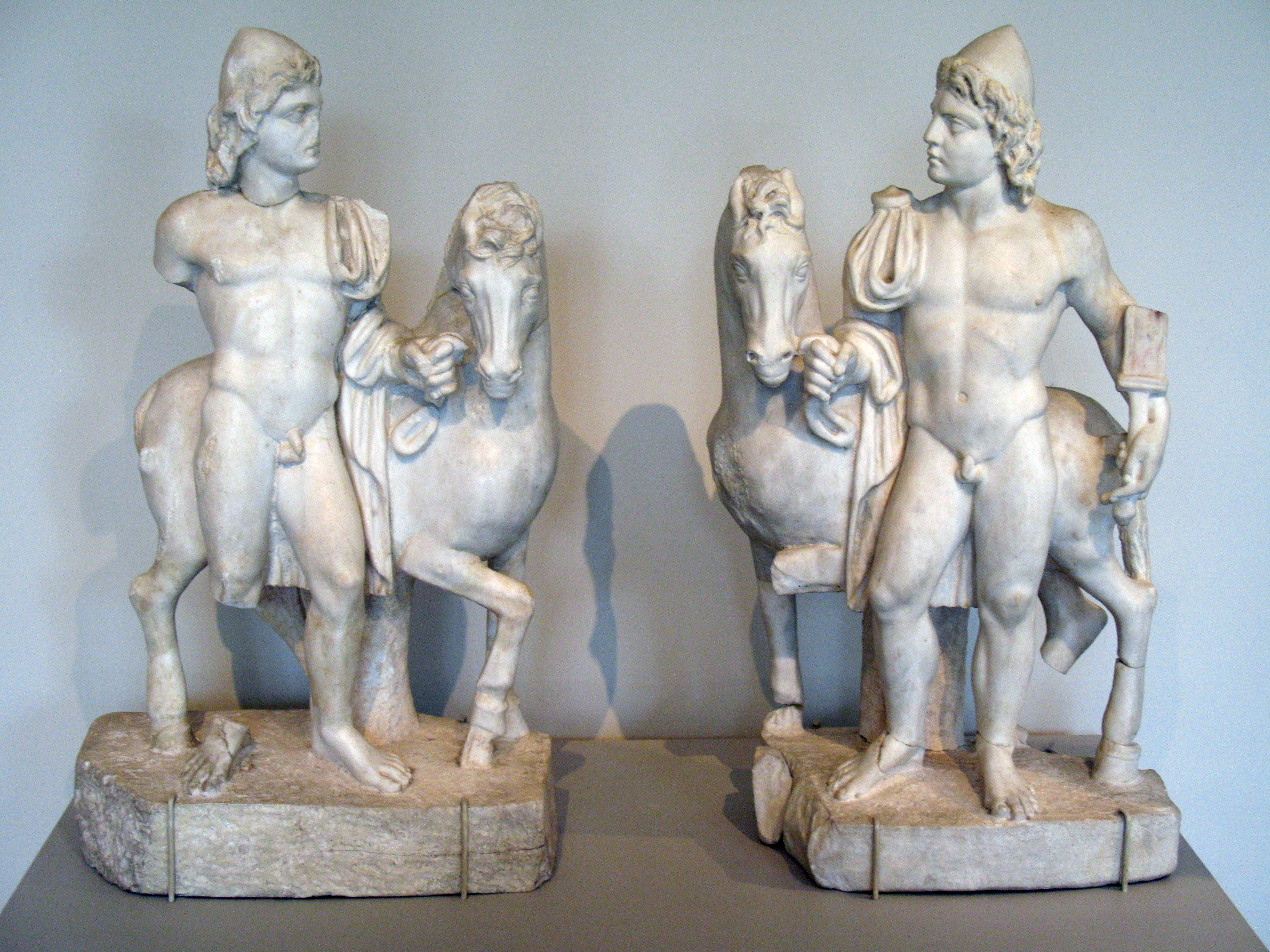
Castor and Pollux – The Divine Twins of Greek Mythology
Castor and Pollux were among the most celebrated heroic figures of ancient Greek mythology. Known collectively as the Dioscuri, meaning "Sons of Zeus", the twin brothers represented brotherhood, loyalty, courage, horsemanship, and divine protection. Famous for their extraordinary abilities in battle, their adventures alongside legendary Greek heroes, and their devotion to one another, Castor and Pollux became enduring symbols of the unbreakable bond between brothers.
In Greek mythology, Pollux was known as Polydeuces, while Castor retained the same name in Greek and Roman traditions. The name Pollux became particularly familiar through Roman literature and religion, where the twins were honoured as powerful protectors of soldiers, sailors, travellers, and those facing danger.
According to the best-known mythological traditions, Castor and Pollux were the sons of Leda, queen of Sparta, although their divine parentage was unusually complicated. Pollux was frequently described as the immortal son of Zeus, while Castor was the mortal son of Tyndareus, king of Sparta. Despite their different fathers and destinies, the brothers were inseparable throughout their lives.
Their mythology became especially famous because of the extraordinary sacrifice Pollux made after Castor's death. Rather than accept eternal life without his brother, Pollux asked Zeus to allow them to share immortality. This act of devotion transformed the twins into powerful symbols of fraternal love and earned them an enduring place among the stars.
Castor and Pollux were associated with the constellation Gemini, appeared in stories concerning the Argonauts and the Calydonian Boar Hunt, and became important figures in Greek and Roman religious traditions. Their influence extended far beyond mythology, shaping ancient ideas about divine protection, military courage, navigation, and the bonds of family.
The Origins of Castor and Pollux
Castor and Pollux belonged to the heroic generation of Greek mythology, the extraordinary age of legendary warriors and adventurers that preceded the Trojan War.
Their mother was Leda, the wife of Tyndareus, king of Sparta. Leda was a prominent figure in Greek mythology because of her relationship with Zeus and her connection to several important heroes and heroines.
According to the most familiar tradition, Zeus approached Leda in the form of a swan. Their union became one of the famous transformations attributed to the supreme Olympian god.
The resulting genealogy was complicated by the fact that Leda was also married to the mortal king Tyndareus.
In a widely known version of the myth, Pollux was the son of Zeus and therefore possessed divine immortality, while Castor was the son of Tyndareus and remained mortal.
Other ancient traditions described both brothers as sons of Zeus, while some accounts attributed their birth to different mothers or presented alternative arrangements of their parentage.
These variations demonstrate the diversity of ancient Greek mythological traditions, which frequently preserved different explanations concerning the origins of famous heroes.
Leda and the Swan
The myth of Leda and the Swan became one of the most recognisable stories concerning the transformations of Zeus.
According to later literary traditions, Zeus assumed the appearance of a swan and approached Leda, the beautiful queen of Sparta.
Ancient accounts differed in their descriptions of the encounter and its consequences, but the story became closely associated with the birth of Castor, Pollux, Helen, and Clytemnestra.
In some versions, Leda laid one or more eggs from which her extraordinary children emerged.
Other traditions described Helen as the daughter of Zeus and Nemesis, with Leda caring for the egg from which Helen was born.
The involvement of Zeus established the divine ancestry of the twins and their connection to some of the most influential figures in Greek heroic mythology.
The story also demonstrated the unusual circumstances surrounding the birth of the Dioscuri, whose lives would eventually unite mortal heroism with divine immortality.
The Family of the Dioscuri
Castor and Pollux belonged to one of the most important families in Greek mythology.
Their sister Helen became famous as Helen of Troy, whose departure from Sparta with Paris was central to the legendary events leading to the Trojan War.
Their other sister, Clytemnestra, became the wife of Agamemnon, king of Mycenae and commander of the Greek forces during the Trojan War.
Clytemnestra later played a central role in the tragic events surrounding Agamemnon's return from Troy.
Through Helen and Clytemnestra, the Dioscuri were connected with some of the most celebrated and tragic stories of ancient Greek literature.
The brothers were also associated with the royal family of Sparta, a connection that later contributed to their importance in Spartan religious and military traditions.
Although the twins were famous for their own achievements, their family relationships placed them at the centre of the wider heroic world of ancient Greece.
The Meaning of the Name Dioscuri
Castor and Pollux were collectively known as the Dioscuri, a name derived from the ancient Greek Dioskouroi, meaning "Sons of Zeus" or "Youths of Zeus".
The title reflected their association with Zeus, even though some traditions identified only Pollux as his biological son.
In Greek literature, the twins were also called the Tyndaridae or Tyndarids, meaning descendants or sons of Tyndareus.
These alternative names reflected the different genealogical traditions surrounding their birth.
The name Dioscuri became particularly important in religious worship, where the brothers were honoured together as divine protectors.
Unlike many heroes who acquired distinct cults based upon individual achievements, Castor and Pollux were most frequently celebrated as an inseparable pair.
Their collective identity emphasised the extraordinary bond that united them throughout life, death, and eventual divinity.
Castor – The Master Horseman
Castor was especially celebrated for his exceptional skill with horses.
Ancient Greek poets frequently described him as a master horseman, renowned for his ability to train, control, and ride powerful steeds.
In a society where horses possessed considerable military, economic, and aristocratic importance, such abilities were highly respected.
Castor's reputation reflected the connection between horsemanship and the heroic ideals of ancient Greece.
Horses were associated with noble birth, military prestige, athletic competition, and the status of wealthy families.
As a skilled horseman, Castor represented discipline, courage, and mastery over one of the most valued animals of the ancient world.
His association with horses also became important in the religious worship of the Dioscuri, who were frequently depicted riding together on horseback.
In ancient art, Castor was often shown as a youthful warrior wearing a traveller's cap and carrying a spear, sometimes accompanied by his horse.
Pollux – The Champion Boxer
Pollux, known to the Greeks as Polydeuces, was famous for his extraordinary strength and skill in boxing.
Ancient writers celebrated him as one of the greatest fighters of the heroic age.
Boxing was an important athletic contest in ancient Greece and required strength, endurance, courage, and technical ability.
Unlike modern boxing, ancient Greek boxing involved fighters wrapping leather straps around their hands, and contests could be extremely dangerous.
Pollux's exceptional abilities made him a formidable opponent in both athletic competitions and heroic encounters.
His most famous boxing contest occurred during the voyage of the Argonauts, when he fought the powerful king Amycus.
Through his victories, Pollux became an embodiment of physical excellence and heroic determination.
His abilities complemented those of Castor, creating a pair of brothers whose different talents strengthened their reputation as extraordinary warriors.
The Brotherhood of Castor and Pollux
The defining feature of the Dioscuri was their extraordinary devotion to one another.
Although some traditions described Castor as mortal and Pollux as immortal, the brothers shared their adventures and remained inseparable.
Their relationship represented an ideal of brotherhood based upon loyalty, mutual protection, and complete trust.
Greek heroic mythology frequently celebrated individual achievement, military courage, and the pursuit of lasting glory.
Castor and Pollux added another dimension to these ideals by placing the bond between brothers above personal ambition.
The ultimate expression of their devotion came when Castor was killed and Pollux refused to accept immortality without him.
Their shared destiny became one of the most moving examples of familial love in ancient Greek mythology.
Castor and Pollux and the Argonauts
Castor and Pollux were counted among the Argonauts, the legendary heroes who accompanied Jason aboard the ship Argo on his quest to obtain the Golden Fleece.
The expedition brought together many of the greatest heroes of the generation before the Trojan War.
Its members included Heracles, Orpheus, Peleus, Telamon, and numerous other celebrated figures, although the exact list varied between ancient sources.
Jason's quest led the Argonauts from Greece towards the distant kingdom of Colchis, traditionally located near the eastern shores of the Black Sea.
Along the way, the heroes encountered dangerous seas, hostile rulers, mysterious islands, and extraordinary supernatural creatures.
Castor and Pollux contributed their martial skills and courage to the expedition.
Pollux became especially important during one encounter involving a powerful foreign king who challenged travellers to deadly boxing contests.
The Argonautic adventures helped establish the Dioscuri as prominent members of the heroic generation and strengthened their later association with sailors and maritime protection.
Pollux and the Boxing Match with Amycus
One of the most famous adventures of Pollux occurred when the Argonauts encountered Amycus, king of the Bebryces.
Amycus was a powerful and violent ruler who forced strangers arriving in his territory to fight him in boxing matches.
His enormous strength and ruthless behaviour made these contests extremely dangerous.
When the Argonauts reached his land, Amycus challenged one of their company to face him.
Pollux accepted the challenge, confident in his exceptional boxing abilities.
The two fighters entered a fierce contest watched by their companions.
Although Amycus possessed tremendous physical strength, Pollux relied upon skill, speed, and carefully directed blows.
In the Argonautica of Apollonius of Rhodes, Pollux eventually struck Amycus with a devastating blow that killed him.
The victory freed the Argonauts from the king's violent challenge and demonstrated Pollux's superiority as a boxer.
The episode became one of the most celebrated examples of heroic athletic skill in Greek mythology.
Castor and Pollux as Protectors of Sailors
The Dioscuri became especially important as divine protectors of sailors and travellers at sea.
Ancient Greek and Roman mariners believed that the twins could provide assistance during dangerous storms and protect ships from destruction.
Their connection with maritime safety may have developed partly through their participation in the voyage of the Argonauts.
In religious tradition, sailors sometimes invoked Castor and Pollux when threatened by violent winds, dangerous waves, or other hazards.
The twins were associated with mysterious lights that occasionally appeared around the masts and rigging of ships during storms.
These luminous phenomena were interpreted as signs of the divine presence of the Dioscuri.
The belief helped establish the twins as benevolent guardians who could intervene when human beings faced extraordinary danger.
Their protective role eventually spread throughout the Mediterranean, making them especially popular among seafaring communities.
Castor and Pollux and St Elmo's Fire
One of the most fascinating associations of the Dioscuri concerns a natural electrical phenomenon now known as St Elmo's fire.
During certain atmospheric conditions, a luminous glow may appear around pointed objects such as ship masts, rigging, and other elevated structures.
The phenomenon is caused by electrical discharge in the surrounding air.
Ancient sailors sometimes interpreted the appearance of paired lights as a manifestation of Castor and Pollux.
Such lights could be regarded as favourable signs indicating that the divine twins were protecting the vessel.
Roman writers, including Pliny the Elder, preserved traditions concerning luminous appearances associated with the Dioscuri.
The later name St Elmo's fire developed within Christian maritime traditions and should not be confused with the original Greek religious interpretation.
Nevertheless, the association demonstrates how the mythology of Castor and Pollux became connected with the observation of natural phenomena.
The Calydonian Boar Hunt
Castor and Pollux were also included in several ancient accounts of the Calydonian Boar Hunt, one of the greatest collective adventures of Greek heroic mythology.
The story began when Artemis sent a monstrous wild boar to devastate the lands of Calydon after King Oeneus neglected to honour her properly.
The enormous creature destroyed crops, attacked inhabitants, and threatened the prosperity of the kingdom.
To defeat the beast, Oeneus's son Meleager assembled a company of famous heroes.
The participants included Atalanta, a remarkable huntress, and numerous warriors drawn from different regions of Greece.
In several later accounts, Castor and Pollux joined the expedition.
The hunt became famous for its danger and the disputes that followed the killing of the boar.
Participation in this adventure further connected the Dioscuri with the great heroic traditions preceding the Trojan War.
Helen of Troy and the Dioscuri
One of the most important figures connected with Castor and Pollux was their sister Helen, whose beauty became legendary throughout the Greek world.
Before her marriage to Menelaus, Helen was abducted by the Athenian hero Theseus in a tradition preserved by several ancient writers.
Theseus took Helen away from Sparta, intending eventually to make her his wife.
When Castor and Pollux learned what had happened, they organised an expedition to recover their sister.
The brothers marched against Athens while Theseus was absent.
They successfully recovered Helen and returned her to Sparta.
Some accounts describe political changes in Athens resulting from the expedition, including the displacement of Theseus's supporters.
The story demonstrated the protective loyalty of the twins towards their family and their willingness to confront powerful heroes when necessary.
The Rescue of Helen
The rescue of Helen was one of the most significant adventures attributed to Castor and Pollux.
According to traditions preserved by Plutarch and other ancient writers, Theseus had abducted Helen while she was still young.
He left her in the care of his mother Aethra while undertaking another dangerous adventure.
The Dioscuri gathered forces and demanded their sister's release.
When Helen's location was revealed, the brothers recovered her and returned to Sparta.
Some traditions stated that Aethra was taken to Sparta as a captive or attendant of Helen.
The episode reinforced the image of Castor and Pollux as defenders of family honour.
It also established an important connection between the Dioscuri and the wider mythology of Athens, Sparta, and the heroic generation preceding the Trojan War.
The Brides of the Dioscuri
Castor and Pollux were associated with two women named Hilaeira and Phoebe, daughters of Leucippus.
According to several ancient traditions, the brothers abducted the women and made them their wives.
The story became known as the abduction of the Leucippides.
Ancient accounts differed concerning whether the women had already been promised in marriage to another pair of brothers, Idas and Lynceus.
Some versions presented the abduction as the cause of a bitter conflict between the two heroic families.
Other traditions connected the quarrel with a dispute concerning cattle.
The myth reflects the importance of marriage alliances, family honour, and rivalry within Greek heroic storytelling.
It also introduces the conflict that eventually led to the death of Castor.
Idas and Lynceus – Rivals of the Dioscuri
Idas and Lynceus were legendary brothers associated with Messenia and descended from Aphareus.
Like Castor and Pollux, they belonged to the heroic generation of Greek mythology and possessed extraordinary abilities.
Idas was renowned for his tremendous strength and courage.
Lynceus was particularly famous for his remarkable eyesight, which some traditions described as capable of penetrating great distances or seeing beneath the Earth.
The two pairs of brothers became rivals through disputes involving cattle, marriage, or both.
In one influential version preserved by Pindar, the conflict developed after the Dioscuri seized cattle belonging to the other brothers.
The resulting confrontation became one of the most tragic episodes in the mythology of Castor and Pollux.
Its consequences ultimately transformed the twins from celebrated heroes into figures associated with shared immortality.
The Death of Castor
The death of Castor was the turning point in the mythology of the Dioscuri.
According to Pindar's Tenth Nemean Ode, the conflict between the twins and Idas and Lynceus ended in a violent battle.
Lynceus spotted the Dioscuri, leading to a confrontation in which Castor was mortally wounded.
Pollux fought to defend his brother and retaliated against their enemies.
In Pindar's version, Pollux killed Lynceus, while Zeus struck Idas with a thunderbolt.
Despite their victory, Castor could not be saved.
Because Castor was mortal in this tradition, his death represented an unavoidable consequence of human existence.
Pollux, however, possessed divine immortality through his father Zeus.
He therefore faced the prospect of living forever while his beloved brother remained among the dead.
The grief of Pollux and his refusal to abandon Castor became the emotional centre of their mythology.
Pollux's Sacrifice
Following the death of Castor, Pollux was overcome with sorrow.
Although he possessed immortality, he found the prospect of eternal existence without his brother unbearable.
He appealed to Zeus, asking that Castor be restored or that he himself be allowed to share his brother's fate.
Zeus offered Pollux a choice.
He could remain among the immortal gods and enjoy an eternal existence on Olympus, or he could share his immortality with Castor.
Pollux chose to remain united with his brother.
According to Pindar, the brothers were permitted to spend alternate periods among the gods and beneath the Earth.
In other versions, they shared their existence between Olympus and the Underworld, while some traditions described them alternating between life and death.
The exact arrangement varied, but the central meaning remained unchanged.
Pollux willingly surrendered the privilege of uninterrupted divine immortality so that he would not be separated permanently from Castor.
His sacrifice became one of the most powerful expressions of brotherly devotion in Greek mythology.
The Shared Immortality of Castor and Pollux
The shared immortality of the Dioscuri distinguished them from most other figures in Greek mythology.
In the Odyssey, Helen's brothers are described as receiving exceptional honours from Zeus, alternately living and dying while retaining a special status among mortals.
This remarkable condition reflected their position between the mortal and divine worlds.
Castor represented the vulnerability and limitations of humanity, while Pollux embodied the divine immortality inherited from Zeus.
Through their devotion to one another, these opposing conditions became united.
The brothers demonstrated that loyalty and love could possess greater importance than individual glory or divine privilege.
Their shared existence also symbolised the possibility of maintaining familial bonds beyond the boundaries of ordinary mortal life.
This theme contributed significantly to their popularity in religious worship and later literature.
Castor and Pollux and the Constellation Gemini
Castor and Pollux became closely associated with Gemini, the constellation of the Twins.
According to a well-known later tradition, Zeus honoured the brothers by placing them among the stars.
The constellation Gemini depicts two figures standing or appearing together, reflecting the inseparable bond of the Dioscuri.
Its two brightest stars are named Castor and Pollux in honour of the mythological brothers.
Pollux is the brighter of the two stars, while Castor is a remarkable multiple-star system.
The constellation occupies a prominent position in the northern celestial hemisphere and belongs to the zodiac.
Its association with the twins became an important example of how ancient cultures connected heavenly patterns with mythological stories.
The placement of Castor and Pollux among the stars symbolised their enduring unity and transformed their legendary brotherhood into a permanent feature of the night sky.
The Symbolism of Gemini
The constellation Gemini became associated with duality, partnership, and the close relationship between two complementary figures.
In the mythology of Castor and Pollux, this duality was expressed through their different abilities and destinies.
Castor was a master horseman and mortal hero, while Pollux was an exceptional boxer who possessed divine immortality.
Despite these differences, the twins functioned as an inseparable pair.
Their story suggested that two individuals could possess distinct strengths while remaining united by a common purpose.
The constellation also reflected their extraordinary relationship with mortality and immortality.
The twins existed between the worlds of gods and humans, sharing a destiny that transcended the ordinary limits of life.
These symbolic associations influenced later interpretations of Gemini in astrology, literature, and artistic representations.
The Worship of Castor and Pollux in Ancient Greece
The Dioscuri received religious honours in several regions of ancient Greece.
Their worship was particularly important in Sparta, where they were regarded as ancestral heroes and protectors of the community.
Spartan religious traditions associated the twins with military courage, horsemanship, and the protection of warriors.
They were also honoured in other Greek cities, where their divine assistance was sought during travel, warfare, and dangerous situations.
The twins frequently appeared together in religious imagery, emphasising their collective identity.
Ancient worshippers sometimes associated them with twin upright wooden objects or beams, known as dokana, which became distinctive symbols of their cult in Sparta.
These representations may have reflected their paired nature and enduring religious presence.
The widespread worship of the Dioscuri demonstrated their importance as protective deities whose influence extended beyond individual heroic stories.
Castor and Pollux in Sparta
Sparta possessed a particularly strong connection with Castor and Pollux because of their association with the royal family of Tyndareus.
The twins were regarded as important divine protectors of the Spartan state.
Their reputation for courage, discipline, and horsemanship corresponded with ideals valued within Spartan military culture.
Ancient sources indicate that Spartan kings and armies maintained religious traditions associated with the Dioscuri.
The twins could symbolically accompany military expeditions, providing divine protection to warriors.
According to Herodotus, Spartan traditions concerning the presence of the Dioscuri were connected with the movements of the city's two kings.
Their cult also included distinctive sacred symbols and religious ceremonies.
As divine brothers closely associated with the land and traditions of Sparta, Castor and Pollux occupied a position that combined heroic ancestry with public religious identity.
The Dioscuri and Military Protection
Castor and Pollux became important symbols of protection in warfare.
Their heroic abilities, combined with their divine status, made them natural patrons of soldiers and cavalry.
Castor's reputation as a master horseman was especially significant in societies where mounted warriors represented military skill and prestige.
The twins were frequently depicted riding together, carrying spears and wearing distinctive caps.
Such imagery emphasised their martial character and their ability to intervene in dangerous situations.
Greek and Roman traditions sometimes described the Dioscuri appearing during battles to assist favoured armies.
These stories reinforced the belief that divine powers could influence the outcome of military conflicts.
In Roman religion, the military associations of Castor and Pollux became especially prominent following a legendary appearance at the Battle of Lake Regillus.
Castor and Pollux in Roman Mythology
The Romans adopted the Greek Dioscuri into their religious traditions under the familiar names Castor and Pollux.
The twins became important protective deities associated with cavalry, military victory, and the welfare of the Roman state.
Their worship developed a distinctive Roman character while preserving many elements of their Greek mythology.
One of the most famous Roman traditions concerned their intervention in a battle fought during the early years of the Roman Republic.
According to legend, the twins appeared as magnificent horsemen and assisted the Roman forces against their enemies.
Their supposed intervention established them as symbols of divine military support.
A major temple dedicated to the twins was subsequently established in the Roman Forum.
The Dioscuri became familiar figures in Roman art, coinage, religious ceremonies, and public monuments.
The Battle of Lake Regillus
The Battle of Lake Regillus was a legendary conflict fought between the early Roman Republic and a coalition of Latin forces.
Ancient traditions commonly placed the battle in the early fifth century BC, although its precise date and historical details remain uncertain.
According to Roman legend, Castor and Pollux appeared during the battle as two extraordinary young horsemen.
They fought on the Roman side and helped secure victory.
After the battle, the twins were reportedly seen in Rome, watering their horses at the Fountain of Juturna in the Forum.
They announced the Roman victory before mysteriously disappearing.
The story became an important part of Roman religious tradition.
A temple was dedicated to Castor and Pollux in recognition of their divine assistance.
The account illustrated the Roman belief that the gods could intervene directly in military affairs and protect the state during moments of crisis.
The Temple of Castor and Pollux in Rome
The Temple of Castor and Pollux, also known as the Temple of the Dioscuri, became one of the important religious buildings of the Roman Forum.
Its foundation was traditionally associated with the Roman victory at Lake Regillus.
The temple was dedicated in 484 BC according to the traditional Roman chronology.
Over the following centuries, the building underwent several reconstructions and restorations.
The surviving remains include three prominent Corinthian columns from the temple's later architectural phases.
The sanctuary served both religious and civic purposes within the Roman Forum.
Its presence demonstrated the importance of Castor and Pollux as protectors of Rome and symbols of military victory.
The temple became an enduring monument to the Roman adoption and transformation of Greek heroic mythology.
The Dioscuri and Roman Cavalry
Castor and Pollux were especially associated with Roman cavalry because of their reputation as divine horsemen.
The Roman equestrian order, whose members were known as equites, maintained important symbolic connections with the twins.
One notable ceremony was the transvectio equitum, a procession of Roman cavalrymen associated with the cult of the Dioscuri.
During the procession, members of the equestrian order rode through Rome in a display of military and civic identity.
The ceremony emphasised the relationship between horsemanship, public honour, and divine protection.
The twins also appeared on Roman coins, frequently represented as horsemen riding together.
Their image became a recognisable symbol of Roman military strength and religious tradition.
The Symbols of Castor and Pollux
Castor and Pollux possessed several distinctive symbols that reflected their mythology and religious importance.
Horses were among their most recognisable attributes, representing their connection with cavalry, heroic skill, and divine protection.
The twins were often depicted wearing rounded caps known as pilei, which were sometimes crowned with stars.
The stars symbolised their celestial association and their identification with Gemini.
Spears represented their military abilities and heroic courage.
The paired wooden symbols known as dokana were especially important in certain Spartan religious traditions.
In some artistic representations, the brothers were accompanied by stars or other celestial imagery.
These symbols expressed their combined identities as warriors, protectors, horsemen, and divine twins.
Castor and Pollux in Ancient Greek Art
The Dioscuri appeared frequently in ancient Greek sculpture, pottery, reliefs, and other artistic forms.
They were generally represented as youthful, athletic male figures possessing similar features.
Their physical resemblance emphasised their twin identity, while their weapons and horses expressed their heroic character.
In many representations, the brothers wore short cloaks and rounded caps, sometimes accompanied by stars.
Greek vase paintings depicted episodes from their mythology, including the abduction of the Leucippides and their heroic adventures.
One famous artistic tradition showed the twins as mounted warriors standing beside their horses.
During the Roman period, monumental sculptures of the Dioscuri became especially prominent.
Their figures appeared in public spaces, temples, and imperial artistic programmes, symbolising divine protection and heroic strength.
The Abduction of the Leucippides in Art
The story of Castor and Pollux abducting Hilaeira and Phoebe became a significant subject in classical and later European art.
Ancient representations explored the dramatic relationship between the divine twins and the daughters of Leucippus.
The episode was also famously depicted by the Flemish painter Peter Paul Rubens during the seventeenth century.
His painting, commonly known as The Rape of the Daughters of Leucippus, portrays the dramatic abduction through powerful movement and elaborate composition.
The work reflects the continued influence of Greek mythology upon European artistic traditions.
Although later artists frequently emphasised the visual drama of the story, the underlying myth belongs to a wider tradition of heroic conflict, marriage rivalry, and family relationships.
Castor and Pollux in Ancient Literature
Castor and Pollux appear in numerous surviving works of ancient Greek and Roman literature.
In Homer's Iliad, Helen looks for her brothers among the Greek warriors gathered outside Troy, unaware that they have already died and been buried in their homeland.
The Odyssey describes their extraordinary fate, explaining that they alternately live and die while receiving special honours from Zeus.
The Homeric Hymn to the Dioscuri celebrates the twins as protectors of sailors and travellers.
Pindar's Tenth Nemean Ode provides one of the most influential accounts of their conflict with Idas and Lynceus and the shared immortality granted by Zeus.
Apollonius of Rhodes includes the brothers in his Argonautica, where Pollux defeats Amycus during the voyage of Jason and the Argonauts.
Later authors, including Apollodorus, Plutarch, and Roman historians, preserved additional traditions concerning their adventures, family relationships, and religious importance.
These literary sources demonstrate the enduring popularity of the Dioscuri throughout antiquity.
Castor and Pollux and the Trojan War
Although Castor and Pollux belonged to the family of Helen, they did not participate in the Trojan War according to the principal Homeric tradition.
In the Iliad, Helen observes the Greek army from the walls of Troy and searches for her brothers among the warriors.
She wonders why Castor and Pollux are absent, suggesting that they may have refused to join the expedition because of shame associated with her actions.
The narrator then explains that both brothers have already died and lie buried in their homeland of Lacedaemon.
This passage is particularly important because it preserves an early tradition concerning their mortality and burial.
Other mythological accounts developed the idea that the twins received a special form of immortality from Zeus.
The apparent differences between these traditions reflect the evolving character of Greek mythology.
Their absence from the Trojan War also places the Dioscuri firmly within the earlier heroic generation associated with Jason, Heracles, and Theseus.
The Dioscuri and the Idea of Divine Twins
Castor and Pollux belong to a wider group of mythological figures often described as divine twins.
Similar pairs appear in several ancient Indo-European religious traditions, frequently possessing associations with horses, protection, and the heavens.
One notable comparison is found in Vedic mythology, where the Ashvins are twin divine horsemen associated with rescue, healing, and assistance to mortals.
Scholars have observed important similarities between the Greek Dioscuri and the Vedic Ashvins.
These parallels may reflect elements of older Indo-European mythological traditions, although the precise historical development of such connections remains a subject of scholarly investigation.
The recurring association of divine twins with horses, travel, and rescue suggests that paired protective deities possessed widespread importance in ancient religious imagination.
Castor and Pollux became the most celebrated Greek representatives of this broader mythological pattern.
The Symbolism of Brotherhood
The mythology of Castor and Pollux is fundamentally a story about the strength of brotherly love.
Although the twins possessed different abilities and, in some traditions, different fathers, their devotion to one another remained constant.
Castor represented mortal courage and excellence in horsemanship, while Pollux embodied exceptional athletic strength and divine immortality.
Their complementary talents made them powerful companions in heroic adventure.
However, the deepest meaning of their relationship emerged only after Castor's death.
Pollux's willingness to share his immortality demonstrated that their bond was more important than the privileges of divine existence.
The story transformed the twins into symbols of loyalty, sacrifice, and enduring affection.
Their mythology suggested that true greatness could be measured not only by victories in battle but also by devotion to those one loves.
Mortality and Immortality in the Myth of the Dioscuri
The different destinies of Castor and Pollux introduced a profound contrast between mortal and immortal existence.
Castor was subject to death, while Pollux possessed the everlasting life associated with divine ancestry.
In Greek mythology, this distinction was fundamental. Mortals could achieve extraordinary fame, but they could not ordinarily escape death.
The gods, by contrast, possessed immortality and existed beyond the normal limitations of human life.
The Dioscuri challenged this separation through their extraordinary shared destiny.
By choosing to divide his immortality with Castor, Pollux transformed the opposition between mortal and divine existence into a relationship based upon sacrifice.
Their story reflected the ancient Greek fascination with the boundaries between humanity and the gods.
It also suggested that love and loyalty could possess a value greater than immortality itself.
Castor and Pollux as Protectors of Travellers
In addition to their military associations, the Dioscuri were widely honoured as guardians of travellers.
Journeys in the ancient world could involve significant dangers, including storms, piracy, hostile territories, and difficult terrain.
Travellers frequently sought divine assistance before undertaking long or uncertain expeditions.
Castor and Pollux became particularly appropriate protectors because of their own adventurous journeys and their reputation for rescuing those in danger.
Their participation in the voyage of the Argonauts reinforced this association.
The twins were believed capable of appearing when travellers faced unexpected threats.
In this role, they represented divine companionship and reassurance during dangerous journeys.
Their popularity among sailors and travellers helped spread their worship beyond the regions traditionally associated with their origins.
The Dioscuri and Hospitality
Castor and Pollux were also associated in some ancient traditions with hospitality and the protection offered to guests.
The concept of hospitality, known in Greek as xenia, was an important moral and religious principle.
Travellers depended upon the willingness of strangers to provide shelter, food, and protection.
Because the Dioscuri were themselves heroic travellers, they became appropriate figures to invoke in situations involving journeys and safe arrival.
Some Greek communities honoured them through religious meals and offerings.
At Sparta, traditions concerning the divine twins included preparations intended to welcome their presence.
These practices reflected the belief that the gods could become guests within human communities.
The association of the Dioscuri with hospitality reinforced their benevolent character as divine protectors.
The Dioscuri in Roman Coinage
Castor and Pollux appeared frequently on coins issued during the Roman Republic.
One particularly common design showed the twins riding horses with spears, often accompanied by stars above their heads.
The image became a recognisable symbol of Roman military success and divine protection.
Their appearance on coinage reflected the importance of the Dioscuri within Roman public religion.
Coins circulated widely throughout Roman territories, carrying religious images into everyday commercial life.
The use of the Dioscuri on Roman currency helped preserve their association with cavalry, military courage, and the protection of the state.
These ancient coins remain valuable archaeological evidence for the religious and political importance of Castor and Pollux.
Castor and Pollux in Roman Art
Roman artists frequently portrayed Castor and Pollux as youthful horsemen standing beside magnificent horses.
Their similar appearance emphasised their twin identity, while their spears, cloaks, and distinctive caps expressed their heroic nature.
Monumental sculptures of the Dioscuri appeared in temples, public squares, and ceremonial locations.
One famous group of later sculptures associated with the Dioscuri stands on the Quirinal Hill in Rome.
The figures, known as the Horse Tamers, became closely identified with Castor and Pollux.
Although the sculptures have a complex history of restoration and interpretation, they demonstrate the enduring importance of the divine twins in Roman monumental art.
The association between the Dioscuri and powerful horses remained one of the most recognisable features of their artistic identity.
Castor and Pollux in Astronomy
The names Castor and Pollux are preserved in two of the brightest stars of the constellation Gemini.
Pollux, designated Beta Geminorum, is an orange giant star located approximately 34 light-years from Earth.
Castor, designated Alpha Geminorum, is a multiple-star system located approximately 51 light-years away.
Although Castor carries the designation Alpha, Pollux appears brighter in the night sky.
The constellation Gemini is one of the traditional zodiac constellations and is visible from many parts of the world.
Its stars have been recognised and named within astronomical traditions for centuries.
The continuing use of the twins' names demonstrates the lasting influence of Greek mythology upon modern astronomy.
Even as scientific understanding of stars developed, the ancient mythological identities associated with celestial patterns remained part of astronomical terminology.
The Legacy of Castor and Pollux
Castor and Pollux remain among the most enduring heroic figures of Greek mythology because their story combines extraordinary adventure with profound emotional meaning.
Their exploits alongside Jason and the Argonauts connected them with the greatest heroic traditions of ancient Greece.
Their association with Helen placed them within the wider mythology surrounding the Trojan War.
Their abilities as horseman and boxer established them as models of athletic and military excellence.
Their worship as protectors of sailors, travellers, and soldiers made them important religious figures throughout the Greek and Roman worlds.
Above all, their shared immortality transformed them into powerful symbols of devotion and sacrifice.
The constellation Gemini continues to preserve their memory in the night sky, while ancient temples, sculptures, coins, and literary works provide evidence of their cultural importance.
Their mythology has inspired artists, writers, astronomers, and scholars for more than two thousand years.
Conclusion – Castor and Pollux, the Eternal Brothers
Castor and Pollux were two of the most celebrated heroes of ancient Greek mythology, renowned for their courage, extraordinary abilities, and unbreakable brotherhood.
Known collectively as the Dioscuri, the twins belonged to the royal family of Sparta and were closely connected with Zeus, Leda, Helen of Troy, and the heroic generation preceding the Trojan War.
Castor became famous as a master horseman, while Pollux was celebrated as an exceptional boxer. Together, they participated in legendary adventures, including the voyage of the Argonauts and the rescue of their sister Helen.
Their greatest mythological significance emerged through the tragedy of Castor's death and Pollux's extraordinary response.
Rather than enjoy immortality alone, Pollux chose to share his divine existence with his mortal brother.
This sacrifice transformed the twins into enduring symbols of loyalty, love, and the willingness to surrender personal privilege for another.
Honoured by Greeks and Romans as protectors of sailors, travellers, soldiers, and horsemen, the Dioscuri occupied an important place in ancient religious life.
Their association with Gemini ensured that their names would remain visible in the heavens, while their temples, sculptures, and literary traditions preserved their memory on Earth.
For the ancient Greeks, Castor and Pollux represented the highest ideals of brotherhood and heroic devotion.
Their story continues to express a timeless idea: that the deepest bonds of loyalty and love can endure beyond the boundaries of mortality itself.