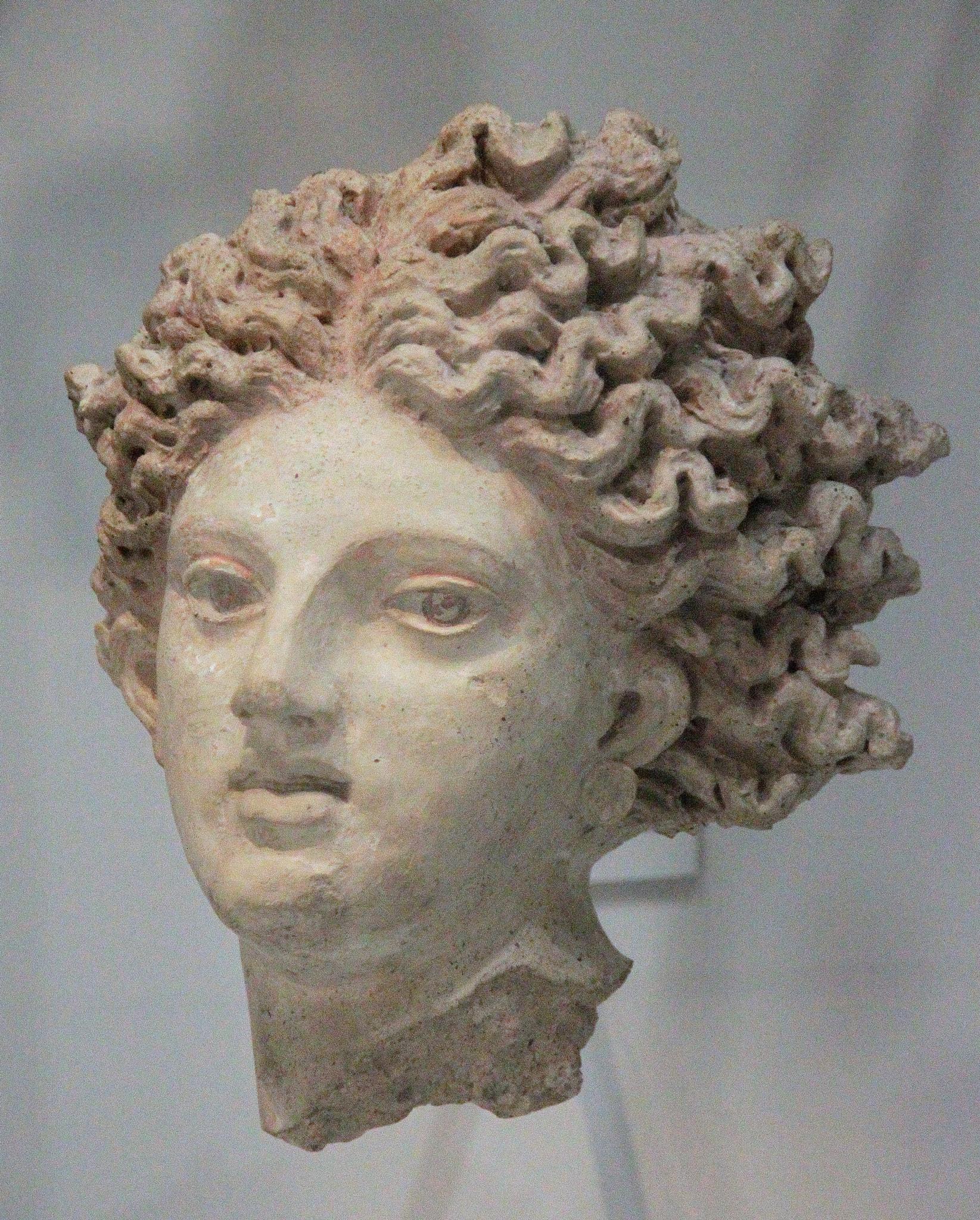
Leucothea – The Greek Goddess of the Sea and Protector of Sailors
Leucothea was a divine sea goddess in ancient Greek mythology, celebrated for her compassion towards sailors, her power to rescue those threatened by the ocean, and her remarkable transformation from a mortal woman into an immortal deity. Originally known as Ino, a princess of Thebes, she became one of the most distinctive figures in Greek mythology because her story combined family tragedy, divine punishment, death, and rebirth.
Unlike the great Olympian gods, who governed vast aspects of the universe, Leucothea was especially associated with the protection of people travelling across the sea. Her most famous appearance occurs in Homer's Odyssey, where she saves the hero Odysseus from drowning during a violent storm sent by Poseidon. By giving him a magical veil and instructing him how to survive the waves, she demonstrates the benevolent powers associated with her divine identity.
The name Leucothea comes from the ancient Greek Leukothea, commonly translated as "White Goddess". This name reflects her transformation into a marine divinity, although the precise symbolic meaning of the title is open to interpretation. In Greek mythology, she was closely connected with the sea, divine rescue, and the mysterious boundary between mortal existence and immortality.
Leucothea's mythology also includes her relationship with Dionysus, the god of wine and ecstatic celebration, whom she helped nurture during his infancy. Her involvement in protecting the young god brought her family into conflict with Hera, the wife of Zeus, leading to a series of tragic events that ultimately transformed Ino into Leucothea.
Although she was not one of the twelve Olympians, Leucothea received religious honours in several parts of the Greek world. Her story continued to influence Greek and Roman literature, art, and religious traditions, establishing her as a symbol of protection, transformation, and hope amid the dangers of the sea.
The Origins of Leucothea
Leucothea began her existence as Ino, a mortal princess belonging to the royal family of Thebes. She was the daughter of Cadmus, the legendary founder of Thebes, and Harmonia, a goddess associated with harmony and concord.
Cadmus was one of the most important legendary figures in Greek mythology. According to tradition, he founded the city of Thebes after following divine instructions and defeating a dragon sacred to Ares. He subsequently sowed the dragon's teeth into the ground, producing armed warriors known as the Spartoi, who became connected with the ancestral families of Thebes.
Harmonia was traditionally described as the daughter of Ares and Aphrodite, although some ancient sources preserved alternative genealogies. Through her mother, Ino was connected with the divine families of Olympus.
Ino's siblings included Semele, Agave, Autonoe, and Polydorus. Their family became associated with several tragic myths involving Dionysus, divine punishment, and the destruction of mortal households.
Her sister Semele became the mother of Dionysus through her relationship with Zeus. This connection would profoundly influence Ino's life and ultimately contribute to her transformation into the sea goddess Leucothea.
The Royal Family of Thebes
Thebes occupied an important position in Greek mythology as the setting for numerous stories concerning kingship, prophecy, divine anger, and family tragedy.
Its legendary royal family, descended from Cadmus, became associated with some of the most dramatic events in Greek literature.
Cadmus and Harmonia had several children whose descendants became central figures in Theban mythology. Semele gave birth to Dionysus, Agave became the mother of Pentheus, and Ino became the wife of Athamas.
The family repeatedly encountered the consequences of contact between mortals and gods. Divine relationships brought extraordinary privileges but also exposed family members to jealousy, persecution, and disaster.
Ino's experiences formed part of this wider pattern. Her willingness to care for Dionysus placed her within the conflict between Zeus and Hera, while her marriage to Athamas brought further suffering.
The transformation of Ino into Leucothea eventually provided an unusual resolution to the tragedies of the Theban royal family. Through divine intervention, she passed beyond mortal suffering and became a protective goddess of the sea.
Ino and Athamas
Before her transformation, Ino married Athamas, a king associated with Boeotia. Their relationship became central to several tragic myths involving jealousy, deception, and the destruction of family relationships.
Athamas had previously been married to Nephele, whose name means "Cloud". Their children were Phrixus and Helle, two figures connected with the famous story of the Golden Fleece.
Ino became the stepmother of Phrixus and Helle, and several ancient accounts portrayed her as hostile towards them.
According to one tradition, Ino devised a plot to eliminate the children by causing a famine and manipulating a message supposedly delivered by an oracle.
She secretly arranged for seed grain to be roasted, preventing it from germinating. When the crops failed, the resulting crisis created an opportunity for her to persuade Athamas that the children must be sacrificed to restore the fertility of the land.
Before the sacrifice could take place, Phrixus and Helle escaped upon a miraculous golden ram sent to rescue them.
The episode reveals a darker aspect of Ino's mortal mythology, contrasting sharply with the compassion she later demonstrated as Leucothea.
Phrixus, Helle, and the Golden Ram
The story of Phrixus and Helle became one of the most important mythological events connected with Ino's marriage to Athamas.
When the children faced sacrifice, a miraculous ram with a golden fleece appeared to carry them to safety.
The ram flew across the sea, transporting the children away from their dangerous home.
During the journey, Helle fell from the ram into the waters separating Europe and Asia. The region became known as the Hellespont, meaning the Sea of Helle, in memory of her death.
Phrixus survived and reached Colchis, a distant kingdom near the eastern shores of the Black Sea.
There he sacrificed the ram and presented its golden fleece to King Aeetes.
The Golden Fleece later became the object of Jason's famous expedition aboard the Argo.
Through this story, Ino became connected with the wider heroic mythology of the Argonauts, although her role in the earliest stages of the narrative was often presented unfavourably.
Ino and the Infant Dionysus
One of the most important events in Ino's life was her involvement in the upbringing of Dionysus.
Dionysus was the son of Zeus and Semele, Ino's sister. According to Greek mythology, Semele died before her child was born after witnessing Zeus in his full divine splendour.
Zeus rescued the unborn Dionysus and concealed him within his own thigh until the child was ready to be born.
Following the extraordinary birth of Dionysus, the young god required protection from Hera, who was angered by Zeus's relationship with Semele.
In several traditions, Hermes brought Dionysus to Ino and Athamas, who agreed to raise him.
The infant was sometimes disguised as a girl to conceal his identity and prevent Hera from discovering his location.
Ino's willingness to shelter Dionysus became an important example of maternal care and loyalty to her deceased sister.
However, her actions also exposed her family to the hostility of Hera, whose anger would have devastating consequences.
The Wrath of Hera
Hera was the wife of Zeus and queen of the Olympian gods. In Greek mythology, she frequently opposed the children born from Zeus's relationships with other women.
Dionysus was one of the divine children whose existence provoked her hostility.
When Ino and Athamas sheltered the infant god, they became involved in the conflict between Hera and Zeus.
According to several ancient accounts, Hera punished the household by sending madness upon Athamas or both members of the family.
The resulting tragedy destroyed the peace of their home.
In one influential version, Athamas was driven into a state of violent delusion and believed that his wife and children were wild animals.
He attacked his own son Learchus, killing him during the frenzy.
Ino, terrified by the destruction of her family, fled with her remaining child, Melicertes.
Their desperate escape led to the extraordinary events that transformed Ino into Leucothea.
The Madness of Athamas
The madness of Athamas became one of the most tragic episodes in the mythology of Leucothea.
In several accounts, Hera's anger caused Athamas to lose his ability to recognise his own family.
Overwhelmed by divine madness, he attacked his son Learchus and killed him.
Ancient writers preserved different details concerning the event, including variations in the circumstances of the child's death and the fate of Ino.
In Ovid's Metamorphoses, the Furies are sent to torment the household, spreading terror and confusion.
Athamas becomes convinced that his wife and children are dangerous animals and responds with violence.
Ino flees from the destruction, carrying Melicertes in her arms.
The episode reflected an important theme in Greek mythology: divine anger could overwhelm human reason and bring catastrophe upon entire families.
It also established the circumstances that led Ino towards the sea and her eventual transformation.
Ino and Melicertes
Melicertes was the young son of Ino and Athamas who became closely associated with his mother's transformation into a sea goddess.
Following the death of Learchus, Ino fled with Melicertes to escape the madness of Athamas.
In one widely known tradition, she reached a rocky coastline and leapt into the sea while holding her child.
The act represented the final desperate moment of her mortal existence.
Rather than allowing Ino and Melicertes to disappear completely, the gods transformed them into divine beings associated with the sea.
Ino became Leucothea, while Melicertes became Palaemon, a youthful marine deity.
Their transformation changed a story of family destruction into one of divine rebirth.
Mother and son became protective figures whose influence extended across the waters of the Mediterranean.
The Transformation of Ino into Leucothea
The transformation of Ino into Leucothea was the defining event of her mythology.
After fleeing from Athamas, Ino reached the sea and leapt into its waters with Melicertes.
Ancient traditions differed concerning the precise location of the event and the gods responsible for her transformation.
Some versions associated the transformation with the compassion of the marine deities, while others described the intervention of Aphrodite or Poseidon.
In Ovid's account, Venus, the Roman counterpart of Aphrodite, appeals to Neptune, the god of the sea, to protect Ino and her son.
Their mortal suffering comes to an end when they receive new divine identities.
Ino becomes Leucothea, the White Goddess, while Melicertes becomes Palaemon.
This transformation belongs to the wider Greek mythological tradition of apotheosis, in which a mortal or heroic figure acquires divine status.
Leucothea's new identity was particularly significant because she became associated with saving others from the same dangerous waters into which she had once fallen.
The Meaning of the Name Leucothea
The name Leucothea derives from the Greek words leukos, meaning "white" or "bright", and thea, meaning "goddess".
It is therefore commonly translated as "White Goddess".
The title may evoke brightness, purity, sea foam, or the luminous appearance of waves, although ancient sources do not provide a single definitive explanation of its symbolism.
The name distinguished her divine identity from that of Ino, the mortal princess of Thebes.
As Ino, she was associated with family tragedy and the persecution of Hera. As Leucothea, she became a benevolent marine deity capable of rescuing those threatened by the sea.
Her transformation reflected the Greek mythological idea that suffering and death could sometimes lead to a new form of existence through divine intervention.
Leucothea – The Protector of Sailors
Leucothea became particularly famous as a goddess who protected sailors and travellers threatened by the dangers of the sea.
For the ancient Greeks, maritime travel was essential to trade, communication, warfare, and exploration.
However, voyages across the Mediterranean and Aegean seas could be extremely dangerous.
Sudden storms, powerful waves, hidden rocks, and unpredictable winds threatened even experienced sailors.
Marine deities therefore occupied an important place in Greek religious belief.
Poseidon was the principal god of the sea, but other divine beings possessed more specialised responsibilities.
Leucothea became associated with rescue and assistance during moments of extreme danger.
Her mythology suggested that divine compassion could appear even when the forces of the ocean seemed overwhelming.
Her most celebrated act of protection occurred when she intervened to save Odysseus during his long journey home from the Trojan War.
Leucothea and Odysseus
Leucothea's most famous appearance occurs in Book Five of Homer's Odyssey.
Odysseus has spent many years attempting to return to his homeland of Ithaca after the Trojan War.
After leaving the island of the nymph Calypso, he travels across the sea upon a raft.
However, Poseidon discovers Odysseus and unleashes a violent storm against him.
Powerful winds strike the raft, enormous waves rise around him, and the vessel begins to break apart.
Odysseus struggles desperately to remain alive as the sea threatens to overwhelm him.
At this moment, Leucothea appears and offers the exhausted hero a means of survival.
Her intervention becomes one of the most important acts of divine assistance during Odysseus's journey.
The Storm Sent by Poseidon
Poseidon was the great Olympian god of the sea, earthquakes, and horses.
He had become hostile towards Odysseus after the hero blinded his son Polyphemus, the Cyclops.
Throughout the Odyssey, Poseidon's anger creates obstacles that delay the hero's return home.
In Book Five, Poseidon notices Odysseus travelling across the sea and decides to punish him once again.
He gathers the winds and creates a terrifying storm.
The waves strike Odysseus's raft, scattering its timbers and leaving him struggling in the water.
The hero faces the possibility of drowning far from land.
Despite his courage and experience, Odysseus is unable to overcome the full power of the sea through human strength alone.
It is during this moment of desperation that Leucothea emerges from the water to provide assistance.
Leucothea Appears to Odysseus
In Homer's Odyssey, Leucothea is introduced as Ino, daughter of Cadmus, who was once mortal but had become a goddess of the sea.
She observes Odysseus struggling against the waves and feels compassion for his suffering.
Taking the form of a seabird, commonly translated as a shearwater or diving bird, she rises from the water and approaches the hero.
Leucothea tells Odysseus that he must abandon his damaged raft and trust himself to the sea.
She instructs him to remove his clothing and swim towards the land of the Phaeacians.
To protect him, she gives him a magical veil that possesses the power to prevent him from drowning.
She also tells him to return the veil to the sea once he reaches safety.
After delivering her instructions, Leucothea disappears beneath the waves.
The encounter demonstrates her divine compassion and her special ability to assist those facing death at sea.
The Magical Veil of Leucothea
The magical veil given to Odysseus became the most distinctive object associated with Leucothea.
In the Odyssey, the veil is described as an extraordinary divine garment capable of protecting its wearer from the dangers of the sea.
Leucothea instructs Odysseus to bind it across his chest before entering the water.
She assures him that the veil will protect him while he struggles towards the shore.
Initially, Odysseus hesitates because he fears that the goddess may be attempting to deceive him.
However, when another enormous wave destroys his raft, he follows her instructions.
He wraps the veil around his body and begins swimming through the turbulent waters.
With additional assistance from Athena, Odysseus eventually reaches the coast of Scheria, the land of the Phaeacians.
Once he is safe, he removes the veil and throws it back into the sea, where it is recovered by Leucothea.
The episode establishes the veil as a powerful symbol of divine rescue and protection.
The Significance of Leucothea's Rescue
Leucothea's intervention in the Odyssey is remarkable because she acts through compassion rather than personal obligation.
She does not rescue Odysseus because he has performed a special service for her or because she possesses a direct family relationship with him.
Instead, she observes his suffering and chooses to help.
Her behaviour contrasts with the hostility of Poseidon, whose anger threatens the hero's life.
The encounter also demonstrates that the Greek divine world contained many different powers capable of acting independently.
Although Poseidon ruled the sea, Leucothea could still provide assistance to a mortal struggling within his domain.
Her actions reflect one of the central themes of the Odyssey: survival often depends upon courage, wisdom, endurance, and the favour of divine beings.
Through Leucothea, the poem presents the possibility of unexpected assistance during moments of overwhelming danger.
Leucothea and Athena
During Odysseus's struggle at sea, both Leucothea and Athena contribute to his eventual survival.
Athena is the principal divine protector of Odysseus throughout much of the Odyssey.
She admires his intelligence, resourcefulness, and determination to return home.
Leucothea, however, intervenes specifically during the dangerous storm created by Poseidon.
Her gift of the protective veil enables Odysseus to survive the waves after his raft is destroyed.
Athena subsequently helps by controlling the winds and guiding the hero towards land.
Their combined assistance illustrates the cooperation of different divine powers within Greek mythology.
Leucothea provides immediate protection against drowning, while Athena helps ensure that Odysseus reaches safety.
The episode reinforces the importance of divine guidance in the hero's eventual return to Ithaca.
Leucothea and Poseidon
Leucothea's relationship with Poseidon was shaped by their shared association with the sea.
Poseidon was the supreme marine deity of the Olympian pantheon, possessing authority over storms, waves, and the waters surrounding the world.
Leucothea was a lesser but significant sea goddess whose role centred upon rescue and protection.
In the Odyssey, she intervenes during a storm caused by Poseidon.
However, the poem does not present her as attempting to overthrow his authority or engage him in direct conflict.
Instead, she uses her own divine abilities to preserve the life of a threatened mortal.
Her compassionate actions create a contrast between the destructive and protective aspects of the marine world.
This distinction helped establish Leucothea as a benevolent figure within the wider family of Greek sea deities.
Melicertes – The Son of Leucothea
Melicertes was the son of Ino and Athamas who shared his mother's tragic transformation.
After Ino leapt into the sea carrying the child, Melicertes became associated with the marine deity Palaemon.
In Greek mythology, Palaemon was honoured as a youthful god connected with maritime protection.
His worship became particularly important near Corinth, where traditions associated him with the Isthmian Games.
According to one account, the body of Melicertes was carried ashore by a dolphin.
Sisyphus, the legendary king of Corinth, discovered the child and established funeral honours in his memory.
These ceremonies were later connected with the religious traditions surrounding the Isthmian Games.
Through Melicertes and Palaemon, Leucothea's mythology became closely linked with Corinthian religion and the sacred geography of the Isthmus.
Palaemon and the Isthmian Games
The Isthmian Games were among the four great Panhellenic athletic festivals of ancient Greece, alongside the Olympic, Pythian, and Nemean Games.
They were held near Corinth and were principally associated with Poseidon.
However, ancient traditions also connected the festival with Melicertes, the mortal child who became the sea deity Palaemon.
According to myth, the death of Melicertes led to the establishment of funeral games in his honour.
Later religious traditions included a sanctuary dedicated to Palaemon within the sacred area of the Isthmus.
Ancient writers, including Pausanias, described monuments and rituals associated with the young marine deity.
The connection between Palaemon and the Isthmian Games demonstrates how local myths could become integrated into major religious festivals.
It also preserved the memory of Ino and her transformation into Leucothea through the worship of her son.
Leucothea and the Dolphin
Dolphins possessed important symbolic associations within ancient Greek maritime mythology.
They were frequently regarded as friendly creatures capable of assisting human beings at sea.
Several Greek myths describe dolphins rescuing sailors, transporting divine figures, or carrying the bodies of the dead towards land.
In traditions concerning Melicertes, a dolphin carried the child's body to the shore near Corinth.
This association helped connect Leucothea's family with the benevolent aspects of marine life.
Although the dolphin was not exclusively an attribute of Leucothea, it formed part of the wider symbolic environment surrounding her mythology.
The image of a dolphin rescuing or carrying a human figure reinforced the belief that the sea contained protective powers as well as destructive forces.
Leucothea and the Nereids
The Nereids were a group of sea nymphs traditionally described as the fifty daughters of Nereus and Doris.
They represented different aspects of the sea and frequently appeared in myths involving marine deities and heroic voyages.
Among the most famous Nereids was Thetis, the mother of Achilles.
Leucothea shared several characteristics with these benevolent marine divinities, particularly her association with protection and assistance at sea.
However, she was not originally one of the fifty daughters of Nereus.
Her mythology instead traced her origins to the mortal princess Ino and her extraordinary transformation following family tragedy.
This distinction makes Leucothea unusual among the Greek sea goddesses.
Unlike many marine deities who were divine from birth, she achieved her new identity after experiencing mortal suffering and death.
Leucothea and Amphitrite
Amphitrite was another important goddess associated with the Greek marine world.
She was traditionally regarded as the wife of Poseidon and queen of the sea.
Her position differed considerably from that of Leucothea.
Amphitrite represented royal authority within the marine kingdom, while Leucothea was especially associated with rescue and protection.
Both goddesses belonged to the wider network of divine beings connected with the ocean.
Their different roles demonstrate the complexity of Greek mythology, in which the sea was not governed by a single deity alone.
Instead, numerous gods, goddesses, and supernatural beings represented different aspects of maritime existence.
Leucothea and Divine Transformation
The transformation of Ino into Leucothea belongs to a recurring pattern in Greek mythology in which mortals acquire new forms or divine identities.
These transformations could occur through divine favour, punishment, extraordinary suffering, or the intervention of powerful gods.
Ino's transformation was particularly significant because it followed an episode of devastating family tragedy.
Her mortal existence ended through her leap into the sea, but her identity continued in a new divine form.
As Leucothea, she possessed the ability to protect others from drowning.
This reversal created a powerful symbolic relationship between her suffering and her later divine responsibilities.
The sea that had seemed to offer only death became the realm in which she exercised her protective powers.
Her mythology therefore expresses themes of rebirth, redemption, and the possibility of transformation beyond mortal suffering.
Leucothea and the Boundary Between Life and Death
One of the most distinctive themes in Leucothea's mythology is the relationship between life, death, and divine rebirth.
As Ino, she experienced the destruction of her family and the apparent loss of her mortal existence.
Her leap into the sea represented a final separation from the human world.
However, divine intervention transformed her into an immortal being.
Her new existence reversed the meaning of her final mortal action.
Instead of remaining a victim of drowning, she became a protector against it.
This transformation makes Leucothea an especially powerful symbol of survival and renewal.
Her story reflects the Greek mythological belief that the boundary between mortality and divinity could occasionally be crossed through extraordinary circumstances.
The Worship of Leucothea in Ancient Greece
Leucothea received religious honours in several parts of the ancient Greek world.
Her worship was particularly associated with maritime communities and locations connected with her mortal identity as Ino.
Ancient writers recorded sanctuaries, altars, and sacred traditions dedicated to Ino or Leucothea.
Her cult reflected the belief that she could protect sailors and offer assistance during dangerous voyages.
In some locations, her worship was closely connected with that of her son Melicertes, known in his divine form as Palaemon.
The relationship between the two deities reinforced their shared association with the sea and the transition from mortal life to divine existence.
Although Leucothea never possessed the widespread religious prominence of Poseidon, she remained a recognised and respected figure within Greek marine religion.
Leucothea and the Ino Festival
Ancient Greek communities preserved different local religious traditions associated with Ino and Leucothea.
Some ceremonies reflected her tragic mortal history, while others celebrated her protective divine nature.
In certain traditions, rituals connected with Ino involved mourning or remembrance of her transformation.
Plutarch records religious customs associated with Leucothea that illustrate the complexity of her identity as both a former mortal and a goddess.
These customs reflected the unusual relationship between funeral traditions and divine worship.
Because Ino had experienced a mortal death before becoming Leucothea, her cult sometimes preserved features associated with heroic or chthonic religious practices.
Her worship demonstrates how Greek religion could honour a figure whose identity crossed the boundaries between humanity, heroism, and divinity.
Leucothea in Ancient Greek Literature
Leucothea appears in several important works of ancient Greek literature, although her most famous role occurs in Homer's Odyssey.
In Book Five, she rescues Odysseus from drowning by providing a protective veil and instructions for surviving the storm.
Homer identifies her as Ino, daughter of Cadmus, who had once been mortal but now enjoyed divine honours beneath the sea.
The story provides one of the earliest and most influential surviving descriptions of her divine identity.
Other ancient authors preserved traditions concerning Ino's family, her relationship with Dionysus, and the events leading to her transformation.
Apollodorus records important elements of her genealogy and mythology, while Pausanias describes places and religious customs connected with her worship.
Roman poets, particularly Ovid, developed elaborate versions of the tragedy of Ino and Athamas.
Together, these sources reveal a complex figure whose mythology extended from royal Theban tragedy to divine protection at sea.
Leucothea in Homer's Odyssey
The appearance of Leucothea in the Odyssey is especially important because it introduces her as an established sea goddess possessing divine authority.
Homer does not recount the full details of her transformation in this episode.
Instead, the poem briefly explains that she was once Ino, daughter of Cadmus, and had become a goddess honoured by the marine powers.
Her compassionate intervention is presented as an immediate response to Odysseus's suffering.
Unlike Poseidon, who attempts to destroy the hero, Leucothea seeks to preserve his life.
The contrast highlights the different personalities and responsibilities of Greek divine beings.
Her protective veil becomes essential to Odysseus's survival, and her advice helps guide him towards the land of the Phaeacians.
Through this episode, Leucothea becomes part of one of the most celebrated journeys in world literature.
Leucothea in Ovid's Metamorphoses
The Roman poet Ovid provides one of the most dramatic accounts of Ino's transformation into Leucothea in his Metamorphoses.
In Book Four, Ovid describes the destruction of Ino's household through the anger of Juno, the Roman counterpart of Hera.
Juno summons the Fury Tisiphone to bring madness upon Ino and Athamas. The Fury spreads terror throughout their home, causing Athamas to lose his reason.
Believing that his wife and children are wild animals, Athamas attacks his family and kills Learchus.
Ino escapes with Melicertes but eventually reaches a rocky cliff overlooking the sea.
Overcome by despair, she throws herself into the water while holding her surviving child.
Venus, the Roman counterpart of Aphrodite, takes pity on Ino because of her family connection with Harmonia, the daughter of Venus.
She appeals to Neptune to save Ino and Melicertes by granting them divine status.
Neptune accepts the request, transforming Ino into Leucothea and Melicertes into Palaemon.
Ovid's account emphasises the extraordinary transformation of human suffering into immortal existence and became an important influence on later European literature.
Leucothea in Ancient Greek Art
Leucothea appeared less frequently in ancient Greek art than major sea deities such as Poseidon, Amphitrite, and Thetis.
Nevertheless, her mythology provided artists with several dramatic subjects.
Scenes involving Ino and Melicertes reflected the tragic events leading to their transformation, while representations of marine rescue could evoke her protective divine identity.
In Roman art, the story of Ino and Athamas became a subject associated with divine madness, family tragedy, and transformation.
Because Leucothea did not possess a universally established set of artistic attributes, identifying her in surviving works can be difficult without inscriptions or clear mythological context.
Modern artistic interpretations sometimes depict her wearing flowing white garments, emerging from waves, or holding the protective veil associated with Odysseus.
These representations reflect her name and mythological character, although they should not be confused with a single standard image established by ancient artists.
The Symbols of Leucothea
Leucothea was associated with several symbols that reflected her transformation and protective powers.
Her most distinctive attribute was the magical veil that she gave to Odysseus during the storm described in the Odyssey.
The veil represented divine protection and the possibility of survival when ordinary human strength was insufficient.
The sea itself was central to her identity, symbolising both the destructive force that ended her mortal existence and the divine realm in which she subsequently offered protection.
White garments and luminous imagery have become associated with her in later interpretations, reflecting the meaning of her name as the White Goddess.
Dolphins and other marine creatures also belong to the wider symbolic traditions surrounding Leucothea and her son Palaemon.
Unlike Poseidon's trident or Athena's owl, however, Leucothea did not possess a single universally recognised emblem throughout ancient Greek art and religion.
Leucothea and the Meaning of the Sea
The sea occupied a central place in ancient Greek civilisation. Greek communities depended upon maritime travel for trade, communication, fishing, exploration, and warfare.
Yet the sea was also unpredictable and dangerous. Storms could destroy ships, while long voyages exposed sailors to uncertainty and the possibility of death far from home.
Greek mythology expressed these contrasting qualities through numerous marine deities.
Poseidon represented the immense authority of the ocean and its capacity for destruction, while protective divine figures could offer assistance during moments of danger.
Leucothea embodied the compassionate aspect of the marine world.
Her rescue of Odysseus demonstrated that the sea was not exclusively a place of hostility and suffering.
Within its dangerous waters, the Greeks imagined benevolent powers capable of guiding mortals towards safety.
Her mythology therefore reflected both the fear inspired by maritime travel and the hope that divine protection could overcome its dangers.
Leucothea and the Theme of Compassion
Compassion was one of the most distinctive characteristics of Leucothea's divine identity.
Her most important mythological action was not the conquest of an enemy or the punishment of a mortal, but the rescue of a suffering traveller.
When she encountered Odysseus during the storm, she recognised his vulnerability and provided assistance.
Her actions required no elaborate sacrifice or promise of reward from the hero.
Instead, she intervened because she pitied his suffering.
This quality distinguished her from many Greek deities whose stories centred on rivalry, jealousy, personal honour, or the exercise of overwhelming power.
Her compassionate character is especially meaningful when considered alongside her own tragic history.
Having experienced suffering and the apparent destruction of her mortal family, Leucothea became a deity associated with preserving others from death.
Her mythology can therefore be interpreted as a transformation of personal tragedy into protective divine responsibility.
Leucothea and the Greek Concept of Apotheosis
Apotheosis was the transformation or elevation of a mortal figure into divine status.
Although the distinction between gods and mortals was fundamental to Greek mythology, certain exceptional individuals crossed this boundary.
Heracles became immortal after his death, while other heroic figures received special honours or divine identities.
Leucothea provides another important example of this process.
Originally born as Ino, a mortal princess, she experienced the suffering and limitations of human life.
Her transformation in the sea granted her a new identity and powers unavailable to ordinary mortals.
Unlike Heracles, whose apotheosis followed extraordinary heroic achievements, Ino's transformation occurred after profound personal tragedy.
Her story demonstrates that Greek mythology offered several different explanations for the passage from mortality into divinity.
Leucothea in Roman Mythology
Leucothea was known to Roman writers through the Greek myths concerning Ino and her transformation into a sea goddess.
Roman mythology also associated her with the goddess Mater Matuta, an important deity connected with the dawn, childbirth, and maternal care.
Ancient authors, including Ovid and Plutarch, preserved traditions identifying Ino or Leucothea with Mater Matuta.
However, Mater Matuta was an established Roman goddess with her own religious history, and the identification reflects the interaction between Greek and Roman religious traditions rather than proving that the two goddesses originally possessed identical identities.
The connection emphasised themes of motherhood, protection, and the safeguarding of young life.
Through Roman literature and religious interpretation, the mythology of Leucothea acquired new meanings beyond its original Greek maritime setting.
Leucothea and Mater Matuta
Mater Matuta was an ancient Roman goddess honoured particularly by women and associated with the protection of children and aspects of the morning or dawn.
Her principal festival was the Matralia, celebrated on 11 June.
Ancient Roman writers connected the goddess with the Greek figure of Ino, whose transformation into Leucothea provided an explanation for her divine identity.
Plutarch discussed customs associated with the worship of Mater Matuta and their possible relationship with the mythology of Ino.
The festival possessed distinctive rituals involving married women and relationships between mothers and the children of their families.
These customs reflected important Roman religious ideas concerning motherhood and kinship.
The identification of Leucothea with Mater Matuta demonstrates how mythological figures could acquire additional characteristics when incorporated into different cultural traditions.
Leucothea and the Protection of Children
Motherhood played an important role in Leucothea's mythology because of her relationship with Melicertes and the tragedy that transformed them both.
As Ino, she had also helped protect the infant Dionysus from the hostility of Hera.
These stories connected her with the care of vulnerable children, although her most clearly established divine function was the protection of people at sea.
Her identification with Mater Matuta in Roman tradition strengthened her associations with motherhood and the safeguarding of young life.
The relationship between Leucothea and Melicertes remained central to her mythological identity.
Their shared transformation suggested that the bond between mother and child could continue beyond the boundaries of mortality.
Her story therefore united the themes of maternal devotion, suffering, protection, and divine renewal.
Leucothea and the Legacy of Dionysus
Leucothea's connection with Dionysus remained an important part of her mortal mythology.
As Ino, she helped care for the infant god following the death of her sister Semele.
This act linked her directly with one of the most influential gods of Greek religion.
Dionysus became associated with wine, vegetation, ecstatic celebration, theatre, and the transformation of ordinary consciousness.
His mythology frequently involved persecution, suffering, and the eventual recognition of divine power.
Ino's own transformation followed a comparable pattern in which suffering preceded the establishment of a new divine identity.
Although the cults of Dionysus and Leucothea were not identical, their mythological connection reveals the importance of family relationships and divine transformation within Theban religious traditions.
Leucothea and the Symbolism of Renewal
The mythology of Leucothea can be understood as a powerful expression of renewal following suffering.
Her mortal life was marked by family conflict, divine hostility, and devastating loss.
Yet the conclusion of her story did not consist solely of death.
Through divine intervention, she acquired a new existence as a sea goddess.
Her transformation changed her relationship with the natural world. The waters that had threatened to destroy her became the realm in which she exercised protective power.
Her rescue of Odysseus illustrates this reversal particularly clearly.
Where Ino had entered the sea in desperation, Leucothea emerged from the sea to offer hope.
This contrast gives her mythology an enduring symbolic significance, connecting suffering with compassion and personal transformation with the protection of others.
The Cultural Legacy of Leucothea
Although Leucothea never achieved the widespread fame of Athena, Artemis, Aphrodite, or Hera, she occupied a distinctive position within Greek mythology.
Her transformation from a mortal princess into a goddess of the sea made her one of the most unusual divine figures of the ancient world.
Her relationship with Dionysus connected her with the royal family of Thebes and the complex mythology surrounding Zeus and Hera.
Her son Palaemon became associated with important religious traditions at Corinth and the Isthmian Games.
Most importantly, her appearance in Homer's Odyssey preserved her image as a benevolent deity capable of rescuing sailors from destruction.
Roman literature expanded her mythology and connected her with Mater Matuta, contributing additional associations with motherhood and divine protection.
Through these traditions, Leucothea became an enduring symbol of compassion, transformation, and hope during moments of extreme danger.
Conclusion – Leucothea, the Compassionate Goddess of the Sea
Leucothea was one of the most distinctive sea goddesses of ancient Greek mythology. Originally known as Ino, the daughter of Cadmus and Harmonia, she began her existence as a mortal princess whose life became entangled in the conflicts of gods and heroes.
Her marriage to Athamas, her involvement in the upbringing of Dionysus, and the hostility of Hera brought tragedy upon her family.
Following the death of her son Learchus and her desperate escape with Melicertes, Ino leapt into the sea and was transformed into the immortal goddess Leucothea.
Her surviving child became Palaemon, a youthful marine deity associated with the protection of sailors and the sacred traditions of Corinth.
As Leucothea, she acquired a new divine identity centred upon compassion and rescue.
Her most famous act occurred in Homer's Odyssey, when she appeared during a devastating storm and gave Odysseus the magical veil that helped preserve his life.
This episode established her as a goddess whose power offered hope to those facing the overwhelming dangers of the sea.
Her mythology also demonstrated the extraordinary transformations possible within the Greek divine world, where mortal suffering could sometimes lead to immortality and renewed purpose.
For the ancient Greeks, Leucothea represented a protective presence within the unpredictable waters of the Mediterranean.
Her legacy endures through the story of Odysseus, the traditions of the Isthmian Games, and the wider mythology of Thebes and Dionysus.
As the White Goddess of the sea, Leucothea remains a symbol of mercy, survival, maternal devotion, and the possibility of finding protection even amid the most terrifying forces of nature.