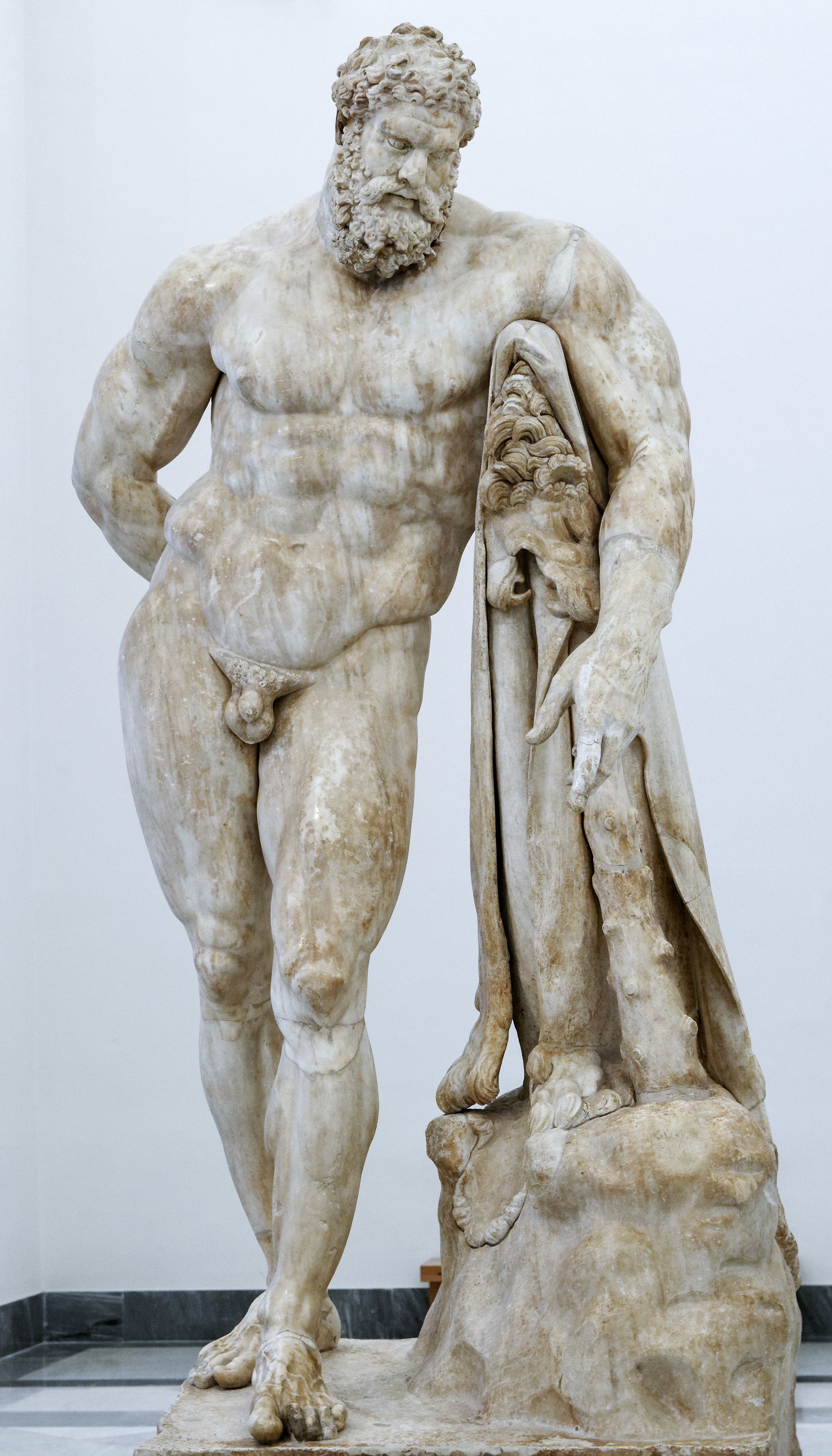
The ninth labour of Heracles was the obtaining of the belt of Hippolyta, queen of the Amazons. The Amazons were a legendary nation of warrior women who lived beyond the familiar Greek world and were famous for their skill in riding, archery and warfare.
The Belt of Hippolyta
Hippolyta possessed a magnificent belt given to her by Ares, the god of war. The belt was not merely a piece of clothing or decoration. It was a symbol of her authority as queen and of her special relationship with the war god.
King Eurystheus ordered Heracles to travel to the land of the Amazons and bring the belt back to Mycenae.
The task was requested for Admete, the daughter of Eurystheus, who desired the famous object for herself.
Unlike many earlier labours, the ninth began without violence. Hippolyta met Heracles peacefully and agreed to give him the belt.
The labour might have ended through diplomacy and mutual respect.
However, Hera disguised herself as an Amazon and spread the false claim that Heracles intended to abduct the queen.
The Amazons armed themselves and attacked the Greek visitors.
Heracles believed that Hippolyta had betrayed him. He killed the queen, took the belt and escaped after a fierce battle.
The ninth labour therefore became a tragedy created by suspicion, deception and the rapid destruction of trust.
Heracles and the Twelve Labours
Heracles was the son of Zeus, king of the gods, and Alcmene, a mortal woman descended from the hero Perseus.
Hera, the wife of Zeus, hated Heracles because he was born from one of her husband’s relationships with a mortal.
She persecuted him throughout his life and eventually caused him to experience a terrible period of madness.
During this madness, Heracles killed members of his own family.
When his sanity returned, he was overwhelmed by grief and guilt.
Heracles travelled to the Oracle of Apollo at Delphi and asked how he might be purified.
The oracle ordered him to serve King Eurystheus of Tiryns and Mycenae.
Eurystheus assigned him a series of dangerous tasks that became known as the Labours of Heracles.
King Eurystheus
Eurystheus possessed royal authority over Heracles because Hera had interfered with the timing of their births.
Zeus had declared that the next descendant of Perseus to be born would become a great ruler.
Hera delayed the birth of Heracles and caused Eurystheus to be born first.
Eurystheus therefore gained the kingship even though he was weaker and less courageous than Heracles.
The king feared the hero and hoped that one of the labours would kill him.
As Heracles continued succeeding, Eurystheus sent him on increasingly distant and dangerous journeys.
The First Eight Labours
Before travelling to the land of the Amazons, Heracles had completed eight great tasks.
He had killed the invulnerable Nemean Lion and taken its skin as armour.
He had destroyed the many-headed Lernaean Hydra with the help of his nephew Iolaus.
He had captured the sacred Ceryneian Hind alive after pursuing it for an entire year.
He had captured the Erymanthian Boar and carried it back to Eurystheus.
He had cleaned the Augean Stables in a single day by redirecting rivers through them.
He had defeated the Stymphalian Birds with the help of Athena and a bronze rattle made by Hephaestus.
He had captured the Cretan Bull alive.
He had also travelled to Thrace, seized the man-eating Mares of Diomedes and defeated their cruel owner.
The ninth labour would take Heracles farther east and bring him into contact with one of mythology’s most famous warrior societies.
Admete
Admete was the daughter of King Eurystheus.
Ancient traditions described her as the person who desired the belt of Hippolyta.
The exact reason for her request is not always explained.
She may have wanted the belt because it was beautiful, rare and associated with royal authority.
She may also have wished to dedicate it to Hera, who was closely connected with the family of Eurystheus.
Whatever her motive, her desire became the reason Heracles was sent to the distant land of the Amazons.
The Belt of Hippolyta
The belt of Hippolyta was sometimes described as a girdle, sash or war belt.
It was worn around the waist and may have helped secure armour, clothing or weapons.
The object represented Hippolyta’s position as queen of the Amazons.
Possessing the belt meant possessing a visible sign of military and political leadership.
It had been given to Hippolyta by Ares, making it a divine gift rather than an ordinary royal possession.
A Gift from Ares
Ares was the Greek god of violent warfare, bloodshed and battle fury.
The Amazons were frequently described as his daughters or descendants.
Hippolyta’s belt symbolised the protection and favour of the war god.
It may also have represented her right to command warriors and lead the Amazon nation.
Taking the belt therefore meant taking an object closely connected with her identity and authority.
The Meaning of the Belt
In the ancient world, belts could possess practical, ceremonial and symbolic importance.
A warrior’s belt might carry a sword or hold armour in place.
A royal belt could distinguish its owner from ordinary people.
The belt of Hippolyta combined these meanings.
It represented warfare, queenship, divine favour and the independence of the Amazons.
The Amazons
The Amazons were a legendary people of warrior women who lived at the edge of the Greek imagination.
They were skilled riders, archers and fighters.
They lived without the ordinary political and family structures familiar to Greek society.
Ancient writers placed their homeland in several different regions.
Some located them near the Black Sea, while others placed them in Asia Minor, the Caucasus or lands farther east.
The shifting geography reflected their role as inhabitants of a distant and unfamiliar world.
The Homeland of the Amazons
One important tradition placed the Amazons near the River Thermodon in northern Anatolia.
Their capital was sometimes called Themiscyra.
The region contained rivers, plains, forests and access to the Black Sea.
Such a landscape suited a society known for horses, hunting and military movement.
Themiscyra
Themiscyra was described as the royal centre of the Amazons.
It was associated with Hippolyta and other famous Amazon queens.
Although no confirmed historical Amazon capital has been identified, the name became an important location in Greek mythology.
Heracles travelled there or to a nearby harbour during the ninth labour.
Amazon Society
Greek stories imagined the Amazons as a society in which women controlled warfare and political authority.
Some myths claimed that men lived separately or held limited roles.
Other stories described the Amazons meeting neighbouring peoples for the purpose of having children.
Daughters were raised as warriors, while sons might be returned to their fathers, made servants or treated differently according to the version.
These accounts reflected Greek imagination more than a single consistent description of a real society.
Amazon Warriors
The Amazons were represented as highly trained fighters.
They used bows, spears, swords, axes and shields.
They were especially famous for fighting on horseback.
Their speed allowed them to attack, retreat and fire arrows while moving.
In Greek art, they were often shown wearing clothing associated with peoples from Anatolia, Persia or the Eurasian steppe.
The Amazons and Horses
Horses were central to the identity of the Amazons.
Mounted warriors could travel rapidly across open country and attack enemies from a distance.
The connection with horses distinguished the Amazons from many Greek infantry warriors, who usually fought on foot.
Their skill as riders contributed to their reputation as dangerous and unusual opponents.
The Amazons and Archery
The bow allowed Amazon warriors to fight from horseback or from a safe distance.
Greek heavy infantry relied upon shields, spears and close formation.
Mounted archery challenged this style of warfare because the attacker could avoid direct contact.
The Amazons therefore represented a form of combat that was difficult for conventional warriors to control.
The Amazons in Greek Imagination
The Amazons fascinated the Greeks because they reversed familiar expectations about gender and society.
Greek women were usually excluded from formal warfare and political leadership.
The Amazons were imagined as queens, generals, hunters and soldiers.
They therefore represented both an admired form of courage and a challenge to Greek social order.
The Amazons as Enemies and Equals
Greek heroes often fought Amazons, but the warrior women were not usually presented as weak or foolish.
They were worthy opponents capable of matching famous male heroes in battle.
Their defeat increased the reputation of the hero who overcame them.
At the same time, their courage allowed them to remain admired figures within myth and art.
Famous Amazon Queens
Hippolyta was one of several famous Amazon queens.
Antiope was connected with the Athenian hero Theseus.
Penthesilea later fought at Troy and was killed by Achilles.
Ancient traditions sometimes confused or exchanged the names and roles of these queens.
Different writers offered different versions of their relationships and deaths.
Hippolyta
Hippolyta was the queen encountered by Heracles during the ninth labour.
She was described as courageous, intelligent and respected by her warriors.
As the owner of the belt given by Ares, she possessed divine authority within Amazon society.
Her first meeting with Heracles was peaceful.
This detail is important because the battle that followed was not inevitable.
Hippolyta and Heracles
Hippolyta did not immediately treat Heracles as an enemy.
She was curious about the famous hero and asked why he had travelled to her land.
Heracles explained that he had been ordered to obtain her belt for the daughter of Eurystheus.
In many versions, Hippolyta admired Heracles and agreed to give him the belt willingly.
The labour appeared close to completion without bloodshed.
A Peaceful Beginning
The first exchange between Heracles and Hippolyta demonstrates that the Greeks and Amazons were capable of negotiation.
Heracles did not need to steal the belt.
Hippolyta did not need to defend it through violence.
A direct and honest conversation produced agreement.
The tragedy began only when an outside force destroyed trust.
The Command to Travel East
Eurystheus ordered Heracles to obtain the belt but did not provide a safe route or military support.
The hero had to organise the journey himself.
The distance required a sea voyage through unfamiliar waters.
The possibility of resistance from the Amazons made the expedition dangerous even before Hera interfered.
Heracles Gathers Companions
Many traditions described Heracles travelling with a group of companions.
These warriors helped sail the ship and defend the expedition.
The exact names differed between sources.
Some versions included Theseus, Telamon, Peleus or other heroes.
Ancient myth often connected famous figures by placing them together within major expeditions.
Theseus
Theseus was the great hero of Athens.
Some traditions claimed that he accompanied Heracles to the land of the Amazons.
During or after the expedition, Theseus took an Amazon named Antiope or Hippolyta back to Athens.
This event later caused a war between Athens and the Amazons.
Other traditions treated the adventure of Theseus as separate from the labour of Heracles.
Telamon
Telamon was a famous hero and the father of Ajax, one of the greatest Greek warriors at Troy.
He was sometimes included among the companions of Heracles.
Telamon later helped Heracles attack Troy after King Laomedon broke a promise concerning the rescue of Hesione.
The Voyage Begins
Heracles and his companions sailed from Greece towards the Black Sea region.
The journey followed the coast of the Aegean and passed through waters associated with storms, pirates and foreign kingdoms.
Sea travel in the ancient world required knowledge of winds, currents and safe harbours.
The expedition had to carry food, water, weapons and supplies for a long journey.
Possible Adventures During the Voyage
Ancient writers connected several side adventures with the ninth labour.
Heracles may have fought hostile rulers, rescued princesses or helped local communities during the outward and return journeys.
These stories varied between sources and were sometimes attached to other periods of his life.
The flexible nature of mythology allowed one voyage to contain many different adventures.
The Island of Paros
In one tradition, Heracles stopped at the island of Paros.
Sons of King Minos killed some of his companions.
Heracles responded by attacking the island and killing the murderers.
The people of Paros offered him replacements for the companions he had lost.
Heracles selected two grandsons of Minos to continue the journey.
King Lycus
Another tradition described Heracles helping a ruler named Lycus during the voyage.
Lycus was at war with a neighbouring king.
Heracles assisted him in battle and helped secure victory.
The ruler honoured Heracles and may have named territory after him.
Such episodes presented the hero as a travelling defender who solved problems beyond his assigned labour.
Arrival in Amazon Territory
The ship of Heracles eventually reached the coast near the land of the Amazons.
The foreign vessel attracted attention.
Amazon scouts or guards approached to discover the purpose of the visitors.
Heracles did not initially begin an attack.
He requested a meeting with Queen Hippolyta.
The Meeting with Hippolyta
Hippolyta came to the ship or met Heracles near the shore.
She may have been accompanied by guards and other leading Amazons.
Heracles explained the command of Eurystheus and the desire of Admete.
Hippolyta listened and responded with interest rather than anger.
Hippolyta’s Admiration
Hippolyta had heard of the achievements of Heracles or recognised his heroic strength.
She may have admired his courage, appearance or reputation.
Some traditions suggested that she was impressed enough to offer the belt freely.
The agreement demonstrated her confidence and generosity.
She did not fear that surrendering the object would destroy her identity as queen.
The Belt Is Offered
Hippolyta agreed to hand over the belt.
Heracles had therefore achieved the apparent purpose of the labour through diplomacy.
No warrior had been killed, and no city had been attacked.
The peaceful result showed that even a task associated with a war goddess could be completed without battle.
Hera Watches the Meeting
Hera continued to hate Heracles and did not want him to complete the labour easily.
She saw that Hippolyta intended to give him the belt.
The goddess decided to interfere before the agreement could be completed.
As in several earlier labours, Hera created danger after Heracles appeared close to success.
Hera Disguises Herself
Hera took the form of an Amazon warrior.
In this disguise, she moved among the women gathered near the coast.
No one recognised the queen of the gods.
Her divine disguise allowed her to speak with the authority of a member of their own community.
The False Rumour
Hera claimed that Heracles had not come merely to obtain the belt.
She said that he intended to kidnap Queen Hippolyta and carry her back to Greece.
The rumour transformed the visiting hero from a negotiator into a threat.
The Amazons believed that their queen and political independence were in immediate danger.
Why the Rumour Was Believed
Heracles had arrived with an armed group of foreign men.
His reputation included battles, captures and the seizure of animals and treasures.
The Amazons may have considered the possibility of abduction believable.
There was little time to question the report before the supposed threat could leave by sea.
Fear encouraged immediate action.
The Amazons Arm Themselves
The Amazons gathered bows, spears, axes, swords and shields.
Mounted warriors prepared their horses.
They moved rapidly towards the ship of Heracles.
The peaceful shore became a battlefield within a short time.
The speed of the response showed their loyalty to Hippolyta and readiness to defend their queen.
Heracles Sees the Army
Heracles saw armed Amazons approaching the Greek camp or ship.
He did not know that Hera had spread a false rumour.
He concluded that Hippolyta had deceived him.
The queen’s earlier agreement now appeared to be a trap intended to delay him until her army arrived.
The Collapse of Trust
Heracles did not ask Hippolyta for an explanation before acting.
The sudden appearance of armed warriors seemed to confirm betrayal.
Hippolyta may also have had little opportunity to explain what was happening.
The agreement collapsed because neither side understood the false information guiding the other.
The Battle Begins
The Amazons attacked the Greek visitors.
Arrows flew towards the ships, while mounted warriors charged across the shore.
Heracles and his companions defended themselves with shields, spears, swords and bows.
The battle became fierce because both sides believed they were responding to treachery.
Heracles and Hippolyta
Heracles confronted Hippolyta during the fighting.
Believing that she had broken her promise, he killed her.
The exact method differs among ancient accounts.
He may have struck her with his sword, club or another weapon.
Her death transformed a peaceful agreement into an irreversible tragedy.
Different Versions of Hippolyta’s Fate
Ancient traditions did not agree about the fate of Hippolyta.
In some accounts, Heracles killed her during the ninth labour.
In others, he killed another Amazon while Hippolyta survived.
Some traditions connected Hippolyta with Theseus rather than Heracles and described her dying during an Amazon attack upon Athens.
The overlapping names and stories reflect the flexible nature of Greek mythology.
Heracles Takes the Belt
After Hippolyta was killed or defeated, Heracles took the belt.
The object that had first been offered freely became a prize of war.
Its meaning changed through the violence surrounding it.
Instead of representing peaceful exchange, it became evidence of a queen’s death and a society’s defeat.
The Battle with the Amazon Leaders
Heracles and his companions fought several important Amazon warriors.
Ancient writers provided different names for those killed or defeated.
These women were presented as courageous fighters rather than an anonymous crowd.
Their individual resistance increased the difficulty and seriousness of the battle.
Melanippe
One tradition described Heracles capturing an Amazon named Melanippe.
She may have been the sister of Hippolyta.
Heracles later released her in exchange for the belt.
In this version, the object was obtained through ransom rather than taken directly from a dead queen.
Antiope
Antiope was another famous Amazon connected with the expedition.
Some traditions said that Theseus abducted her and carried her to Athens.
Others claimed that she willingly left with him.
Their relationship led to the birth of Hippolytus in several versions.
The removal of Antiope became the cause of an Amazon invasion of Attica.
Theseus and the Amazon Queen
Ancient sources disagreed whether the Amazon taken by Theseus was Antiope or Hippolyta.
Some described an abduction during the expedition of Heracles.
Others described Theseus travelling separately to Amazon territory.
The uncertainty shows how closely the myths of Heracles and Theseus became connected.
The Amazons Retreat
After losing their queen or several leading warriors, the Amazons were forced to retreat.
Heracles and his companions reached their ship with the belt.
The Greeks departed before another attack could prevent their escape.
The labour had been completed, but the journey home still contained danger.
The Tragedy of the Ninth Labour
The ninth labour is especially tragic because violence was unnecessary at the beginning.
Hippolyta had agreed to give Heracles what he wanted.
Hera’s false rumour transformed cooperation into fear.
Heracles’ immediate suspicion transformed fear into death.
The tragedy arose not from an unavoidable conflict but from misinformation and lost trust.
Hera’s Motive
Hera wanted Heracles to suffer and fail.
She may also have wanted to prevent him from gaining glory through a peaceful success.
By causing battle, she increased the danger of the labour and destroyed an agreement that reflected well upon both Heracles and Hippolyta.
Her interference once again created suffering for people beyond her original target.
Hera’s Unintended Result
Although Hera caused the battle, Heracles still obtained the belt.
Her plan increased suffering but did not prevent the labour from being completed.
As in earlier adventures, her hostility unintentionally increased the scale of Heracles’ fame.
The peaceful obtaining of a belt became a legendary battle with the Amazons.
The Return Voyage
Heracles and his companions sailed away from Amazon territory.
They carried the belt of Hippolyta and any other trophies gained during the battle.
The return journey passed through several lands connected with additional myths.
One of the most important was Troy.
Troy and King Laomedon
During the return voyage, Heracles arrived near Troy.
The city was ruled by King Laomedon, father of the future King Priam.
Troy was suffering because Laomedon had broken a promise to the gods Apollo and Poseidon.
The punishment took the form of disease, destruction or a sea monster.
Laomedon’s Broken Promise
Apollo and Poseidon had helped build the walls of Troy while serving the mortal king.
Laomedon promised to reward them for their labour.
When the walls were complete, he refused to pay.
The gods punished Troy for the king’s dishonesty.
Poseidon sent a sea monster to attack the coast.
Hesione
An oracle declared that the sea monster could be satisfied if Laomedon sacrificed his daughter Hesione.
She was chained to a rock beside the sea and left for the creature.
Heracles saw her during his journey and offered to rescue her.
Laomedon promised him a group of extraordinary horses if he killed the monster.
The Horses of Laomedon
The horses had originally been given by Zeus to Tros or another ancestor of the Trojan royal family.
They were connected with the abduction of Ganymede, a Trojan prince taken to Olympus by Zeus.
The animals were therefore extremely valuable and of divine origin.
Heracles accepted the promised reward and prepared to fight the sea monster.
Heracles Rescues Hesione
Heracles attacked and killed the sea monster.
Different traditions described him firing arrows, using a sword or entering the creature’s body.
Hesione was saved from sacrifice.
Laomedon received the benefit of the hero’s courage.
Laomedon Breaks His Promise
After the rescue, Laomedon refused to surrender the promised horses.
He repeated the dishonesty that had already brought divine punishment upon Troy.
Heracles became furious but could not immediately attack the powerful city with his limited companions.
He promised to return later.
The Later Attack on Troy
Heracles eventually returned with an army and attacked Troy.
He captured the city, killed Laomedon and most of his sons, and gave Hesione to Telamon.
One son survived because Hesione paid a ransom for him.
That son was Podarces, later known as Priam.
This earlier destruction of Troy became part of the background to the later Trojan War.
The Ninth Labour and Broken Promises
The story of Hippolyta begins with an agreement destroyed by false information.
The story of Laomedon involves a real promise deliberately broken.
Both episodes explore trust, but they present different causes of betrayal.
Hippolyta may be innocent of betrayal, while Laomedon is repeatedly dishonest.
Other Return-Journey Adventures
Ancient sources connected other episodes with the voyage home.
Heracles may have fought hostile peoples, assisted local rulers or defeated enemies along the coast.
The exact sequence differs among authors.
These additional adventures helped transform the labour into a wide-ranging expedition.
Heracles Returns to Mycenae
Heracles eventually returned to the court of Eurystheus.
He carried the belt of Hippolyta as proof that the ninth labour had been completed.
Eurystheus or Admete received the object.
The king could not deny that Heracles had travelled to the land of the Amazons and obtained the famous belt.
The Fate of the Belt
Ancient sources do not clearly agree about what happened to the belt after its delivery.
It may have been kept by Admete, placed in a royal treasury or dedicated within a temple.
Its later disappearance from the myth reflects the fact that its main purpose was to prove the completion of the labour.
The Completion of the Ninth Labour
Heracles had fulfilled the command given by Eurystheus.
He travelled to a distant land, met Hippolyta and returned with her belt.
The labour was officially successful.
However, its success came through the death of a queen who had originally intended to cooperate.
The Meaning of the Ninth Labour
The ninth labour explores the fragility of trust.
Heracles and Hippolyta reach an agreement through honest conversation.
One false rumour destroys that agreement.
The story shows how quickly fear can replace understanding when people act before verifying information.
The Labour as a Story of Misinformation
Hera does not attack Heracles with a monster or weapon.
She uses false information.
The lie is powerful because it changes how the Amazons interpret the presence of the Greeks.
A peaceful visitor becomes an abductor, and a defensive army appears to Heracles as proof of betrayal.
The Power of Rumour
A rumour can spread faster than careful explanation.
The Amazons arm themselves before Hippolyta and Heracles can restore trust.
The story demonstrates that information can become a weapon capable of causing as much destruction as physical force.
The Failure to Verify
Neither side pauses long enough to confirm the truth.
The Amazons do not ask Hippolyta whether she is being abducted.
Heracles does not ask why the warriors are approaching.
Fear makes immediate action appear safer than communication.
The result is unnecessary death.
Suspicion and Violence
Heracles has travelled through many hostile lands and faced repeated betrayal.
His suspicion is understandable, but it proves disastrous.
Past experiences make him ready to believe that Hippolyta has deceived him.
The labour shows how fear created by earlier conflicts can destroy later opportunities for peace.
Hippolyta as a Tragic Figure
Hippolyta behaves generously when she meets Heracles.
She agrees to surrender a symbol of her royal power.
Her reward is suspicion and death.
Her tragedy lies in being caught between Hera’s deception and Heracles’ fear.
Was Hippolyta Betrayed?
Hippolyta may be understood as betrayed by both divine and human forces.
Hera manipulates her people.
Heracles fails to trust her earlier promise.
The Amazon army acts from loyalty but helps create the appearance of betrayal.
No single mortal fully understands what is happening until it is too late.
The Belt as a Symbol of Authority
The belt represents the right of Hippolyta to rule.
When it is taken to Mycenae, part of Amazon royal authority is transferred into a Greek court.
The object becomes a trophy demonstrating Heracles’ ability to enter and overcome a foreign warrior society.
The Belt as a Symbol of Identity
Hippolyta’s identity as queen is closely connected with the belt.
Giving it willingly would have represented generosity and confidence.
Losing it through battle represents defeat and the loss of political control.
The same object acquires different meanings according to how it changes hands.
The Belt as a Symbol of War
Because Ares gave the belt to Hippolyta, it symbolises warfare.
Ironically, the belt is initially offered without violence.
Hera’s interference causes the object associated with war to become the centre of an actual battle.
The Belt as a Symbol of Female Power
Hippolyta’s belt represents the military and political authority of a woman.
The demand that it be carried to a Greek princess creates a complex transfer between two different ideas of female identity.
Hippolyta is a ruling warrior, while Admete is a daughter within a Greek royal household.
The belt moves from a queen who commands armies to a princess who desires a prestigious object.
The Amazons as Symbols of Independence
The Amazons live beyond the control of Greek kings.
They possess their own rulers, customs and military strength.
Their independence makes them both fascinating and threatening within Greek myth.
Heracles’ victory symbolically brings part of their distant world under Greek heroic control.
The Amazons as a Mirror of Greek Society
The Amazons reverse many Greek social expectations.
Women fight, ride horses and rule.
Men hold limited or distant roles.
By imagining this reversal, Greek storytellers could explore ideas about gender, political order and the boundaries of civilisation.
The Amazons as Worthy Opponents
The courage of the Amazons is essential to the story.
If they were weak, the ninth labour would bring little glory to Heracles.
Their military skill makes the battle dangerous and their defeat meaningful.
Ancient art often showed Amazons fighting with determination equal to that of Greek heroes.
The Amazonomachy
Scenes of battles between Greeks and Amazons were known as Amazonomachies.
They became popular subjects in Greek sculpture, pottery and architecture.
Such scenes often showed heroic order struggling against a foreign warrior society.
They also allowed artists to represent movement, cavalry, exotic clothing and close combat.
Amazonomachy in Greek Art
Amazon battles appeared on temples, shields, painted pottery and public monuments.
They were sometimes placed beside scenes of Greeks fighting centaurs, giants or Trojans.
The Amazons were not presented as monsters, but they occupied a similar symbolic position as opponents of Greek heroes.
The Parthenon and the Amazons
An Amazonomachy appeared in the artistic programme of the Parthenon in Athens.
The subject was appropriate because Theseus, the great Athenian hero, was linked with the Amazons.
The battle represented both mythological conflict and ideas about the defence of the city.
The Temple of Apollo at Bassae
The Temple of Apollo Epicurius at Bassae contained a sculpted frieze depicting Greeks and Amazons in battle.
The surviving sculptures show intense movement and close combat.
The Amazons appear as active and courageous warriors rather than passive victims.
Heracles in Amazon Art
Heracles was often shown wearing the skin of the Nemean Lion while fighting Amazon warriors.
The lion skin made him immediately recognisable.
He might carry a club, sword or bow depending upon the scene.
Hippolyta could be shown defending herself or surrendering the belt.
Hippolyta in Ancient Art
Artists represented Hippolyta as a powerful warrior queen.
She might wear patterned trousers, a short tunic, armour and a distinctive cap.
Such clothing was associated by Greeks with peoples from Anatolia and the Eurasian steppe.
Her appearance marked her as foreign while preserving her dignity and strength.
Amazon Clothing
Amazons in Greek art often wore trousers, long sleeves and soft caps.
Greek male warriors usually fought with bare legs beneath armour.
The different clothing helped viewers distinguish the Amazons immediately.
It also connected them with horse-riding peoples beyond the Greek world.
Amazon Weapons
Artists gave Amazons bows, spears, swords and double-headed axes.
The crescent-shaped shield known as a pelta became especially associated with them.
The shield was lighter than the large circular shield carried by Greek heavy infantry.
It suited fast movement and mounted warfare.
The Double-Headed Axe
The double-headed axe was sometimes shown in the hands of Amazon warriors.
It made their equipment appear different from that of Greek soldiers.
The weapon became a recognisable symbol of fierce female warriors in later art.
Possible Historical Inspirations
The Amazons were mythological, but ancient storytellers may have been influenced by real societies in which women rode horses, hunted or fought.
Archaeological discoveries from the Eurasian steppe have revealed burials of women with weapons and riding equipment.
These findings do not prove that the mythological Amazon nation existed exactly as described.
They show that Greek travellers may have encountered cultures in which women had more visible military roles.
Steppe Warrior Women
Nomadic and semi-nomadic peoples north and east of the Black Sea depended heavily upon horses.
Women in some of these societies could ride, hunt and use bows.
Greek stories may have transformed reports of such women into the legendary Amazons.
Myth enlarged real cultural differences into a complete nation of female warriors.
The Name Amazon
Ancient and later writers proposed several explanations for the name Amazon.
One famous but uncertain interpretation connected it with the Greek idea of being without a breast.
This explanation produced the later story that Amazons removed or burned one breast to improve archery.
Ancient art usually shows Amazons with both breasts, making the claim doubtful.
The true origin of the name remains uncertain.
The Myth of the Removed Breast
The claim that Amazons removed one breast became popular in later retellings.
It was supposedly done to make drawing a bow easier.
There is no practical need for such an act, and Greek artists did not consistently represent it.
The idea probably developed from an attempted explanation of the name rather than an original feature of Amazon mythology.
Hippolyta and Penthesilea
Hippolyta’s story can be compared with that of Penthesilea, another Amazon queen.
Penthesilea came to Troy after the death of Hector and fought on the Trojan side.
Achilles killed her in battle.
Later traditions claimed that he fell in love with her at the moment of her death.
Both queens are remembered through tragic encounters with great Greek heroes.
Hippolyta and Antiope
Hippolyta and Antiope are sometimes described as sisters.
Hippolyta is connected mainly with Heracles, while Antiope is connected with Theseus.
Because ancient traditions often exchanged their names, the two figures can be difficult to separate.
Both represent Amazon queens whose contact with Greek heroes leads to conflict and death.
The Amazon War Against Athens
After Theseus took Antiope or Hippolyta to Athens, the Amazons invaded Attica.
They entered the region and fought near the city itself.
The conflict became known as the Attic War or Amazonomachy.
Theseus eventually defeated them.
The story gave Athens its own major victory over the warrior women.
Hippolytus
Theseus and the Amazon woman had a son named Hippolytus in several traditions.
He became a devoted worshipper of Artemis and rejected romantic love.
His stepmother Phaedra fell in love with him and later accused him falsely.
Theseus cursed Hippolytus, leading to the young man’s death.
The story continued the tragic consequences of Greek and Amazon relationships across generations.
The Ninth Labour and Theseus
If Theseus accompanied Heracles, the ninth labour became the beginning of his personal connection with the Amazons.
The expedition that obtained Hippolyta’s belt also prepared the later Amazon attack upon Athens.
A labour completed for Eurystheus therefore produced consequences far beyond Mycenae.
The Ninth Labour and Troy
The rescue of Hesione connected Heracles with the royal family of Troy.
Laomedon’s betrayal later caused Heracles to attack the city.
Priam survived that destruction and rebuilt Troy.
Many years later, another Greek army would destroy the city during the Trojan War.
The ninth labour therefore intersects with the earlier history of one of mythology’s greatest conflicts.
The Ninth Labour and the Argonauts
Several companions associated with the voyage of Heracles also appeared among the Argonauts.
The journey to the distant shores of the Black Sea resembled the expedition of Jason in geography and danger.
Both stories involved sea travel, foreign kingdoms and encounters with powerful women.
The Labour as a Diplomatic Mission
The ninth labour begins more like a diplomatic mission than a hunt.
Heracles must request a royal object from a foreign queen.
He succeeds initially because he explains his purpose openly.
The first result demonstrates the effectiveness of respectful negotiation.
The Failure of Diplomacy
Diplomacy fails not because the two leaders cannot agree.
It fails because a false rumour reaches the wider group.
The story shows that agreements between leaders remain fragile when their followers believe they are in danger.
Communication must extend beyond the people making the original agreement.
The Labour as a Lesson in Communication
Heracles and Hippolyta communicate successfully at first.
The Amazons do not receive the same information.
Hera fills the gap with a lie.
The tragedy suggests that unclear or incomplete communication creates space for manipulation.
The Labour as a Lesson in Trust
Trust is built through the meeting between Heracles and Hippolyta.
It is destroyed within moments by the sight of armed warriors.
Once trust collapses, earlier promises appear false.
The labour demonstrates how difficult trust is to build and how easily fear can destroy it.
The Labour as a Lesson in Suspicion
Heracles has reason to be cautious in foreign territory.
However, suspicion becomes dangerous when it replaces investigation.
He interprets the Amazon army as proof of Hippolyta’s betrayal without understanding the cause.
The result shows that caution and judgement are not the same as immediate distrust.
The Labour as a Lesson in Deception
Hera wins control of events without fighting personally.
She identifies the fear most likely to unite the Amazons and presents it as fact.
The lie succeeds because it matches what they believe a foreign hero might do.
Effective deception often uses existing fears rather than inventing entirely unbelievable claims.
The Labour as a Lesson in Fear
The Amazons fear the loss of their queen.
Heracles fears betrayal and entrapment.
Both fears are understandable, but neither is based upon the truth of the situation.
The battle begins because fear is treated as evidence.
The Labour as a Lesson in Hasty Action
The Amazons arm themselves immediately.
Heracles attacks before demanding an explanation.
Speed appears necessary to both sides, but it prevents peaceful correction.
The labour warns that urgent action taken on false information can create irreversible harm.
The Labour as a Lesson in Leadership
Hippolyta must communicate with both a foreign hero and her own warriors.
Heracles must control the actions of his companions while judging the intentions of the Amazons.
The failure of communication on both sides shows how leadership becomes difficult during sudden crisis.
The Labour as a Lesson in Responsibility
Hera is the main cause of the deception, but mortal choices still matter.
The Amazons choose to attack.
Heracles chooses to believe Hippolyta has betrayed him.
The story distributes responsibility between divine manipulation and human reaction.
The Labour as a Lesson in the Consequences of Lies
Hera’s statement contains no physical force.
Nevertheless, it causes armed conflict and death.
The myth presents a lie as an action with real and lasting consequences.
Words can become causes of violence when spoken within a fearful community.
The Labour as a Lesson in Lost Opportunities
The peaceful agreement offered a rare opportunity for cooperation between Greeks and Amazons.
The belt could have become a gift symbolising respect.
Instead, it becomes a trophy associated with bloodshed.
The labour shows how deception can destroy outcomes beneficial to everyone involved.
The Labour as a Lesson in Gender and Power
Heracles enters a society ruled by women and asks its queen to surrender a symbol of authority.
The story reflects Greek fascination with female political and military power.
Hippolyta’s willingness to negotiate shows confidence, while the later battle presents the threat Greeks associated with armed female independence.
The Labour as a Lesson in Cultural Difference
The Greeks and Amazons belong to different societies and may interpret actions differently.
The presence of armed Greek men may appear threatening to the Amazons.
The rapid mobilisation of Amazon warriors appears treacherous to Heracles.
Cultural distance makes misunderstanding easier.
The Labour as a Lesson in Peace and War
The story begins with peace and ends with war.
The change does not occur because negotiation fails.
It occurs because war is created after negotiation succeeds.
The labour suggests that peace requires protection from those who benefit from conflict.
The Labour as a Lesson in Divine Interference
Mortals make plans, agreements and promises, but the gods can disrupt them.
Hera’s interference demonstrates the vulnerability of human cooperation before divine power.
However, the myth also shows that gods work through mortal emotions such as fear and suspicion.
The Labour as a Lesson in Heroic Limitations
Heracles possesses enormous strength but cannot see through Hera’s disguise.
He can defeat armies but cannot recover the peaceful opportunity once Hippolyta is dead.
The labour exposes the limitations of physical power before deception.
The Labour as a Lesson in Regret
Ancient accounts do not always describe Heracles learning the truth about Hera’s rumour.
If he later understood what happened, the victory would have carried deep regret.
He obtained the belt but killed a queen who had intended to help him.
The story allows success and remorse to exist together.
The Labour as a Step Towards Redemption
Heracles performs the labours to gain purification after the tragedy of his madness.
The ninth labour complicates that process because it creates more death.
He completes his duty, but the circumstances reveal that heroic service does not always produce morally simple results.
Heroism and Tragedy
Heracles is heroic in courage, endurance and achievement.
Hippolyta is heroic in leadership and generosity.
Their encounter becomes tragic because their strengths cannot protect them from deception.
The labour shows that tragedy can arise even when both central figures possess admirable qualities.
Heracles and Hippolyta Compared
Heracles is a powerful servant of Eurystheus seeking an object for another person.
Hippolyta is an independent queen who already possesses divine authority.
He travels because he must obey.
She offers the belt because she chooses to do so.
Their meeting brings together two different forms of power.
Heracles and Ares
The belt belongs to Ares through his gift to Hippolyta.
Heracles therefore enters a world closely connected with the war god.
Although Ares does not always appear directly, his influence is visible in the warrior society, the belt and the battle.
Heracles and Hera
Hera remains the most persistent enemy of Heracles.
During earlier labours, she raised monsters, sent a giant crab and created other obstacles.
During the ninth labour, she uses deception instead of a creature.
The change reveals that her attacks can be psychological and political as well as physical.
Hippolyta and Ares
As the recipient of Ares’ belt, Hippolyta is closely connected with martial authority.
She does not need to prove herself through immediate violence.
Her willingness to give away the belt can be understood as confidence that her queenship depends upon more than one object.
Admete and Hippolyta
Admete desires the belt because of its beauty or prestige.
Hippolyta wears it as a sign of actual leadership.
The contrast separates possession of a symbol from the experience that gives the symbol meaning.
Admete can own the belt, but she does not automatically gain the authority of the Amazon queen.
Objects and Power
The ninth labour raises the question of whether power can be transferred through an object.
The belt represents Hippolyta’s authority, but removing it does not necessarily transfer her courage or leadership to its new owner.
A symbol can be possessed without possessing the qualities it originally represented.
The First Nine Labours Compared
The Nemean Lion tests direct strength.
The Lernaean Hydra tests cooperation and adaptation.
The Ceryneian Hind tests patience and restraint.
The Erymanthian Boar tests hunting and use of terrain.
The Augean Stables test engineering and creative thought.
The Stymphalian Birds test archery and specialised tools.
The Cretan Bull tests wrestling and controlled force.
The Mares of Diomedes test leadership and the defeat of cruelty.
The belt of Hippolyta tests diplomacy, trust and judgement under deception.
The Ninth Labour and the Tenth
After obtaining the belt, Heracles would be sent to the far western edge of the world.
His tenth labour required him to capture the cattle of Geryon.
The journey would involve a three-bodied ruler, a two-headed dog, the Ocean and the Pillars of Heracles.
The labours continued expanding in geographical and supernatural scale.
The Growing Distance of the Labours
The earliest labours take place near Mycenae and within the Peloponnese.
Later tasks send Heracles to Crete, Thrace and the land of the Amazons.
The ninth labour confirms his transformation from a local hero into a traveller known across the ancient world.
The Ninth Labour in Greek Literature
Greek writers preserved several versions of the story.
Some emphasised Hippolyta’s peaceful offer and Hera’s deception.
Others described a planned battle from the beginning.
Some made Melanippe the captive exchanged for the belt.
Others connected the labour closely with Theseus and Antiope.
The Ninth Labour in Roman Literature
The Romans called Heracles Hercules and continued retelling the Amazon adventure.
Roman writers and artists were interested in the contrast between the powerful male hero and the warrior queen.
The labour became part of the wider image of Hercules as a conqueror of distant peoples and dangerous lands.
The Ninth Labour in Later Literature
Medieval and Renaissance writers continued using the Amazons as symbols of female courage, independence and disorder.
Hippolyta sometimes appeared as a noble queen rather than an enemy.
Later authors reinterpreted the meeting with Heracles according to changing ideas about gender and heroism.
Hippolyta in Later Stories
The name Hippolyta appears in later literature beyond direct retellings of the labour.
Writers used her as a model for warrior queens and powerful women.
Different stories combined elements from her myths with those of Antiope and Penthesilea.
The Amazons in Modern Culture
Amazons appear frequently in modern novels, films, television programmes, comics and games.
They are often portrayed as an advanced society of female warriors living apart from the wider world.
Modern adaptations may present them as heroes, rivals or protectors rather than enemies of Greek civilisation.
Modern Interpretations of Hippolyta
Modern retellings often give Hippolyta greater depth and independence.
She may be shown as a wise ruler who attempts to prevent unnecessary war.
Her death can be interpreted as a criticism of mistrust and aggressive heroism.
Some versions allow her to survive and form a respectful alliance with Heracles.
Modern Interpretations of the Labour
The labour can be retold as a story of diplomacy destroyed by propaganda.
It can also be interpreted as a conflict between cultures unable to understand one another.
Modern writers may question whether taking the belt was a heroic act or an example of powerful outsiders demanding a sacred object.
The Labour and Propaganda
Hera’s rumour functions like propaganda.
It presents a threatening story designed to produce immediate action.
It does not allow space for doubt, evidence or discussion.
The reaction shows how communities can be moved towards war through emotionally powerful claims.
The Labour and Confirmation
The approaching Amazon army confirms Heracles’ fear of betrayal.
His armed companions may confirm the Amazons’ fear of abduction.
Each side sees evidence supporting the false story because their own defensive actions appear threatening to the other.
The misunderstanding becomes self-reinforcing.
The Labour and Escalation
A rumour leads to mobilisation.
Mobilisation appears to prove hostile intent.
Perceived hostility leads to attack.
Attack makes peace impossible.
The ninth labour presents a clear pattern of escalation from words to war.
The Labour and the Cost of Victory
Heracles obtains the belt and completes the command.
However, the cost includes the death of Hippolyta and many Amazon warriors.
The labour asks whether success should be measured only by possession of the desired object.
The Labour and Moral Ambiguity
Heracles acts under royal and divine command, but his judgement contributes to tragedy.
The Amazons act to protect their queen, but their attack makes explanation impossible.
Hippolyta offers peace but cannot control the rumour spreading among her people.
The story contains no simple moral innocence apart from the deception that begins the conflict.
The Labour and the Limits of Strength
Heracles can defeat Amazon warriors but cannot restore Hippolyta after killing her.
Physical power solves the immediate battle while failing to solve the underlying misunderstanding.
The labour shows that some problems become impossible to repair once violence begins.
The Labour and Reconciliation
The original agreement demonstrates that reconciliation was possible.
Heracles and Hippolyta were not natural enemies.
Their tragedy makes the lost peaceful outcome more powerful.
The labour suggests that peace depends upon maintaining communication even during moments of fear.
The Legacy of Hippolyta
Hippolyta remains one of the most famous warrior queens in mythology.
She is remembered through her belt, her meeting with Heracles and her connection with the wider Amazon tradition.
Although many ancient versions end with her defeat, her courage and authority remain central to the story.
The Legacy of the Amazons
The Amazons became enduring symbols of female military strength and independence.
They inspired ancient art, political symbolism, literature and modern fantasy.
Their mythology continues to raise questions about gender, power, cultural difference and the way societies imagine outsiders.
The Legacy of the Ninth Labour
The ninth labour is remembered not only because Heracles obtained a divine belt.
It endures because the task begins peacefully and becomes tragic through deception.
The story gives unusual importance to communication, rumour and mistrust within a cycle famous for physical monsters.
Conclusion
The ninth labour of Heracles was the obtaining of the belt of Hippolyta, queen of the Amazons.
The belt had been given to Hippolyta by Ares and represented her authority as a warrior queen.
King Eurystheus ordered Heracles to bring it back for his daughter Admete.
Heracles gathered companions and sailed to the distant land of the Amazons near the Black Sea.
When Hippolyta met him, he explained the purpose of his journey.
The queen admired Heracles and agreed to give him the belt willingly.
The labour could have ended without violence.
Hera, however, disguised herself as an Amazon and spread the false claim that Heracles intended to abduct Hippolyta.
The Amazons armed themselves and rushed towards the Greek camp.
Heracles saw the approaching warriors and believed that Hippolyta had betrayed him.
He killed the queen, took the belt and fought his way back to the ship.
Ancient versions differed about the exact fate of Hippolyta and the role of other Amazons such as Melanippe and Antiope.
Some traditions also connected Theseus with the expedition and the later Amazon war against Athens.
During the return journey, Heracles rescued Hesione from a sea monster at Troy.
King Laomedon then refused to provide the horses promised as payment.
This betrayal later caused Heracles to return and destroy the city.
Heracles eventually delivered Hippolyta’s belt to Eurystheus and completed the ninth labour.
The adventure demonstrates that not every great danger takes the form of a monster.
During this labour, the greatest threat is false information.
Hera’s rumour turns allies into enemies and transforms a peaceful agreement into a deadly battle.
The Amazons act because they believe their queen is in danger.
Heracles acts because he believes Hippolyta has deceived him.
Both sides respond to fear rather than verified truth.
The death of Hippolyta reveals the terrible cost of suspicion and hasty action.
Heracles obtains the object he was commanded to bring home, but the success is overshadowed by unnecessary loss.
The ninth labour therefore stands as one of the most tragic and morally complex adventures of Heracles.
It is a story about diplomacy, female authority, cultural difference and the destructive power of lies.
It teaches that trust can take time to create but only moments to destroy.
It also reminds readers that physical strength cannot repair every harm caused by misunderstanding.
Through the belt of Hippolyta, the mythology of Heracles moves beyond battles with animals and monsters into the more dangerous world of politics, rumour and human judgement.