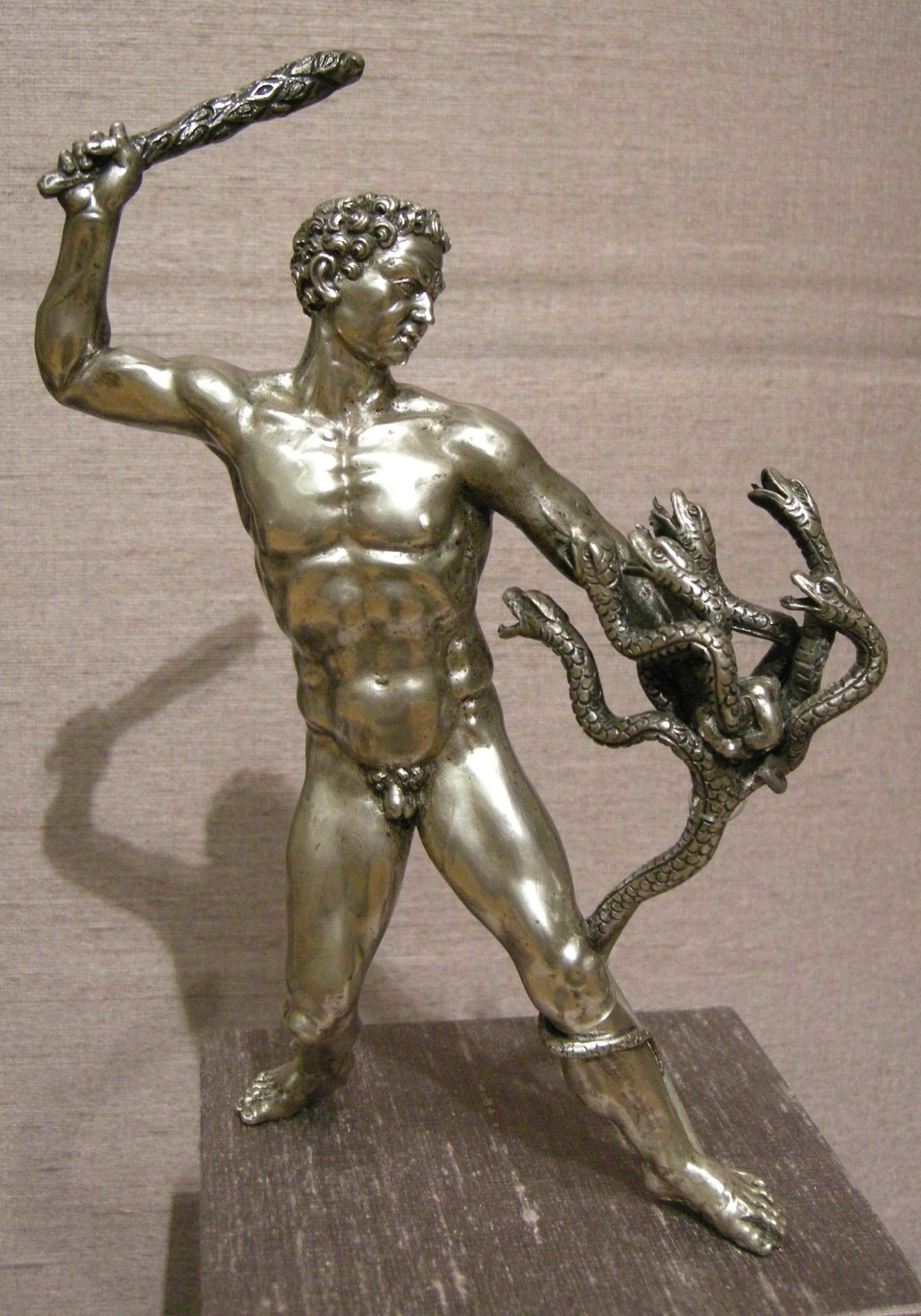
The Hydra of Lerna was one of the most terrifying monsters in ancient Greek mythology. Usually described as a gigantic water serpent with numerous heads, the Hydra lived in the marshes near the ancient settlement of Lerna in the region of Argolis. Its poisonous breath, deadly blood and remarkable ability to grow new heads made it almost impossible to defeat.
Introduction
The monster is best known for its battle with Heracles, also called Hercules, who was ordered to destroy it as the second of his famous Twelve Labours. The struggle became one of the greatest examples of heroic courage, cooperation and intelligence in Greek mythology.
The Hydra was more than a dangerous animal. It represented destruction that multiplied whenever it was attacked. For this reason, the creature later became a symbol of problems that grow more complicated when people attempt to solve them without understanding their true cause.
The Meaning of the Hydra’s Name
The name Hydra comes from an ancient Greek word connected with water. This was appropriate because the monster lived in a wet and marshy region and was closely associated with springs, lakes and the underworld.
The creature is often called the Lernaean Hydra or the Hydra of Lerna to distinguish it from other serpents and dragon-like beings in Greek mythology.
In modern language, the word hydra can describe any difficulty that appears to multiply when part of it is removed. The expression comes directly from the monster’s ability to replace each severed head with new ones.
The Family of the Hydra
The Hydra belonged to a terrifying family of monsters. Its parents were usually identified as Typhon and Echidna, two of the most dangerous beings in Greek mythology.
Typhon was an enormous storm monster who challenged Zeus for control of the universe. He was described as possessing tremendous strength, fiery eyes and numerous serpent-like forms.
Echidna was a creature who was part beautiful woman and part serpent. She lived far from human civilisation and gave birth to many monsters that later appeared in the adventures of Greek heroes.
The Hydra’s siblings were said to include Cerberus, the three-headed dog guarding the underworld, and the Chimera, a fire-breathing creature made from parts of several animals.
Other monsters connected with this family included the Nemean Lion, the Sphinx and the two-headed dog Orthrus. The Hydra therefore belonged to a generation of creatures that threatened the order of both gods and mortals.
The Appearance of the Hydra
Ancient writers and artists did not always agree about the Hydra’s appearance. It was generally imagined as a vast serpent or dragon with a long body and several heads rising from its neck.
Some accounts gave the Hydra nine heads, while others described fifty or even one hundred. The number was less important than the creature’s ability to replace the heads that were cut away.
One of the Hydra’s heads was said to be immortal. Unlike the others, this central head could not be killed by an ordinary weapon.
The monster’s many mouths contained sharp teeth, and its breath was believed to be poisonous. In some versions, merely approaching the Hydra was dangerous because the fumes surrounding it could kill a person.
Its blood and venom were even more deadly. After defeating the monster, Heracles used this poison to make his arrows almost impossible to survive.
The Land of Lerna
Lerna was located south of the city of Argos in the north-eastern Peloponnese. The area contained springs, marshes and a lake surrounded by fertile land.
In ancient Greek religion, Lerna was associated with mystery, fertility and the underworld. Deep pools and underground waters were sometimes believed to provide entrances to the realm of the dead.
The Hydra lived near one of these sacred and dangerous places. Its lair was commonly located beneath a plane tree close to the spring of Amymone.
The marshes provided an ideal home for a serpent-like monster. Thick vegetation, deep water and dangerous ground made it difficult for hunters to approach or escape.
The Spring of Amymone
The spring of Amymone was named after one of the daughters of Danaus, a legendary king associated with Argos. According to mythology, the region once suffered from a shortage of water.
Amymone went searching for a spring and encountered the god Poseidon. He created or revealed a source of fresh water for her, and the spring later carried her name.
The Hydra was believed to guard the area near this spring. This connection placed the monster beside a valuable source of life while also linking it with hidden waters and the underworld.
The presence of the Hydra may have represented the dangerous side of water. Springs and rivers could support crops and communities, but marshes could also contain disease, flooding and unseen threats.
Hera and the Hydra
The goddess Hera played an important role in the story of the Hydra. She was the wife of Zeus and the queen of the Olympian gods.
Heracles was the son of Zeus and a mortal woman named Alcmene. Because of her anger over Zeus’s unfaithfulness, Hera became the lifelong enemy of Heracles.
She sent hardships, monsters and madness against him. According to some traditions, Hera raised or placed the Hydra at Lerna because she knew that Heracles would eventually be sent to fight it.
The Hydra was therefore not simply a wild monster. It was also one of Hera’s weapons in her struggle against the son of Zeus.
Heracles and the Twelve Labours
Heracles was the greatest of the Greek heroes, famous for his strength and endurance. However, his life was filled with suffering caused by the hostility of Hera.
Hera drove Heracles into a period of madness during which he killed members of his own family. When his mind returned, he was overcome by grief and guilt.
To seek purification, Heracles consulted the oracle at Delphi. He was ordered to serve King Eurystheus of Tiryns and complete a series of difficult tasks.
These tasks became known as the Twelve Labours of Heracles. They were designed to humiliate or destroy him, but each victory increased his fame.
The killing of the Hydra was originally the second labour. It followed Heracles’s defeat of the Nemean Lion.
The Journey to Lerna
Heracles travelled to Lerna in a chariot driven by his nephew and companion Iolaus. Iolaus was the son of Heracles’s half-brother Iphicles.
Although Heracles possessed extraordinary strength, he did not always complete his adventures alone. Iolaus was a loyal assistant whose quick thinking became essential during the struggle with the Hydra.
When they reached the marshes, Heracles found the entrance to the monster’s lair. The Hydra remained hidden among the water, rocks and vegetation.
Heracles needed to force it into the open before he could begin the battle.
Forcing the Hydra from Its Lair
Heracles fired burning arrows into the Hydra’s cave or threw flaming objects into the entrance. Smoke and heat filled the monster’s hiding place.
Unable to remain inside, the Hydra emerged from the darkness. Its many heads twisted through the air as it prepared to attack.
Heracles covered his mouth and nose to protect himself from the creature’s poisonous breath. He then confronted the monster with his sword, club or sickle.
The marshy ground made the battle especially difficult. Heracles had to maintain his balance while avoiding the Hydra’s jaws and the coils of its enormous body.
The Battle Begins
Heracles attacked the Hydra with tremendous force. He seized the monster and began striking or cutting at its heads.
At first, the task appeared possible. Heracles removed one of the heads and prepared to attack the others.
However, he soon discovered the Hydra’s greatest power. Whenever one head was cut off, two new heads grew from the wound.
Every successful blow made the monster more dangerous. Instead of weakening his enemy, Heracles was increasing the number of heads attacking him.
This regenerative power made the Hydra different from the Nemean Lion. Physical strength alone could not defeat it.
The Hydra’s Regenerating Heads
The Hydra’s ability to grow new heads is the most famous part of its mythology. It transformed an ordinary monster-slaying battle into a seemingly impossible challenge.
Heracles could continue cutting, but the creature would continue multiplying. Without a new strategy, he would eventually become exhausted and overwhelmed.
The growing heads surrounded him from different directions. Some tried to bite him, while others released poisonous breath.
Heracles realised that he needed to prevent the wounds from producing new heads. This required more than strength and courage.
The Giant Crab
During the battle, Hera sent another creature to help the Hydra. A giant crab emerged from the marsh and attacked Heracles.
The crab seized or bit his foot while he was attempting to control the Hydra. This forced Heracles to fight two enemies at once.
Heracles crushed the crab beneath his heel. Although it failed to defeat him, its attack demonstrated Hera’s determination to make the labour as dangerous as possible.
According to later tradition, Hera honoured the crab for its loyalty by placing it among the stars. It became the constellation Cancer.
The Hydra was also later connected with a constellation, allowing both creatures to remain visible in the night sky.
Iolaus Helps Heracles
Recognising that his original method was failing, Heracles called to Iolaus for assistance. Together, they developed a new plan.
Iolaus gathered burning branches or prepared a flaming torch. Each time Heracles severed one of the Hydra’s mortal heads, Iolaus burned the open wound.
The fire cauterised the neck and prevented new heads from growing. One by one, the monster’s regenerative heads were removed permanently.
This strategy changed the course of the battle. Heracles supplied the strength needed to cut the heads away, while Iolaus used fire and intelligence to stop them from returning.
The defeat of the Hydra therefore depended on cooperation. Even the greatest hero in Greece needed help to overcome an enemy whose power could not be defeated by strength alone.
The Immortal Head
After destroying the Hydra’s mortal heads, Heracles still had to deal with the central immortal head.
This head could not be killed in the same way as the others. Heracles cut it from the creature’s body using a sword, golden blade or sickle.
Because the head remained alive, he buried it beneath the ground beside the road leading from Lerna to the nearby settlement of Elaeus.
Heracles placed an enormous rock over the buried head so that it could never escape. The immortal part of the Hydra remained trapped beneath the earth.
This ending connected the creature even more strongly with the underworld and the hidden forces beneath the landscape.
The Death of the Hydra
With its heads removed and its immortal head buried, the Hydra was finally defeated. Heracles opened or cut apart the creature’s body.
The monster’s death freed the region around Lerna from its poisonous presence. The springs and marshes were no longer controlled by the many-headed serpent.
Heracles had completed his second labour, but he recognised that the Hydra’s poison could still be useful.
He collected its deadly blood or venom and used it to create a new weapon.
The Poisoned Arrows of Heracles
Heracles dipped the points of his arrows into the Hydra’s blood. From that time onward, even a small wound from one of these arrows could be fatal.
The poison made Heracles an even more dangerous warrior. He used the arrows against monsters, enemies and supernatural beings during his later adventures.
However, the poison also caused several tragedies. Once released into a wound, it could not easily be cured or removed.
The Hydra continued to bring death long after its body had been destroyed. Its venom became part of the power and suffering associated with Heracles.
Eurystheus Rejects the Labour
After defeating the Hydra, Heracles returned to King Eurystheus. He expected the labour to be accepted as complete.
Eurystheus refused to count it because Heracles had received help from Iolaus. He claimed that the hero had not completed the task alone.
This decision was one reason the original ten labours became twelve. Eurystheus rejected both the Hydra labour and another task involving the Augean Stables.
Although the king refused to recognise the victory formally, the destruction of the Hydra remained one of Heracles’s greatest achievements.
The rejection also emphasised Eurystheus’s unfairness. Heracles had faced an almost impossible enemy, yet the king used a technical excuse to deny him credit.
The Importance of Iolaus
Iolaus was often overshadowed by the fame of Heracles, but his role in the battle was essential. Without his assistance, the Hydra’s heads would have continued to multiply.
His use of fire demonstrated intelligence and adaptability. Rather than repeating an unsuccessful attack, he found a way to stop the monster’s regenerative power.
The story shows that heroic achievement can require teamwork. Strength, loyalty and clever planning were all necessary.
Iolaus later appeared in other myths involving Heracles and remained one of the hero’s most trusted companions.
The Hydra as a Guardian of the Underworld
Because the Hydra lived near waters associated with the underworld, some traditions treated it as a guardian of the entrance to the realm of the dead.
Serpents often represented the earth, death and rebirth in ancient religion. Their ability to shed their skin made them symbols of renewal and immortality.
The Hydra’s regenerating heads reflected this association. It appeared to create new life whenever part of it was destroyed.
Its immortal head also suggested that some forms of death and danger could never be completely eliminated.
The Hydra and Water
The Hydra’s home in the marshes was central to its identity. Water was necessary for life, but deep and stagnant pools could be dangerous.
Ancient communities often feared swamps because they were difficult to cross and could hide snakes, insects and disease.
The Hydra may have represented these natural dangers. Its poisonous breath and blood resembled the invisible threats associated with unhealthy wetlands.
By killing the Hydra, Heracles symbolically brought order to a dangerous landscape and made it safer for human settlement.
The Hydra as a Symbol of Chaos
The Hydra’s many heads made it a powerful symbol of chaos. It did not possess one clear centre of attack but threatened its enemy from many directions.
Each attempt to destroy it created additional dangers. The monster therefore represented disorder that increased under pressure.
Heracles could not restore order simply by striking harder. He had to understand the nature of the problem and change his method.
The myth suggests that chaos is not always defeated through direct force. Some dangers require intelligence, patience and cooperation.
The Hydra as a Symbol of Repeating Problems
The expression hydra-headed problem is used for a difficulty that develops new forms whenever one part is solved.
This meaning comes directly from the Hydra’s regenerating necks. Cutting away a single head treated only the visible part of the monster.
Heracles succeeded only when he stopped the source of the regeneration by burning the wounds.
The story can therefore represent the need to address the cause of a problem rather than repeatedly attacking its symptoms.
The Hydra as a Symbol of Resilience
Although the Hydra was a destructive monster, its ability to regenerate also made it a symbol of resilience.
Every injury caused the creature to return in a stronger form. It adapted to attack and became more difficult to defeat.
This quality has made the Hydra a popular image for organisations, stories and fictional characters associated with survival and renewal.
However, the myth also shows that even extraordinary resilience has limits when confronted with the correct strategy.
The Role of Fire
Fire was essential to the defeat of the Hydra. Heracles could remove the heads, but only fire could prevent them from returning.
In Greek mythology, fire often represented civilisation, intelligence and transformative power. It could destroy, purify and change materials.
Iolaus used fire not simply as a weapon but as a tool that altered the monster’s body. It removed the Hydra’s ability to recover.
The combination of blade and flame symbolised the union of physical power with human invention.
The Hydra and the Nemean Lion
The Hydra was the second major monster faced by Heracles. His first labour had been the killing of the Nemean Lion.
The lion possessed a hide that could not be pierced by ordinary weapons. Heracles defeated it by using his hands and enormous strength.
The Hydra presented the opposite challenge. Direct attacks made the monster more dangerous, so Heracles needed help and a more complicated strategy.
Together, the first two labours demonstrated the different qualities of the hero. He was capable of overwhelming physical force, but he could also adapt when strength was insufficient.
The Hydra and Cerberus
The Hydra and Cerberus were often described as siblings, both born from Typhon and Echidna.
Each creature possessed multiple heads and had a connection with the underworld. The Hydra lived near an entrance to the realm of the dead, while Cerberus guarded its gates.
Heracles encountered both monsters during his Twelve Labours. He killed the Hydra but was ordered to capture Cerberus alive.
The two tasks formed a connection between the beginning and end of his labours. The second labour involved the destruction of the Hydra, while the final labour required Heracles to descend into the underworld itself.
The Hydra and the Chimera
The Hydra was also related to the Chimera, another monstrous child of Typhon and Echidna.
The Chimera combined the features of a lion, goat and serpent and could breathe fire. It was defeated by the hero Bellerophon with the help of the winged horse Pegasus.
Both monsters required unusual strategies. Bellerophon attacked the Chimera from the air, while Heracles used fire to prevent the Hydra’s heads from regenerating.
These stories showed that monsters created by Typhon and Echidna could not be defeated through ordinary combat.
Different Numbers of Heads
There was no single agreed number of heads possessed by the Hydra. Some ancient accounts described nine, while others gave much larger numbers.
Artists often selected a number that fitted the space available on pottery, sculptures or coins. As a result, visual representations varied greatly.
The idea of many heads was more important than the exact total. The creature had to appear capable of attacking from several directions and replacing what it lost.
Modern versions often use nine heads because this number became especially popular in later retellings.
The Immortality of the Hydra
The Hydra itself was not entirely immortal. Most of its heads and its serpent body could be destroyed.
Only one head possessed true immortality. This created a final challenge after the mortal parts had been defeated.
Heracles could not kill the immortal head, so he contained it. By burying it beneath a rock, he removed its ability to cause further harm.
This part of the story suggests that some dangers cannot be destroyed completely. They must instead be controlled, hidden or prevented from returning.
The Hydra’s Poisonous Breath
The Hydra’s breath was said to be so poisonous that it could kill anyone who came too close. Some versions claimed that even the creature’s scent or tracks were dangerous.
Heracles protected himself by covering his face with cloth or holding his breath while approaching the lair.
The poisonous atmosphere increased the danger of the battle. Heracles could not remain near the monster indefinitely without risking death.
This detail may have reflected ancient fears about marsh gases, disease and unhealthy air rising from wetlands.
The Deadly Blood of the Hydra
The poison contained in the Hydra’s blood was one of the most destructive substances in Greek mythology.
Heracles used it to coat his arrows, transforming ordinary weapons into instruments of unavoidable death.
Several figures were later wounded by these arrows, including the centaur Nessus and the wise centaur Chiron.
The poison could injure even immortal beings. It caused terrible pain that could continue without relief.
The Hydra’s blood therefore ensured that the monster’s destructive influence survived beyond its defeat.
The Death of Chiron
Chiron was a wise centaur known for teaching heroes such as Achilles, Asclepius and Jason. Unlike most centaurs, he was peaceful, intelligent and immortal.
During a conflict involving other centaurs, Heracles accidentally wounded Chiron with one of the Hydra-poisoned arrows.
Because Chiron was immortal, he could not die, but the wound caused constant suffering and could not be healed.
Eventually, Chiron gave up his immortality and was allowed to escape the pain through death. In some traditions, his immortality was transferred in connection with the release of Prometheus.
This tragedy demonstrated that the Hydra’s venom could harm the innocent as well as enemies.
Nessus and the Poisoned Robe
The centaur Nessus attempted to carry Heracles’s wife Deianira across a river. During the crossing, he tried to abduct or attack her.
Heracles shot Nessus with an arrow poisoned by the Hydra’s blood. As he lay dying, the centaur planned his revenge.
Nessus told Deianira that his blood could be used as a love charm if Heracles ever became interested in another woman.
Years later, Deianira placed the blood on a robe and sent it to Heracles. She did not understand that the blood had been mixed with the Hydra’s poison.
When Heracles put on the robe, the venom burned into his body and caused unbearable pain. The poison that had helped him complete his labours ultimately contributed to his mortal death.
The Hydra and the Fate of Heracles
The battle with the Hydra gave Heracles one of his most powerful weapons, but it also prepared the way for his destruction.
The poisoned arrows allowed him to defeat many enemies. However, the venom spread suffering beyond his control.
The death of Heracles showed that heroic power could carry unexpected consequences. A weapon taken from a monster remained dangerous even in the hands of a great hero.
The Hydra was defeated at Lerna, but part of its destructive power survived until the final moments of Heracles’s mortal life.
The Hydra in Ancient Art
The battle between Heracles and the Hydra became a popular subject in ancient Greek art.
Pottery often showed Heracles standing beside the many-headed serpent while Iolaus prepared to burn the severed necks.
The giant crab sometimes appeared beneath the hero’s feet. Athena, the divine protector of Heracles, could also be included in the scene.
Artists faced the challenge of representing the Hydra’s many heads clearly. They often arranged the necks in a fan-like pattern around the hero.
These images allowed viewers to recognise the labour immediately and celebrate the victory of Heracles over a seemingly unbeatable monster.
The Hydra in Roman Art
Roman artists adopted the Greek myths of Heracles, whom they called Hercules. The destruction of the Hydra appeared in mosaics, sculptures, reliefs and decorated household objects.
Roman rulers sometimes compared themselves with Hercules to suggest strength, courage and the defeat of disorder.
The Hydra became a visual symbol of the many enemies or difficulties overcome by a powerful leader.
Through Roman art and literature, the story spread throughout Europe and remained known after the end of the ancient world.
The Constellation Hydra
Hydra is the name of a large constellation in the night sky. It stretches across a wide area and is traditionally represented as a long water serpent.
One myth connected the constellation directly with the monster killed by Heracles. Hera placed the Hydra among the stars after its defeat.
Another story linked the constellation with Apollo, a raven and a water cup. The raven delayed completing a task and blamed a water snake for its failure.
Although different traditions explained the constellation in different ways, the image of a great serpent remained constant.
The Constellation Cancer
The crab sent by Hera during the battle was also honoured in the sky. It became the constellation Cancer.
Cancer is one of the twelve constellations of the zodiac. Its connection with the Hydra battle explained why a relatively small creature received a place among the stars.
The crab had not defeated Heracles, but Hera rewarded it for its loyalty and willingness to challenge the hero.
The placement of both Hydra and Cancer in the heavens transformed the labour into a permanent cosmic story.
The Hydra in Medieval Thought
During the Middle Ages, writers and artists continued to use creatures from Greek mythology as moral symbols.
The Hydra’s many heads could represent numerous sins, heresies or enemies of religious and political order.
Cutting away one head while others grew back provided a powerful image for temptations that returned in new forms.
Heracles’s victory could be interpreted as the triumph of virtue, faith or disciplined strength over corruption.
The Hydra in Renaissance Art
Renaissance artists renewed their interest in classical mythology and frequently represented the adventures of Hercules.
The Hydra labour allowed painters and sculptors to show physical strength, dramatic movement and the contrast between the human hero and the twisting monster.
Political leaders sometimes adopted the image of Hercules fighting the Hydra to suggest that they were defeating disorder or many enemies at once.
The myth therefore became part of both artistic culture and political symbolism.
The Hydra in Literature
Writers have used the Hydra as a metaphor for war, crime, corruption and other problems that reproduce themselves.
A single visible difficulty may be only one head of a much larger system. Removing it without changing the conditions that created it may cause more problems to appear.
The story provides a simple but powerful image for complicated struggles. It explains why some challenges cannot be solved through repeated direct attacks.
Like Heracles and Iolaus, people must sometimes combine different skills and develop a new strategy.
The Hydra in Modern Fantasy
The Hydra appears frequently in modern fantasy novels, films, television programmes, comic books and video games.
It is usually shown as a giant reptilian creature with several long necks. Many modern versions preserve its ability to regrow severed heads.
Heroes may need to use fire, magic or a special weapon to prevent the regeneration. This creates battles in which strategy is as important as physical strength.
Some fictional hydras possess additional powers, including poisonous breath, acid, fire or the ability to control water.
Hydras as a Species
In the original myth, the Hydra of Lerna was a unique monster. It was not presented as one member of a large species.
Modern fantasy often treats hydras as a type of creature that can live in different regions and possess different numbers of heads.
These fictional hydras may inhabit swamps, caves, mountains or oceans. Some are intelligent, while others behave like wild animals.
Although these modern versions differ from the ancient story, they preserve the central image of a powerful many-headed serpent.
The Hydra in Science
The name Hydra was given to a small freshwater animal known for its ability to regenerate damaged parts of its body.
A biological hydra has a tube-shaped body surrounded by tentacles. It is very different in appearance from the monster of Greek mythology.
Scientists chose the name because the animal can replace lost tissue. In some conditions, a hydra can regrow much of its body after being divided.
The mythological name therefore became connected with scientific research into regeneration, ageing and the repair of living tissue.
The Hydra as a Political Symbol
Political writers have often compared powerful organisations or widespread movements to the Hydra.
The metaphor suggests that removing a single leader or group will not destroy the entire organisation because new leaders will emerge.
It can also describe corruption that exists in many connected forms. Ending one abuse may reveal several others.
The image is effective because it warns that visible enemies may be supported by a deeper structure.
The Hydra as a Symbol of Fear
The Hydra represented fear that became greater when confronted. Every head cut away appeared to confirm that the monster could not be defeated.
Heracles could have continued attacking until exhaustion, but courage alone would not have saved him.
By changing his strategy and accepting help, he transformed an impossible situation into a victory.
The story suggests that fear can be overcome by understanding how it grows and by refusing to face it in isolation.
The Hydra as a Symbol of Cooperation
Many stories about Heracles focus on his individual strength, but the Hydra labour celebrates cooperation.
Heracles and Iolaus performed different but equally necessary roles. One removed the heads, while the other prevented them from returning.
Neither action would have been enough by itself. The hero needed his companion, and the companion needed the hero’s strength and courage.
This makes the Hydra story unusual among the Twelve Labours. It shows that asking for assistance is not necessarily a sign of weakness.
The Hydra as a Test of Intelligence
The Hydra was designed to defeat anyone who relied only on direct violence. Its power turned every successful strike into a new danger.
Heracles had to observe the result of his attacks and recognise that his method was ineffective.
The use of cauterisation demonstrated practical problem-solving. The hero and Iolaus addressed the mechanism that allowed the monster to regenerate.
The labour therefore tested intelligence as much as physical power.
The Hydra and the Boundaries of Heroism
Eurystheus’s refusal to count the labour raised a question about what qualifies as heroic achievement.
Heracles had defeated the monster, but he had not done so completely alone. Eurystheus used this fact to deny him recognition.
However, the story itself presents cooperation as the reason for success. The victory did not become less courageous because Iolaus participated.
The labour suggests that true heroism may involve recognising personal limits and accepting the help of others.
The Legacy of the Hydra
The Hydra of Lerna remains one of the most recognisable monsters in Greek mythology. Its many heads, poisonous blood and regenerative power distinguish it from every other creature fought by Heracles.
The monster became a symbol of repeated difficulties, hidden causes and threats that multiply under attack.
Its story also demonstrates the value of intelligence and teamwork. Heracles possessed extraordinary strength, but he needed Iolaus and the controlled use of fire to achieve victory.
The Hydra’s venom continued to shape the life of Heracles after the battle. It gave him great power but eventually contributed to his death.
Conclusion
The Hydra of Lerna was a vast water serpent born from Typhon and Echidna. It lived in the marshes of Lerna, where its poisonous presence threatened the surrounding land.
Heracles was ordered to destroy the monster as his second labour. When he cut off its heads, new ones grew in their place, making the Hydra stronger with every attack.
With the help of Iolaus, Heracles developed a successful strategy. He removed the heads while Iolaus burned the wounds, preventing regeneration. The final immortal head was buried beneath a great rock.
Heracles then dipped his arrows into the Hydra’s poisonous blood. These weapons helped him defeat later enemies but also caused suffering, tragedy and his eventual mortal death.
The battle remains one of the greatest stories of the Twelve Labours because it shows that strength alone cannot overcome every challenge. Victory required observation, cooperation and the courage to change an unsuccessful approach.
For ancient and modern audiences, the Hydra represents any danger that returns in new forms. Its defeat reminds people that the most complicated problems must be confronted at their source rather than attacked one part at a time.